Home Blog Page 1142

IAEA, Japan agree on timeline for safety review of water release at Fukushima Daiichi

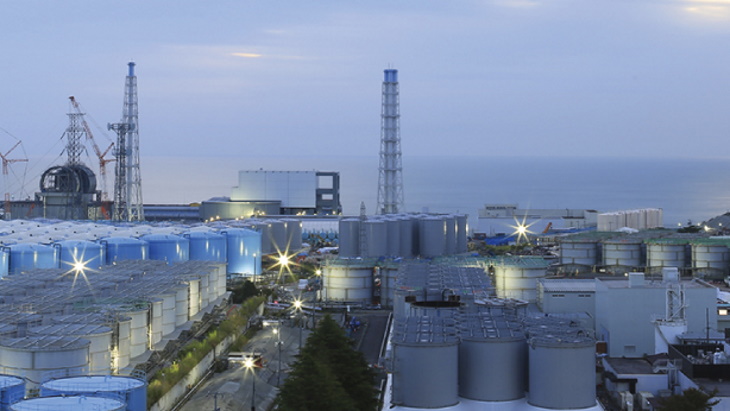
The International Atomic Energy Agency (IAEA) and Japan have agreed on an initial mission schedule and other arrangements for the implementation of the Agency’s multi-year review and monitoring of the safety of the planned treated water release at the Fukushima Daiichi nuclear power station.

Japan is expected to start discharging the treated water in 2023. In line with the commitment of Director General Rafael Mariano Grossi to provide IAEA support before, during and after the water discharge, the first of a series of IAEA preparatory technical on-site review missions will take place later this year.

The IAEA’s special Taskforce for the water disposal will meet in the coming weeks to prepare the reviews.

An IAEA team, led by Lydie Evrard, IAEA Deputy Director General and Head of the Department of Nuclear Safety and Security, met with senior officials in Japan this week to officially launch the review process and agree on the timeline, the preliminary scope of each mission, and other details.

“I welcome Japan’s invitation for the Agency to conduct the first technical review by the end of this year. With this invitation Japan demonstrates that it supports the IAEA’s presence during the entire operation to discharge the treated water,” IAEA Director General Rafael Mariano Grossi said.

During its 07–09 September visit to Japan, the IAEA team met with senior officials from the Ministry of Foreign Affairs, the Ministry of Economy, Trade and Industry, and Japan Nuclear Regulation Authority. They agreed on the three main parts of the IAEA review:

*Safety related aspects.
*Regulatory activities.
*Environmental monitoring.

The Agency’s assistance to Japan will consist of reviews and monitoring to help confirm that the operation to discharge the water over the coming decades is consistent with international safety standards. This review will be based in particular on material submitted by Japan, and on-site technical missions to Japan.

The IAEA team also travelled to the Fukushima Daiichi site on Wednesday to gain an updated understanding of the situation by observing on-site activities and visiting key locations that will feature within the review project.

“This project will be the first of its kind for the Agency, considering the technical specificities, the duration of the release and the level of international regional interest and scrutiny that the plan will receive,” said Deputy Director General Evrard. “Our primary objective will be to review the implementation of the project, from the perspective of safety and transparency. We will ensure that our review is comprehensive and objective and the results are conveyed clearly to the international community. Our visit and the meetings this week were very productive and confirmed that all parties are committed and dedicated to the mission.”

In April this year, Japan announced its decision to release the treated water into the sea and requested the assistance of the IAEA to ensure that the discharge takes place in line with the international safety standards. IAEA safety standards constitute a global reference for protecting people and the environment and contribute to a harmonised high level of safety worldwide. The IAEA and Japan agreed on the project’s Terms of Reference in July.

The IAEA Taskforce for the water discharge, which includes internationally recognised experts from Member States, was set up to oversee the programme of technical assistance and review the related plans and actions.

The IAEA has provided technical assistance to support Japan’s efforts at Fukushima Daiichi in areas such as radiation monitoring, remediation, waste management and decommissioning since 2011.

SOURCE: IAEA/PACNEWS

Fiji records 179 new cases of COVID-19, five new deaths reported

Fiji has recorded 179 new cases of COVID-19 and five new deaths Thursday, increasing the total number of cases in the Pacific nation to 48,502 and 531 deaths since the outbreak in April.

Permanent secretary for Health, Dr James Fong said 87 cases are from the Western division, 90 cases are from the Central division in Vitilevu. Fiji’s main island , one case is from the Eastern division and one case is from the Northern division in Vanualevu.

“There have been 403 new recoveries to report since the last update, which means that there are now 13,362 active cases. 2,272 active cases are in the Central division, 10,800 active cases in the Western division, five active cases in the Northern division (Macuata) and 285 active cases in the Eastern division (all in Kadavu).

“There have been 48,502 cases during the outbreak that started in April 2021. We have recorded a total of 48,572 cases in Fiji since the first case was reported in March 2020, with 34,318 recoveries,” he said.

Dr Fong said the five new COVID-19 deaths reported for the period of 16 July – 08 September 2021.

One death was reported from the Western division and fourth deaths were reported from the Central division.

He said one death was reported for the month of July, due to the delay in the issuance of the official death certificate.

“There have been six more deaths of COVID-19 positive patients. However, these deaths have been classified as non-COVID deaths by their doctors. The doctors have determined that these deaths were caused by a serious pre-existing medical condition and not COVID-19.

“There have now been 533 deaths due to COVID-19 in Fiji, with 531 of these deaths during the outbreak that started in April this year. As of 04 September, the national seven-day rolling average of COVID-19 deaths per day is four. The seven day rolling average for COVID-19 deaths per day in the Central division is one and in the Western division is three.

“We also have recorded 359 COVID-19 positive patients who died from the serious medical conditions that they had before they contracted COVID-19; these are not classified as COVID-19 deaths,” said Dr Fong.

He said there are currently 154 COVID-19 patients admitted to hospitals in Fiji.

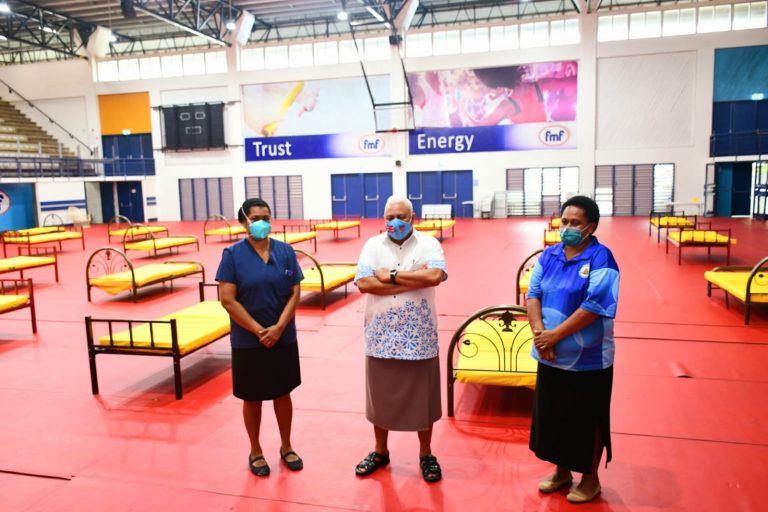
“71 patients are admitted at the Lautoka Hospital, 13 patients are admitted at the FEMAT field hospital, and 70 admitted at CWM hospital, St Giles, and Makoi.

“12 patients are considered to be in severe condition, and five are in critical condition,” said Dr Fong

The national seven-day average daily test positivity is 17.6 percent, which is on a downward trend but still indicating a high level of community transmission, he said.

As of 08 September, 567,751 adults in Fiji have received their first dose of the vaccine and 320,520 have received their second doses.

“This means that 96.8 percent of the target population have received at least one dose and 54.6 percent are now fully vaccinated nationwide,” said Dr Fong.

SOURCE: PACNEWS

Fiji PM acknowledges biological diversity as a global asset to the present and future generations

“The relentless demands we humans have placed on the Earth are driving more than a million species of plants and animals to the brink of extinction. This climate-fueled loss in biodiversity will be irreversible. Once these species are gone, they are gone. There is no turning back the clock.”

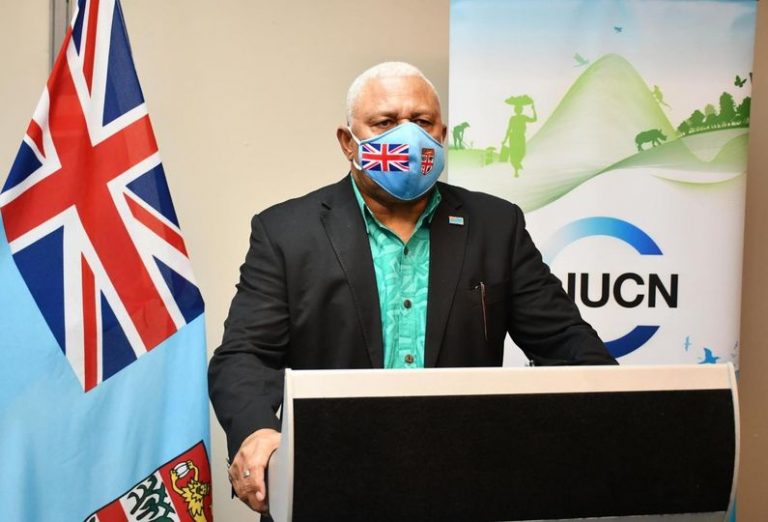
These were the bold remarks by the Prime Minister, Voreqe Bainimarama while delivering the opening address in a video recorded message at the IUCN World Conservation Congress High-Level Strategic discussion in Marseille, France.

With the theme “Influence of Biodiversity Loss and Climate Change on Public Health,” the Prime Minister stated that human health is not immune to global temperature rise and that both the health of individuals and the general health of the community are tied intimately to the health of the planet. Some of these effects according to Prime Minister Bainimarama are immediate and impactful, such as the damage violent storms cause to health care facilities which often render them unable to function at the very time they are most needed.

PM Bainimarama further stated that in Small Island Developing States (SIDS), health care facilities are often in low-lying areas that are subject to flooding and storm surges, which makes them particularly vulnerable.

Using Fiji as an example, PM Bainimarama shared with the high-level participants the damages caused by Tropical Cyclone Winston in 2016. These damages included 88 of 214 national health centres in Fiji – seven of them beyond repair at a time when 125 Fijians were injured and 44 died while thousands were without shelter, food, safe water, and infectious diseases breaking out in many areas.

Additionally for SIDS, Prime Minister Bainimarama said there is an increase in hospital admissions and treatments from some of the same conditions and infectious diseases that surged in the wake of Tropical Cyclone Winston. Responding to this, the Ministry of Health and Medical Services of Fiji has been working to increase its capacity to monitor, assess and respond to climate-sensitive diseases in order to reduce health risks associated with climate change.

“But it’s not only storms we’re worried about. We cannot overlook the matter of biodiversity. Studies have confirmed that many public health diseases are linked to the loss of biodiversity, which is due at least in large part to climate change. For example, the Ebola virus outbreak in West Africa from 2014 to 2016 stems from environmental degradation—particularly deforestation, which forced bats, which were the vector of the disease, out of their natural habitats.”

The Prime Minister reiterated the need for the world to recognise and embrace the fact that biological diversity is a global asset of tremendous value to the present and future generations. Further elaborating on this, the Prime Minister said that biodiversity keeps the earth in balance and prevents species that carry disease or can destroy crops from spreading to new areas or becoming dominant and unstoppable.

“In Fiji, we are taking a transformative approach by attacking the root of the problem. We are restoring and reversing biodiversity loss. We are planting 30 million trees and restoring and expanding mangroves, for example. And we are watching carefully for declines in species.”

Prime Minister Bainimarama added that Fiji is also strengthening the enforcement of environmental legislation, investing in ecosystem conservation and community-based management of natural resources. These will work with biodiversity restoration programs to minimize or halt further degradation of biodiversity–all while sustaining livelihoods. Fiji is committed to the 100 percent sustainable manage of our ocean with 30 percent declared as marine protected areas.

“The processes and actions that link ecosystems and species, including us humans, are complex. Damage in one part of the world may have unforeseen consequences elsewhere, often far away and several years or even generations later. But that linkage works in our favor as well, because positive actions in one part of the world can have a dramatic positive effect thousands of kilometers away.”

The Prime Minister concluded his address affirming the need for a holistic, ecosystem-based strategy that would be consistent globally – integrating the management of land, water and air.

Stating there is no time to lose, the Head of Government then called on the global community to support nature-based solutions to addressing climate change and halting biodiversity loss, identify and implement ecosystem-based adaptation and mitigation measures which help reduce the risk of species extinctions and prevent further damage to ecosystems. Lastly, to innovate and maintain green coastal-protection structures that are cost-efficient and effective compared to the conventional engineering solutions that the world has turned to thus far.

SOURCE: FIJI GOVT/PACNEWS

Nauru’s president aims fire at Fiji in support of USP Vice-Chancellor

Nauru’s president has released part of a previously confidential investigation into mismanagement at the University of the South Pacific in defence of the institution’s vice-chancellor.

Lionel Aingimea tabled part of what’s known as the BDO report in Nauru’s parliament and said it showed “clear violation of university rules, unethical conduct, and gross financial mismanagement by the previous administration”.

Professor Pal Ahluwalia first raised the allegations against his predecessor Rajesh Chandra and others in 2019 after becoming USP’s vice-chancellor, which prompted the investigation by the accounting firm BDO.

His actions angered the Fijian government and it forcibly deported Professor Ahluwalia and his wife in February for unspecified immigration breaches.

But the USP Council recently re-appointed him to the role and allowed him to perform his duties from the regional university’s campus in Samoa, rather than the main campus in Suva.

“He is clearly supported by the staff, students and alumni … as demonstrated by the huge outpouring of support throughout the region for him,” said Aingimea.

Aingimea also took aim at Fiji’s Attorney General Aiyaz Sayed-Khaiyum, who last month claimed Professor Pal’s reappointment was illegal and said his government would withhold funding to the university.

“This move is seen as a divisive and a dismissal move against regionalism … USP needs every contributing member to give its contribution,” Aingimea said.

“USP as a regional university does not belong to any one country,” he said.

SOURCE: ABC/PACNEWS

Sefanaia Nawadra appointed new SPREP Director General

Sefanaia Nawadra is the new Director General of the Secretariat of the Pacific Regional Environment Programme (SPREP).

Announced at the 30th SPREP Meeting of Officials which concluded this afternoon,  Nawadra, a national of Fiji, will take over at the helm of the Pacific’s premiere organisation for the conservation of the environment from his predecessor, Kosi Latu, who has served as Director General since 2016.

Nawadra is currently the Head of the United Nations Environment Programme (UNEP) Pacific Office based at the SPREP Campus in Vailima, Samoa. He is no stranger to SPREP, having worked for the Secretariat in previous years in many different roles, with his last role being the Director of the Environmental Monitoring and Governance programme before he took up his current position with UNEP.

The Secretariat’s Members – comprised of 21 Pacific island and 5 Metropolitan countries and territories, confirmed  Nawadra’s appointment from a pool of high calibre applications who underwent a rigorous selection process.

“SPREP Members would like to congratulate Nawadra on his appointment as the new Director General, and we look forward to working with him at the helm of SPREP. We have every faith that he will continue the work of the great leaders who came before him in ensuring that we foster a resilient Pacific environment that will sustain our livelihoods and natural heritage in harmony with our cultures, for present and future generations,” said Mika Perez of Tokelau, Chair of the 30th SPREP Meeting of Officials.

Nawadra will officially begin his duties on 4 April 2022.  Kosi Latu, has had his contract extended to 03 April 2022, and will continue to serve as the Director General until Nawadra assumes his new role.

SOURCE: SPREP/PACNEWS

Kiribati to open its borders in January 2022

0

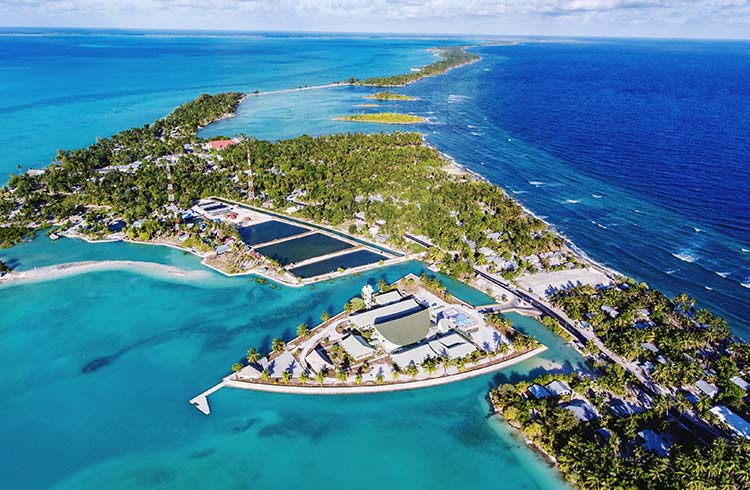
Kiribati will start opening its borders in January 2022.

The announcement was made by Kiribati President Taneti Maamau when addressing the nation on Radio Kiribati.

“Your government has decided that beginning next year, January 2022, Kiribati will open its borders resume travel,”, President Maamau announced.

President Maamau urges the people of Kiribati who haven’t received their Covid-19 jabs to start getting theirs and complete their doses before the opening of the country’s borders.

“Unity and complying with restrictions and regulations is very important for the safety of us all. And I’m urging the old men and women organisations, church groups, youth groups, women organisations, Islands Councils, communities and fathers and mothers in every household to help encourage family members and friends to get vaccinated against this deadly disease.

“The earlier you get the jab and fully vaccinated, the safer you, your kids and grandchildren, your family and all the people of Kiribati will be.”

The president said vaccination rollout continues for Kiribati nationals stranded in Fiji awaiting repatriation including students.

According to the Kiribati High Commission in Fiji all Kiribati seafarers in Fiji have been fully vaccinated on 26 August.

Of the 520 students there, 453 or 87 percent have received their first doze and 95 or 18 percent have been fully vaccinated.

Of I-Kiribati nationals awaiting repatriation, 77 or 79 percent have received their first jabs. Of that, only 18 or eight percent have been fully vaccinated.

The Kiribati Government is sad to learn that a lot of Kiribati nationals in Fiji have not taken their second jabs and urges parents in Kiribati to encourage their families living in Fiji to take their second jabs for their own safety.

Meanwhile, Air Kiribati said a Solomon Airlines aircraft has been hired to help with domestic flights in the Kiribati Group.

Air Kiribati acting CEO Kobebe Taitai told Radio Kiribati News Air Kiribati currently has one aircraft carrying out domestic flight services.

Kobebe said two of the airline’s aircraft are still undergoing maintenance. One is having its engine replaced and the other is waiting for a C-check.

SOURCE: RADIO KIRIBATI/PACNEWS

Next phase of NZ$12 million support for Fiji’s COVID-19 response announced

Further support for Fiji’s COVID-19 response has been announced by New Zealand Foreign Minister Nanaia Mahuta today.

The package builds on previous tranches of assistance Aotearoa New Zealand has provided to Fiji.

“Fiji remains in a very challenging position in their response to COVID-19 and our continued thoughts are with the Fijian people at this time,” Nanaia Mahuta said.

“New Zealand is committed to supporting our Pacific neighbours through these unprecedented times. We need to look beyond our own borders in the fight to eradicate COVID-19.

“This latest package of support will continue our efforts to assist the Government of Fiji and civil society partners to assist the most vulnerable communities impacted by COVID-19 over the next 12 months,” said Nanaia Mahuta.

The $12 million (US$8.5 million) package will support ongoing equipment and supply needs, including testing capacity, oxygen supply and Personal Protective Equipment (PPE) stocks. It will also be directed towards urgent and essential operations costs, including funding for technical assistance, surge support for Government operations, and support for monitoring of community isolation cases.

New Zealand will also contribute NZ$1 million(US$709,000) to the International Red Cross Global Appeal for COVID-19 tagged to support the Fiji Red Cross Society’s National Response Plan focused on vaccine roll out, blood donations and training of volunteers for home-based care.

This latest announcement is in addition to the package of assistance announced for Fiji earlier this month, including delivery of 100,000 doses of vaccines and funding the recruitment of 190 Fiji graduate nurses to provide surge capacity across the health system.

“We continue to stay in contact with the Government of Fiji and civil society partners to respond to further requests of assistance,” Nanaia Mahuta said.

SOURCE: NZ GOVT/PACNEWS

SPREP Members endorse key documents on conservation and the state of the Pacific environment

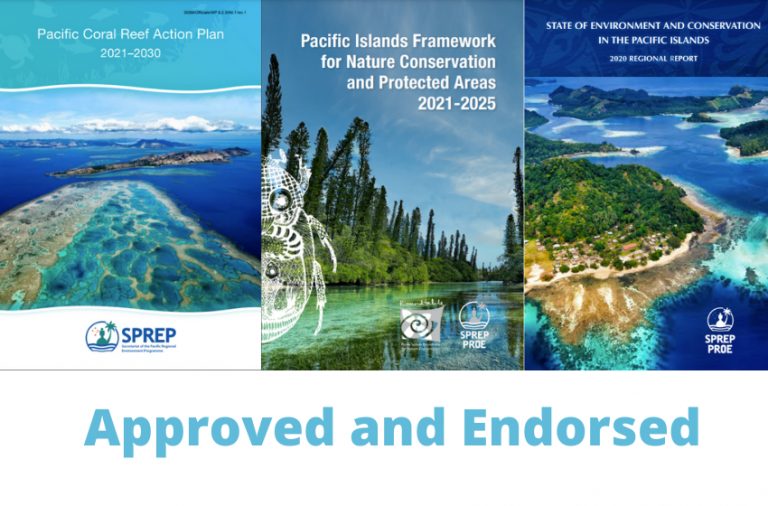
Three key documents were endorsed by SPREP Member countries and territories during the second day of the 30th Secretariat of the Pacific Regional Environment Programme Meeting of Officials.

The documents were presented to the Members and observers by SPREP technical experts who had worked in collaboration with Member countries and partners to develop and approve the final versions of the documents.

The Pacific Islands Framework for Nature Conservation and Protected Areas 2021-2025 is the principal regional document for environmental conservation in the Pacific. Its purpose is to provide broad strategic guidance for nature conservation planning, prioritisation, and implementation in the Pacific region, and reflects the urgent need for transformative action in response to the multiple accelerating threats that are faced by nature and people in the Pacific.

The Framework has been reviewed, discussed and endorsed by the participants of the 10th Pacific Islands Conference on Nature Conservation and Protected Areas which convened virtually in November 2020. It identified key regional priorities for action that are needed to make progress towards the 30-year Vision, Mission and Goals for conservation that were adopted by Pacific leaders at the 7th Conference held in Rarotonga, Cook Islands. These regional priorities are presented in the Framework in the form of six Strategic Objectives.

The Strategic Objectives and Action Tracks were endorsed during the High-Level session of the Conference, with commitments to action by Pacific islands countries articulated through the Vemoore Declaration, which also forms part of the Framework.

The Framework also provides on Overview of Best Practices as guidance for work undertaken within each Action Track. It includes notes on the various responsibilities of stakeholders in its implementation, on governance arrangements, and on monitoring and reporting of regional progress.

The Pacific Coral Reef Action Plan 2021-2030 was also presented for endorsement by SPREP Members, and seeking their commitment to implement in a cross-sectoral and collaborative way as a matter of urgency to the region.

The Pacific is home to approximately 25 percent of the world’s corals. Coral reefs are arguably the most important ecosystem for the livelihoods and sustainable existence of Pacific island communities but they are under increasing pressure from climate change, water quality, ocean acidification and harvesting pressures.

The regional Pacific Coral Reef Action Plan identifies the major threats to coral reefs and associated ecosystems across the Pacific, identifies impediments to successful coral reef action, and identifies eight strategic action areas for which regional actions can provide economies of scale or other benefits to Member countries.

The Plan has been developed in consultation with Member countries and territories, Council of Regional Organisations of the Pacific (CROP) agencies, civil society, and the scientific community.

The final document which was presented to Members for approval was the first regional State of Environment and Conservation (SOEC) report. The report was adopted by the participants of the 10th Pacific Nature Conservation.

The report reflects an indicator-based reporting process for 31 conservation and environment indicators and was developed to inform planning and decision-making actions addressing environmental issues prioritised by SPREP Members.

It provides key information for the development of regional policies and gives guidance to the Pacific 2050 Strategy and other regional frameworks. It also supports SPREP Member countries and partners on periodic monitoring and reporting to international and regional Multilateral Environment Agreements, the Sustainable Development Goals, and can also be used to address today’s environment challenges.

SPREP Director General, Kosi Latu says, “This is a great achievement for not only the Secretariat and its Members but for the Pacific environment. I would like to congratulate all who were involved in these documents – from the developing stage to the approvals and finally the endorsements. These will go a long way in ensuring that our Pacific island countries are better equipped and able to foster a resilient Pacific environment for today and the future.

For more information on the Pacific Islands Framework on Nature Conservation, please contact Ms Amanda Wheatley, Biodiversity Adviser at amandaw@sprep.org

SOURCE: SPREP/PACNEWS

What will the Pacific islands region be prioritising at the COP26 climate talks?

By Dr Ian Fry

As wildfires take lives and ravage property around the Mediterranean and North America and floods destroy lives and property in other parts of Europe, China and Nepal, Pacific Island countries are bracing themselves for another severe cyclone season. These are no longer simply natural disasters, they are climate change events. This is the new normal and it’s going to get worse.

The Intergovernmental Panel on Climate Change released part of its Sixth Assessment Report earlier this month and their message does not make for cheery reading. According to the report, the Western Pacific sea levels rose faster than anywhere else in the world in recent times and by 2050 are estimated to rise by 10cm – 25cm. For Pacific coastal communities with villages close to the sea this will have a devastating effect. Storm surges are the critical factor. Coastal inundation events are happening far more regularly with the IPCC estimating that one in a 100-year events could happen annually or more frequently by 2100. Coastal villages will have to start looking for new land. Coral atoll nations and communities where there is nowhere to go, they will have to start thinking about land reclamation and raising the level of their islands. This is an extremely costly proposition.

Storm surges not only destroy property, they contaminate groundwater supplies and crops. Fresh water is going to be in short supply. Droughts will become more frequent. It seems that we are moving in to an all or nothing climate. We will face severe storms with heavy rainfall causing flooding and then the climate cycle changes, and we will face more severe droughts.

The IPCC report is describing the effects of basic physics. As we increase the temperature of the atmosphere due to the greenhouse effect, our oceans are warming in tandem. Warmer oceans mean that greater energy is being created in a weather system. This means more severe cyclones and more severe droughts.

Warmer oceans are not just affecting the weather, they are having an impact on our fish stocks. Recent studies suggest that our tuna populations are migrating eastward as the Western Pacific becomes warmer. Far western Pacific nations could see significant declines in their catch. The economic ramifications of this are significant and are likely to exacerbate regional tensions over access to fish stocks by distant water fishing nations.

The IPCC also highlights the issue of ocean acidification. The more carbon dioxide that is emitted into our atmosphere through the burning of fossil fuels, the more carbon dioxide is dissolved in our oceans. This makes the ocean acidic. An acid ocean slowly dissolves coral reefs and shellfish. This means that our first line of defence against storm surges, the coral reefs, will be less resilient. Studies also suggest that ocean acidification affects the development of young tuna and other fish species.

Reactions to the IPCC Report

Global reactions to the IPCC report were quick. The UN Secretary General, Antonio Gutteres tweeted that “the evidence is irrefutable: greenhouse gas emissions are choking our plant and placing billions of people in danger”. Ambassador Aubrey Webson, Chair of Alliance of Small Island States (AOSIS) said that scientists have shared a dire warning that every single tonne of carbon added to the atmosphere will contribute to stronger warming.

Unfortunately, the reaction to the IPCC report by the Pacific’s largest neighbour has been underwhelming. Prime Minister of Australia, Scott Morrison, said at a recent press conference that the world faces a “serious challenge”. Followers of Prime Minister Morrison’s press conferences are used to these ambiguous, non-committal statements. The Morrison government has yet to set a timeframe for a net zero emissions target and a commitment to phase out coal mining. Furthermore, the Morrison government has withdrawn its funding from the Green Climate Fund, the major global climate change fund.

Pacific Leaders Forum and Maritime Boundaries

At the recent Pacific Leaders Forum, Leaders agreed to a statement which notes that once maritime zones are established Pacific Island Leaders intend “to maintain these zones without reduction, notwithstanding climate change related sea-level rise”. In effect, this means that once a maritime boundary is established it will not change even if the coastline recedes during to sea level rise. Island may disappear but their maritime boundaries will remain. Interestingly, Pacific Island countries tried similar language at the 2019 Leaders Forum but this was rejected by Australia because they feared it would legitimise Chinese island building efforts in the South China Sea.

What Needs to be Done

Looking at some of the graphs in the IPCC report, it appears that we need to peak global emissions by 2025 if we are going to limit global warming to 1.5 deg C as stated in the Paris Agreement. This is a tall task, but it can be achieved if countries dramatically ramp up their efforts to reduce greenhouse gas emissions.

The need to step up action to reduce emissions was recently highlighted in a report by Greenpeace Australia Pacific entitled “Te Mana o Te Moana”. The report, introduced by the former Prime Minister of Tuvalu,  Enele Sopoaga, highlights the critically insufficient Nationally Determined Contributions presented by the world’s highest polluters. Nevertheless, that report goes on to say that six of the world’s top 15 highest emitting countries have now proposed or submitted stronger emissions reductions targets, including China, the US and the EU: three of the top four emitters. Unfortunately, the report also notes that a further six top emitting nations have submitted targets that either do not increase their ambition or that decrease it in real terms; namely Russia, Indonesia, Brazil, Mexico, South Korea, and Australia. It is clear from the report that much more needs to be done.

Expectations for COP 26

Pacific Island Ministers recently met with the President designate Alok Sharma of the next UN climate change conference (COP 26) to be held in Glasgow in November. Due to Covid concerns, this was an online meeting. The Ministers emphasised the need for emissions to peak by 2025 to ensure that Pacific Island countries are protected from the most severe effects of climate change.

Due to the growing concern about the impacts of climate change, the Pacific Ministers emphasised the need for G20 countries to commit to higher mitigation targets at COP 26.

Pacific Ministers highlighted the need to finish the Paris Agreement rulebook. This includes a decision on how to manage the market mechanisms established in the Paris Agreement. This is a tricky issue and negotiations fell apart at the last minute at the COP in Madrid. Brazil insisted that carbon credits generated under the Kyoto Protocol should be carried over into the Paris Agreement. But the Pacific was and continues to be adamant that this would undermine the targets set under Paris. Creating a carbon market that delivers a real reduction of emissions and not just a transfer of responsibility is another key issue. In negotiation speak this is known as “overall mitigation in global emissions”. Essentially countries that trade in the carbon market would need to sacrifice part of the traded units, so that buyers would take a reduced amount. The sacrificed units would be withdrawn from the accounting system. As a consequence, the atmosphere would be better off.

Another key issue mentioned by Pacific Ministers related to setting a common time frame for when countries would submit their emission reduction goals, their NDCs. Pacific Ministers want a 5-year time frame so that, NDCs can be revised regularly to meet the challenge of increasing concern about rising emissions. Other countries, notably Europe and China are resistant to this 5-year timetable and prefer a 10-year period.

Naturally enough, the issue of climate change finance was another key ask of the Pacific Ministers. The costs of addressing the impacts of climate change are growing exponentially. A USD$100 billion by 2020 climate finance promise made by developed countries in 2010 is yet to be met. Recent OECD reports suggest that current pledges are around $60 billion, and this figure includes the rather generous estimation that the OECD uses to define climate finance.

The lack of climate change funding was highlighted in a statement made by the Alliance of Small Island States (AOSIS) at this year’s G20 meeting. AOSIS noted that the International Monetary Fund had stated in 2017 that the unfunded cost of climate change is well over USD$4 trillion. It is clear to see that there is a major shortfall in climate change finance, even if the promised $100 billion had been met. AOSIS went on to state that the value of the coal, oil, and gas industry is not worth the losses we are seeing globally. This does not make economic sense but demonstrates that the politics of the fossil fuel industry seems to be far more important than the rest of the global economy and its people.

Representation at COP 26 is a major concern for the Pacific. The Ministers also discussed this with President designate Sharma. Due to Covid travel restrictions and quarantine requirements it seems highly unlikely that many Pacific Island countries will make to Glasgow and equally uncertain that they will get back. This would be a major imbalance in the process if the Pacific was underrepresented. The most vulnerable need a voice in Glasgow. Pacific Ministers suggested that proxies may need to be found for their representation or remote participation may be required. Remote participation may work when Ministers need to give speeches, but the nitty-gritty of negotiations need to be handled face to face.

At a recent meeting of Pacific Island climate change negotiators organised by AOSIS and the Secretariat of the Pacific Environment Program, participants expressed their concern that they wouldn’t be able to attend the COP. Even if the COP went into a hybrid mode of in-person and on-line participation, the time difference would be an enormous disadvantage for Pacific Island countries. Many negotiations take place in the corridors or over a cup of coffee. Virtual meetings don’t really cater for this informal part of the process.

The Pacific has a long reputation of boxing above its weight in climate change negotiations and Pacific delegations need to be in Glasgow. We also need strong representation from Pacific civil society organisations as they are the voice of the most vulnerable. How this will happen is certainly not clear.

If we are to see a significant change in the increasing warming of the global climate, and take heed of the IPCC report, we need to take decisive action now. The world cannot afford the costs of more wildfires, floods, warming oceans, cyclones and everything else that comes with rising greenhouse gas emissions. Glasgow should be the key point for a dramatic ramping up of effort to reduction greenhouse gas emissions. It should be the pivot for the global community to commit to a rapid phase out of the use of fossil fuels. Unfortunately, without the active participation of the Pacific, the voice of the most vulnerable will not be heard. Key negotiators and civil society organisations will be left at home. The COP may become a Boris Johnson celebration of underachievement.

Dr Ian Fry is the former Ambassador for Climate Change and Environment, Tuvalu. This article originally appeared in the August issue of Islands Business magazine.

SOURCE: ISLANDS BUSINESS/PACNEWS

France declares Covid-19 emergency in New Caledonia

France has declared a health emergency in New Caledonia after Covid-19 was detected in the community.

The state of emergency was decreed by the French prime minister Jean Castex, effective immediately.

The decree, which is valid for a month, allows the authorities to impose restrictions, such as curfews or a lockdown, which the New Caledonian authorities had already imposed on Tuesday.

Today, a law is expected to pass in the French Senate to extend the health emergency in several French overseas territories, including New Caledonia and French Polynesia, to the middle of November.

A government statement said the pandemic has turned into a health catastrophe in New Caledonia because hospital capacity is limited, and people have made little use of the access to vaccines.

Medical experts in New Caledonia warned last month that the number of vaccinated people needed to be doubled within weeks, prompting the government last Friday to make vaccinations for adults compulsory.

They also said there only had about a third of the number of nurses needed to be able to use the intensive care units available.

The virus is now said to be in wide circulation, and Wednesday the public was told that in two to three weeks the hospitals will be full.

The government reported 16 Covid-19 cases Wednesday, but provincial and local authorities have added to the number since.

Until the latest outbreak on Monday, New Caledonia had recorded fewer than 140 Covid-19 cases and there had been no fatality.

Since March 2020, the borders have been closed and people allowed to enter have had to spend two weeks in government-run isolation facilities.

SOURCE: RNZ PACIFIC/PACNEWS

Stay connected

529FansLike
172FollowersFollow
156SubscribersSubscribe
- Advertisement -