Home Blog Page 1139

Fiji records 127 new cases of COVID-19, three deaths reported

Fiji has recorded 127 new cases of COVID-19 and three deaths Monday, increasing the total number of cases in the Pacific nation to 49,043 and 536 deaths since the outbreak that started in April.

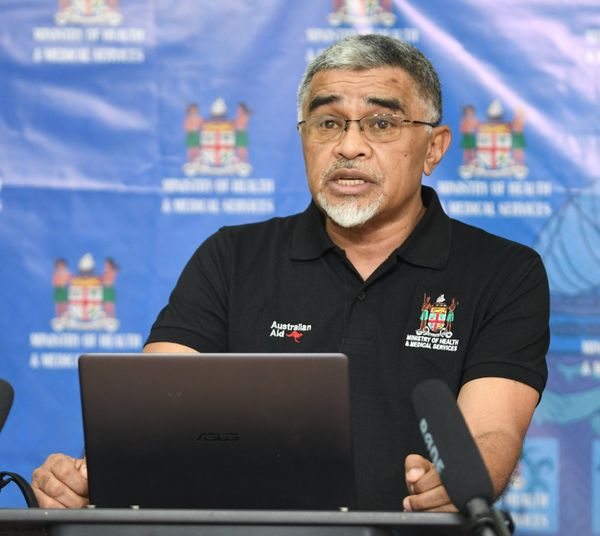
Permanent secretary for Health,Dr James Fong said 83 cases are from the Western division, 36 cases are from the Central division in Vitilevu, Fiji’s main island and eight cases are from the Eastern division.

“There have been 12 new recoveries to report since the last update, which means that there are now 12,925 active cases. 1,503 active cases are in the Central division, 11,117 active cases in the Western division, two active cases in the Northern division (Macuata) and 303 active cases in the Eastern division (all in Kadavu).

“There have been 49,043 cases during the outbreak that started in April 2021.We have recorded a total of 49,113 cases in Fiji since the first case was reported in March 2020, with 35,284 recoveries,” said Dr Fong.

He said there are three new COVID-19 deaths reported for the period of 10-12 September 2021. Two deaths were reported for the Central division and one death was reported from the Western division.

“There has been one more death of a COVID-19 positive patient. However, this death has been classified as a non-COVID death by their doctors. The doctors have determined that this death was caused by a serious pre-existing medical condition and not COVID-19.

“There have now been 538 deaths due to COVID-19 in Fiji, with 536 of these deaths during the outbreak that started in April this year. As of 08 September the national seven-day rolling average of COVID-19 deaths per day is two. The seven day rolling average for COVID-19 deaths per day in the Central division is one and in the Western Division is one.

“We also have recorded 366 COVID-19 positive patients who died from the serious medical conditions that they had before they contracted COVID-19; these are not classified as COVID-19 deaths,” Dr Fong explained.

He said there are currently 117 COVID-19 patients admitted to hospitals in Fiji.

“44 patients are admitted at the Lautoka Hospital, eight patients are admitted at the FEMAT field hospital, and 65 admitted at CWM hospital, St Giles, and Makoi.

“12 patients are considered to be in severe condition, and three are in critical condition,” Dr Fong said.

The national seven-day average daily test positivity is 16.5 percent, which is on a downward trend but still indicating a high level of community transmission, he said.

As of 12 September, 569,958 adults in Fiji have received their first dose of the vaccine and 342,191 have received their second doses.

“This means that 97.2 percent of the target population have received at least one dose and 58.3 percent are now fully vaccinated nationwide,” said Dr Fong.

SOURCE: PACNEWS/PACNEWS

Four Papuan districts can form South Papua Province: Indonesian Home minister

0

Indonesian Home Minister Tito Karnavian highlighted “a specialty” pertaining to the public’s aspirations in the Merauke, Boven Digoel, Mappi, and Asmat districts in Papua Province regarding a regional division to create South Papua Province.

To this end, the government will revise the Papua Special Autonomy Law, according to Karnavian, who had earlier headed the Papua police headquarters before being promoted to serve as Indonesia’s national police chief and then home minister.

Karnavian made the statement during his working visit along with Coordinating Minister for Political, Legal, and Security Affairs Mahfud MD to Sota Sub-district in Merauke District, Papua Province, near the Indonesia-Papua New Guinea border on Sunday.

Karnavian further called for accelerated development in Papua, so that the regional division for creating South Papua Province with Merauke as its capital city becomes indispensable.

In the early stage, Pegunungan Bintang District was keen to be part of South Papua Province, but due to its geographical proximity to Jayapura, it united with the “Saereri division,” he remarked.

Referring to a new regulation, four districts in South Papua could have formed their own province, he noted, adding that the Home Ministry is currently deliberating and preparing a government regulation, he stated.

Coordinating Minister Mahfud MD has given his ministry a deadline to complete the government regulation on this regional division by 19 October, 2021. It still needs to be merged with the aspirations of those at the grassroots level, Karnavian stated.

Hence, Karnavian urged community leaders and all societal elements at large in the districts of Merauke, Boven Digoel, Mappi, and Asmat to stand united to express their aspirations for the creation of South Papua Province.

They must also write a letter to Indonesian President Joko Widodo, he noted, adding that Merauke District had vast potential in agriculture and fisheries.

Owing to its huge potential and sufficient availability of human resources, he is confident that South Papua will rise to become the most developed province on the land of Papua.

ANTARA reported earlier that Indonesia’s House of Representatives (DPR) had ratified the bill amending the Papua Special Autonomy Law No. 21 of 2001.

The bill that the House members enacted during a plenary session on 15 July, 2021, accommodates 18 revised chapters and two new chapters, according to head of the House’s Special Committee for Amending the Papua Special Autonomy Law, Komarudin Watubun.

The enacted bill has accommodated the need to regulate the privileges of indigenous Papuans in the political, education, health, labour, and economic sectors, as well as to support customary communities, he affirmed.

It offers more room to native Papuans to get involved in politics and in organisations, such as the Papuan People’s Assembly (MRP) and Papua legislative councils (DPRK) in districts and cities.

At least 250 seats will currently be reserved for native Papuans at the district- and city-level Papua legislative councils (DPRK), Watubun noted. At the same time, 30 percent of the DPRK seats will be reserved for native Papuan women, he remarked.

Meanwhile, the value of special autonomy funds for Papua and West Papua has been increased to about 2.25 percent of general allocation funds, placing them among eight provinces with the highest budgets, the Home Minister has said.

“Papua and West Papua’s regional budgets are top eight among provinces in Indonesia though their total population is less than five million,” Minister Muhammad Tito Karnavian observed while visiting Sota sub-district in Papua’s Merauke district.

According to Karnavian, compared to the regional budget of South Sumatra province, which has a population of more than 12 million, for instance, Papua and West Papua’s regional budgets are higher.

However, as Papua is larger than Java Island in terms of size, there is a “specialty” pertaining to the need for accelerating regional development there, he explained.

Karnavian then urged community leaders and all societal elements at large in the districts of Merauke, Boven Digoel, Mappi, and Asmat to stand united to express their aspirations for the creation of South Papua province.

Owing to its huge potential and sufficient availability of human resources, he said he is confident that South Papua would rise to become the most developed province in the land of Papua.

SOURCE: ANTARA NEWS/PACNEWS

Pandemic increasing risk factors for suicide, UN health agency warns

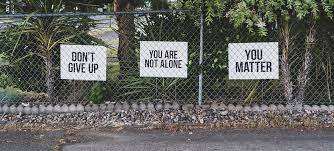
Suicide prevention must be prioritized after 18 months of the COVID-19 pandemic, the Americas office of the World Health Organisation (WHO) warned ahead of World Suicide Prevention Day, commemorated annually on 10 September.

Studies show that the global crisis has exacerbated risk factors associated with suicidal behaviours, such as job loss, trauma or abuse, mental health disorders and barriers to accessing health care.

“Suicide is an urgent public health problem and its prevention must be a national priority,” said Renato Oliveira e Souza, head of the Mental Health Unit at the Pan American Health Organisation (PAHO).

“We need concrete action from all elements of society to put an end to these deaths, and for governments to create and invest in a comprehensive national strategy to improve suicide prevention and care,” he added.

Globally, one in 100 deaths is by suicide, making it among the leading causes of death worldwide and the fourth leading cause of death among 15- to 29-year-olds, after road traffic accidents, tuberculosis and interpersonal violence.

More people die each year from suicide than from HIV, malaria, or breast cancer, or from war and homicide, according to WHO.

Some of the verbal or behavioural warning signs for suicide include talking about wanting to die, feeling immense guilt or shame, or feeling like a burden to others. Other signs are feeling empty, hopeless or trapped, or having no reason to live, or feeling extremely sad, anxious, agitated, or full of anger.

Among behavioural changes that can also be warning signs, are researching ways to die, staying away from friends, giving away important items, showing extreme mood swings, eating or sleeping too much or too little, and using drugs or alcohol more often.

Anyone who detects warning signs of suicide, whether in themselves or in someone they know, should seek help from a health care professional as soon as possible.

World Suicide Prevention Day was organised by the International Association for Suicide Prevention (IASP) and endorsed by WHO.

This year’s theme ‘Creating hope through action’, focuses on the need for collective action to address the issue.

WHO recently published guidance that supports national efforts to help reduce the global suicide rate by one-third by 2030, in line with the Sustainable Development Goals (SDGs).

Key prevention measures include limiting access to means of suicide, such as firearms and pesticide, as well as early identification, assessment, management and follow-up of people affected by suicidal thoughts and behaviours.

Other actions include fostering adolescent social-emotional skills, and educating the media in responsible reporting on suicide.

SOURCE: UN NEWS CENTRE/PACNEWS

Fiji’s Covid-19 outbreak prompts a new way of leading

Op-ed by Tessa Price, Regional Executive for the Pacific ANZ NZ Ltd

After finding herself locked out of Fiji when the borders were closed in April – and locked down in Sydney as it faces its own Covid-19 outbreak – ANZ Regional Executive for the Pacific Tessa Price writes about how she’s finding new ways to lead remotely, helping FNU students continue their education, and what she’s learned about doing business in the Pacific.

When Fiji’s Covid-19 outbreak began this year and the country closed to all arrivals, I found myself on the wrong side of the border.

I moved to Fiji five years ago to take up my new role as ANZ’s Regional Executive for the Pacific, and travel is – or was – a regular part of my life. My husband David is based in Australia and my 15-year-old daughter spends time in both countries.

I left Fiji in March this year to spend the Easter period in Sydney with family, and to be there for my daughter’s birthday – but when the Covid-19 outbreak in Fiji quickly took hold, and the border was closed to all but Fiji residents and citizens, I was stranded.

There were no flights, and the advice I received was that Fiji was not allowing people in my situation to return. I was also mindful that, even if I could return, it would be an unnecessary use of a quarantine spot, when they really need those facilities for Fijians.

I would very much prefer to be working there, alongside the Fijian people – in many ways it would make my role a lot easier – but the reality is that I can’t return right now, as much as I want to.

So over the past few months, I’ve had to buckle down here in Sydney, and continue to lead the bank’s Pacific operations, during one of the most difficult periods I can recall.

A NEW WAY OF LEADING

Being here in Sydney has definitely not been a holiday for me – anyone who works remotely can probably relate to that experience.

I’m working harder now than ever – as is the whole ANZ team in Fiji, who are also working from home.

Many of our customers in the Pacific need help. So much revenue has dried up, and we’re having those critical conversations to ensure they can navigate through the pandemic, and become successful in this new world.

What I’ve learned is that you can lead successfully in a remote working situation – but it takes concerted effort, and a new way of thinking.

Firstly, and importantly, leaders need to take care of themselves by proactively managing their own wellbeing, and that of their family.

I try to exercise every day – my daughter leads the way on our runs, and sometimes puts me to shame as we go a little further each day. That physical exercise is crucial – it sets me up to think clearly about the needs of the bank and its customers.

I’m also finding that minimising screen time can help leaders manage their wellbeing – which I admit can be difficult, when most of your work has to be done online.

My most productive time is actually spent offline, thinking about ideas and how to solve issues we are facing as a business. I print off long articles to read in bed, and avoid any screen time at all prior to sleep.

In terms of our people, I’m spending a lot more time listening, and offering support. Empathy is key – leaders need to understand the difficulty, discomfort and stress many people within their teams will be feeling.

Remote leaders also need to have enhanced, ongoing communications with their staff, while also being mindful that some people will need space to absorb what’s happening, and to adjust.

When we feel isolated, especially when we’re physically isolated, we need more communication to help us feel connected.

It’s also very important to lead with trust, not control, and to assume the best and be patient when people have difficulty working remotely – due to closures or technology, for example.

STEERING TWO SHIPS AT ONCE

On top of my ANZ role, I’m also continuing to work remotely as the new Chancellor and Chair of the Fiji National University (FNU) – which presents its own challenges.

I accepted a three-year permanent role with FNU in April this year after a short stint as acting Vice-Chancellor, and some time as Acting Chancellor. I felt incredibly honoured to be offered that position.

Education has always been important to me – my own mother was a teacher – and it was always something I really wanted to be involved with. I’ve said no to a few board positions in the past, but this one was very close to my heart.

The situation in Fiji presents a huge challenge for the FNU and its students. I’m mindful that, while online learning has been put in place, some students will struggle to access that because of infrastructure, or other technological barriers.

And importantly, a huge part of being at university is actually being there and getting involved in everything a university has to offer– the clubs, the friends, the debates, and everything else. So I really feel for the FNU students who aren’t able to have that right now.

A big part of my role with FNU involves looking at the future needs of the Pacific – examining its aims for the future and predicting where the new jobs will be, with a view to bringing island economies to the world stage.

Education is critical to economic development, and the development of societies – it lifts people out of poverty and creates higher order jobs, which is key to major structural reform.

FNU has the ability to help transform the Pacific economy, and that’s already a critical part of what we’re trying to do at ANZ – so in many ways my job with ANZ, and the FNU role, are quite similar.

A PACIFIC STATE OF MIND

Moving to Fiji five years ago led to a steep cultural learning curve for me. Pacific nations, and especially their people, have a unique way of operating, which has really taught me a new way of leading.

When I first started, I thought I could walk into the Pacific with my experience from past positions, and be successful – but I soon learned that I had to completely reinvent myself.

I had to really listen to people, and listen to the community – I had to learn about the culture, and the language.

So to some extent, I’ve dumped a lot of my experience and biases, and I feel that’s made me more effective in my role – if you just go in and keep doing what you’re doing, it doesn’t always work in the Pacific.

You have to show real, authentic passion, and real understanding, and show you want to get involved and be genuine with Pacific people – and then they bring you in.

The Pacific is so unique, and it has so many strengths that you can leverage, but you have to first understand where those strengths lie – especially the power of the community.

If you can tap into that strength, you get very rich feedback from people who can help explain how to make the most impact in those communities.

It’s an incredible, challenging and rewarding place to live and work, and I very much look forward to being back there soon.

SOURCE: ANZ/PACNEWS
PNG deputy PM Sam Basil suspended over alleged misappropriation of K150,000

Papua New Guinea deputy Prime Minister and Bulolo MP Sam Basil has been suspended from official duties pending a leadership tribunal inquiring into allegations of misconduct in office against him.

This comes after public prosecutor Pondros Kaluwin on Friday presented the reference and statement on the allegations, thus officially starting the inquiry.

Basil, as chairman of Bulolo district development authority, allegedly failed to declare to the Ombudsman Commission the use of K150,000(US$42,750) from the Bulolo district operating account in 2015.

He is accused of interfering with the decision of the Central Supply and Tenders Board (now National Procurement Commission) regarding the awarding of a contract to build the Wau commercial and district headquarters.

Tribunal chairman Justice Alan Kingsley David said in accordance with section 28 of the organic law on duties and responsibilities of leadership, Basil was officially suspended from performing his duties and functions required of him as Bulolo MP and deputy prime minister, pending the determination of the tribunal’s investigation.

According to a copy of the reference by the public prosecutor, Basil, leader of the United Labour Party, is facing five charges.

They are:

* between March 2013 and 24 September, 2018, Basil as Bulolo district development authority chairman allegedly interfered with the decision of the central supply and tenders board by failing to implement that decision, awarding a contract to Jaybis construction and management to construct the Wau commercial and district headquarters;

*On 15 December, 2014, without lawful authority, Basil allegedly received a sum of K50,000(US$14,250) drawn from the Bulolo district treasury operating account and made payable to one Tae Guambelek. The money was for the construction of the Wau commercial and district headquarters;

*On 18 December, 2014, without lawful authority, Basil allegedly indirectly asked for and accepted K50,000, drawn from the Bulolo district treasury operating account and made payable to one Christopher Sumae. The money was for the construction of the Wau commercial and district headquarters;

On December 21, 2014, Basil indirectly asked for and accepted K50,000(US$14,250) , drawn from Bulolo district treasury operating account and made payable to one Christopher Sumae. The money was for the construction of the Wau commercial and district headquarters; and,

On 09 November, 2015, Basil knowingly and recklessly or negligently provided information in the annual returns for the period of 06 August, 2014, to 05 August, 2015 that were false, misleading or incomplete by not declaring receipt of K150,000 (US$42,750)from the Bulolo district treasury operating account. The tribunal adjourned to 01 October for Basil to give his plea on the allegations.

SOURCE: THE NATIONAL/PACNEWS

Fiji Health Ministry prepares for border opening

Medical experts’ reveal that Fiji does not need to wait for the two-week buffer period to re-open containment borders once 60 percentof the eligible population are fully vaccinated.

Fiji Medical Association President, Dr Basharat Munshi said the vaccination threshold is a national guide and should not to be mistaken as scientific data when assessing Fiji’s COVID situation.

“Numbers are guidelines and there is no exact science and there are many variables with medicine”.

Concerns have been raised on the safety of opening containment borders without waiting for the two-week buffer period, to which Dr Munshi replied that our safety can be measured by Fiji’s high vaccination rate.

“Ideally speaking the higher the vaccination coverage there is, the safer we are in terms of being able to contain the infections before we open up”.

Health Minister, Doctor Ifereimi Waqainabete said by the time the 60 percent threshold is reached, the majority of the target population will be considered fully vaccinated.

“Even when we achieve that 60 percent, there’ll be a huge number of people that would have been fully vaccinated (and two weeks) even when we reach that 60 percent”.

The COVID-19 vaccine only takes full effect a fortnight after an individual receives the second jab.

Vaccination data is collected daily, except for Sundays when there is no vaccination.

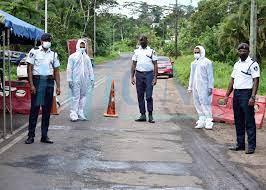
As of Monday, the full vaccination rate was 1.8 percent below the 60 percent required to lift containment borders and move the curfew to 9 pm.

Meanwhile, students under the age of 18 will soon get the COVID-19 vaccine.

Speaking during the Radio Fiji One’s Nai Lalakai Programme, Prime Minister Voreqe Bainimarama said all Year 13 students who are 18 years and below will receive the Moderna vaccine.

Bainimarama said Year 7 to Year 12 students will have to wait for the Pfizer vaccine.

“The increasing number of people that receive the COVID-19 vaccination will enable the government and the Health Ministry to lift containment zones and other COVID-19 restrictions in place.”

Bainimarama said this is to ensure that children are safe from the virus and also allow the safe re-opening of schools.

All schools in Fiji have remained closed since April following the COVID-19 outbreak.

SOURCE: FBC NEWS/PACNEWS

Fiji seeking Australian support with ‘long COVID’ cases

Fiji’s health chief is asking his Australian colleagues for support and advice to help deal with emerging cases of what’s called ‘long COVID’.

It’s the latest development in the country’s outbreak that first began in April, but Dr James Fong believes the worst is behind them.

Fiji has had nearly 49,000 confirmed COVID-19 cases and Dr Fong told Pacific Beat they’re starting to hear of people who are still suffering symptoms, months after they were first infected.

He admits ‘long COVID’ cases will put a strain on Fiji’s health system longer term.

“It will be a strain on the health system that much. That’s basically a no brainer for us,” he said.

“I have actually made a request with some of my Australian colleagues, some of the medical experts have offered to come in to provide some support…where we are looking at people who have who can help us put together better means to diagnose long COVID.

But Dr Fong said that the health system is currently coping again after months of being stretched.

“In terms of more bed occupancy, ventilators and other oxygen therapy equipment, we’ve got reserves of 80 per cent and more,” he said.

“Most of the patients are asymptomatic, most of the patients do not require oxygen. And some of the critical care equipment that we use, are actually sitting in reserve.”

But he confirmed front line health workers are beginning to fatigue and he’s in discussion with his Australian colleagues for additional support to relieve the Fijian workers.

Meanwhile, as conversations around ‘no job, no jab’ continue to happen around the Pacific a new threat to the vaccine rollout has emerged.

Health authorities globally are being challenged by the emergence of fake vaccine cards.

There are reports in Fiji that people are purchasing and using fake vaccination cards to by-pass mandatory vaccination.

Eleanoa* is a 26-year-old women living just outside of Suva and she says that she has been offered a fake card.

“It was going around on messenger, people were spreading the news and it was like wildfire,” she said.

Epidemiologist Dr Fiona Russell has lived and worked in Fiji, and she says fake vaccination cards are incredibly dangerous,

“It’s such an unethical development to hear it’s really is signing off, potentially somebody’s death sentence,” she said.

Dr Russell said vaccination is the best protection from COVID-19.

“Vaccination prevents severe illness, and death, and having a fake vaccination card will not prevent illness or death.”

*Elenoa’s name has been changed to protect her identity.

SOURCE: ABC/PACNEWS


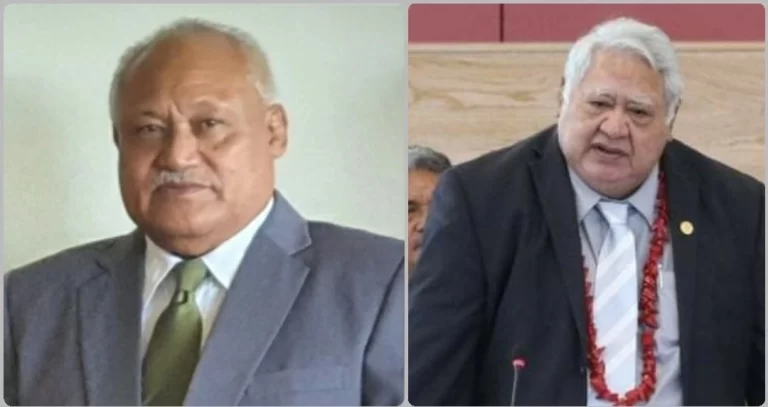
Unsworn HRPP MPs turned away: Samoa Speaker

The 18 unsworn members of the Human Rights Protection Party(HRPP) will likely return to by-elections after the Samoan Speaker of the House denied their request to be sworn in on Tuesday.

The Speaker of the House, Papalii Lio Masipau in a letter to to the leader of the HRPP Tuilaepa Sailele Malielegaoi confirmed his decision to deny the members access to parliament sitting tomorrow.

Papalii told Tuilaepa that their continuous rejection of the new Government also means they do not accept the Speaker of the House.

Due to these reasons, the Speaker said, he has concluded that there will be no swearing in for the HRPP members when parliament convenes.

He added his decision is also in accordance with Standing Orders and to maintain the integrity of parliament.

Meanwhile, former prime minister Tuilaepa Sailele Malielegaoi and members of his Human Rights Protection Party (HRPP) say they will strongly defend themselves against contempt of court charges.

Several HRPP members or associates including Tuilaepa’s deputy, Lauofo Fonotoe Pierre Lauofo, and the former Speaker of parliament, Le’aupepetele Toleafoa Fa’afisi, are among those also charged.

They are alleged to have said insults against the judiciary on TV and social media following a July court of appeal ruling which declared as lawful the adhoc tent swearing-in of the new Faatuatua ile Atua Samoa ua tasi (FAST) party government.

The contempt proceedings were filed by the FAST party and its leader, Prime Minister Fiame Naomi Mata’afa, who allege that the HRPP members and supporters scandalised and undermined the Court’s authority.

A TV1 presenter and broadcaster, Sioeli Alofaifo Taulealeausumai, is also facing the same charge in the amended statement of claim by the FAST party which was filed in court last week before the matter is heard this week.

In a statement the HRPP party said each and every allegation will be strongly defended.

“We will be considering several grounds of defence including fair comment, freedom of speech and expression under the Constitution of Samoa and that there is no real risk of serious prejudice to the administration of justice”, the statement said.

A lawyer and former MP for the HRPP, Maiava Visekota Peteru said the contempt cases appeared to be a thinly veiled attempt to silence any opposition.

Two New Zealand judges will preside over the case via online link.

SOURCE: SAMOA OBSERVER/PACNEWS

COP26: Poorest countries fear not reaching UK for climate summit

The world’s poorest countries say they are worried about getting to the COP26 climate summit in Glasgow in November.

Twenty are on the UK’s Covid red list – meaning hotel quarantine for arrivals.

They say the fortnight-long talks may involve being away for seven weeks as they will also have to isolate on return.

And they warn that flights from Pacific islands have virtually stopped and that some transit hubs are refusing non-residents.

The warning comes from the group made up of the world’s 46 poorest countries which are on the United Nations’ list of Least Developed Countries (LDC).

The 20 countries that are also on the UK’s foreign travel red list include Afghanistan, Ethiopia and Nepal.

The chairman of the LDC group, Bhutan’s Sonam Phuntsho Wangdi, said: “It’s our people who are hardest hit by this ever worsening crisis. They must be well represented in the climate talks.

“The world cannot risk unambitious and unfair decisions being taken at COP26, there is far too much at stake.”

This follows a coalition of 1,500 green groups calling for the summit to be delayed because of Covid arrangements.

But the UK government and the UN say they are planning to go ahead because the massive gathering is so important and they are working to keep it safe.

Bringing together 30,000 people from every country on the planet – regardless of whether they’ve got the disease under control or not – is a challenge.

Especially when the talks will be face-to-face, last for two weeks indoors during a Scottish winter when few will welcome opening windows to bring in virus-dispersing fresh air.

And the event will be opened by people in the most vulnerable demographic: the Queen (aged 95), David Attenborough (95), the Pope (84) and President Biden (78).

It comes as other events on a similar scale have not gone ahead as planned.

China was due to hold a UN conference on biodiversity next month but switched to virtual sessions for the opening and normal talks next year.

And while France has just hosted a congress in Marseilles on nature conservation, the numbers were far lower than usual with many joining via video.

By contrast, officials planning COP26 say the future of the planet is at stake and that Zoom is no substitute for meeting in-person. And they insist the risks can be minimised.

The first line of defence is vaccination – it is not mandatory but “strongly encouraged”.

Vaccine doses have been promised to anyone registered with the UN and those should be available now.

Arrivals from red list countries will still have to quarantine – for five days if they are vaccinated, 10 days if they are not, with the UK government paying for the hotel bills.

The next barrier is regular testing – probably every other day and with lateral flow tests (the more reliable PCR tests were judged too slow).

In the event itself, there will be zones for global leaders and a “blue zone” for ministers, officials, observers and media – with both groups urged not to mingle.

Masks will be needed when moving around, numbers will limited in meeting rooms and there will be plenty of hand sanitiser.

Ventilation – a key safety measure – is mentioned in the official guidance though not spelled out.

In the Olympics and Paralympics in Japan recently, competitors were isolated in an athletes’ village.

Instead in Glasgow, delegates will be staying in hotels in and around the city and will inevitably be meeting others.

Informal talks and social events are a crucial part of COPs.

The city’s restaurants, where mixing is most likely, are being advised on Covid safety measures – but these can’t be policed.

In Marseilles, at the conservation conference, no one unvaccinated from a red list country was allowed into France.

Also, face coverings had to be worn all the time indoors as well as outdoors.

And it is possible a higher grade of mask may be required. When the COP26 president Alok Sharma visited China this week, the delegations wore FFP2 masks – offering protection against infectious aerosols.

SOURCE: BBC NEWS/PACNEWS

Commonwealth to champion climate-vulnerable small states at COP26

The Commonwealth Secretary-General Patricia Scotland called for urgent action to ensure improved climate resilience of small states and promised to amplify the concerns of small and other vulnerable states around climate change at the upcoming United Nations Climate Change Conference COP26 in Glasgow this November.

During visit to The Bahamas last week, the Secretary-General said: “Without a doubt, we are living through a global climate crisis which is unfolding with disturbing speed and intensity across the Commonwealth, and the world. The unequivocal evidence contained in the most recent report by the Intergovernmental Panel on Climate Change (IPCC) has only reinforced what small island nations on the frontlines of climate change have been experiencing and advocating for a long time.

“Urgent, decisive and sustained climate action is needed, and the international community must not miss the window to make a real difference at the upcoming COP26 summit. This includes mobilising the financial support needed for vulnerable nations to cope with the impacts of climate change and build long-lasting resilience.

“The Commonwealth Secretariat has dedicated a number of programmes to support member countries to access finance, such as the Commonwealth Climate Finance Access Hub, the Disaster Risk Finance Portal and the Commonwealth Blue Charter Ocean Funders Database, but more must be done multilaterally to target the needs of small states, which face an existential threat from climate change.”

The Secretary-General last visited The Bahamas in 2019, in a show of solidarity with the country and region after it was devastated by Category 5 Hurricane Dorian.

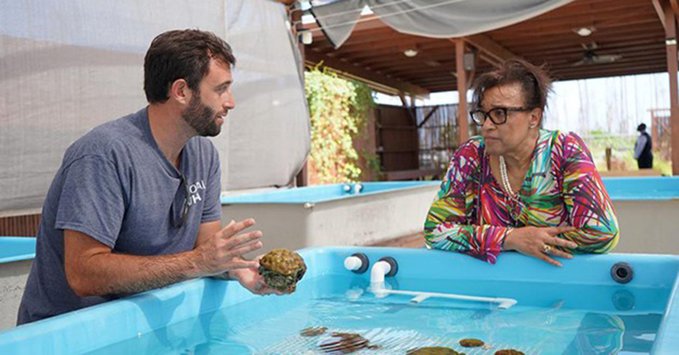
On a tour of the Coral Vita coral restoration facility in Freeport, Grand Bahama, she added: “While they have contributed the least to the climate crisis, small states are most affected by it. But they are also leading the charge in advocating for transformative climate action on a global scale, in addition to developing local solutions, including new innovations as well as those drawn from indigenous knowledge.”

The Secretary-General will lead a delegation to the UN Climate Change Conference COP26 to advocate the interests of Commonwealth countries, exchange knowledge and best practices around climate action, strengthen partnerships and mobilise resources to support Commonwealth programmes.

Thirty-two Commonwealth countries – more than half of the membership – are classified as ‘small states’, including 25 small island developing nations.

SOURCE: COMSEC/PACNEWS