Home Blog Page 1138

Samoa new chair of Pacific Small Islands Developing States

Samoa has succeeded Fiji in chairing the Pacific Small Islands Developing States (PSIDS) international grouping at the United Nations in New York.

Outgoing PSIDS Chair, Satyendra Prasad, Fiji’s Ambassador and Permanent Resident to the UN announced that Samoa has assumed the role in a tweet on Monday.

Ambassador Prasad said it was his greatest honour to serve as chair.

“It has been my greatest honour to chair the Pacific Small Islands Developing States at the UN. On behalf of the Fiji Prime Minister and Fiji Ministry of Foreign Affairs I thank PSIDS for this honour,” he said in a statement on Twitter.

“I offer congratulations and support to Ambassador Fatumanava-O-Upolu III Pa’olelei Luteru of Samoa for taking forward PSIDS.”

The chairmanship for PSIDS was handed over to the Ambassador Fatumanava-O-Upolu III on Friday, 10 September, 2021 at the UN in New York.

The ceremony was hosted by Fiji and witnessed by Permanent Residents of PSIDS to the UN.

Tonga was among the nations that attended the ceremony, according to a statement issued by the Permanent Mission of Tonga to the UN.

“Well done Fiji and the best to Samoa!,” the Tonga mission said on Twitter.

Tonga, they added, has chaired PSIDS twice in the past.

SOURCE: SAMOA OBSERVER/PACNEWS

Forum SG Henry Puna statement to third Japan-PIF briefing on Fukushima wastewater

Warm Pacific greetings from Suva. I am pleased to welcome you all to this third briefing session with Japan in relation to the ALPS treated water issue.

At the outset, I refer to the important outcomes achieved at PALM9, where Leaders agreed that this matter is a priority for the Pacific and for Japan.

Indeed, this is an issue that requires open and frank consultation, and sustained and continued dialogue both at political and technical levels moving forward.

On 27 July this year Forum Foreign Ministers reiterated the importance of international consultation, international law, and independent and verifiable scientific assessment, as well as our commitment to pursue independent guidance to interpret and verify scientific evidence as they become available.

As we move forward, I encourage us all to remember the range of pertinent issues and concerns we have shared and discussed over the past months. Not least of these is the nuclear testing legacy that we continue to face today, and the lessons that we have learned.

Just two weeks ago, we commemorated International Day against Nuclear Tests, a particularly poignant day for both Japan and our region. The voices of the hibakusha remain in our hearts and we stand by the survivors of Hiroshima and Nagasaki and the struggles they have faced. Likewise, we remember and stand in solidarity with our own people of Bikini and other affected atolls.

As recently highlighted by the Prime Minister of Fiji and Chair of the Pacific Islands Forum, Voreqe Bainimarama, our Pacific nuclear testing legacy continues to pose a clear and present danger to the livelihoods of the peoples of our Blue Pacific.

And as we envision the safe and peaceful world we want to leave for our children, a nuclear-free Blue Pacific must remain our legacy. Indeed, our Treaty of Rarotonga espouses our determination to keep the region free of environmental pollution by radioactive wastes and other radioactive matter.

Against this vital backdrop, Excellencies and Officials, let us not waver in our collective determination and efforts to move forward in a spirit of solidarity and unity in our shared goals.

I thank the government of Japan for providing these latest reports and certainly welcome the opportunity to discuss the contents of these reports with you today.

As we unpack the information, we hope that what we find bridges the information gap on this highly complex and technical issue, and in a way that helps us all to understand the true nature of impacts of the discharge.

More importantly for us in the Blue Pacific, our fears really lie in the transboundary nature of the impacts which is certainly an angle we should pursue in our future endeavours.

We in the Blue Pacific require nothing less than full and complete disclosure of all information and evidence to enable us to fully understand the nature and extent of the impact, and to enable us to make a comprehensive and unbiased assessment of the impacts of the proposed ALPS water discharge.

We are unequivocal about the need for information, and as such, I humbly appeal to the Government of Japan to continue to share the relevant information in its totality, and within agreed timelines.

I am hopeful that through our partnership and ongoing dialogue, we will find ways to address the issues raised by Pacific Island Leaders on this issue, and solutions that are based on science, and consistent with legal and moral obligations.

Notwithstanding, I take this opportunity once again to thank the Government of Japan for the important partnership and the continued dialogue on this most important issue.

SOURCE: PIFS/PACNEWS

Samoa Speaker clarifies Parliament quorum

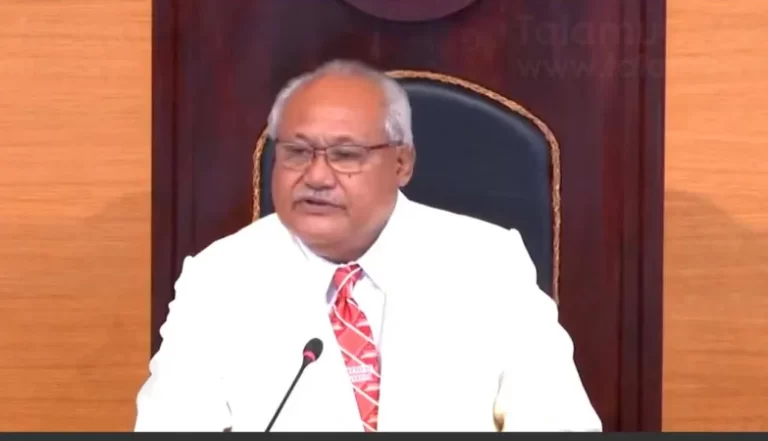
Samoa Parliament Speaker, Papali’i Li’o Tae’u Masipa’u has confirmed that parliament has the quorum to meet in its session that started today where the 2021/2022 Annual Budget and the Electoral amendments were tabled.

After announcing the seven seats voided by the courts for electoral malpractices, Papalii said that leaves parliament with 44 seats and the quorum is 23.

He also confirmed with the FAST Party holding 25 seats, parliament has the quorum to meet and conduct its business especially the budget which should be passed before the end of the month.

The Government has been operating on a three months emergency budget put in place by the caretaker government and that ends at the end of September.

Meanwhile, outside Parliament today former Prime Minister and HRPP Leader Tuilaepa Sailele Malielegaoi unsuccessfully negotiated with the police for their 18 MPs to enter the parliament grounds.

They were stopped outside the parliament grounds lined with police steel security fences.

Tuilaepa told the party supporters that parliament does not have a quorum and what parliament will pass will all be illegal and unconstitutional.

The Speaker however quoted Article 57 of the Constitution and 34 of the Standing Orders that clarifies parliament’s quorum.

Papali’i also referred to the HRPP Members who have yet to be sworn in and said that come a time when number of members of parliament are complete, he is seeking the spirit of forgiveness and cooperation to serve the country.

SOURCE: TALAMUA ONLINE/PACNEWS

Quarantine options for Pacific workforce

Australia is weighing up new quarantine arrangements for Pacific farm workers coming from countries with low coronavirus cases and high vaccination rates.

Pacific Minister Zed Seselja wants state and territory governments to consider on-farm or home isolation, as well as shortened quarantine periods.

“Tonga has had zero COVID cases. It is the definition of low risk and there are a number of Pacific nations that are very low risk,” he told Sky News on Tuesday.

“We’re seeing either very low rates of COVID in those countries or we’re seeing high rates of vaccination.”

There is 27,000 Pacific workers ready to be deployed in Australia with about 7000 of those fully vaccinated.

Senator Seselja said Fiji had experienced higher coronavirus cases but had now reached 96 percent single-dose vaccination coverage and 58 percent for two shots.

“Our arrangements for workers coming from overseas, as it will be for Australians coming home, will have to change over time,” he said.

“We’ll look for flexible options to keep the community safe but to recognise the relative risk factors.”

The Morrison government is aiming to bring in an extra 12,500 agriculture, accommodation, hospitality and aged care workers by March next year.

The Pacific Labour Scheme and Seasonal Worker Programme will now include accommodation businesses in all parts of rural and regional Australia.

Employers with good records will have SWP recruitment caps doubled, while the age limit of 45 will be scrapped across both programmes.

Workers will be allowed to complete training certificates while in Australia.

Labour market testing will now be valid for 12 months instead of six and postcode restrictions on some workers scrapped.

Businesses will be able to access both programs through a single application on a new website.

Pacific workers who have spent three years in Australia will be able to apply for another 12-month stay while coronavirus travel restrictions are in place.

More than 10,600 Pacific and Timorese workers have arrived in Australia since the two schemes resumed last month.

SOURCE: AAP/PACNEWS

Cook Islands woman nabbed in PNG, 150 C-4 plastic explosives seized

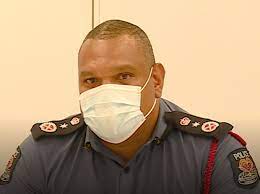
A 59-year-old widow from the Cook Islands was arrested with 150 pieces of C-4 plastic explosives in Milne Bay’s Alotau last Thursday, Papua New Guinea Police Commissioner David Manning says.

Police also seized 250 rounds of live ammunition of various calibres and a telescopic Winchester sniper rifle.

“The widow led police to the seizure of the explosives and igniters, ammunition and firearm.

“The widow from Rarotonga has been staying illegally in Papua New Guinea after her visa expired on 04 February last year,” Comm Manning said.

He said the uncovering of the explosives and ammunition followed a robbery that occurred in the widow’s house on 05 September.

“The investigation was led by the police intelligence officers from the National Capital District and the Southern mobile group special services division policemen who pursued the case despite the challenges,” Manning said.

“The widow lodged a police report after four men raided her home.

“She told police that three men walked into her house and demanded for firearms and ammunitions.

“They seized a Luger .22 rifle with a mounted Lithgow telescope and 20 rounds of Winchester 9mm Luger 147 Grain ammunition in a box.

“They also took the time to apologise to the widow before leaving.

“The woman reported the robbery the same Sunday.

“Police launched investigations that revealed the firearm and ammunitions taken were unregistered, with the firearm classified as dangerous with the capability of discharging several 9mm calibre rounds within seconds.

“Last Thursday, police recovered the firearm and ammunitions at about 10am in Mutuyuwa village in Alotau.”

Police returned to the woman, who upon further questioning, led them to a local construction company office where police recovered the explosives and live ammunition in the company safe.

“She did not want to explain how those dangerous explosives and ammunition were kept in the office,” Manning said.

“She has been arrested and charged with one count of being in possession of an unlicensed firearm, one count for being in possession of 20 rounds of 9mm ammunition and one count of being in the country with an expired visa.

“She has been charged with counts under the Firearms Act and one under the Migration Act.

“The widow was released on K5,000(US$1,425) police bail and will appear in court tomorrow in Alotau.”

“It is excellent work from the operation team in Alotau,” he said.

SOURCE: THE NATIONAL/PACNEWS

Fiji’s total population stands at 864,132

0

Fiji’s population is made up of 62 percent iTaukei people, 34.2 percent Fijians of Indian descent and 3.8 percent of other races, states the 2019-2020 Household Income and Expenditure Survey(HIES).

According to the study, Fiji’s total population was 864,132, of which 535,554 were iTaukei, 295,326 were Fijians of Indian descent and 33,251 were classified as “others”.

Of the total population, 434,914 were males and 429,218 were females.

The HIES stated of the 535,554 iTaukei people, 270,675 were males and 264,879 were females. For the Fijians of Indian descent, 148,603 were males and 146,724 were females.

The survey found that the Central division had a population of 361,459 people, of which 182,581 were females and 178,878 were males – with females outnumbering males by 1.1 percent. The Western division had a population of 330,434, of which 165,975 were males and 164,458 were females.

The study found that the Northern division had a total population of 135,965 with 70,078 males and 65,888 females.

The Eastern division had 36,274 people.

This was the first time, after the 2017 national census, that data on Fiji’s ethnic breakdown was released.

Data on Fiji’s ethnic composition was not released after the 2017 census and when quizzed in Parliament in March 2018, Attorney-General Aiyaz Sayed-Khaiyum said no data on ethnicity had been collected.

SOURCE:FIJI TIMES/PACNEWS

Westpac Pacific bank sale blocked by PNG regulator

Westpac’s exit strategy in the Pacific is in tatters, after the competition regulator in Papua New Guinea knocked back the $420 million(US$176 million) sale of its operations to Kina Securities in a final determination.

The decision means Westpac can no longer sell its PNG bank to Kina, given approval from the Independent Consumer and Competition Commission in PNG was required for the sale to go through.

The sale to Kina was announced last December, as part of Westpac’s strategy to simplify its operations and focus on banking in Australia and New Zealand. Kina was the only viable buyer for Westpac’s network in PNG and Fiji.

The deal would have combined PNG’s second and third largest banks, increasing Kina’s customer base from 165,000 to more than half a million. It would have left just two commercial banks – Kina, and the larger Bank South Pacific – on the island nation.

Both Westpac and Kina challenged a preliminary ICCC determination in July that the sale to Kina Securities, which is ASX listed, would substantially lessen competition.

“The ICCC has now released its final determination confirming it has denied authorisation,” Westpac said in a release to the ASX on Tuesday morning.

“Westpac acknowledges the ICCC’s determination and will continue to operate these businesses while it reviews the impact on the sale to Kina Bank.”

PNG’s biggest lender, Bank South Pacific, which is also ASX listed, argued against the deal. Its chief executive Robin Fleming said it “won’t necessarily stimulate innovation and product and service availability” and “I don’t think that is going to be healthy to have further concentration of two banks and less geographic spread and availability of services.”

Westpac CEO Peter King told an ICCC hearing in August that no other buyer for the assets had been identified during the sale process.

“Absent the option to divest to Kina, our only remaining option would be to continue to progressively scale down the business and seek an exit whenever possible,” he said.

After the draft determination, Kina Securities CEO Greg Pawson made a last-ditch effort to get the deal over the line, pledging to spend almost $10 million (US$7.3 million) on digital technology and expanding Westpac’s branch network by 50 per cent in the first three years after the acquisition. He also told regulators Westpac PNG’s existing senior management and executive roles “will be nationalised and given to PNG local talent, including the country head position”.

But this was not enough to change the mind of PNG’s regulators, who maintained their opposition to the transaction.

Kina acquired ANZ’s retail, commercial and small business lending operations in PNG in 2019.

SOURCE: AUSTRALIA FINANCIAL REVIEW/PACNEWS

Albacore Tuna are spawning less, and that’s worrying some south Pacific nations

Longstanding concerns over the South Pacific’s stock of albacore tuna have been raised once again at a recent meeting of the Western and Central Pacific Fisheries Commission’s (WCPFC)Scientific Committee.

The fall in albacore spawning stock in the region, which includes New Caledonia, Fiji, French Polynesia, Australia and Kiribati, could have a detrimental effect on the countries whose fisheries rely on it, the committee noted.

It “expressed great concern” over the tuna species’ projected status, as part of its advice to the WCPFC’s 17th annual session in November, when the commission is expected to agree to and establish a framework for fisheries in the region for the coming year.

Albacore, found in the Pacific, Atlantic and Indian oceans, are generally fished by longlining vessels in the South Pacific. Larger than skipjack and smaller than yellowfin, albacore is typically canned — often labelled “white tuna” in the United States — as its pale flesh is less desirable on the fresh or sashimi market. Canned tuna accounts for more than 60 percent of the global consumer market; canned albacore generally fetches a higher price than canned skipjack.

The stock assessment for albacore, performed by the Oceanic Fisheries Programme of the Pacific Community, found numbers have continued to decline but the stock has not been overfished. Though the size of the stock was not deemed critically low, the scientific committee has recommended that members of WCPFC — whose members make decisions either by consensus or by voting — agree to reduce longline catch numbers. Low recruitment — the number of fish reaching adulthood to enter a fishery — has contributed to the decline in numbers of the past five to ten years. Recruitment was particularly low in 2016 and 2017.

“So that’s now flowing through the data into the estimates on the status of the fishery. And that’s why it’s telling us that the stock is lower, and declining,” said Paul Hamer, principal fisheries scientist for the Pacific Community. The adult albacore stock remains above the critical mark but is trending downwards, with a relatively wide range of future possibilities.

The 17th regular session of the Scientific Committee for Western and Central Pacific Fisheries has found that adult numbers are continuing to decline for albacore, though there is no overfishing. WCPFC

Hamer said countries with albacore fisheries are concerned about the potential declines, though there remains a degree of uncertainty around albacore and its behavior. Estimates for 2020 ranges were cause for alarm, the committee stated in its Aug. 31 outcomes report.

“The one thing you have to acknowledge is that we don’t know everything about albacore. And there’s a lot of uncertainties that we need to build into the management advice,” Hamer said. “So when we do the stock assessment, we run a whole bunch of different models, which are alternative, plausible states of the stock.”

Though purse seine fishing (targeted netting) constituted 67 percent of the US$40.8 billion tuna industry in 2018, longline fishing for albacore remains important to several Pacific nations. The fleets of South Pacific nations catch albacore themselves, but also earn substantial amounts by selling fishing rights to their waters — to China, Japan, Korea and Taiwan — as well as through processing their catch in local facilities. Many of those countries are part of the Tokelau Arrangement, a subregional agreement to help manage tuna stocks in the South Pacific, signed by several members of the Pacific Islands Forum Fisheries Agency.

The importance of albacore varies from country to country. For Fiji, Vanuatu, Niue, Samoa and Tonga, it is the “backbone” of their fishing industries, according to FFA deputy director general Matthew Hooper. The Solomon Islands and Papua New Guinea also have significant albacore industries, but do not rely on it as much.

“Certainly, the albacore longline fishery is the most important tuna fishery for the more southern FFA member countries that don’t have a valuable purse seine fishery in their waters,” said Hooper. “They catch a bit of big eye and yellowfin in the longline fisheries, that is sometimes described as ‘the cream on top,’ but it’s not necessarily being targeted.”

In WCPFC’s southern area, 67,241 tons of albacore were caught in 2020, predominantly by longline. Just short of 260,000 tons of albacore were caught globally in 2018, according to a 2020 report “Netting Billions: A Global Valuation of Tuna,” though that number is dwarfed by the annual tonnage of skipjack and yellowfin.

During the pandemic, albacore has become even more important, as the market for more desirable fresh, sashimi-grade tuna, such as yellowfin, had been decimated by the cost of airfreight in the South Pacific. Albacore was susceptible to factors outside the water too, as it typically follows a boom-bust cycle, Hooper said.

“Things like low fuel costs and a high price for albacore on global markets … if you have that combination, then economic conditions can be reasonably good,” he said. “Then you’ll get a flood of vessels into a specific albacore fishery. Then the catch rates will decline. And you’ll go into a period … where a lot of domestic vessels from Pacific Island fleets actually end up tying up because it’s not economical for them to go fishing.”

Hooper said it was not ideal for fishery management and needs to be addressed soon.

“At present, it’s really the economics that are dictating whether boats are fishing or not. It’s not through strong proactive management by the countries involved,” Hooper said. “And that’s what members are really trying to turn around in the Western and Central Pacific Fisheries Commission. Everyone acknowledges that that’s going to require a cut in catches.”

Perhaps because albacore was often considered “the poorer brother of the species,” according to Hamer, less is known about the fish and its behaviour.

Pacific albacore is generally understood to exist within two stocks, north and south, though it is now understood there are more than two groups of the fish. But the behavior of albacore has been historically difficult to ascertain, in part due to albacore not being amenable to tagging. The fish has higher mortality rates when tagged.

“Albacore is a low value species,” Hamer said. “And it’s targeted by more of the southern island states … It’s not such a big fishery in the tropical zone. And maybe that’s a reason why there hasn’t been as much money put into research on albacore as the other species in the past.”

WCPFC’s assessment methodology for albacore is antiquated, said Glen Holmes, an officer for the Pew Charitable Trust’s international fisheries program. The current system starts with annual stock assessments followed by negotiations between fishery managers on fishing quotas, but uncertainty leads to vague assessments. Instead, Holmes and Hamer agree “harvest strategies” — which focus on making agreements ahead of time to enable dynamic responses to changes in stocks — is the best method of assessment.

“If the summation turns out to be wrong, there’s a potential that they are over-estimating the status of the stock,” Holmes said. The strategies method is “more proactive, less reactive,” because it’s a continuous method of monitoring, assessing and implementing changes in management of stocks.

Hamer said harvest strategies are the future, though the scientific committee is following interim strategies for the foreseeable future. WCPFC has had plans to adopt harvest strategies since 2015, but has yet to adopt the framework.

“It tries to activate the management and keep it going, rather than stalling all the time,” Hamer said. “Agree on the rules upfront before you play the game, is kind of what it’s about.”

Papua New Guinea recently urged WCPFC to implement harvest strategies, as the country was fearful it would lose prized Marine Stewardship Council certification. In July, the council warned 22 fisheries in the Western Central Pacific that they would have their certifications suspended if harvest strategies were not implemented by June 2023. If certification is suspended, more than 2.2 million tons of tuna could not be sold into the MSC-certified supply chain and brands could not use MSC’s eco-label on their products. Tuna from the Western Central Pacific accounted for 73 percent of MSC’s tuna certifications.

The 18th regular session of WCPFC is scheduled to begin 29 November.

SOURCE: HONOLULU CIVIL BEAT/PACNEWS
Jordan Mailata urges fellow Pasifika to follow dreams after NFL megadeal

0

Rugby league reject Jordan Mailata has set his family up for life after signing a four-year NZD$94 million (US$60 million) extension with the Philadelphia Eagles.

Five years ago Mailata was playing junior rugby league for the South Sydney Rabbitohs. But at 6-foot-8 and 142kg he was told he wasn’t fit enough to make the NRL, prompting his agent to contact NFL teams.

The 24-year-old was drafted in 2018 as part of the NFL’s international player programme, working his way up to become the team’s starting left tackle this year.

He spoke about the contract extension for the first time after today’s season-opening 32-6 win over the Atlanta Falcons, saying a big chunk of the money will go to his parents who were born in Samoa.

“Been wanting to buy my parents a house, so I can finally do that,” Mailata told reporters.

His father, Tupai, initially moved the family from Samoa to New Zealand with a plan to settle but unexpectedly ended up in Australia.

“There’s a family story behind that,’” said Mailata’s oldest brother Moana, who was born in New Zealand, when interviewed by the Philadelphia Inquirer in 2018.

“My cousin ran away from New Zealand. My dad’s sister said, ‘Go find her.’ My dad, a handyman, right? He should have private investigator [listed] as well. He found her.

“She stayed in Australia. He liked Australia so much he stayed too, sending for his own family. So Jordan and his younger brother, Millo, are the Aussies.

“I don’t know what I am, a bit mixed up — I guess I’m a Kiwi.”

Mailata’s position of left tackle is considered the most important in the offensive line. His job is to protect Eagles quarterback Jalen Hurts who starred in the win over Atlanta – completing 27 of 35 pass attempts for 264 yards and three touchdowns.

“I think it is a movie,” Mailata said.

“I’m just waiting for someone to say cut, then all the lights come down.

“Obviously, it’s an incredible feat. I’m extremely blessed to have gotten that extension.

“Everyone (at home) called me ‘Big Money’. I told them not to call me that. I’m trying to take it day by day … keep getting better, one per cent better every day. I strongly believe in that,”  he said.

SOURCE: TVNZ/PACNEWS

Samoa Speaker rejects swearing-in of HRPP members by Head of State

Samoa Speaker of Parliament, Papali’i Li’o Ta’eu Masipa’u has rejected Human Rights Political Party’s(HRPP) latest repeated request to be sworn in by the Head of State.

The Speakers letter dated Monday, 13 September was in response to the HRPP Leader’s letter of 07 September and a subsequent meeting with the HRPP leader and Party Secretary that again asked for their members to be sworn in by the Head of State.

On 07 September, the Speaker wrote to HRPP Leader that “The swearing in of your good self and members of the Human Rights Protection Party is to be done by the Speaker in accordance with Part 111 (14) (1) (2) Standing Orders of the Parliament of Samoa 2021.”

The Speaker also referred to Part 111 (14) (1) (2) of the Standing Orders for each member to take the Oath of Allegiance.

“The Oath shall be administered before the Assembly by the Speaker to each member, who shall subscribe the same at the first appropriate opportunity after the members’ election to the Assembly. No Member of Parliament shall sit or vote therein….until that Member has taken and subscribed the Oath of Allegiance.”

In his letter on Monday, Speaker Papali’i Li’o Ta’eu Masipa’u referred to the HRPP’s numerous broadcasts where they continued to oppose and refuse to accept the current FAST led government who were sworn in 24 May 2021.

“Your unceasing refusal to accept the swearing in which occurred on the mentioned date also means that you do not accept my position as Speaker.

“Because of these reasons, a swearing in of the Members of the Human Rights Protection Party will not take place at the Parliament sitting on Tuesday 14 September 2021.

“Since there will not be a swearing in on Tuesday, your members who have not been sworn in will not be allowed to attend the sitting.

“This decision is made in accordance with the Standing Orders of Parliament and the Constitution of the Independent State of Samoa 1960, as well as to maintain the honor of Parliamentary processes and procedures,” wrote the Speaker.

HRPP leader, Tuilaepa Sailele Malielegaoi in a live broadcast Monday, refused to accept the Speakers decision and said that they will attend the Parliament sitting.

“Our constituencies of over a hundred thousand people will escort us there,” he stated.

Other than refusing to allow HRPP Members into Parliament, the Speaker has also announced that the parliament grounds and premise will be secured and will not be open to the public today. This is with the exception of CEOs, media and some officials required for the parliament session.

Several HRPP members came to Parliament Monday before the start of the pre-sitting session where the Electoral Commissioner briefed the members on proposed amendments to the Electoral Act that will be tabled in today’s session.

Of the HRPP’s 25 members,seven lost their seats in the election petitions and will go back for by elections.

Meanwhile, the future of the HRPP members who have yet to be sworn in remain unclear.

The Speaker has stated his position that the law is silent on Members who have yet to be sworn in beyond the 45 days allowed under the Constitution. This is the first time such as happened in Samoa’s 59 years of independence and was due mainly to the four months long drawn out constitutional impasse due to the HRPP Leaders refusal to give up power.

There is also the option of seeking a court declaration whether the unsworn members can be sworn in outside the 45 days stipulated by the Constitution or they have to go back to the polls to see if these members still have the confidence of their constituents.

In another development, a procession of Human Rights Protection Party (HRPP) supporters led by the party leader Tuilaepa Sa’ilele Malielegaoi and other elected Members were stopped by Police Tuesday some 200 metres from Samoa’s Parliament.

A police officer, who was part of the police cordon on the main road not far from the Legislative Assembly, told the former Prime Minister and HRPP Members as well as their supporters that they were only doing their job to uphold the peace.

Speaking through a megaphone, the police officer told the crowd that the Speaker had already advised them of his position on their swearing-in as elected Members and they must do their part.

Tuilaepa, in response to the police officer, told the crowd that the country’s current political crisis is something that never happened during his Government and the Fa’atuatua i le Atua Samoa ua Tasi (FAST) Government is acting dictatorial on how it is addressing the issue.

He then made reference to his correspondence with the Speaker on the swearing of his party members and questioned what else did the new Government want as his party and their members have recognised the new administration.

Referring to the first sitting of the XVII Legislative Assembly on Tuesday morning, the HRPP leader said they needed to get into the Parliament in order for them to be sworn-in and appealed to Police who blocked the road to led them through.

“What a sad day for Samoa,” said Tuilaepa who described the move by the Police as akin to “Hitler”.

A police officer later told the crowd that they take on the grievances expressed by the former Prime Minister and they will relay it to the authorities, before urging the supporters and the elected unsworn Members to return to the party’s Petesa headquarters.

Tuilaepa and his unsworn Members all wore white suits and could be easily distinguished from the crowd of their supporters as they led the march to the Parliament, before they were stopped not far from the House.

The constituencies of Lepa and Sagaga No. 1 led the procession of supporters from town to the party’s headquarters in Petesa. But this went against the notice issued by the Speaker of the House, Papalii Lio Masipau which bans members of the public and uninvited guests from going to Mulinu’u after threats were made, which compelled the Police to lockdown parts of the Mulinu’u peninsula restricting public access to the area.

The Police also released a statement Monday pointing restrictions to the area following the statement issued by the Speaker’s Office.

The restricted areas include the Tofilau Eti Alesana building, the Parliament House, the lawn in front of parliament and any other buildings, enclosures or open spaces that are considered a compound of the Legislative Assembly.

Amidst the commotion on the main road in Mulinu’u not far from the Parliament, the Legislative Assembly has got its first sitting of the XVII parliamentary term underway.

SOURCE: TALAMUA ONLINE/SAMOA OBSERVER/PACNEWS

Stay connected

529FansLike
172FollowersFollow
156SubscribersSubscribe
- Advertisement -