
Home Blog Page 1136

Australian nuclear submarine plan ‘wrong direction at the wrong time’, Nobel prize-winning group says

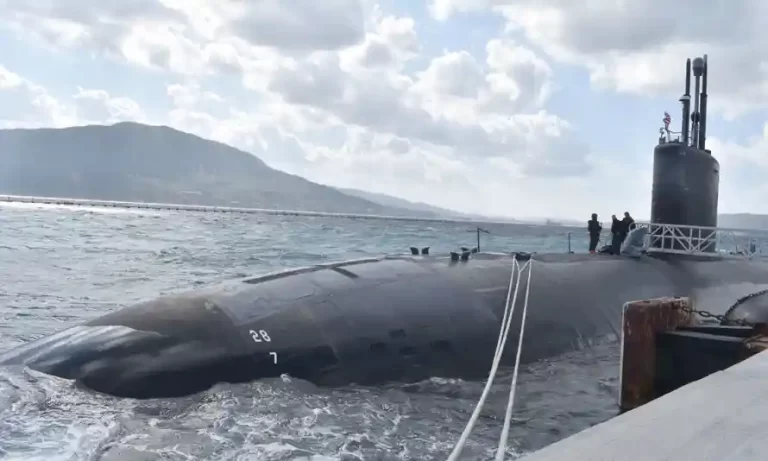
Australia’s decision to build nuclear submarines will isolate Australia from its regional neighbours who have, for decades, pursued a nuclear-free Pacific, the International Campaign to Abolish Nuclear Weapons (Ican) has said.

While the Australian government and defence force have insisted the submarines will be nuclear-powered, and never nuclear-armed, Ican, the winner of the 2017 Nobel Peace Prize, argues that a military nuclear reactor built in Adelaide was a “foot in the door” towards weapons development.

“As the world is moving towards making these weapons illegal, this is the wrong direction at the wrong time,” Gem Romuld, Australia Director of Ican, told Guardian Australia.

Pacific anti-nuclear campaigners have reacted with disapproval, while the New Zealand government says Australia’s nuclear submarines will be banned from its nation’s waters.

Romuld said the decision to build and operate nuclear submarines, part of the broader Aukus security alliance announced by the U.S, UK and Australia on Thursday, had “no social licence”. She also warned it could make Adelaide a target for attack.

“This is not something the Australian people have agreed to,” she said.

“Important questions remain over construction of the submarines and the potential imposition of military nuclear reactors on Adelaide or other cities, making construction sites and host ports certain nuclear targets.

“Military nuclear reactors in Australia would present a clear nuclear weapons proliferation risk and become potential sites for nuclear accidents and radiological contamination long into the future.”

The Guardian understands Australia does not plan to build the submarines’ nuclear reactors domestically. Instead, the reactor modules would be delivered, sealed, to Australia from either the U.S or the UK, where they would be installed into the vessels.

But Romuld said the nuclear submarine decision was “alarming” because it represented an escalating nuclearisation of Australia’s military capabilities; increasing military ties with nuclear weapons powers the UK and U.S; and a “shift towards nuclear interoperability at a time when the world has moved towards making these weapons illegal”.

In January this year, a global treaty on the prohibition of nuclear weapons (TPNW), came into force, outlawing parties to the treaty from developing, testing, producing, possessing, or stockpiling nuclear weapons.

It is not supported by any of the world’s nine nuclear-armed states. Australia, also, does not support the treaty, relying on the deterrent effect of the U.S “nuclear umbrella”.

Australia, however, is a party to the Treaty of Rarotonga, which establishes a nuclear weapons free zone in the South Pacific.

Prime minister Scott Morrison said the Aukus security alliance, and the adoption of nuclear submarines, was not a step towards nuclear weapons development.

“Let me be clear, Australia is not seeking to acquire nuclear weapons or establish a civil nuclear capability.

“And we will continue to meet all our nuclear non-proliferation obligations.”

A joint statement from Morrison, U.S president Joe Biden, and UK prime minister Boris Johnson, said: “the development of Australia’s nuclear-powered submarines would be a joint endeavour between the three nations, with a focus on interoperability, commonality, and mutual benefit”.

“Australia is committed to adhering to the highest standards for safeguards, transparency, verification, and accountancy measures to ensure the non-proliferation, safety, and security of nuclear material and technology.”

The chief of the Australian defence force, General Angus Campbell, said Australia’s “commitment to our obligations under the non-proliferation treaty are absolute”.

But Romuld argued Australia adopting nuclear-powered submarines “abandons the direction that our neighbours are taking in pursuing non-nuclear armed peace and stability in the region”.

“We note that the prime minister has clearly stated that this move does not signal future consideration of nuclear weapons. But he must match this with action – Australia must sign and ratify the TPNW now – to not do so leaves the door open for a future stealthy slide towards nuclear weapons.”

New Zealand has already said Australia’s nuclear-powered submarines will be banned from its waters. Wellington has maintained a ban on nuclear-powered vessels since 1985, a response to French nuclear testing in the Pacific.

“New Zealand’s position in relation to the prohibition of nuclear-powered vessels in our waters remains unchanged,” New Zealand prime minister Jacinda Ardern said.

Across the Pacific, where thousands live daily with the legacy of nuclear testing and disposal of nuclear waste, there was disappointment.

Reverend James Bhagwan, the general secretary for the Pacific Conference of Churches, said: “Shame Australia, Shame. How can you call us your ‘vuvale’ when you know your ‘family’ stands for a nuclear-free and independent Pacific?”

Ralph Regenvanu, Vanuatu’s former foreign minister and current opposition leader, said of Australia’s decision: “We continue to be disappointed. And more fearful for our Pacific future”.

Three weeks ago, to mark international day against nuclear tests, the Fijian prime minister Frank Bainimarama told a regional forum the threat of nuclear proliferation remained a “clear and present danger”.

“A nuclear-free Blue Pacific must remain our legacy,” he said.

SOURCE: THE GUARDIAN/PACNEWS

Australia keen to extend PacificAusSports partnership beyond its current funding cycle: Minister Seselja

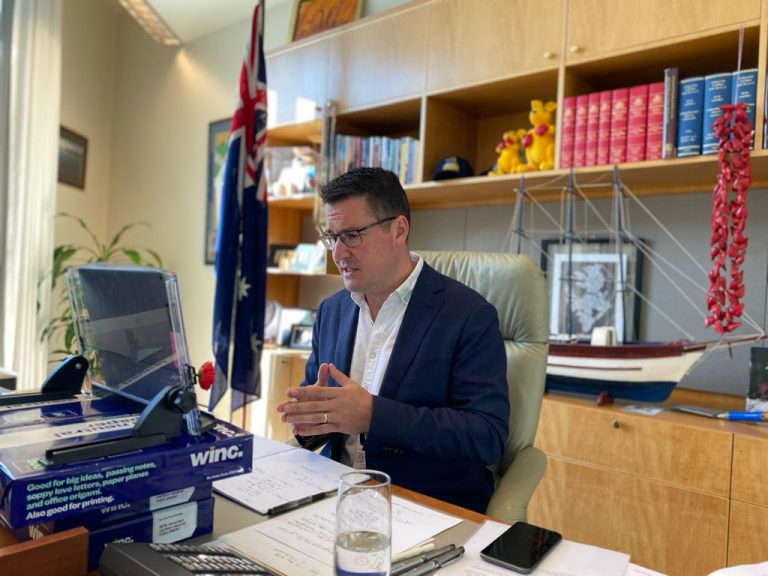
Australian Minister for International Development and the Pacific, Zed Seselja says the PacificAusSports Olympic and Paralympic partnership was set up to provide elite level pathways for both potential Olympic and Paralympic athletes.

“One of the facts about the Pacific is that there is extraordinary sporting talent available and one of the things that Australia has developed over the last few decades is a lot of great coaches and some amazing facilities.

“So to be able to bring those Pacific athletes and give them in many cases for the first time, the opportunity to have that high level coaching and to have access to these higher level facilities is key to the programme. I think we saw some really good outcomes as a result of that with many going on and competing at the Olympics and the Paralympics,” Seselja told PACNEWS in an interview earlier this week.

Seselja has indicated that Australia will extend the PacificAus Sports initiative beyond its current funding cycle, saying it is ‘committed for the long haul’.

“I’m very hopeful that what we’ll see is a continuation into the future of the Pacific, our sports programme. Of course, decisions need to be made by the government in coming years for further funding rounds.

But I think what we are likely to see and what I genuinely hope is that we will build on what I think has been a very, very successful programme so far,” Seselja told PACNEWS.

He said there’s something very special about the Olympics and the Paralympics, is that it lifts the spirits.

“We know that sports like rugby and rugby union and netball, which, of course are either professional or semi-professional, get a lot of attention by the Olympics, which is great, because you get some of the world’s best athletes, but you also get sports that don’t always get a high profile, and people have opportunities to come and compete.

“So I think there is something very special about the Olympics and Paralympics. Certainly in Australia, we know that during this challenging pandemic, we took a lot of pleasure watching our athletes but also with a keen eye on those specific athletes doing great things as well,” he told PACNEWS

Seselja said Australia supported athletes from Pacific nations to go to the Olympics and Paralympics – and it paid off.

“Some amazing performances, I think there was something like five national records from Pacific athletes.

“We saw some extraordinary individual performances. So I think we can all be very pleased that the support of Pacific sports for these pathways for Paralympian’s and Olympians has been a great success. And I hope it’s something that we can continue to work on and continue to build on for future Olympics,” Seselja explained.

As an Australian basketball fan, one of the highlights of the Olympics was watching the Boomers finally get a medal.

“So seeing Patty Mills in the team was just a whole lot of fun but from PNG, who I met, who is a long jumper, and did an extraordinary job really achieved great things.

“I think PNG would be very proud and I now see Bulimairewa, who I also met who was at the Paralympics. He’s from Fiji and he is a Paralympic javelin thrower. He lost his leg and taught himself javelin on YouTube and came to Australia and had some opportunities to be coached for the first time and you know, it was great to see him competing,” he said.

Seselja sees the 2032 Brisbane Olympics as “being at the heart” of Australia’s relationship with Pacific island nations.

“I think it’ll be a showcase for Australia, of course, but also for our family in our near region and the Pacific.

“We see great opportunities coming from the Brisbane Olympics. We know that the ties between Australia and the Pacific are very close, I think they’re particularly keenly felt in places like Brisbane and Queensland.

“Having it in Brisbane, where there is such a strong Pacific presence already, will just highlight to the rest of the world that yes, you are coming to Australia, but you are experiencing these Olympics, which are very much the Olympics for our immediate region,” Seselja told PACNEWS

SOURCE: PACNEWS

Brigadier General Jone Kalouniwai is the new Commander of Fiji’s Miilitary Forces

Brigadier-General Jone Kalouniwai is the new Commander of the Republic of the Fiji Military Forces(RFMF), taking over from Rear Admiral Viliame Naupoto.

This was confirmed by the Fijian Government following a meeting by the Constitutional Offices Commission in Suva today.

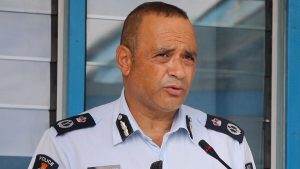
Former military man Brigadier-General Sitiveni Qiliho remains as the Commissioner of Police, and Francis Kean as Commissioner for Fiji Corrections Service.

Jeanette Emberson has been appointed the new Secretary-General to Parliament.

The appointments were made by President Major General Ret’d Jioji Konrote on the advice of the Constitutional Offices Commission, and appointments made after an exhaustive process of open merit recruitment.

All of the appointments will be for a term of five years

Meanwhile, Police Commissioner Brigadier-General, Sitiveni Qiliho says his re-appointment is an opportunity for him to achieve the goals he has set for the Force.

Speaking to FBC News following his appointment, Qiliho said he was pleased that the Constitutional Offices Commission recognised his achievements.

The Police Commissioner said his focus would be the restructuring of the Fiji Police Force, national security and COVID-19 operations.

“We have achieved a lot in the last five years and some of those roll over into the next couple of years like the re-structure and some of the plans in place. So it gives me another opportunity to complete that process.”

Qiliho said he is ready to work with the newly appointed RFMF Commander Brigadier General Jone Kalouniwai in terms of national security.

SOURCE: FIJI TIMES/PACNEWS/FBC NEWS

Samoa Supreme Court orders HRPP members to be sworn in

Samoa Supreme Court has ruled in favour of the Human Rights Protection Party (HRPP) and ordered the Speaker of the House to swear in the party’s members who were elected in April’s national poll and have not been knocked out by post-election legal challenges.

The orders conclude a hearing of the declaratory order application filed by HRPP members against the Speaker of the House, Papali’i Lio Masipau for not allowing the HRPP to be sworn in.

The order was handed down by Chief Justice Satiu Simativa Perese, who was accompanied on the bench with Supreme Court Justices, Niaava Tuatagaloa Keli and Tologata Leilani Tuala-Warren.

“The [Speaker of the House] has an obligation to administer the oath of allegations under standing order 14,” the decision read.

“The respondent is obliged to carry out the obligation forthwith to fulfil the requirements of Article 61 of the Constitutions.

The costs are reserved and the court will issue its reasons as soon as possible.

“It is the court’s role to interpret and protect the constitution,” the Justices said.

‘We do not accept that duly elected Members of Parliament pursuant to the Constitution to be refused to attend Parliament and be duly sworn in and such denial cannot be protected by the principle of non intervention, said the Chief Justice.

“The matter was heard before the court on the pickwick basis, given the “urgency and importance.”

A total of 18 HRPP members were unsworn due to a decision taken by the Speaker of Parliament, Papali’i Li’o Ta’eu-Masipau.

The Speaker of the House, informed the former ruling party of his decision to disallow their unsworn Members from this week’s parliamentary sitting in a letter delivered on Monday: the eve of the new parliamentary term.

HRPP initially secured 25 seats in the April election but seven by-elections have been called after the party’s Members-elect had their victories challenged in court, thus voiding their elections and giving rise to by-elections.

The party this week protested the exclusion of its representatives from Parliament on Tuesday by the Speaker, who had refused to swear-in their elected representatives.

The decision left 18 HRPP members outside the Parliamentary precinct amid a heavy Police presence blocking their entry to the Legislative Assembly, as proceedings, including the tabling of the national budget, continued.

In a letter to the HRPP’s leader, former Prime Minister Tuilaepa Sa’ilele Malielegaoi, dated 13 September 2021, Papalii gave his reasons for rejecting the request from the party to take their oath of allegiance for office when Parliament sat this week.

The party had previously sought to be sworn into Parliament by the Head of State, not the speaker himself, in contravention of standing orders.

Papalii’s letter noted the party’s numerous broadcasts showed their continual opposition and non-acceptance of the current Government led by the FAST which was sworn-in on 24 May 2021.

“Your unceasing refusal to accept the swearing-in which occurred on the mentioned date also means that you do not accept my position as Speaker,” he said.

“Because of these reasons, a swearing-in of the Human Rights Protection Party will not take place at the Parliament sitting on Tuesday 14th September 2021.

“Since there will be no swearing-in on Tuesday, your Members who have not been sworn in will not be allowed to attend the sitting.”

The Speaker said his decision was made in accordance with Parliamentary Standing Orders and the constitution.

Tuilaepa deemed the reasons a “weak excuse” and said that the party would be mounting a legal challenge.

SOURCE: SAMOA OBSERVER/PACNEWS

Changes to Australia’s Pacific labour programmes welcomed

Changes to Australia’s Pacific worker programmes have been welcomed but questions remain over the pathway to permanent residency.

The Australian government hailed their reforms to the labour programs as a “new era”, claiming they are designed to reduce red tape for employers.

It announced the changes on Tuesday and said they would streamline the application process for the two labour programmes, the Pacific Seasonal Worker program and the newer Pacific Labour Scheme, with Australian employers able to to join both programmes through a single application.

“We know that Pacific workers have been filling a lot of skill shortages in regional Australia. We know that they’ve been an absolute lifeblood for our farmers, but also in other areas such as aged care and accommodation,” Australia’s Minister for the Pacific and International Development Zed Seselja told Pacific Beat.

“And what we’re going to do, what we’re announcing today is to improve that to streamline that,” he said on Tuesday.

The streamlining involves a commitment to faster application response times and a greater allowance for employers to recruit under both the seasonal worker programme (SWP) and the PLS, which provides workers in areas like meat processing and aged care.

The government aims to safeguard worker welfare with more funding for Pacific Labour Facility staff to be closer to workers and employers, and for the Fair Work Ombudsman to do education and compliance.

Recruitment caps for certain employers hiring seasonal workers will be doubled and the 45 year age limit will be removed for PLS workers.

Andrew Coldbeck, the founder of Northern Territory employment agency Job Shop, which manages many Pacific workers, welcomed the reforms, including the age limit removal.

“We had some candidates for PLS knocked back because of their age but they had outstanding experience and they were working in the hospitality sector so it’s not as, they weren’t gonna go out and pick melons,” he told the Northern Territory Country Hour.

“They were hired for their other expertise and experience so aged over 45, we welcome that as well”.

Andrew Coldbeck is also in favour of the new scheme’s emphasis on upskilling and career development.

“I like the add-on skills that they’re talking about…training, a lot of the seasonal workers respond really well to the tasks that they’re given and show initiative and it’s really good to recognise that by upskilling them and helping them get qualifications so I certainly like that,” he said.

One of the major criticisms of the existing Pacific labour programs has been a lack of pathways to permanent residency in Australia, particularly when it was announced as part of the recent Agricultural visa for South-east Asian workers.

But pathways to permanent residency for Pacific workers are still absent from the reforms announced this week.

Ryan Edwards, the Deputy Director of the ANU’s Development Policy Centre, said while he’s broadly supportive of the changes, he thinks the focus on upskilling rather than permanent residency pathways is strange.

“I find it interesting that the emphasis there was on career pathways for workers. But once you start putting skill levels into there, and certificates, then it makes people eligible for the skills visas, which this seems like a bit of a longer in a roundabout way to build in permanent pathways into the scheme,” he said.

“Whereas we could be doing that in more efficient and direct ways”.

Pacific Minister Zed Seselja said the scheme will remain without the permanent residency pathway for now.

“No decisions have been taken on that. I have an open mind on that question.”

“”But what we are doing is certainly talking very closely to representatives of our Pacific island family, about what their needs are as well. So those things will be considered,” he said.

The Australian Government says further reforms will be announced later in the year.

SOURCE: ABC/PACNEWS

Pacific Minister Seselja pleads with Micronesian Leaders not to leave the Forum

Australian Minister for International Development and the Pacific, Zed Seselja,has called on Micronesian Leaders not to leave the premier political body- the Pacific Islands Forum saying the region is ‘stronger together’.

Seselja made the call after the recent move made by the Micronesian Leaders’ Summit last week to set up their own interim secretariat in Nauru- signalling the withdrawal of the five Micronesian countries from the Forum.

Seselja in an interview with PACNEWS said the Australian Government’s position is to see for the Pacific Islands Forum to continue as a unified organisation.

“Australia, of course, takes the concerns of our Micronesian friends very seriously. And we’ve been engaging, we’ve been listening to their concerns.

“What my message to them has been and my message continues to be is that the region is stronger together. And what I would like to see what the Australian government would like to see is for the Pacific Islands Forum to continue as a unified organisation, to look at what reforms are reasonable and necessary to make sure that all nations feel included in that decision making process,” Seselja told PACNEWS

Seselja said the voice of the Micronesian sub-region is crucial, coming at a time when the Pacific Islands Forum is celebrating 50 years of regionalism and regional solidarity.

“But going forward, we would like to see the Pacific Islands Forum continue together because we think that voice is very important. It’s not just important here, but it’s important on an international scale as well,” Seselja told PACNEWS.

In the 20th Micronesian Presidents’ Summit communique signed by the five presidents – President of Kiribati, Taneti Maamau; President of Federated States of Micronesia David Panuelo; President of the Republic of Marshall Islands, David Kabua, President of Palau, Surangel Whipps Jr, and Nauru President Lionel Aingimea, discussed the establishment of the Secretariat.

“Presidents acknowledged the importance of positioning the Micronesian subregion at the international level,” the communique stated.

In February, the Micronesian leaders announced that it is quitting the Pacific Islands Forum after the selection of former Cook Islands Prime Minister Henry Puna, as the Forum Secretariat’s Secretary-General.

The leaders claimed that due to an unwritten agreement, it was the sub-region’s turn to provide the next SG.

While there is an ongoing discussion among the leaders regarding the rift, the Micronesian leaders during their meeting said Micronesia is still leaving the Forum.

Fiji’s Prime Minister Voreqe Bainimarama last month used his inaugural speech as the new chair of the Pacific Islands Forum to offer an apology to the Micronesian members of the Pacific grouping who were angered by the way the Forum rejected their nominee for the Forum Secretary-General’s job.

“I offer you my deepest apology,” said Bainimarama at the handover ceremony done virtually at the start of the 51st Pacific Islands Forum Leaders’ retreat in August.

“We could have handled it better,” he added.

SOURCE: PACNEWS

Fiji records 146 new cases of COVID-19, one death reported

Fiji has recorded 146 new cases of COVID-19 and one new death reported Wednesday, increasing the total number of cases to 49,320 and 538 deaths since the outbreak that started in April.

Permanent secretary for Health, Dr James Fong said 69 cases are from the Western division, 68 cases are from the Central Division in Vitilevu, Fiji’s main island and nine cases are from the Eastern division.

“There have been 217 new recoveries to report since the last update, which means that there are now 12,870 active cases. 1,328 active cases are in the Central Division, 11,226 active cases in the Western Division, 2 active cases in the Northern Division (Macuata), and 314 active cases in the Eastern Division (all in Kadavu).

“There have been 49,320 cases during the outbreak that started in April 2021. We have recorded a total of 49,390 cases in Fiji since the first case was reported in March 2020, with 35,605 recoveries,” Dr Fong said.

He said there is one COVID-19 death reported from the Central division.

“There have been eight more deaths of COVID-19 positive patients. However, these deaths have been classified as non-COVID deaths by their doctors. The doctors have determined that these deaths were caused by serious pre-existing medical conditions and not COVID-19.

“There have now been 540 deaths due to COVID-19 in Fiji, with 538 of these deaths during the outbreak that started in April this year. As of 10 September, the national seven day rolling average of COVID-19 deaths per day is two. The seven day rolling average for COVID-19 deaths per day in the Central division is one and in the Western division is one.

“We also have recorded 374 COVID-19 positive patients who died from the serious medical conditions that they had before they contracted COVID-19; these are not classified as COVID-19 deaths,” said Dr Fong.

He said there are currently 119 COVID-19 patients admitted to hospitals in Fiji.

“33 patients are admitted at the Lautoka Hospital, six patients are admitted at the FEMAT field hospital, and 80 admitted at CWM hospital, St Giles, and Makoi.

“Five patients are considered to be in severe condition, and four are in critical condition,” said Dr Fong.

A total of 351,192 samples have been tested since this outbreak started in April 2021, with 394,053 tested since testing began in March 2020.

“The national 7-day average daily test positivity is 12.6 percent, which is on a downward trend but still indicating a high level of community transmission,” said Dr Fong.

As of 14 September 577,005 adults in Fiji have received their first dose of the vaccine and 363,420 have received their second doses.

“This means that 97.5percent of the target population have received at least one dose and 61.9 percent are now fully vaccinated nationwide.

“Over the last two weeks, the team has been validating its data to ensure that the level of protection across Viti Levu is equitably distributed. We are currently validating areas of concern and we will be outlining further measures to reduce the risk that travellers will place on these areas of concern.

“We will also be reviewing other restrictions currently in place and a formal announcement will be made today on the lifting of borders and other measures.

Until this announcement is made all current measures remain in force,” said Dr Fong.

SOURCE: PACNEWS

Solomon Islands PM urges journalists to be fair when reporting on corruption

Solomon Islands Prime Minister Manasseh Sogavare urges journalists to be fair and accurate when reporting integrity and corruption issues.

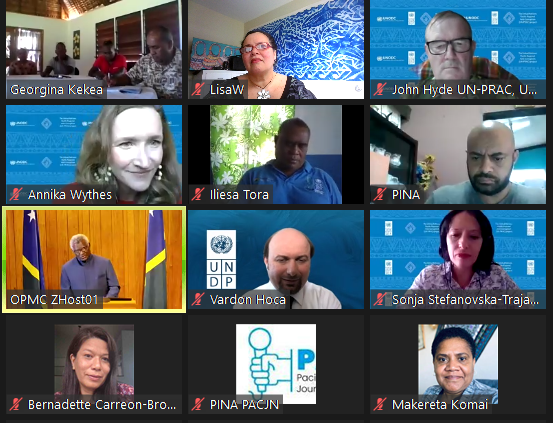
Sogavare made the call in his address to Pacific Media Chief executive officers and owners attending the virtual Reporting on Integrity and Anti-Corruption summit at the Tavanipupu resort in East Guadalcanal Wednesday.

He said it is important for journalists to understand the functions of certain institutions to be able to report fairly on corruption issues.

“In order to be fair and accurate when reporting and exposing integrity and corruption issues, it is absolutely crucial that you must first understand how these institutions operate and how they relate to other institutions within the government.

“Understanding their powers is extremely important, especially within the international, regional and national frameworks,” he said.

The Prime Minister assured the government is also committed to addressing corruption through its anti-corruption institutions such as that Solomon Islands Independent Commission Against Corruption (SICAC).

“We as a government is committed to making sure that SICAC is effective. We also, like other countries in the Pacific, we also have other integrity institutions, such as the Leadership Code Commission, Ombudsman Office, Office of the Auditor General amongst others.

“Whilst having these institutions are very important, it is also equally important that the public has to know how these institutions work,” Prime Minister Sogavare said.

Sogavare has also encouraged the media who plays the role as the fourth estate to report fairly and accurately on corruption issues.

The two-day summit is co-hosted by the Media Association of Solomon Islands (MASI) from Tavanipupu Marau, Guadalcanal Province, with support from Pacific Islands News Association (PINA), United Nations -Pacific Regional Anti-Corruption(UN-PRAC) and Pacific Anti-Corruption Journalists Network (PACJN).
In a statement, MASI said the summit will enable Pacific media CEOs and owners to understand the role of United Nation Convention Against Corruption and UN-General Nations Assembly Special Session (UNGASS) and the Sustainable Development Goal 16 in boosting Pacific anti-corruption co-operation and promoting the Teieniwa Vision, share vision experiences and challenges reporting on anti-corruption.

It will also provide leadership in promoting and delivering anti-corruption reporting in the Pacific and increase the capacity of media to monitor and report on corruption.

Participants will have a better understanding of the roles of anti-corruption bodies and instruments and how these can assist journalists to report on corruption.

Media Companies represented at the conference from Solomon Islands are SIBC, Solomon Star, Island Sun, Isles Media, Media One, Barava FM and SBM. MASI thanks PINA and the different UN stakeholders for the support.

The summit ends today…PACNEWS

SOURCE: SIBC/PACNEWS

Pacific Forum Members hold third briefing with Japan regarding Fukushima treated nuclear wastewater

Pacific nations continue to raise questions and concerns in closed briefing sessions around plans by Japan to discharge over a million tonnes of treated water from the Fukushima Daiichi Nuclear Power Plant into the Pacific Ocean.

The Government of Japan committed to ongoing dialogue with Forum Members as a priority follow up to the PALM9 Summit in July. This followed Japan’s announcement in April of plans to begin discharge in 2023, for a period of up to 40 years. The announcement drew strong global response, including from the Forum Chair and Leaders.

In his opening comments at the third briefing on Tuesday, Secretary General of the Pacific Islands Forum Henry Puna noted the issues require “open and frank consultation” along with sustained dialogue at the political and technical level.

Japan officials presented a status update on the ALPS (Advanced Liquid Processing System) Treated Water, interim measures regarding the planned discharge, and outcomes of the latest International Atomic Energy Agency (IAEA) visit to Fukushima.

While appreciative of the information being shared by Japan, Secretary General Puna reiterated the region’s unequivocal need for information as being key to safeguard the Blue Pacific as a nuclear-free zone. “I appeal to the Government of Japan to continue to share the relevant information in its totality, and within agreed timelines.”

“Importantly for us in the Blue Pacific, our fears really lie in the transboundary nature of the impacts. We require nothing less than full and complete disclosure of all information and evidence to enable us to fully understand the nature and extent of the impact, and to enable us to make a comprehensive and unbiased assessment of the impacts of the proposed ALPS water discharge.”

As reiterated by Forum Foreign Ministers on 27 July, the region is actively pursuing efforts to advance Forum Leaders’ commitments to international consultation, international law, and independent expertise to provide guidance and verifiable scientific assessments. To accelerate efforts, the Forum will engage independent experts to support the region’s efforts over the next months.

Thanking the Government of Japan, Secretary General Puna said he is hopeful there will be ways to address Pacific concerns to reach “solutions that are based on science, and consistent with legal and moral obligations.” .

SOURCE: PIFS/PACNEWS

Over 100 Pasifika overstayers deported last year during pandemic

0

Deportation of Pacific overstayers is continuing despite the global Covid-19 pandemic putting pressure on island nations.

Fiji has been particularly ravaged by the virus of late, with hospitals overrun with infected patients.

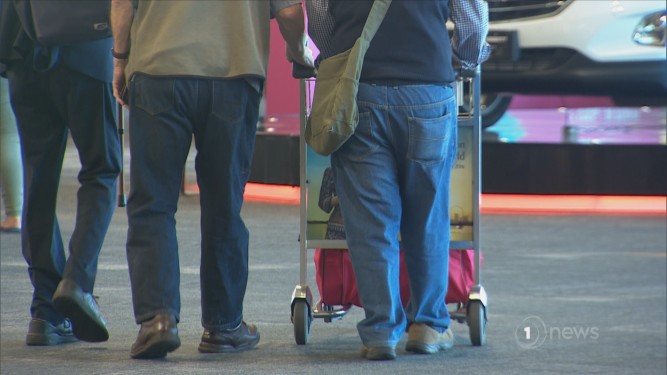
And yet New Zealand, with its largely successful Covid response, continues to deport members of the Pasifika community – with 17 people sent back to Fiji this year.

Members of the Pacific Leadership Forum say it is unacceptable.

“Countries like Fiji, when they are being hammered with Covid and now New Zealand is deporting their people back there – it’s like throwing somebody in the lion’s den,” Makahokovalu Pailate said.

Figures obtained by 1News reveal around 60 Pasifika were picked up and deported by Immigration New Zealand since the pandemic took hold in 2020 – including more than half to Samoa and Tonga.

Add to that what officials call “self-deportation” and the total number of deportations rise to 144 since last year.

Asked if it was acceptable to be deporting people during a global pandemic, Covid-19 Response Minister Chris Hipkins said “ultimately different countries will make different decisions on that”.

Experts here warn New Zealand should take a different stance.

“I think we need a temporary amnesty on deportations to avoid spreading anxiety in the Pacific community or any migrant communities in New Zealand at the moment,” epidemiologist Professor Michael Baker said.

At Parliament last month, one man described how his family was forced to flee immigration officials in May last year.

“One of my kids who was with us that day is a New Zealand citizen but he had to run with us that day in fear, panic and tears,” Haniteli Taufalele said.

The latest outbreak centred around the Pacific community has highlighted the need for trust in the system.

“Because we are still deporting people, overstayers will keep hiding, they won’t come out,” Pailate said.

Green Party MP Teanau Tuiono agrees and is calling for the Government to grant permanent amnesty.

“Amnesty for overstayers and pathways to residency can also be a public health response … because you remove all those barriers,” Tuiono said.

The Government’s recent apology over the Dawn Raids is viewed by some as a missed opportunity for amnesty.

Immigration Minister Kris Faafoi said considerations for overstayers, including amnesty, are part of an immigration review expected by the end of the year.

“This is my challenge to the Honourable Minister – make a decision. People’s lives matter in this situation; you can’t keep saying ‘soon’, ‘soon’, ‘soon’,” Pailate said.

SOURCE: TVNZ/PACNEWS

Stay connected

529FansLike
172FollowersFollow
156SubscribersSubscribe
- Advertisement -