Home Blog Page 1131

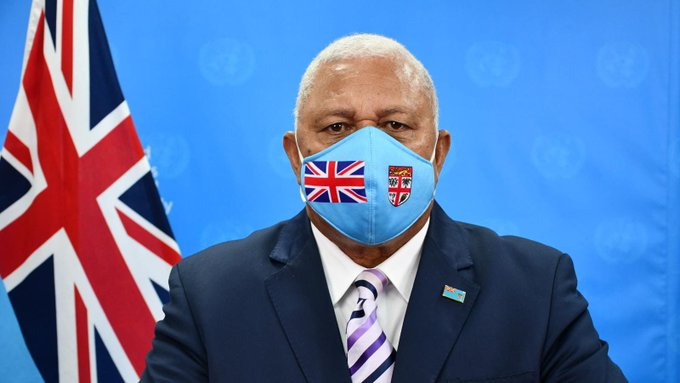
Firm commitment to transformative action for resilient recovery: Fiji PM Bainimarama

Nature’s role in growing Fiji’s socio-economic development cannot go unnoticed as efforts are made to mitigate against the impact of climate change and warm ocean levels.

This message was highlighted today by Prime Minister Frank Bainimarama in a virtual message to the global community at the ‘Transformative Action for Nature and People High-level’, an event held along the margins of the United Nations General Assembly 76 session (UNGA 76).

Speaking on the important role that nature plays in different communities, and in particular, in Fijian communities, the Prime Minister highlighted that nature’s value is non-negotiable and it provides Fijians with culture and community.

“It supports jobs and industry. It builds resilience and underpins every aspect of sustainable development. And it is key to an inclusive and sustainable pandemic recovery.”

“Battered by COVID-19, as well as the stronger storms and the rising seas brought by climate change, Fijians are drawing hope from a whole-of-nation effort to build a more nature-positive society.”

The High-level event provided an opportunity for Government leaders and partners to present and pursue transformative actions and financing to reverse biodiversity loss by 2030. This High-Level Event calls for urgent actions which protect, conserve, enable sustainable use and restoration of biodiversity.

Prime Minister Bainimarama called for far greater global solidarity needed to protect the environment and biodiversity. He said that to build back better from the COVID-19 pandemic we must restore biodiversity and recommit to a 1.5 Celsius or less pathway.

“Humanity is not above nature, we are a part of it. The arrogance of thinking otherwise is costing us dearly. Now, we must appeal to nature to save us from a crisis of our own creation, a sixth mass extinction event produced by our appalling degradation of the climate. Without urgent and drastic action, the consequences will be irreversible.”

Prime Minister Bainimarama outlined the decisive actions taken by Fiji to deliver its commitment to climate adaptation and oceans conservation.

“Fiji is committed to the 100 per cent sustainable management of the ocean, with 30 percent declared as marine protected areas. We will be a net-zero society by 2050, with drastic emission cuts secured by 2030. We have banned deep-seabed mining in Fijian waters. We are committed to planting 30 million trees and dramatically improving mangrove cover in our coastal regions. We have banned single-use plastics and styrofoam.”

“We are bringing traditional leaders, women, youth and people living with disabilities into the fold of our climate and biodiversity action to build a healthy relationship with nature from the grassroots up. And we call on the world to match our ambition for nature and the climate, and for the opportunities afforded to all people –– as promised in the Leaders Pledge for Nature,” PM Bainimarama said.

He called for global collaboration and accelerated action towards nature positive actions for biodiversity and people.

“Fiji’s future will be nature-positive and carbon neutral. It is green, it is blue, and its benefits will extend from ridge to reef, from our farms to our watersheds, from our cities and our rural highlands and outer islands.”

“Globally, our pandemic recovery is our chance to reset our relationship with the rich biodiversity of planet earth. The clock is ticking. This is our window of opportunity for bold action and leadership to protect our environment and invest in the long-term health of our one connected ocean, climate, and global ecosystem,” Prime Minister Bainimarama emphasised.

SOURCE: FIJI GOVT/PACNEWS
WTO Fisheries subsidies process changes to disadvantage developing countries

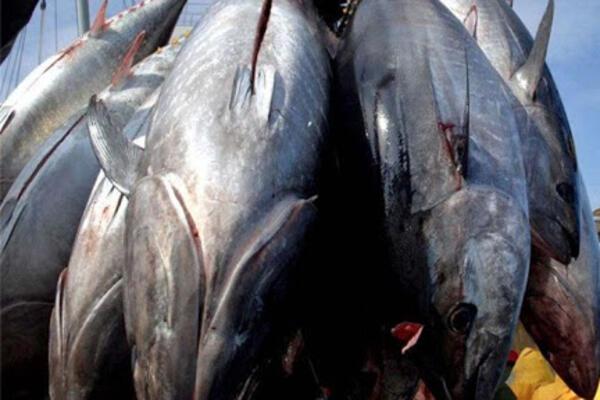
The World Trade Organisation (WTO) is altering the process for negotiations to curb fisheries subsidies in a manner that will make it harder for developing countries, including Pacific member states to engage in the talks.

PACNEWS has confirmed that Chair of the WTO fisheries subsidies negotiations, Santiago Wills, has communicated to Member States’ Heads of Delegation on a specific and new process for negotiations going forward.

The process, due to COVID19 restrictions, limits in person attendance of negotiations to Heads of Delegations-plus-one only while virtual participation is limited to “listen only” mode. Previously Member states who participated virtually were able to speak and make proposals however it appears that this option is now no longer available in the fisheries subsidies negotiations despite it still being the case in other negotiations underway at the WTO.

The COVID19 restrictions on travel are further complicating the ability for some developing country members to participate in the negotiations. The changes as outlined by the Chair will mean that those Members States who don’t have Geneva based missions and aren’t able to travel due to closed borders will be unable to intervene in the negotiations.

With many simultaneous negotiations currently underway in the WTO it presents a logistical challenge for many developing countries with small missions in Geneva. The removal of virtual participation into the fisheries talks precludes officials based back in capitals from being able to intervene.

The WTO’s Director General, Dr, Ngozi Okonjo-Iweala has claimed that “concluding these negotiations is a top priority for this organisation, not only for the fisheries, but also for the WTO system”. The negotiations on fisheries subsidies are also part of the United Nations Sustainable Development Goals which sets as a target the elimination of subsidies for Illegal Unreported and Unregulated fishing, prohibit in certain forms that contribute to overfishing and overcapacity whilst ensuring appropriate and effective special and differential treatment for developing and least developed countries.

There are concerns that the recent changes to the negotiating process will disadvantage developing countries, including the Pacific.

The Pacific Network on Globalisation’s (PANG) campaigner, Adam Wolfenden when questioned by PACNEWS said, “these changes will hamper the involvement of those developing and least-developed countries with limited staff and resources in Geneva as well as effectively cut off the support from technical expertise back in capitals. This is an attempt to manufacture a biased outcome by making it harder for those same countries who have the least historical responsibility for the state of global fish stocks to advocate for a pro-development and sustainability outcome”.

The changes in negotiating process comes after the 15 July Ministerial which was hailed as a success by Dr Ngozi Okonjo-Iweala who stated in her concluding remarks that “[o]ne fundamental conclusion that I draw from your interventions today is that Members are ready to use the text as the basis for future negotiations”.

This interpretation of the 15 July Ministerial comes despite many developing countries including the Africa, Caribbean and Pacific Group, Least Developed Country Group, African group, India, Indonesia and South Africa expressing their concerns about the text of the agreement.

At the Ministerial Fiji’s Trade Minister Faiyaz Koya stated, “Fiji believes that the revised text does not have all the ingredients to conclude the Agreement. Fiji is not satisfied with the current chair’s text….the text is imbalance[d] against our development and small-scale fishers. It will permanently prevent us sustainably developing our own resources, by rewarding the existing distant water fishing fleets that have grown on the back of billions of dollars of subsidies”.

What’s more the fisheries subsidies negotiations remain deeply divided on a number of critical issues, namely the permanent flexibilities being granted to large industrial fishers compared to the time and geographically bound flexibilities in the form of special and differential treatment proposed for developing countries.

Susan Herawati, Secretary General of Koalisi Rakyat untuk Keadilan Perikanan or the People’s Coalition for Fisheries Justice Indonesia commented “the WTO will fulfil its mandate of ensuring fish stock and livelihoods for small fishers globally only if high subsidies for large-scale fishers in rich countries are disciplined and actual small fishers are allowed to be subsidised. But as the process is deteriorating we are concerned a fair outcome is unlikely and the negotiations should be stopped if the process goes on in this manner”.

In April this year, shortly after starting her role as Director General, Dr Ngozi Okonjo-Iweala addressed the fisheries subsidies negotiations stating “I wanted to assure everybody that the principles of transparency and inclusiveness will be respected, and that no decisions will be taken behind closed doors”.

Despite these sentiments not everyone is convinced. Speaking on behalf of the World Forum of Fisher Peoples (WFFP), representing over 10 million fisherfolk in 23 countries around the world, Naseegh Jaffer, said “we are already extremely worried that the outcome will destroy small fishers’ livelihoods in poor countries. Making the process of negotiations so restricted and opaque at such a critical time makes us doubly convinced that the outcome will be in favour of rich fishers in advanced countries and totally against our interests”.

Meanwhile, negotiations and fish talks continue this week at the World Trade Organisation in Geneva.

SOURCE: PACNEWS

Genetic study reveals how ancient seafarers settled vast Polynesia

0

Beginning more than a millennium ago, intrepid seafarers traversed vast Pacific Ocean expanses in double-hulled sailing canoes to reach the far-flung islands of Polynesia, the planet’s last habitable region to be settled by people.

A genetic study published on Wednesday has deciphered the timing and sequence of this settlement of an area spanning about a third of Earth’s surface, with Samoa as the starting point while Rapa Nui, also called Easter Island, and other locales known for megalithic statues were among the last to be reached.

“Many of the distances were immense,” said Stanford University computational geneticist Alexander Ioannidis, lead author of the research appearing in the journal Nature.

For example, the study found that Rapa Nui was settled in about 1210 AD after an open-sea voyage covering roughly 1,600 miles (2,575 km). Historians believe that family groups of perhaps 30 to 200 people sailed at a time aboard double-hulled canoes that operated similarly to modern catamarans and used a lateen, or triangular, sail.

Genomic data from 430 modern-day people from 21 Pacific island populations helped unravel Polynesia’s genetic history.

“Each living individual retains a genetic record of all the ancestors from whom they inherited their DNA, so by analysing together hundreds of individuals we can create a genomic network where connections, splitting patterns and dates can be inferred,” said geneticist and study co-author Andres Moreno-Estrada of Mexico’s CINVESTAV network of research centers.

The first voyages were found to have been from Samoa to Fiji and Tonga and then to Rarotonga in the Cook Islands in the 9th century AD. In the 11th century, the islands of Totaiete ma (Society Islands) were next, followed in the 12th century by Tuha’a Pae (Austral Islands) and the Tuamotu Archipelago.

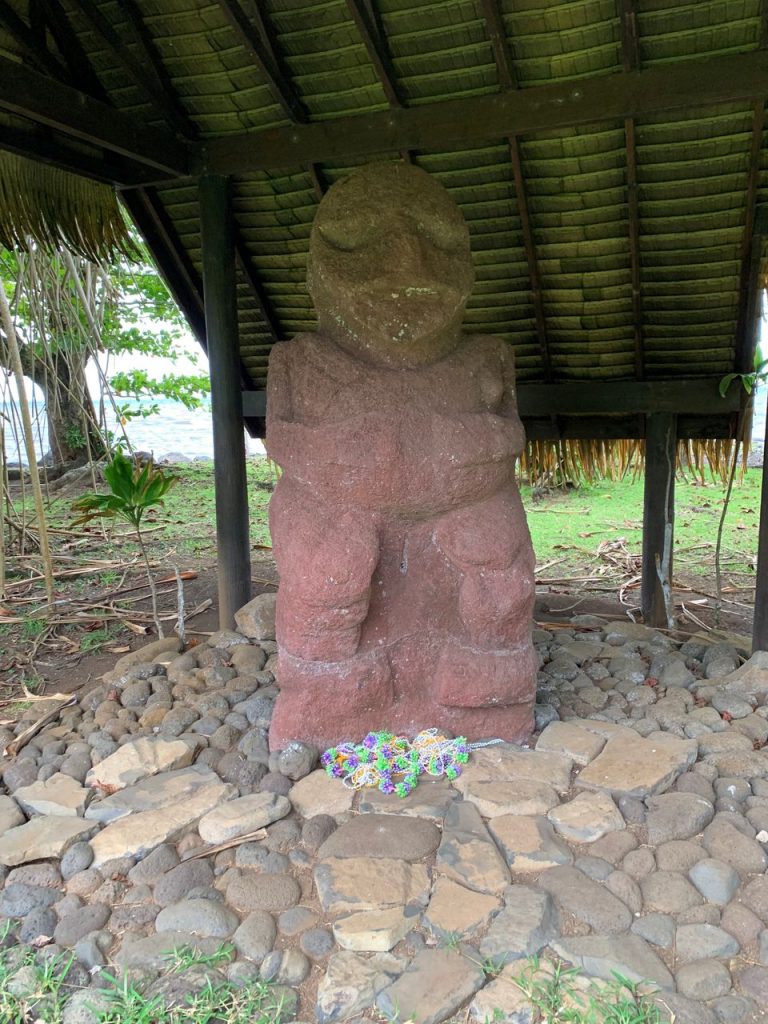
Eventually in the 12th and 13th centuries seafarers from Mangareva in the Gambier Islands reached Te Henua ‘Enana (Marquesas Islands), Rapa Nui and Raivavae – places where megaliths like Rapa Nui’s monumental head-and-torso stone statues, known as moai, were created.

“It is one of the most impressive and fascinating chapters of human expansion and long-distance exploration,” Moreno-Estrada said.

There has been an ongoing debate based on archeological remains as to when the Polynesian islands were settled.

“Unraveling these histories is not only a fascinating challenge, but also an incredible demonstration that modern populations are still connected physically to their ancestors’ stories,” Ioannidis said.

Navigation may have involved following the paths of long-distance seabirds as well as guidance from the stars, winds, weather, ocean currents and water patterns caused by islands and atolls. The voyagers brought with them crops like the root vegetable taro and food sources such as chickens.

“These were initially voyages into the unknown, and it is believed that Polynesians would sail upwind so that if they were unable to find a new island they could return,” Ioannidis added.

Polynesians established sophisticated artistic and cultural traditions in carving, boat ornamentation, religious and social rules, the practice of tattooing and, in Rapa Nui, North Marquesas, South Marquesas and Raivavae, megalithic statues.

The people of the megalith islands were found to be genetically connected, settled from a common Tuamotu origin.

“The discovery of a common genetic source for people on the eastern islands where megalithic sites have been found is not an intuitive connection given how distant and widely dispersed these group of islands are,” Moreno-Estrada said.

The researchers dated those lengthy voyages close to the time when, as detailed in their genetic study published last year, there was contact by Polynesians with native people in South America.

“This suggests that when the maritime culture of the widely spread Tuamotu Archipelago was embarking on its longest voyages of discovery, which gave rise to widely dispersed monumental sculpture-building populations, it also made contact with the Americas,” Ioannidis said.

While Samoa was the springboard for remote Polynesia’s settlement, the researchers called it merely an intermediate stop in a larger Pacific regional human expansion beginning in Taiwan around 4,000 to 5,000 years ago. It is believed Samoa was settled by around 800 BC…..

SOURCE: REUTERS/PACNEWS

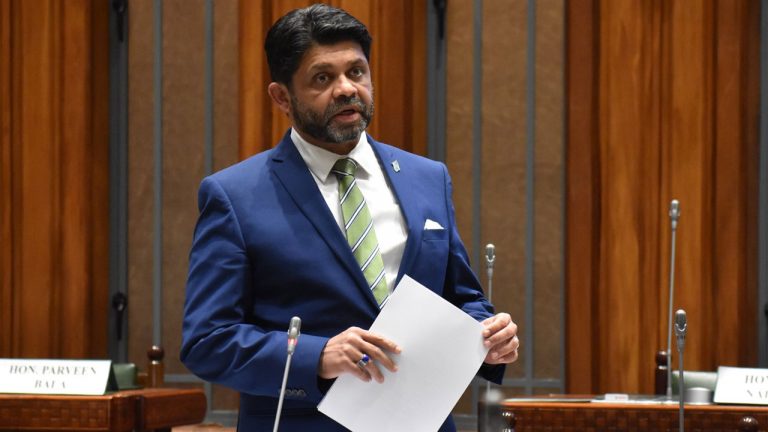
Global climate finance allocation unfair and unsustainable: Fiji AG

Fiji is among the climate-vulnerable countries in the region that continues to receive less than one percent of global climate finance.

Minister Responsible for Climate Change, Aiyaz Sayed-Khaiyum said this is unfair and unsustainable.

While speaking on ‘priorities for Fiji at COP26’ in parliament today, Sayed-Khaiyum highlighted the unfair disbursement of climate financing is against the Paris Agreement which states the need to aim for a resource mobilisation balance between climate mitigation and adaptation.

He said Fiji will continue to lobby for access to affordable climate finance for developing countries and to raise additional financing for adaptation.

“We seek to provide strong guidance to bilateral and multilateral resources of climate finance to prioritise financing for adaptation projects and will be putting pressure on these funding sources to better support countries that have developed their national adaptation plan.”

Opposition MP, Lenora Qereqeretabua in her response said this is an ongoing issue, and accessing adequate funding will remain a challenge.

“We have had promises, accessing climate change funds we all know is not easy. We have had promises in the past and getting it is a complicated exercise as the Minister says it is available globally.”

The Minister stressed Fiji will have to spend billions on adaptation due to the damage done by climate change.

This has prompted Fiji to develop a robust National Adaptation Plan with over 160 action items that require adequate financial footings.

“To address this future human mobility needs, the Fijian Government has established the Climate Relocation of Communities Trust Fund which has received an initial grant commitment of $2.5 million(US$1.1 million) from the Government of New Zealand. We are now working and facilitating the relocation of few communities in Vanua Levu that have been severely impacted by multiple cyclones, saltwater intrusion, and land degradation.”

Since 2011, the Fijian Government has helped relocate six communities entailing 78 households at $3.6 million(US$1.7 million).

Sayed-Khaiyum said there are 40 other rural communities have been identified for relocation.

SOURCE: FBC NEWS/PACNEWS


‘We can end the pandemic’, UN chief says in new call for global vaccine plan

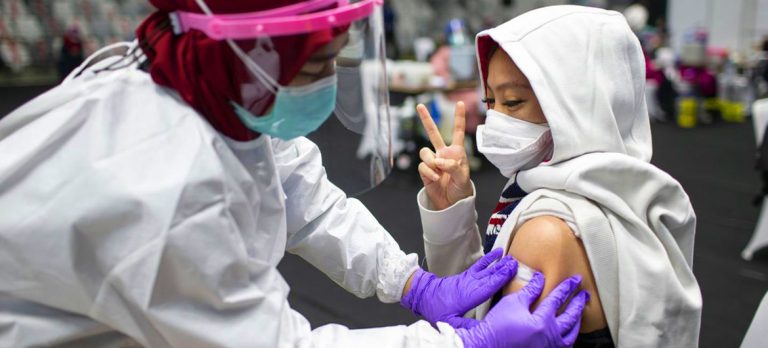
UN Secretary-General António Guterres on Wednesday repeated his call for a global COVID-19 vaccination plan to boost production and reach millions over the coming months, in line with recommendations by the World Health Organisation (WHO).

Speaking at a summit on the global pandemic, hosted by United States President Joseph Biden, the UN chief stressed that the move is not philanthropy, but self-interest.

“Global health security until now has failed, to the tune of 4.5 million lives, and counting. We have effective vaccines against COVID-19. We can end the pandemic,” he told the online meeting.

At the summit, the US pledged to donate next year some 500 million more doses of Pfizer-BioNtech shots to developing countries, with Biden promising an “arsenal of vaccines”. This would reportedly bring the total U.S commitment to sharing doses above the one billion mark.

The Secretary-General outlined inequities in vaccine distribution.

Although more than 5.7 million doses have been administered globally, 73 percent have been in just 10 countries, and just three percent of people in Africa have had innoculations.

The G7 leading industrial nations recently pledged a billion doses, but this represents a fraction of what is needed, and has yet to fully materialize.

“And while vaccines were developed with public funds, they are emerging as a US$100 billion industry, with middle-income countries spending hundreds of millions of dollars to immunise their people in a seller’s market”, said Guterres, adding “This is not only disappointing. It is baffling.”

The Secretary-General continues to push for the global vaccination plan, expressing hope that the US summit would be “a step in that direction”.

His plan calls for at least doubling vaccine production to ensure 2.3 billion doses are equitably distributed through the vaccine solidarity initiative, COVAX.

The goal is to reach 40 per cent of people worldwide by the end of this year, and 70 per cent in the first half of 2022, per targets set by WHO.

The UN chief said the plan could be implemented by an emergency team that will work with pharmaceutical companies to double vaccine production and ensure equitable distribution.

Membership would include vaccine producing countries, and those with production potential, as well as WHO, COVAX partners, international financial institutions, and the World Trade Organisation (WTO).

“This is necessary to solve the problems of intellectual property, the problems of technical support to the countries that can produce vaccines but need to be sure that they have all the safety guarantees in their production and, together, the power and the money that the group of countries I mentioned have,” said Guterres.

Looking ahead, he warned that the next pandemic cannot be managed “with tools tailored to the past.”

He urged countries to use recommendations made by the Independent Panel for Pandemic Preparedness and Response as a starting point for urgent reforms to strengthen global health.

“The World Health Organisation must be empowered, its authority enhanced and better funded so that it can play a leading role in coordinating emergency response,” said the UN chief.

“Global health security and preparedness must be strengthened through sustained political commitment and leadership at the highest level. Low and middle-income countries must be able to develop and access health technologies,” he said.

SOURCE: UN NEWS CENTRE/PACNEWS

PNG is qualified to talk about the impacts of climate change at UNGA and COP26: PM Marape

Papua New Guinea Prime Minister James Marape, says PNG has experienced the impacts of climate change, therefore, he as the leader is qualified to talk about climate change and to call on industrialised nations to contribute more towards reduction of carbon emissions and the conservation of existing rainforest, including the rainforest in Papua New Guinea.

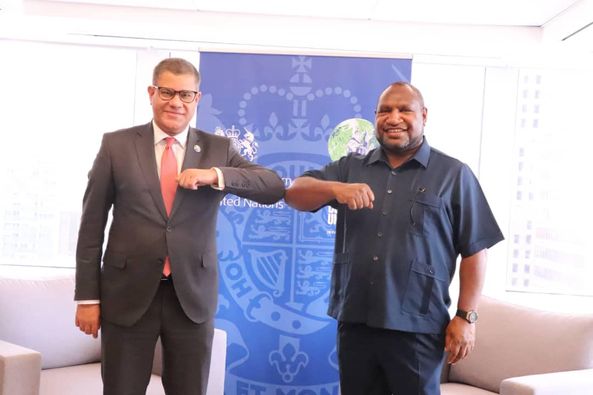
The Prime Minister made this comment when meeting with Alok Sharma, the United Kingdom’s UNFCCC COP 26 President Designate, to discuss the COP26 Climate Change Agenda.

Prime Minister Marape said although Papua New Guinea has a large land mass, we also have close to 600 outlying islands that are being affected by sea water level rise and sallination as a direct result of climate change.

“We were the first country in the world to relocate climate change refugees from the Caterets islands. That qualifies me to talk about climate change and its impacts in communities,” he said.

“Papua New Guinea, including the 15 other smaller Island States in the Pacific, do not emit a lot of carbon into the atmosphere and yet they are paying the price.

“Relocating the people of Kiribati, who are slowly losing their land to sea water to another land mass that is not a part of their own country is a plan that they are against as well. Their island is sinking but the people have chosen to stay. The world must do something. We should also cite the Caterets as well.”

Prime Minister Marape made known his intention to ask industrialised nations, to do more and to work together with communities affected by deforestation and climate change to find a viable and sustainable way forward to achieve the SDG’s as well as the Paris Accord, without compromising the development aspirations of developing country, especially the smaller Island States.

“Since the Kyoto Agreement and now the Paris Accord, industrialized countries have never tried to push hard to implement the agendas agreed to in the agreements.

“Apart from reducing carbon emissions, industrial countries should invest some money in technology that will reclaim land that is being lost to the sea.

“Papua New Guinea has one of the last standing rainforests in the world and if you want me to conserve it, create an opportunity for my people and country to grow without affecting the conservation of the rainforest.

“Our rainforest is the oxygen factory of the world, therefore, it is a global asset. To conserve, we must all work together to find a balance that will preserve the rainforest while improving livelihood.”

Data taken from the Global Forest Watch Forest Monitoring program has revealed that only 36 per cent of the Earth’s 14.6 million square kilometers of tropical rainforest remain intact. The balance of 64 percent is either degraded or completely gone.

SOURCE: PNG GOVT/PACNEWS

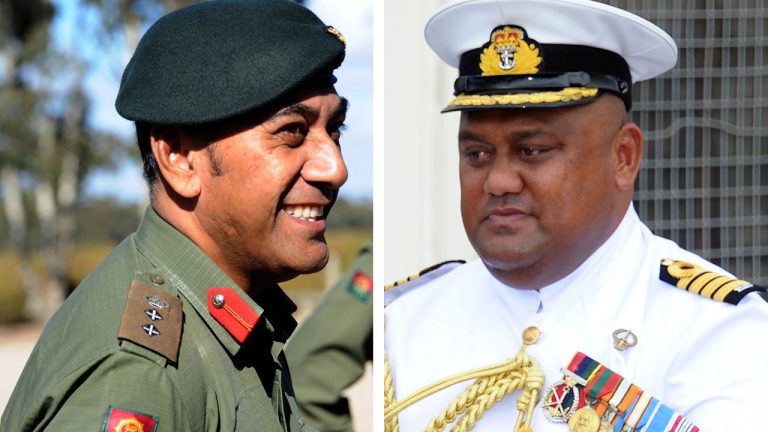
Captain Humphrey Tawake appointed as Fiji’s Deputy Commander RFMF

The Republic of Fiji Military Forces (RFMF) has announced two new senior appointments within the Force.

Captain [Navy] Humphrey Biu Tawake has been appointed as the deputy Commander Republic of Fiji Military Forces whilst Colonel Sapenafa Motufaga is now the new Chief of Staff (CoS) at the Headquarters RFMF. Before taking on this role, Captain Tawake headed the Republic of Fiji Navy.

He has held senior appointments within the RFMF including being the Director Peace Support Operations. Captain Tawake is a graduate of the Australian War College and has proven himself as the ideal candidate for the appointment.

Colonel Motufaga is returning from New York after having served at the Fiji Permanent Mission to the United Nations as the Military Police Advisor. Prior to his diplomatic posting, he was the Commander Land Forces.

Colonel Motufaga is a graduate of National Defence College in India.

SOURCE: RFMF/PACNEWS

Fiji records 72 new cases of COVID-19

Fiji has recorded 72 new cases of COVID-19 Wednesday, increasing the total number of cases to 50,200 and 577 deaths since the outbreak in April.

Permanent secretary for Health, Dr James Fong said there have been 32 new recoveries to report since the last update, which means that there are now 12,982 active cases.

“There have been 50,200 cases during the outbreak that started in April 2021. We have recorded a total of 50,270 cases in Fiji since the first case was reported in March 2020, with 36,290 recoveries,” he said.

Dr Fong said no new COVID-19 deaths reported on Wednesday.

“There have been three deaths of COVID-19 positive patients. However, these deaths have been classified as non-COVID deaths by their doctors. The doctors have determined that these deaths were caused by a serious pre-existing medical condition and not COVID-19.

“We have an additional three COVID-19 deaths to report for the period of 15th July 2021- 16th July 2021. All three deaths were reported from the Central division.

“There have now been 579 deaths due to COVID-19 in Fiji, with 577 of these deaths during the outbreak that started in April this year.as of 17 September, the national seven days rolling average of COVID-19 deaths per day is 0.7. The seven days rolling average for COVID-19 deaths per day in the Central division is 0.3 and 0.4 in the Western division.

“We have also recorded 419 COVID-19 positive patients who died from the serious medical conditions that they had before they contracted COVID-19; these are not classified as COVID-19 deaths,” Dr Fong explained.

He said there are currently 108 COVID-19 patients admitted to hospitals in Fiji.

“40 patients are admitted at the Lautoka Hospital and 68 are admitted at CWM hospital, St Giles, and Makoi.

“Nine patients are considered to be in severe condition, and two are in critical condition,” Dr Fong said.

Following the mop-up vaccination programme for the first dose, and the review of the target population, the Ministry of Health and Medical Services has updated its total target population of adults aged 18 and over for the nationwide COVID-19 vaccination campaign.

“The new target population of adults aged 18 years and over is 618,173.

“Therefore, as of Tuesday, a total of 589,301 adults in Fiji have received their first dose of the vaccine and 405,839 have received their second doses. Based on our updated total population of 618,173 people aged 18 and over (adults), the revised vaccination coverage rates are 95.3 percent for one dose and 65.7 percent for the two-dose coverage,” said Dr Fong.

SOURCE: PACNEWS

Samoa on two-day lockdown for Covid-19 mass vaccination

More than 30,000 people are targeted to get their COVID-19 vaccination by the time the nationwide lockdown for Thursday and Friday’s mass vaccination campaign ends, Samoa authorities say.

Prime Minister, Fiame Naomi Mata’afa has appealed to the country to use the opportunity to get vaccinated to achieve a 99 per cent herd coverage of immunity for Samoa.

Mata’afa addressed parliament on Wednesday ahead of the two-day lockdown in an effort to strengthen the national response to unprecedented impacts of covid-19.

A total of 100,000 people have already received their first dose and 52,000 have already been fully vaccinated, she noted.

The Government aims to vaccinate the 127,000 people eligible to get the injection.

The Prime Minister said the two doses are required to be fully immune from the COVID-19 virus.

“The House is well aware a similar campaign was done during the measles in December 2019,” she said.

“We have enough vaccines for the country and we thank our donor partners for their assistance in providing the free vaccine.

“The only thing left for us to do is to make proper use of the vaccine before it expires.”

A total of 150 teams led by the head of Government office and agencies will be out in the field to assist registered nurses to administer the vaccine and police officers are there to ensure security.

On Wednesday afternoon several teams regrouped at the National Emergency Operation Centre at Tuanaimato before being released to Savaii for the mass vaccination.

There are also teams allocated to service the islands of Manono and Apolima.

All Government and private sector services are ordered to be closed from 8am to 6pm on both days except for the essential services.

Those services include national and district hospitals, Ministry of Police and Prisons, Fire and Emergency Services Authority, international ports, Electric Power Corporation and Samoa Water Authority.

This is to ensure that people remain at home when the vaccination team mobilised around the country reaches the residents.

Mata’afa called on those that have not been immunised to place a red cloth outside their homes or roads to inform the officials they need the vaccine.

She also urged Members of Parliament, church leaders, village councils to show their support to ensure a fully vaccinated nation.

SOURCE: TALAMUA ONLINE/PACNEWS

Palau president Whipps calls on UN to include Taiwan

0

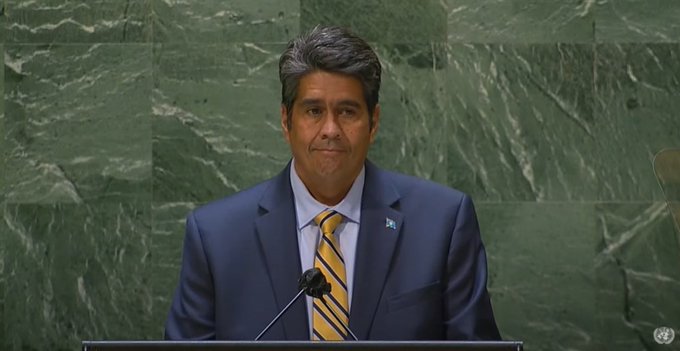
Palau President Surangel Whipps Jr on Tuesday urged the United Nations to allow Taiwan to participate in its system on the first day of the general debate of the UN General Assembly’s (UNGA) 76th session in New York.

In his 13-minute address, Whipps Jr thanked Palau’s international allies who came to its aid during the COVID-19 pandemic, in particular the United States, Taiwan, Japan and Australia.

Their assistance, including the donations of COVID-19 vaccines, personal protective gear, and testing capacity, allowed Palau to remain COVID-free and COVID-safe, he said.

Currently, over 80 percent of Palau’s total population has been fully vaccinated, and there have been no deaths or hospitalisations from COVID-19, for which the people of Palau are forever grateful, he said.

The Palau leader highlighted Taiwan’s leadership in the global response against the pandemic and its demonstration of “consistent and effective management of the pandemic within their borders,” efforts that extend to Palau.

“Taiwan’s international response facilitated cooperation and implementation of an effective sterile travel corridor between Taiwan and Palau,” he said.

The sterile corridor, also known as a “travel bubble,” has allowed both sides to resume medical, educational cooperation and economic engagement and other benefits of international travel, the president said.

“We encourage the UN system to accept Taiwan as a valuable contributor to our collective efforts and strongly advocate for Taiwan’s participation in the UN system,” he said.

With the world facing major challenges, Whipps Jr called for global unity using an analogy built around a Palau fish, the surgeonfish.

“The surgeonfish represents a unique characteristic. They fish to graze and roam on the reef alone, eating algae, but once danger lurks they all swim quickly from wherever they are along the reef and come together in a large school, resembling an intimidating ocean animal to provide safety and security for all,” he said.

He called on the international community to “act like the surgeonfish and come together, including Taiwan.”

“Taiwan’s 23.5 million people must also be given a voice as our UN charter states,” he said.

“We the peoples all nations working together can overcome the challenges of our time from COVID to climate and act with integrity and resolve to leave a better world for our children,” he said.

The Palau leader spoke on the opening day of the 76th session of the UN General Assembly.

He was the first leader of Taiwan’s 15 diplomatic allies to spoke at the General Debate, which runs until 27 September.

Presidents of three other Taiwan’s diplomatic allies — Guatemala, the Marshall Islands, and Honduras — will speak at Wednesday’s General Debate.

Taiwan, officially called the Republic of China, left the UN in 1971 when the People’s Republic of China took its place, and has since been excluded from participation in its special agencies.

SOURCE: CENTRAL NEWS AGENCY/PACNEWS

Stay connected

529FansLike
172FollowersFollow
156SubscribersSubscribe
- Advertisement -