Home Blog Page 1100

Tongans urged to register and vote

By Iliesa Tora

Tongans who are eligible to vote must register and vote at the 18 November General Elections in Tonga.

Supervisor of Elections Pita Vuki made the call at a media workshop on Monday this week.

“People should know that they have the opportunity to elect their reps and government at the election and they should exercise that right by voting,” Vuki told media reps at the pre-election workshop.

“That is a critical point for people to understand.”

He said those who are now 21 years old but have not registered to vote can still register now, with the Supplementary Roll containing additional names scheduled to be published on 04 November.

A total of 60,414 voters have their name on the current Roll. That is 29,496 males and 30,918 females.
Tongatapu currently has 42,477 voters with Vava’u totalling 9,168.

The highest number of voters are within the 31-40 years old bracket, that totalling 15,823 voters at the moment.

People between 21 to 30 years old total 10,498.

Vuki stressed the need for people to register if they are 21 years old, as those who do not register can be penalised.

He also added it was critical that people get to vote and have a say in who gets to represent them in Parliament.

A total of 74 candidates have confirmed they are standing for election.

That is less than the 86 who contested the 2017 elections.

Vuki revealed that the number of candidates contesting the elections have continued to drop since 2010.

In 2010 a total of 147 candidates contested the elections. A total of 106 candidates stood at the 2014 poll.

A reduction has also been recorded in the number of female candidates standing in the elections over the past four elections.

This year only 12 female candidates are standing.

Meanwhile, in addressing the workshop and adding to discussions on female candidates Vuki said the first step for local women who are pushing for more female representation in Parliament is to get more candidates to stand in the elections.

He said the push for more female reps in Parliament is not a new one.

“I think the first step is to get more candidates to stand in the different constituencies,” he said.

Former Member of Parliament Lepolo Taunisila told the workshop that it is important for Parliament, as a lawmaking entity, to include a balance of power – with both male and female representations.

She said unless that happens true democracy will not be achieved in Tonga.

“If there is no balance of representation then the laws made in parliament will be biased,” she told the workshop.

Taunisila also blamed the men in the families for influencing how their women members in the family vote during elections, adding Tongan women were obedient in nature to their men folks, especially when it comes to decisions on who to vote for.

That was disputed by veteran journalist Kalafi Moala, who shared that this was not so in the case of how female voters in Kolomotu’a supported the late Prime Minister ‘Akilisi Pohiva in 2014 and 2017.

“From my experience of working with the late Prime Minister Pohiva showed that his voters were more women than men,” he added.

Another veteran journalist and Publisher/Editor of the Matangi Tonga Pesi Fonua said women still needed to do a lot of work before standing for the elections.

He said the fact that there is only two female members in the last Parliament says alot about how people view women’s participation in politics.

“There is a lot that still needs to be done,” he added.

Journalists present at the workshop also raised the issue of changes made to the Constitution for special allocation of seats for female reps.

Taunisila responded that there were push made years back on that issue but nothing materialised.

SOURCE: NUKU’ALOFA ISLAND TIMES/PACNEWS
Glasgow showdown: Pacific Islands demand global leaders bring action, not excuses, to UN summit

By Wesley Morgan, Researcher, Climate Council, and Research Fellow, Griffith Asia Institute, Griffith University

The Pacific Islands are at the frontline of climate change. But as rising seas threaten their very existence, these tiny nation states will not be submerged without a fight.

For decades this group has been the world’s moral conscience on climate change. Pacific leaders are not afraid to call out the climate policy failures of far bigger nations, including regional neighbour Australia. And they have a strong history of punching above their weight at United Nations climate talks – including at Paris, where they were credited with helping secure the first truly global climate agreement.

The momentum is with Pacific island countries at next month’s summit in Glasgow, and they have powerful friends. The United Kingdom, European Union and United States all want to see warming limited to 1.5℃.

This powerful alliance will turn the screws on countries dragging down the global effort to avert catastrophic climate change. And if history is a guide, the Pacific won’t let the actions of laggard nations go unnoticed.

A long fight for survival

Pacific leaders’ agitation for climate action dates back to the late 1980s, when scientific consensus on the problem emerged. The leaders quickly realised the serious implications global warming and sea-level rise posed for island countries.

Some Pacific nations – such as Kiribati, Marshall Islands and Tuvalu – are predominantly low-lying atolls, rising just metres above the waves. In 1991, Pacific leaders declared “the cultural, economic and physical survival of Pacific nations is at great risk”.

Successive scientific assessments clarified the devastating threat climate change posed for Pacific nations: more intense cyclones, changing rainfall patterns, coral bleaching, ocean acidification, coastal inundation and sea-level rise.

Pacific states developed collective strategies to press the international community to take action. At past UN climate talks, they formed a diplomatic alliance with island nations in the Caribbean and the Indian Ocean, which swelled to more than 40 countries.

The first draft of the 1997 Kyoto Protocol – which required wealthy nations to reduce greenhouse gas emissions – was put forward by Nauru on behalf of this Alliance of Small Island States (AOSIS).

Securing a global agreement in Paris

Pacific states were also crucial in negotiating a successor to the Kyoto Protocol in Paris in 2015.

By this time, UN climate talks were stalled by arguments between wealthy nations and developing countries about who was responsible for addressing climate change, and how much support should be provided to help poorer nations to deal with its impacts.

In the months before the Paris climate summit, then-Marshall Islands Foreign Minister, the late Tony De Brum, quietly coordinated a coalition of countries from across traditional negotiating divides at the UN.

This was genius strategy. During talks in Paris, membership of this “High Ambition Coalition” swelled to more than 100 countries, including the European Union and the United States, which proved vital for securing the first truly global climate agreement.

When then-U. S President Barack Obama met with island leaders in 2016, he noted “we could not have gotten a Paris Agreement without the incredible efforts and hard work of island nations”.

The High Ambition Coalition secured a shared temperature goal in the Paris Agreement, for countries to limit global warming to 1.5℃ above the long-term average. This was no arbitrary figure.

Scientific assessments have clarified 1.5℃ warming is a key threshold for the survival of vulnerable Pacific Island states and the ecosystems they depend on, such as coral reefs.

De Brum took a powerful slogan to Paris: “1.5 to stay alive”.

The Glasgow summit is the last chance to keep 1.5℃ of warming within reach. But Australia – almost alone among advanced economies – is taking to Glasgow the same 2030 target it took to Paris six years ago. This is despite the Paris Agreement requirement that nations ratchet up their emissions-reduction ambition every five years.

Australia is the largest member of the Pacific Islands Forum (an intergovernmental group that aims to promote the interests of countries and territories in the Pacific). But it’s also a major fossil fuel producer, putting it at odds with other Pacific countries on climate.

When Australia announced its 2030 target, De Brum said if the rest of the world followed suit:

the Great Barrier Reef would disappear […] so would the Marshall Islands and other vulnerable nations.

Influence at Glasgow

So what can we expect from Pacific leaders at the Glasgow summit? The signs so far suggest they will demand COP26 deliver an outcome to once and for all limit global warming to 1.5℃.

At pre-COP discussions in Milan earlier this month, vulnerable nations proposed countries be required to set new 2030 targets each year until 2025 – a move intended to bring global ambition into alignment with a 1.5℃ pathway.

COP26 president Alok Sharma says he wants the decision text from the summit to include a new agreement to keep 1.5℃ within reach.

This sets the stage for a showdown. Major powers like the US and the EU are set to work with large negotiating blocs, like the High Ambition Coalition, to heap pressure on major emitters that have yet to commit to serious 2030 ambition – including China, India, Saudi Arabia, Mexico and Australia.

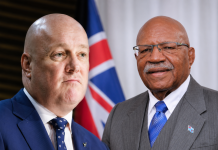
The chair of the Pacific Islands Forum, Fiji’s Prime Minister Frank Bainimarama, has warned Pacific island countries “refuse to be the canary in the world’s coal mine.”

According to Bainimarama:

by the time leaders come to Glasgow, it has to be with immediate and transformative action […] come with commitments for serious cuts in emissions by 2030 – 50% or more. Come with commitments to become net-zero before 2050. Do not come with excuses. That time is past.

SOURCE: THE CONVERSATION/PACNEWS

Fiji’s new President to be elected today

0

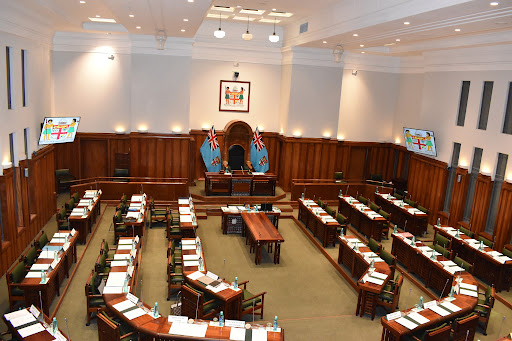
All members of Fijian parliament will be present today to appoint the new president of Fiji.

Prime Minister Voreqe Bainimarama will move Tui Macuata Ratu Wiliame Katonivere’s name on the floor of Parliament to be the next president of Fiji.

Tui Macuata has accepted Bainimarama’s nomination to assume the nation’s Presidency.

While the opposition leader Ratu Naiqama Lalabalavu will move Ro Teimumu Kepa’s name on the floor of Parliament today to be the next president.

Ro Teimumu is a former leader of the Social Democratic Liberal Party(SODELPA) and she was the first Fijian woman to serve as the leader of the opposition.

Unity Fiji Party leader Savenaca Narube is urging members of parliament to vote wisely for the next president of Fiji on behalf of the people.

“The FijiFirst Party has the freedom to nominate the new president and the opposition also has the freedom to nominate its candidate,” Narube said.

“I urge Parliament to vote wisely on behalf of the people of Fiji. Unity Fiji congratulates the new President of Fiji whoever that may be,” he said.

Pro-democracy advocate Pita Waqavonovono believes taxpayers should be paying for experienced, qualified and competent states people, not political appointments.

Waqavonovono in a statement on social media said as a taxpayer of this country, he is tired of funding all these political appointments.

“Can we just hire people that are neutral, independent and who have the qualifications to do the job we are paying them to do,” he said.

“In the FijiFirst post, they go further to say that they could not imagine any other worthy successor to our current President.

“Little did we know, their level of imagination was just circulating within their Party,” he said.

He said Fiji needs a figure that will unite the country and a statesperson, not a political appointee announced over their political parties page.

Parliament in an advisory said all members of parliament as agreed to during the Business Committee will be present today to appoint the new president of Fiji.

“Access to the Parliament Complex shall be limited only to members of parliament, authorised government officials, authorised caucus and parliament staff.

“Other authorised personnel will be allowed to the Parliament Complex. Everyone should strictly adhere to the coronavirus safe measures and protocols in place nationwide.

“All members of parliament will be present as agreed to during the Business Committee held on Wednesday, to appoint the new President of the Republic of Fiji.”

Parliament said the sitting will be aired live on the Parliament website, their Facebook page, Parliament Channel on the Walesi platform, FBC TV and Fiji One.

SOURCE: FIJI LIVE/PACNEWS

FLNKS pleads for delay in New Caledonia independence vote

0

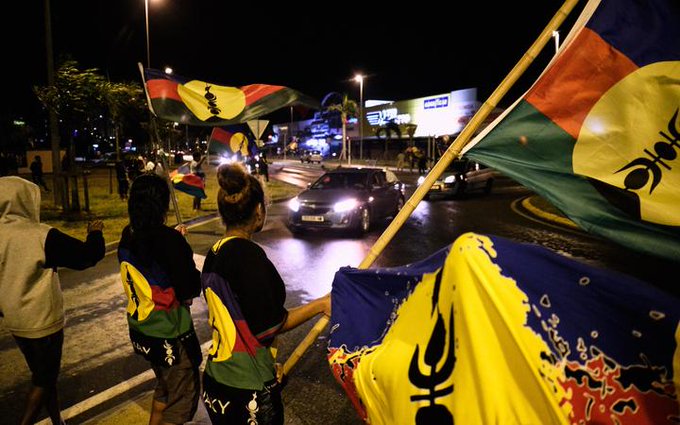
New Caledonia’s pro-independence FLNKS party has called for “non-participation” in the independence referendum on 12 December.

The Kanak alliance wants the vote postponed until 2022 because of the Covid-19 epidemic.

The pro-French loyalists have responded to the call by resuming their campaign for the vote.

In a statement, the FLNKS criticised the state for wanting to “maintain at all costs the third and final referendum consultation” of the Noumea Accord.

Two previous referendums took place, in 2018 and 2020, and were won by pro-Paris supporters.

However, the percentage backing the status quo fell from 56.7 percent to 53.3 percent in the second vote.

The Kanak announcement comes just a day after the visit to New Caledonia by the Minister of Overseas Territories, Sébastien Lecornu.

The independence leaders had asked Lecornu to postpone the vote, in view of the virulent pandemic, which has killed 245 since the beginning of September.

They said the campaign will not be fair, with the debates focusing on the support of France during the covid crisis, while the Kanak leaders will not be able to campaign because their people are in mourning.

SOURCE: RNZ PACIFIC/PACNEWS

China to create fund to help Pacific Island countries defeat COVID-19

Chinese State Councilor and Foreign Minister Wang Yi said on Thursday that China will set up a fund to help Pacific Island countries defeat the COVID-19 pandemic.

Wang made the remarks at the first China-Pacific Island Countries Foreign Ministers’ Meeting in Beijing via video link.

Wang said the bilateral relationship between China and the Pacific Island countries has shown a good development momentum, and the comprehensive strategic partnership has continued to deepen.

Relations between the two sides are based on mutual respect and equity, Wang said.

He said China always respects the development paths chosen by the Pacific Island countries and sincerely hopes to help these countries develop their economy and improve local people’s livelihoods.

Speaking of the COVID-19 pandemic, Wang said China will continue to help the Pacific Island countries fight against the virus by donating vaccines and establishing and sponsoring a China-Pacific Island countries fund.

Speaking of bilateral economic cooperation, Wang noted that China has signed cooperation documents for the joint construction of the Belt and Road Initiative with all 10 countries in the region that have built diplomatic relations with Beijing.

Both sides have successfully held three China-Pacific Island Countries Economic Development and Cooperation Forums and jointly promoted numerous cooperative projects, he said.

Representatives of the Pacific Island countries thanked China for its long-term selfless assistance and support for the development of the region, and reiterated their firm upholding of the one-China principle and support for China in safeguarding its core interests.

All parties voiced support for the Global Development Initiative proposed by Chinese President Xi Jinping, and hoped to increase governance experience sharing with China and deepen Belt and Road cooperation, elevating the comprehensive strategic partnership to a new level.

They spoke highly of China’s commitment to making vaccines a global public good, and they said they are willing to work with China to strengthen solidarity in fighting against the pandemic.

They also said they will work with China to uphold multilateralism and safeguard the international system with the United Nations at its core and the international order based on international law.

SOURCE: CGTN/PACNEWS

Vax for visas: ‘Overstayers would come out of woodwork’, say Pacific leaders

Pacific leaders say offering “visas for vaccinations’ would be the ultimate incentive for New Zealand overstayers to get the covid-19 jab, as Auckland struggles to stop delta variant infections spreading through the community.

It comes as epidemiologists say the government needs to pull out all the stops to get people vaccinated amid rising case numbers.

Immigration lawyer Richard Small of Pacific Legal called for visas only to be granted to those who get inoculated, and an amnesty to overstayers who are double-jabbed.

The Ministry of Health reported a record 102 community cases today, the first time the number of new cases has reached triple figures.

Director-General of Health Dr Ashley Bloomfield said on the current trajectory there could be up to 180 cases a day within two to three weeks. The number of these cases that ended up in hospital would depend on how many had been vaccinated, he said.

The latest modelling showed there was not a large amount of undetected cases, and the numbers being found were what would be expected, he said.

The Pacific Leadership Forum is calling for an overstayer amnesty through a parliamentary petition, which won support from the Employers and Manufacturers Association.

The forum’s Pacific Response Coordination Team chair Pakilau Manase Lua said that adding in an immigration incentive to that amnesty would be very effective.

“I would guarantee that probably 99.9 percent of overstayers would come out of the woodwork and get vaccinated if that was their pathway to residency or amnesty to get their papers to be legal here,” Lua said.

“They’re desperate. It was hard enough before covid arrived for these people to survive – they have to work, they have to find a way to make ends meet.

“Moving from house to house and at the whim of the family and friends who are sheltering them. And that’s a risk to themselves and to others if they’re not vaccinated”

Among an estimated 14,000 overstayers, the highest numbers without valid visas are from Tonga and Samoa.

A fifth of the current active covid-19 cases are among Pacific people, and their fully vaccinated rates are lower (at 59 percent) than the national average (67 percent).

If the government was concerned an amnesty would be unpopular, it needed to make sure politics did not trump public health, said Lua.

“The optics don’t matter, it’s life or death – in a pandemic, what are optics compared to human lives? We’ve got a virus raging in South Auckland among our communities where most overstayers are living.

“And despite all the reassurances to go out and test and to get vaccinated, we know that many have yet to be vaccinated – some have gone in, but the majority have not.

“Rightfully, they fear authority – these are people who are hiding from authority because they’ve got deportation orders or other things that are hanging over them.”

Tongan Manase Lua, an overstayer as a child during the Dawn Raids era before an amnesty gave his family a permanent future, said launching a similar reprieve now would also recognise the reality that no-one could be deported back to the Pacific Islands while there was a risk of them spreading covid-19 there.

It was mind-boggling that the government was disregarding the risk, as well the contribution overstayers make, he said.

“They’re resourceful, they work hard, they often do the work that nobody else wants to do on the front lines — while we’re working from home and in the safety and security of home, they’re out on the front lines picking fruit, cleaning the floors, mopping the hospital floors and all the hard work that we take for granted.

“So they would love this opportunity to be a person, be a human being in the country that says it’s kind.”..

SOURCE: NZ/PACNEWS

First wahine Māori Dame Cindy Kiro sworn in as NZ Governor-General

0

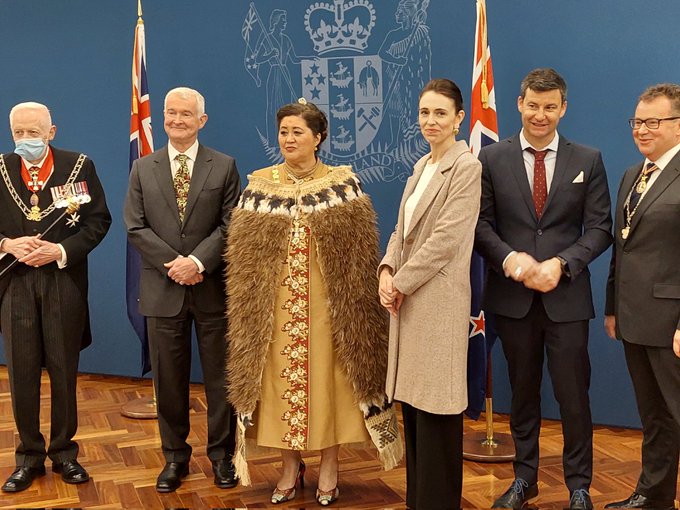
Dame Cindy Kiro was sworn in as New Zealand’s newest Govenor-General Thursday at Parliament, the first wahine Māori to hold the role.

Speaking to a limited audience due to Covid restrictions, Dame Cindy pledged to reach people marginalised in New Zealand in her new role as New Zealand’s 22nd Governor-General.

Prime Minister Jacinda Ardern, Opposition leader Judith Collins, MPs from across the House and officials watched as Dame Cindy took the role as representative of the Queen.

About 35 people lined the front of Parliament protesting Covid restrictions and vaccinations, as Dame Cindy walked up a red carpet placed on the the steps of Parliament, draped in a korowai.

In a speech delivered at the ceremony, she said the appointment was an honour and a privilege.

“We are living through a period of immense uncertainty and anxiety, and I wish to acknowledge those in Auckland, and around the country, who continue to face the disruptions caused by Covid-19.

“I know the challenges we’re facing can often feel bewildering and overwhelming – but we’ve shown what is possible when we choose to be guided by wisdom, courage, and a sense of care for one another,” she said.

Dame Cindy spoke her dual Ngāpuhi and British heritage and what that could bring to New Zealand’s “ongoing dialogue on Te Tiriti o Waitangi”.

“The Treaty relationship has been tested in our struggle to build mutual respect – but we continue to make progress, and I understand what an important role the Governor-General has to play in that task,” she said.

Ngā Puawai Ō Ngāpuhi was sung in Parliament’s Legislative Council Chamber.

Ardern welcomed Dame Cindy into the role during her speech, saying she would be a picture of inspiration for many.

“We are very lucky to have you,” Ardern said.

She said Dame Cindy came from a life of hardwork, and was the “portrait of every New Zealander”.

Te Paati Māori co-leader Rawiri Waititi said he was “really, really proud of Dame Cindy Kiro’s appointment”.

“We’re really proud of her up there in Te Atatū Peninsula to have one of our very own in that particular position.

“Everybody knows I’m more of a republican and not a loyalist to the Crown, whilst that is the way this country operates, I’m still proud of Cindy’s appointment today, and really proud she represents us in that position.

Dame Cindy acknowledged how she valued evidence-based thinking, coming from a background in academia.

“It has never been more important to critically evaluate the constant flood of information across our screens – and to value the ability of expert communicators, who can help to alleviate our uncertainties and fears.”

Dame Cindy said she would do what she can, as Governor-General, to strengthen the country’s communities in meeting “these challenges of our time”.

“Communities develop resilience when people feel connected; a sense of belonging; a place to stand.

“I will connect with new migrants and former refugees, and celebrate the diverse cultures and religions gifted to our nation by all those who have chosen to make New Zealand their home.

“I will reach out to those marginalised in our society, whether because of disability, homelessness, discrimination, addiction, or mental health issues,” Dame Cindy said.

Dame Cindy said she would also seek opportunities to interact with young people whenever and wherever she could.

“I will listen to their hopes and dreams, and encourage them to pursue their passions. And I will support organisations dedicated to contributing to their physical, social, and cultural wellbeing.”

Dame Cindy was announced as the next Governor-General by Prime Minister Jacinda Ardern in May.

Ardern said at the time that Dame Cindy “has a highly distinguished and lengthy career in academic and leadership positions and has made significant contributions across a number of fields and organisations”.

Dame Cindy is the first wahine Māori to hold the role and replaces Dame Patsy Reddy.

“On behalf of all New Zealanders, I thank Dame Patsy and Sir David for their service over these past five years,” she said.

Dame Cindy was most recently Chief Executive of the Royal Society – Te Apārangi, which advances research and scholarly activity in science, technology and the humanities and raises public understanding of those fields.

She was previously the Children’s Commissioner, had leadership roles at several New Zealand universities, including Pro Vice-chancellor Māori at the University of Auckland, extensive health sector experience, and a number of roles in community and voluntary organisations.

She had her first audience with the Queen this week.

SOURCE: TVNZ/PACNEWS

Pacific Islands Climate Action Network launches Pacific Climate demands

The Pacific Climate Action Network (PICAN) in partnership with Greenpeace Australia Pacific is launching Pacific COP26 Climate Demands on Friday 22 October 2021 in the lead up to the UN Climate Summit in Glasgow.

Through an intensive consultation, engagement, and collaboration with civil society organisations (CSOs), non-governmental organisations (NGOs) and movements from across the Pacific Island countries, PICAN has developed a set of critical demands to ensure that the COP26 delivers sustainable, just, and inclusive outcomes for the Blue Pacific.

The Pacific Climate Demands recognises that people and communities of the Blue Pacific are living in a climate emergency, a crisis that, sadly, continues to be ignored by many countries, including those nearest to the Pacific Islands. The Pacific is demanding urgent & accelerated climate action;ambitious climate targets & plans (National Determined Contributions) that puts the world on a pathway to achieving the 1.5º Celsius target, and robust and accessible climate finance to build resilient Pacific communities.

“The Pacific is already knee deep, experiencing irreversible climate induced loss and damage, and the Pacific communities are demanding for urgent and accelerated climate action now – not in another twenty or thirty years. We are demanding that parties, especially the developed nations to come to COP 26 with concrete plans on closing the emissions gap and bring the world to a pathway to achieve the Paris target of limiting global warming to well below 1.5 degrees, said Lavetanalagi Seru from the Pacific Islands Climate Action Network.

The Pacific is already in the grip of a climate disaster and only deep, rapid emissions cuts including the complete phase-out of climate-destroying coal, oil and gas and an immediate end to fossil fuel subsidies will provide a fighting chance of a safe and habitable future for the Pacific islands,” Greenpeace Australia Pacific Acting Head of Pacific Steph Hodgins-May said, adding there was no more time for excuses and history would judge world leaders on their actions at COP26.

“Australia should pay its fair share of climate finance to help our neighbours tackle climate change. The UK, USA, Canada,and NZ made bold new commitments. A commitment of US$3 billion over five years would be a good start for Australia.

The Climate Justice Demands launching event will feature prominent Pacific Leaders, including the Anote Tong(Former President of Kiribati), Dame Meg Taylor (Former Pacific Islands Forum Secretary General), Emeline Siale Ilolahia (Executive Director of the Pacific Islands Association of NGO’s), Nikolas Casule (Head of Investigations & Research at Greenpeace Australia Pacific), Raijeli Nicole (Regional Director of Oxfam in the Pacific), and Hon Bikenibeu Paeniu(Tuvalu’s Former Prime Minister and representative for Tuvalu Climate Action Network). The keynote address will be delivered by the UK High Commissioner to Fiji,George Edgar.

PICAN is an informal Network linking civil society organisations working on climate change. Since 2013, it has brought together civil society actors across the Pacific Island countries, advocating for climate justice and environmental integrity. PICAN aims to unite civil society under a common voice to increase the influence and impact of their advocacy demands on Pacific Island governments, leading non-Pacific governments to respond with more powerful and ambitious climate change policies and action at the national and regional level. As part of CAN, the worldwide network of over 1,500 Non-Governmental Organisations (NGOs) across the world, PICAN works to ensure the Pacific Island civil society is represented at the international level.

Visit us at www.PICAN.org to know more about and support the incredible work of Pacific Island civil society or email us on canpacificislands@gmail.com

SOURCE: PICAN/PACNEWS

Third of Pacific islands unable to attend Cop26, sparking fears summit will be less ambitious

A third of Pacific small island states and territories do not plan to send any government figures to the COP26 summit in Glasgow due to Covid-19 travel restrictions.

The lack of high-level representation of Pacific nations at the meeting has led to fears that the concerns of these countries, which are among those most at risk due to the climate crisis, will not be appropriately represented at the summit.

At a meeting of Pacific regional organisations last week, it was confirmed that 13 of the Pacific small island developing states plan to send a leader or minister to COP26 and seven do not, and instead intend to send representatives from their missions in New York, Brussels, or other cities, though sources present at the meeting say the number could change in the next few weeks.

“It’s a big issue for the Pacific, the fact that we will not be able to be there in person as we would like,” said Ralph Regenvanu, opposition leader of Vanuatu. “If we go back to Paris [COP21], it was the personal presence of Pacific leaders that really made a change and brought us to the one point five degree figure that we have now in the agreement.

“I know, for example, Vanuatu will not be sending anybody in person [this year]. Other countries are sending much smaller delegations … and that will significantly, I think, reduce our ability to influence the outcomes of that COP… which is what we’ve done in the past.”

The smaller numbers are largely due to Covid travel restrictions. Most Pacific countries have remained Covid-free or had very low case numbers throughout the pandemic, due to closing their borders to international travel.

As a result, travelling from these Pacific countries to the Glasgow summit would require leaders to complete up to a month of managed quarantine.

“We’re really really struggling to get a high-level delegation to go to the COP,” said Albon Ishoda, Ambassador from the Marshall Islands to Fiji and the Pacific Islands.

“It’s always expected that the head of the country … would attend these meetings and we cannot have the president be indisposed for a huge amount of time,” he said.

Anyone returning to the Marshall Islands, a low-lying atoll nation in the north Pacific, which has recorded just four cases of Covid-19 and no deaths during the pandemic, must complete two weeks of managed quarantine in Honolulu and then another two weeks in the Marshall Islands.

Ishoda says the difficulties for Pacific leaders in getting to COP should motivate other world leaders to make sure they don’t waste the opportunity afforded by the summit.

“They should recognise that … we’re crossing huge oceans and scaling mountains to get there, so you know, don’t waste our time by saying: ‘OK, we’re going to push this back to another COP’.”

The impact of travel restrictions will have an even more dramatic effect on the number of civil society representatives from the Pacific who will be able to attend.

Lavetanalagi Seru, a Fijian leader from the Pacific Islands Climate Action Network (PICAN), said COP26 had proved “near impossible to attend” for activists and campaigners.

The challenges include strict quarantine rules upon return to Pacific countries, which have to be paid for by the delegates and mean many delegates have to take a month off work; flights that cost up to double their pre-pandemic prices; high accommodation costs in Scotland and the fear of bringing Covid-19 back to vulnerable communities.

“It’s going to be really really small,” said Seru, estimating there will be 20 to 30 civil society delegates from the Pacific this year, compared with 70 to 80 in normal years.

Seru says that civil society representatives have traditionally played a significant role at COP summits.

“It keeps this drumbeat of pressure on government … we break down whatever the outcome is in a very digestible approach and communicate that back to people in the Pacific, so we can keep the pressure on Pacific governments, also on Australia, New Zealand, the U.S.

“We’re also there to provide support for Pacific small island developing states, where we have smaller delegations, leaders are unable to be in all the rooms at once, so this is where civil society steps in and covers some of the meetings.”

Seru estimates the costs for him to get to Glasgow will be about FJD20,000 (US$10,000), in a country where the starting salary for a government employee is about FJD12,000 (US$6,00) a year. He has managed to attend because NGOs including Greenpeace, Oxfam and Climate Justice Resilience Fund have provided support to his organisation.

Alisi Rabukawaqa is a Pacific Climate Warrior and Council of Elder member in Fiji. She has attended Cop summits in the past but will not be attending this year.

“The bottom line really is time and money,” she said. “For me, I do this voluntarily, it is not part of my 8-5 job. There is absolutely no organisation that would allow for a staff to have that much time away.”

Rabukawaqa says that while it’s “crucial” that Pacific leaders and activists attend Cop, “I think so far I can count with one hand the number of people I know personally who will be in attendance.”.

SOURCE: THE GUARDIAN/PACNEWS

“We’re suffering”: Why climate finance is so important for Pacific countries

Pacific leaders like Fiji’s Prime Minister Frank Bainimarama have had enough.

Speaking at a recent international climate forum hosted by the former U.S vice president Al Gore, Bainimarama refused to be the proverbial canary.

“We want more for ourselves then to be helpless songbirds whose demise serves as a warning to others,” he said.

Fiji and the Pacific’s demands are clear, the developed world must deliver on the US$100 billion as promised in climate finance,” he said.

Garth Henderson, Cook Islands Secretary of Finance, echoed his call.

“We’re suffering – we’re the canaries in the coal mine help us adapt to the consequences of emissions that we didn’t create,” he said.

Climate finance is the flow of finance to support developing countries mitigate the impacts of climate change.

Tagaloa Cooper-Halo the head of Climate Change Resilience at Secretariat of Pacific Regional Environmental Programme (SPREP) believes bigger emitting countries have a responsibility to help Pacific countries.

“These are costs that have been imposed on Pacific countries through no fault of their own.

Therefore it is important for the developed world who are responsible for increased emissions – it is their responsibility to small developing countries to provide funding support for them,” she said.

In 2015 talks in Paris really kicked off the Green Climate Fund when developed nations promised to raise US$100 billion a year from 2020 to 2025 to support climate change adaptation and mitigation in vulnerable countries.

Maina Talia, the secretary for the Tuvalu Climate Action Network, says red tape is making it hard for countries to access those funds.

“In Tuvalu we need the money to provide sea walls to protect the whole islands, and to raise the elevation of the island.

Simply we are protecting our people, our natural environment but we also are protecting our cultural identity by protecting the island,” he said.

With a cyclone season looming, rising sea levels and increasing debt Tagaloa Cooper-Halo says the needs of Pacific countries are urgent.

“Developed countries need to ensure that the money works for developing countries, not just provided as their contribution and then they walk away from that.

“We want to make sure that the developing countries are able to access and not wait for a long time for reviews – the amount of back and forth that we go through is unreal,” she said.

SOURCE: ABC/PACNEWS

Stay connected

529FansLike
172FollowersFollow
156SubscribersSubscribe
- Advertisement -