
Home Blog Page 1085

‘It’s a team like no other’: Moana Pasifika ready to inject new energy into Super Rugby

0

Power, flair and courage. They are three words coach Aaron Mauger hopes will become synonymous with Moana Pasifika as the new Super Rugby Pacific franchise looks to quickly make a mark on the competition.

While players were gradually revealed over the last six weeks, Monday marked another major milestone for Moana Pasifika as their first ever squad was confirmed, with former Highlanders and Crusaders outside back Tima Fainga’anuku completing the 38-man roster.

A Pacific Island franchise in Super Rugby has been a long time coming but having only been granted an unconditional licence in July, Moana Pasifika have worked around the clock to build the team from scratch.

There is, of course, still a long way to go and Mauger is relishing the opportunity to establish a long-lasting culture amongst the squad that reflects where they come from.

“I want us to be known for being us,” Mauger told Stuff.

“It’s a team like no other and we don’t want to be compared to other teams. There’s so much richness in our own history and our own narrative that we can draw inspiration from. We want that to be reflected on the field as well.

“We want to be refreshing, we want to be different. We’re happy to embrace our uniqueness and get out there and play our style. That looks like power, that looks like flair, that looks like courage – guys backing themselves, having a crack and putting smiles on some faces.

“We really hope to inject some energy into this competition.”

Finding a core group of experienced players was always a priority for Mauger and his staff, which is where the likes of former Wallabies duo Sekope Kepu and Christian Leali’ifano, and Manu Samoa internationals Jack Lam, Ray Niuia and Henry Taefu come in.

There is no shortage of athleticism right across the park, but in order to reach their full potential Mauger felt it was crucial they nail the key decision-making positions.

With Leali’ifano joined by impressive Hawke’s Bay first-five Lincoln McClutchie, former Crusaders halfback Ereatara Enari and ex-Blues fullback Lolagi Visinia, the former Leicester and Highlanders coach is confident they have struck the right balance.

“We’ve got some really smart game drivers in our squad, guys who understand how to use the players and the strengths around them,” Mauger said.

“If you look at our strengths we’ve got a lot of power athletes so it’s important we understand how we can maximise that strength. I’m really happy with the balance between our smarts and our power and it’s a good indication of how we’re looking to attack our game.”

Mauger was also excited by a number of talented inexperienced players who have been waiting to grasp the chance provided by Moana Pasifika.

“All they need is an opportunity to be part of a full-time programme and what you see when these guys come through the other side of a first pre-season can be pretty special.

“We know we’ve got a couple of those in our mix, so I’m looking forward to seeing how far they progress during this pre-season.”

Mauger will have less time to work with his side over summer than initially expected due to Covid-19 disruptions, with the squad not assembling in full until 05 January.

But it’s another challenge Moana Pasifika is determined to overcome as they count down to the historic season-opener against the Brumbies at Mt Smart Stadium on 18 February.

“The goal posts have moved a couple of times in terms of assembly dates so we just make do with what we can,” Mauger said.

“We’ve got guys in Auckland who have missed out on NPC programmes who are now able to train in smaller groups. We’ve got guys who have just finished playing rugby at the weekend in the NPC finals, so it’s a real individualised approach from us.

“We’re just making sure our players have got what they need through December so they can come in and attack our pre-season when we assemble,” he said.

SOURCE: STUFF SPORTS/PACNEWS
Olympic impact sees rugby sevens reach new audiences

0

Rugby sevens’ second Olympic appearance at Tokyo 2020 proved to be hugely impactful for the sport in reaching and inspiring new, younger and more diverse fans across the globe.

As the sport prepares to return to HSBC World Rugby Sevens Series action with the 2022 Series kicking off in Dubai on 26-27 November, new independent research insights from Nielsen highlight the effect of Olympic participation on engaging fans around the world, particularly in emerging rugby nations.

Following sevens’ memorable Olympic debut at Rio 2016, which was estimated to have attracted 30 million new fans, the stage was set for the sport’s highly anticipated second Olympic appearance in July 2021, in the wake of the record-breaking success of Rugby World Cup 2019 in Japan.

While Fiji and New Zealand took men’s and women’s honours on the pitch respectively, off the field the Games were tailored to the huge worldwide broadcast audience as there were sadly no fans in attendance due to the COVID-19 restrictions, meaning Tokyo was the first truly digital Olympics.

Anticipating this unique scenario, World Rugby launched the ‘This is how we sevens’ campaign in June, promoting the exciting, dynamic and action packed nature of rugby sevens and showcasing the breadth of personalities within the sport while aiming to connect with a younger, more diverse global audience.

World Rugby’s digital platforms performed superbly to achieve 22 million video views, 3.4 million social media engagements – up 77per cent from Rio 2016, and capture 313,000 new social media followers in July alone. The Olympic hub website received 522,000 page views, almost double the number in Rio, while more than five million emails were sent to fans that had signed up to receive sevens news.

These results saw World Rugby ranked the second fastest growing international federation among team sports in terms of percentage growth on social media during the Olympics.

Gender equality was a key message in the narrative of the Tokyo Games and the outstanding women’s rugby sevens competition produced extraordinary content with the gold medal final taking place on ‘super Saturday’. World Rugby’s social channels achieved a strong equity of coverage with 44 per cent women’s content, 48 per cent men’s and eight per cent unified.

Independent Nielsen research conducted across 11 established and five emerging rugby nations in September 2021 again highlighted the positive and far-reaching impact of Olympic participation on the sport.

Interest and awareness continue to grow with an overall increase in followership of the Olympic rugby sevens event from 28- 37 per cent across the nations that were surveyed in both 2016 and 2021.

The impact of Olympic participation on the sport is of huge significance, demonstrated by the growth from 26 per cent in 2016 to 41 per cent in 2021 in agreement that rugby sevens being in the Olympics has ‘increased my interest in the sport’, with Germany and the USA recording particularly strong results.

In emerging nations 54 per cent of the general population agreed the Olympic competition has increased their interest in the sport, with 35 per cent in established nations, where 43 per cent of the general population watched sevens for the first time.

In established rugby nations, more recent rugby fans, female rugby fans and fans under the age of 34 were most likely to report the Olympic event as their first sevens tournament, demonstrating the importance of the Olympics in generating awareness and attracting new types of fans to the sport.

In the emerging rugby nations, such as Brazil, China, Germany, India and the USA who were involved in the study, 44 per cent of the general population reported following the Olympic event, with 26 per cent watching some part live.

For 63 per cent of those in emerging nations who watched the Olympic event it was their first rugby sevens viewing experience, significantly higher than in established nations, suggesting the Olympic event is vital for reaching new fans around the world.

Overall sentiment from the Olympic event was extremely positive with ‘competitive, entertaining, exciting and fast’ the top attributes associated to the sport.

Results also showed that rugby sevens’ strong relationship with the Olympic Games continued to increase following the Tokyo Games with agreement that ‘rugby sevens is a good fit for the Olympics’ rising nine per cent across all respondents from 2016, with 61 per cent approval in emerging nations.

World Rugby Chief Executive Alan Gilpin attended the Games in Tokyo and welcomed International Olympic Committee President Thomas Bach on the traditionally popular ‘Super Saturday’ of the Games to witness an outstanding women’s final that saw New Zealand’s Black Ferns Sevens overcome France to claim gold.

Gilpin said: “Due to the absence of fans in the stadium, Tokyo 2020 was the first completely digital Olympic Games and this provided an opportunity to really focus on connecting with fans on our digital platforms through our innovative and dynamic ‘This is how we sevens’ campaign.

“The strong social media statistics and research insights shared today, helped by the incredible and inspirational performances of the players and teams on the pitch, clearly demonstrate the huge impact that Olympic participation has in enabling us to reach new, younger and more diverse fan groups across the globe, particularly in emerging rugby nations.

“As we begin to emerge from the challenges of the global pandemic, the future of rugby sevens is incredibly bright and 2022 is shaping up to be a huge year for the sport with the HSBC World Rugby Sevens Series followed by the Commonwealth Games in Birmingham and climaxing in what promises to be a hugely exciting Rugby World Cup Sevens in Cape Town in September.”

Fans can already begin to look forward to another edition of high octane, action packed Olympic rugby sevens competition as the Paris 2024 Olympic Games are just two and a half years away.

SOURCE: WORLD RUGBY/PACNEWS

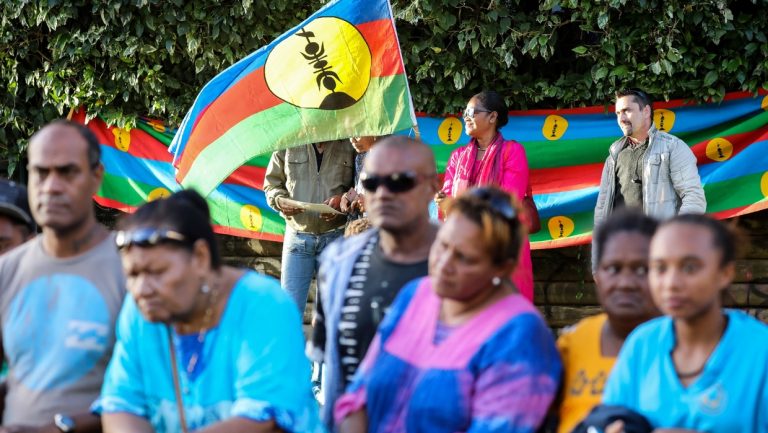
Pacific Elders urge French President to defer independence referendum

Pacific Elders’ Voice have urged the French President to respect the wishes of indigenous leaders in New Caledonia who have called for the deferral of the third independence Referendum due to a spike in COVID related deaths.

“We understand that the proposed third Referendum under the Noumea Accord, scheduled for 12 December, is not supported by the indigenous peoples of New Caledonia,” said the Pacific Elders in a letter delivered to President Emmanuel Macron.

“We are aware of their concerns, as we across the Pacific in Micronesia Polynesia and Melanesia have faced tragedy with the deaths of our peoples, greater isolation as well as the economic downturn of our economies.”

“We acknowledge and understand the concerns of our brothers and sisters in New Caledonia and their wishes to defer the Third Referendum until all mourning protocols have been adhered to at time of death burial, and throughout our traditional mourning periods time.”

The 1998 Noumea Accord allows for three Referendum votes to determine whether New Caledonia becomes an independent state. Independence was rejected in the first two polls held in 2018 and 2020. In October this year the pro-independence, Kanak and Socialist National Liberation Front (FLNKS) called upon the French Government to postpone the third and final December ballot until 2022, however this reasonable request has been ignored.

The Elders recalled President Macron’s visit to Ouvea, New Caledonia in 2018, when he stood with the Kanak peoples at a time for remembrance of great tragedy and pain, and his wise words were that ‘we are no longer in a time of possession but of choice, and collective responsibility’.

“We urge you to be open to the voice of the leaders of the Kanak peoples and show consideration and respect for their wishes. We urge this so that the situation does not turn to violence and that dialogue remains open. We urge this so that whatever decision is made for the future of the peoples of New Caledonia it is made under the auspices of a fair, just, transparent, and peaceful Referendum.” said the Elders in their letter to Macron.

Pacific Elders’ Voice comprises former President of the Republic of Marshall Islands, Hilda Heine, former President of Palau, Tommy Remengesau Jr., former President of Kiribati, Anote Tong, former Prime Minister of Tuvalu, Enele Sopoaga, former Secretary General of the Pacific Islands Forum Secretariat, Dame Meg Taylor, and former member of U.S Congress and President of the University of Guam, Robert Underwood.

They provide guidance, advice and constructive policy inputs for current and future challenges and opportunities facing the Pacific.

SOURCE: PACIFIC ELDERS VOICE/PACNEWS

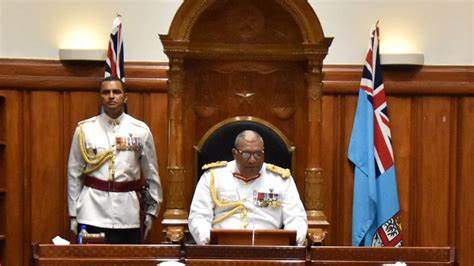
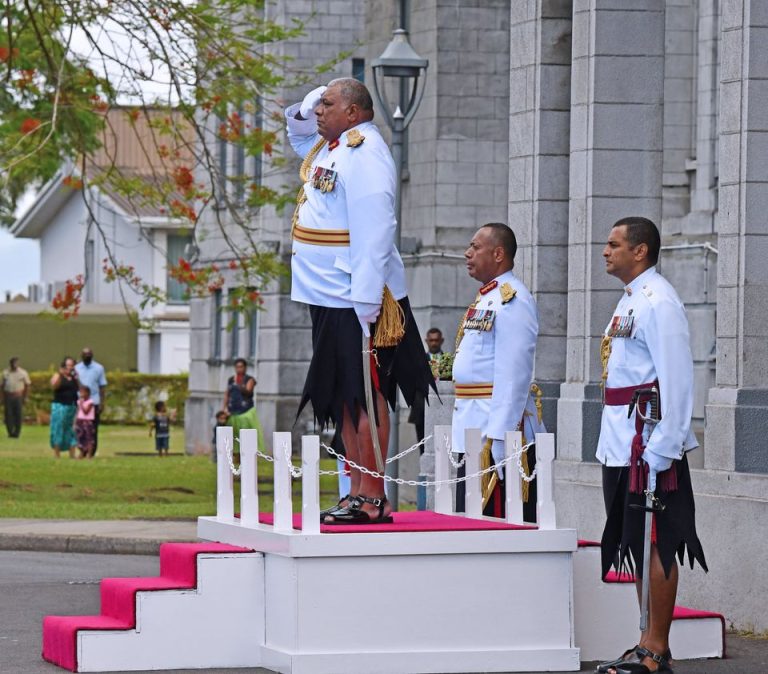
Fiji President Ratu Wiliame: Voters deserve better

Fiji’s next general election should not become a battle of dividers, of people who pit province against province, religion against religion, or ethnicity against ethnicity, says newly-appointed President Ratu Wiliame Katonivere.

While opening the 2021-2022 session of Parliament Monday, he said voters deserved better.

“We should not only ignore candidates and party leaders who engage in that sort of politicking, but condemn them, loudly and together,” he said.

Ratu Wiliame said elections were an opportunity to choose who was best to lead, who had sound philosophies and policies that created stability, that built confidence, and ensured equal treatment and equal opportunity was provided for every Fijian, as outlined in the Constitution.

He said every Fijian voter must understand clearly and specifically what vision different parties represented, what ideas and plans they would bring to the table, and how they planned to finance their socioeconomic policies and legislative ambition.

Ratu Wiliame said those who sought office must approach the campaign with compassion, with dignity and understanding, and they must “stay high” by adhering to principles of ethical conduct rather than “go low” by seeking votes at any cost.

“Merit must matter in our elections, just as it does across our civil service and for the boards that govern our companies.

“I have personally served on a number of boards, including Tropik Wood, Fiji Pine, Fiji Airports, FSC, Fiji Coconut Millers, and Fiji Rice, where I have been privileged to work alongside well-qualified, merit-appointed colleagues.

“I cannot stress how impactful, merit-based leadership can be in steering our industries toward success, better jobs and greater prosperity.

“Without merit-based selection, our companies, our civil service, and even our government would serve the interests of a privileged few rather than serve the Fijian people as prudently managed, sustainably profitable, and service-delivery-centric organisations.”

Ratu Wiliame saId while he is the youngest person to become President, he has been in leadership long enough “to see the difference between the genuine democracy we share today and past systems that fell short of delivering true equality for our people”.

He said he would “protect the flame of young democracy from any and all who seek to extinguish it, for personal or political purposes”.

Ratu Wiliame said he would use his leadership to support the highest possible functioning of the State and the work of the executive to realise the objectives of Fiji’s Constitution.

“I thank the members of Parliament for their vote of confidence in me to assume this high office, and to my immediate predecessor, Major-General Jioji Konusi Konrote,” he said.

“The democracy created under our Fijian Constitution will wither with our complacency, but comes alive with the public’s participation, as do its values and principles.

“So, wherever you are watching, listening to, or reading this address, I thank you for your participation in the vital national business of our democracy,” he said.

SOURCE: FIJI TIMES/PACNEWS

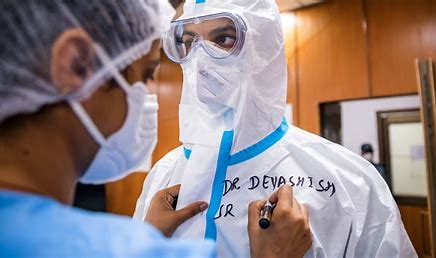
Current system will not protect us from the next pandemic, ‘which could happen at any time’

0

Efforts to reform global pandemic preparedness and response are happening too slowly, the World Health Organisation’s (WHO) Independent Panel for Pandemic Preparedness and Response said on Monday.

Presenting the findings of a six-month accountability report, Co-chairs Helen Clark, former President of New Zealand, and Ellen Johnson Sirleaf, former President of Liberia, warned that “uneven” progress in addressing the COVID-19 pandemic continues to cause illness, deaths and economic losses.

Calling for Heads of State and Government to come together to make faster progress, especially at the UN General Assembly, the two leaders pointed out that with much of the groundwork done, now is the time to end the pandemic and prepare for the next global health threat.

In assessing the progress made since last May, the report covered the areas of leadership and governance, financing, equity, a new legal instrument, and a stronger WHO.

Since May, the report noted that 90 million more people have contracted COVID 19, and 1.65 million have died.

Following the deep-dive into COVID-19 responses, immediate action was recommended for a package of international, interlinked reforms to stop a future outbreak.

“Given the scale of devastation from this pandemic and its continuing impact on people across the globe, the Panel resolved to document fully what happened and why, and to make bold recommendations for change”, said Clark.

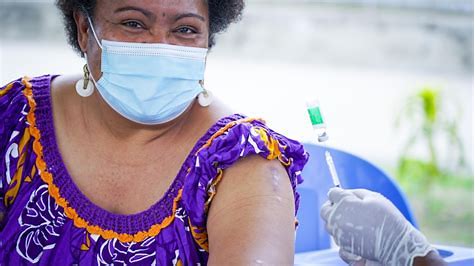
Unfortunately, vaccine inequity has changed very little. And in the poorest countries, less than one per cent of the population are fully vaccinated.

Although wealthy countries have publicly pledged donations, Sirleaf observed that “just a fraction of redistributed doses have actually been delivered”.

The co-chairs maintained that the pledged donations must be transparently planned to quickly deliver the vaccines and to develop, adding that “a true end-to-end global public goods model remains the answer”.

The former leaders pointed to a speech delivered by Secretary-General António Guterres in September calling for the panel’s recommendations to be a starting point for urgent reforms to the global health architecture.

The co-chairs highlighted a growing momentum for a UN global summit as well as increasing support for a new top-level political leadership Global Health Threats Council to mobilise the strong collective commitment required for global health security, which should provide “much-needed leadership and accountability”.

The report stressed that “governance without finance lacks teeth; and finance without governance lacks accountability”.

The Independent Panel noted that the Global Health Threats Council should also allocate and monitor funding from a new financing mechanism that supports pandemic preparedness and responses.

At least US$10 billion in new financing annually and up to US$100 billion in a pool of response funding is needed for a pandemic threat, the report said.

“Our message is simple and clear: The current system failed to protect us from the COVID-19 pandemic”, said Sirleaf.

“And if we do not act to change it now, it will not protect us from the next pandemic threat, which could happen at any time”.

SOURCE: UN NEWS CENTRE/PACNEWS

Climate crisis does not play politics: Fiji President

Fijian President Ratu Wiliame Katonivere says some Parliamentarians are blinded by political ambition to accept the threat climate change poses on communities around Fiji.

Ratu Wiliame while opening a new Parliament session Monday said that he is worried that some have lost sight of what is happening at the grassroots level due to climate change.

He said people will need to see what this crisis is costing Fiji as rising seas, erratic weather patterns, and dying reefs do not play politics.

“I worry that some of us do not appreciate the threat this crisis poses or the vehemence of the Opposition Fiji faces on the world stage,” he said.

“I worry that some are blinded by political ambition and machinations while others have lost sight of what is happening at the grassroots due to climate change.

“I fear they are blind to the forces of industry and to some of the high emitting nations who willfully ignore the Fijians and countless others suffering on the front line.”

“I urge these doubters to look objectively at what the United Nations Framework Convention on Climate Change and the Paris Agreement entail and how these negotiations function.”

“Any sensible mind will see exactly why we must amplify Pacific voices within it but if you won’t look there, look around you,” he said.

He said before politicians choose to attack climate leaders and politicise an issue of such importance, they needed to pause and think of the suffering it has caused in Fiji.

“I assure you that cyclones, rising seas, erratic weather patterns, and dying reefs here in Fiji do not play politics,” he said.

“Politicians need to think the climate devastation has cost our children, grandchildren, and all those Fijians yet to be born. Their future is worth fighting for.

“You cannot claim to stand with those future generations or our people on the front line of the climate catastrophe if you do not stand behind Fiji’s climate leadership,” he said.

He said the real work of combatting climate change does not only happen in conference rooms and on written paper it also happens at home and this is where Government is leading from.

SOURCE: FIJI LIVE/PACNEWS

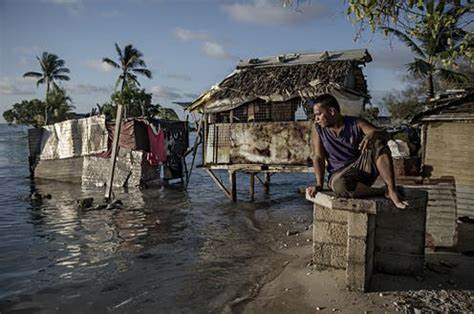
Seas are coming for us in Kiribati

By Akka Rimon, PhD Student, Australian National University and Anote Tong, Distinguished Global Leader-in-Residence, University of Pennsylvania

Despite the progress and momentum of the COP26 climate conference in Glasgow, we are still not moving fast enough to avoid the worst of climate change.

It is heartening that more than 190 countries and organisations agreed to rapidly phase out coal power and end support for new coal power stations. More than 100 countries signed a pledge to cut methane emissions 30% by the end of the decade, and about the same number agreed to stop deforestation on an industrial scale in the same timeframe.

But even with these agreements, we in Kiribati face the death of our homeland. Co-author Anote Tong led our country as president for 15 years, alongside lead author Akka Rimon, who was foreign secretary between 2014 and 2016.

The problem is speed. Our land is disappearing faster than global action can stem climate change. Delays and a lack of global leadership mean the existence of small island states like Kiribati is now in the balance.

That means we must urgently find ways to rehome our people. It is very difficult to leave our homes, but there is no choice. Time is not on our side. We must prepare for a difficult future.

What we need is a model where displaced people can migrate to host nations when their homes become uninhabitable. Countries like Australia need workers – and we will soon need homes.

This is, increasingly, a question of justice. Australia’s actions, in particular, raise questions over how sincere it is in honouring its recent commitments at COP26.

As the world’s largest exporter of fossil gas and the second largest exporter of coal, Australia’s reluctance to change is putting its neighbours in the Pacific at risk of literally disappearing. It is the only developed nation not committed to cut emissions at least in half by 2030.

In Glasgow, Fiji urged Australia to take real action by halving emissions by 2030. Did it work? No. Australia also refused to sign the agreements on ending coal’s reign, with prominent politicians undermining the COP26 agreement as soon as the conference was over.

We desperately hope the commitments Australia did make at COP26 are not just words on paper. But if they are, that makes our need for certainty even more urgent.

Let us speak plainly: If Australia really does plan to sell as much of its fossil fuel reserves as possible and drag its feet on climate action, the least it can do is help us survive the rising seas caused by the burning of its coal and gas.

To migrate with dignity

Eighteen years ago, the Kiribati government – then headed by Anote Tong – introduced a “migration with dignity” policy as a way for I-Kiribati people to adapt to climate change.

We gave our I-Kiribati workers international qualifications tailored for jobs in demand overseas. After this, Kiribati, Tuvalu, Fiji, Tonga and New Zealand set up a scheme to allow workers to migrate to New Zealand if they had an offer of a job. Each year prior to COVID, 75 people from Kiribati were able to migrate through the scheme.

New Zealand is the first and only country currently offering a permanent labour migration program from Kiribati. While welcome, we will need more places for I-Kiribati as climate change intensifies.

Like New Zealand, Australia has expanded its seasonal worker schemes for Pacific workers, and is now moving towards a longer stay, multi-visa arrangement under its Pacific Labour Scheme. We expect this scheme will evolve into a permanent migration scheme similar to New Zealand.

While we wait in hope for a true safe haven for our people, our diaspora is growing. I-Kiribati are moving now to Pacific countries higher above the water level such as Fiji, the Cook Islands, Niue, Samoa and Tonga.

Are we scared? Of course. We are on the front line of this crisis, despite having done amongst the least to cause it. It is difficult to leave the only home we have known. But science does not lie. And we can see the water coming.

Labour migration will not solve climate change, but it offers hope to those of us who will be displaced first.

This is a vital question of climate justice. This upheaval is caused by high-emitting economic powerhouses like the US, China, and the European Union. But the vulnerable are paying the full cost. That is not fair.

As climate change worsens, other global leaders must consider how best to support adaptation through labour mobility. Far better to plan for this now than to let climate change rage unchecked and trigger ever-larger waves of refugees.

The question of climate justice

Consider this: in 2018, each person in Kiribati was responsible for 0.95 tonnes of carbon dioxide equivalent. By contrast, each person in the United States was responsible for 17.7 tonnes. Despite this imbalance, the US has taken little responsibility for what is happening to Kiribati and other low-lying nations.

We are hopeful this may change, given US President Joe Biden recently pledged to make his nation a leader in climate finance by supporting nations worst hit by climate change and with the least resources to cope. It’s also encouraging that new laws have been proposed to allow people displaced by climate change to live in America.

We must work to slash emissions and devise solutions for the problems caused by the warming.

International law must recognise climate displaced populations and create ways we can be rehoused.

While other solutions such as climate-proofing infrastructure or even floating islands have been proposed for Kiribati, these cannot happen overnight and are very expensive. By contrast, labour mobility is fast and advantageous to the host country.

Kiribati’s current government is working to increase skills and employability in our workforce. We are doing our part to get ready for the great dislocation.

When I-Kiribati have to migrate, we want them to be able to do so as first class citizens with access to secure futures rather than as climate refugees.

We are doing all we can to stay afloat in the years of ever angrier climate change. But it will take the global village to save our small village and keep alive our culture, language, heritage, spirits, land, waters and above all, our people.

Akka Rimon is currently employed by the World Bank. The views expressed in this piece are hers and in no way represent the views of the bank.

Anote Tong does not work for, consult, own shares in or receive funding from any company or organisation that would benefit from this article, and has disclosed no relevant affiliations beyond their academic appointment.

SOURCE: THE CONVERSATION/PACNEWS

Papua New Guinea will only have one-third of its population vaccinated by 2026

New data released by The Lowy Institute has predicted only a third of Papua New Guinea’s adult population will be fully vaccinated by 2026 as the island nation battles to stay ahead of the pandemic.

Lowy Institute researcher Alexandre Dayant said the analysis “revealed a region divided”, placing nations like Papua New Guinea, Vanuatu and Solomon Islands well behind neighbours such as Nauru and Fiji.

The research suggests social media has driven vaccine hesitancy in the region as platforms such as Facebook and Twitter develop into the “primary conduit for news consumption” across the globe.

Dayant also attributes the low vaccination rate – which is sitting somewhere around 4 percent – to a “limited number of healthcare workers, weak government capacity and large rural populations”.

“In a region where social media has become the primary conduit for news consumption, conspiracy and conjecture about the vaccine have spread faster than the disease itself,” Dayant said.

“This has fed into an already-low level of trust in formal and public institutions.”

Dayant suggested governments step in to offer “more targeted” vaccination campaigns on social media platforms to combat the rise in misinformation.

“You could help design more targeted and context-specific campaigns across a range of platforms to convey the message (that) the vaccine is safe,” he said.

In comparison, Nauru vaccinated its entire adult population in May this year, with Fiji (more than 80 per cent) and New Caledonia (93 per cent) reporting similar numbers. Despite only having had reported one confirmed case, the Polynesian kingdom of Tonga’s vaccine rollout has still outpaced PNG.

Across the Buka Strait, the Solomon Islands have roughly 12 percent of their population double-jabbed, according to numbers from October.
There were initial fears the Pacific Island nations would “fall towards the back of the global queue” for vaccine doses, but support from Australia, New Zealand, the U.S and China has helped keep supplies high for those who want it.

Australia has sent more than one million vaccines to Fiji, including more than 200,000 doses to both Papua New Guinea and the Solomon Islands. Vanuatu has received roughly 100,000 doses from Australia, Samoa (50,000 doses) and Tonga (19,000).

However, despite vaccine support from more developed nations, the uptake of the jabs is still not correlating with the bolstered supply in some countries. In mid-September, the government of PNG donated 30,000 vaccine doses to Vietnam, after they were set to expire at the end of the month.

Healthcare workers and medical aid workers have even reported receiving death threats from rural communities who associate the vaccine with “witchcraft”. This presents another difficulty for PNG’s vaccine distribution, which is challenged by the country’s varied terrain and dispersed population.

“The conspiracy theories are really adapting as fast as the mutations of Covid itself,” said the CEO of Australian Doctors International (ADI), Mimi Zilliacus, speaking to the ABC.

“That’s in part driven a lot by a very low-level understanding of biology and science, and a background of having a culture around witchcraft and a belief in superstitions.”

The Red Cross is calling for urgent support for Papua New Guinea as a surge in cases overwhelms the island. Monash University’s Dr Rob Mitchell told Sky News Australia the situation in PNG is incredibly precarious with less than one in 25 of its adult population vaccinated.

“Although I’m in Melbourne at the moment, I’m in regular contact with emergency department colleagues throughout the country, and they are describing a really bleak picture,” Dr Mitchell said.

“In part, that is attributable to a very low vaccination rate. It’s highly likely to be less than 5 per cent countrywide.”

As of 22 November, Papua New Guinea has 1126 active cases of coronavirus and a total of 484 deaths since the initial outbreak.

SOURCE: NEWS.COM.AU/PACNEWS

FAST party secures Falealupo seat

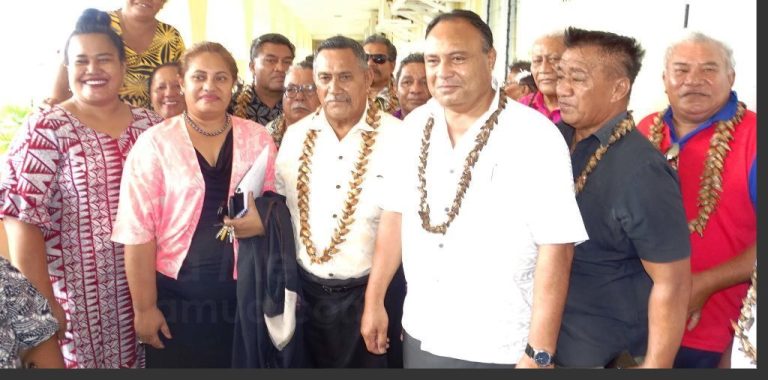
Fuiono Tenina Crichton is the new Samoa Member of Parliament for Falealupo following the Supreme Court decision Monday to disqualify Tuitogamanaia Dr. Peniamina Leavai from the by-election.

The Fa’atuatua ile Atua Samoa ua Tasi (FAST) party candidate filed a petition questioning the eligibility of his rival and Human Rights Protection Party (HRPP).

Chief Justice, Satiu Simativa Perese and Justice Niava Mata Tuatagaloa handed down the decision in a packed courtroom on Monday afternoon.

In their decision, the Court ruled that Tuitoga does not satisfy a requirement to render service to the church due to the matafale that he serves belongs to his father, Aeau Peniamina Leavaiseeta.

Chief Justice Perese said Tuitoga’s voluntary contribution to the EFKS church in Falealupo is not attributed to him but rather his father and he is therefore disqualified from contesting the by-election.

The decision means that the constituents of Falealupo will not head to the polls this Friday while six other constituencies return to the voting booths to decide their MP for the second time this year.

Now that FAST has secured another seat in parliament, the hopes of the former government led by HRPP to return to office are slim after losing another seat that it previously held in April.

FAST now holds a 27-seat majority in the parliament including the Speaker while HRPP has its numbers at 18 seats.

Fuiono is a first-term parliamentarian that lost the April’s election to Aeau Tima Leavai who is the sister of Tuitoga.

Aeau was forced to vacate her seat in parliament when Fuiono lodged a post-election petition alleging bribery and treating against the female winner.

She later resigned from office and agreed to forego a by-election that followed after as part of a deal to drop the legal actions against her.

SOURCE: SAMOA OBSERVER/PACNEWS

U.S faces pressure to do more to address its nuclear legacy in the Marshall Islands

Two Congress members are asking the U.S Department of Energy to provide more information about the effects of U.S nuclear waste in the Marshall Islands.

The U.S conducted 67 nuclear weapons tests in the Marshall Islands from 1946 to 1958, exposing Marshallese people to radiation that continues to have health and environmental implications. The U.S then stored the atomic waste at Runit Dome, a concrete dome on Enewetak Atoll.

Rep. Katie Porter represents Orange County, California, and is chair of the Subcommittee on Oversight and Investigations in the House Committee on Natural Resources.

She has been seeking more details about the effects of nuclear testing in the Marshall Islands in the wake of a Los Angeles Times investigation that found the U.S stored nuclear waste from Nevada in Runit Dome without informing the Pacific nation.

In a letter Friday, Porter and Rep. Raul Grijalva of Arizona asked for documents and correspondence among Department of Energy officials related to a letter that officials sent to the Marshall Islands about the state of nuclear waste in May.

The Department of Energy didn’t respond to a request for comment.

In October, Porter led a congressional hearing regarding concerns about Runit Dome, which is leaking radioactive waste. The Energy Department said in a report last year that the leaking is not significant.

“The U.S has both a moral and national security imperative to address our nuclear legacy in the Marshall Islands,” Porter said at the hearing, adding that addressing the issue would be in line with the Biden administration’s commitment to racial justice and national security issues in the Pacific.

Department of Energy officials testified that the Runit Dome “is not in any immediate danger of collapse or failure.”

The agency said the U.S has for decades enrolled survivors from two affected atolls in a program that provides access to medical care and treatment, and 77 survivors are still participating.

“DOE is in the process of establishing a groundwater radiochemical analysis program designed to provide scientifically substantiated data that can be used to determine what, if any, effects the dome contents are having, or will have, on the surrounding environment now and in the future,” the agency said in its testimony.

In their letter, Porter and Grijalva criticised the agency’s lack of response to repeated document requests, raised concerns about conflicting Energy Department testimony and the timing of the department’s May letter.

The U.S is in the midst of renegotiating a treaty with the Marshall Islands that in part gives the U.S military strategic denial rights over the country’s surrounding air and waters.

The Congress members described how the U.S failed to evacuate Marshallese people quickly enough to protect them from the fallout during the 1946-1958 testing, and cited descriptions of how mothers later gave birth to babies with translucent skin and no bones.

A 2014 study analysed how the radiation exposure in the Marshall Islands increased the risk of certain cancers, especially thyroid cancer.

Franscine Anmontha, communication director of the Marshall Islands National Nuclear Commission, said Saturday that the community is concerned about the ongoing health effects of radiation on people not only on the atolls enrolled in the U.S medical programme but on surrounding atolls.

“If you were to ask a group of young Marshallese people if they knew someone with cancer almost 90% of them would raise their hands,” she said. She said the commission wants to bring scientists to the Marshall Islands to analyse the dome so that they don’t have to rely solely on U.S data.

Anmontha said October’s congressional hearing was a turning point in the struggle over the U.S nuclear legacy in the Marshall Islands.

“I think it’s really important because we’re seeing someone with a title and power to voice their opinion and represent those who have been fighting,” she said. “It’s kind of amplifying the Marshallese community to have a voice and to have someone supporting them.”

Friday’s letter is the second letter this month pressing the Biden administration for more information about the nuclear testing.

Several Congress members — including Hawaii Reps Ed Case and Kai Kahele — wrote to the White House on 05 November pushing for the appointment of a lead negotiator for treaty discussions who would have the ability to address concerns about nuclear waste.

The lead negotiator “should have the mandate to see that legacy issues related to U.S nuclear testing in the region are appropriately resolved, including proper environmental protections, clean up, health benefits, and monetary compensation for victims and their descendants,” the lawmakers wrote.

Anmontha said she’s glad to hear that U.S officials are pressing the Energy Department for more information.

“This has been a long and hard fight for the Marshallese community. A lot of the people who are directly impacted are very old now,” she said. “We just want them to be able to see some sort of justice before they all pass away,” said Anmontha.

SOURCE: CIVIL BEAT/PACNEWS

Stay connected

529FansLike
172FollowersFollow
156SubscribersSubscribe
- Advertisement -