Home Blog Page 1075

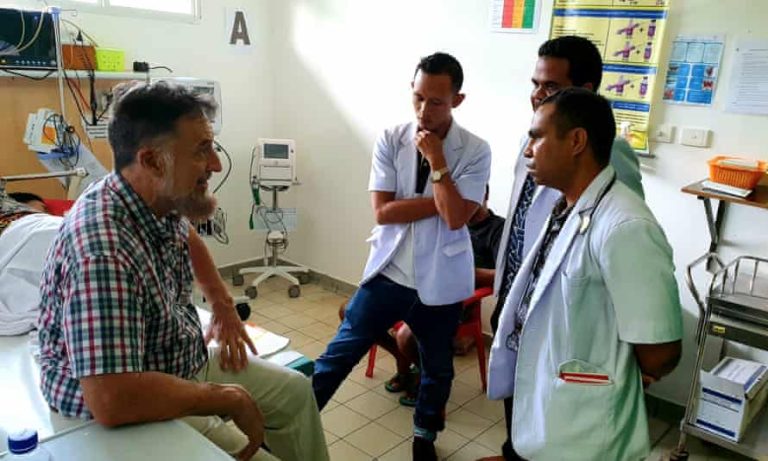
Omicron did not come as a surprise: Dr Fong

Policymakers in Fiji are leaving the situation to the health experts to draft the country’s next course of action.

This as the new Omicron variant has forced some bigger nations to restrict travel, while global scientists are still trying to understand the variant and its mutations.

Attorney General, Aiyaz Sayed-Khaiyum, said Fiji had risk-mitigation measures in place ahead of the re-opening of international travel.

“They’ll be risks in anything but if you mitigate those risks well but at the same time open up the tourism sector then you’re able to not only able to control or mitigate the risks but you’re also able to provide livelihoods for our people.”

National health experts say the COVID-safe measures will not change if any specimen result returns positive for the Omicron variant.

Permanent Secretary for Health, Dr James Fong said the detection of Omicron was expected given the laxity of COVID mitigation efforts in the region.

“I mean Omicron came as no surprise to any of us sitting in the Ministry of Health. We knew that Africa was among the region that we knew where there was relatively uncontrolled spread, we knew there was a large number of unvaccinated persons there. So we knew that there is a likelihood that we were going to get variants coming out of South Africa.”

The World Health Organisation says rational, proportional risk-reduction measures in line with international health regulations must be followed.

SOURCE: FBC NEWS/PACNEWS

‘The fear of this vaccine is real’: how Papua New Guinea’s Covid strategy went so wrong

By Jo Chandler

Public confusion and distrust over vaccination have been fuelled by what experts say are crippling failures in authorities’ response to the pandemic

In mid-October Dr Clement Malau, a Harvard-educated public health specialist and former secretary of the Papua New Guinea health department, was alarmed to discover he had gone viral. Only he hadn’t.

Someone had posted a 20-minute audio clip as a “speech from Dr Clement Malau regarding the vaccine”, the orator sliding between English and Tok Pisin – PNG Pidgin – to deliver an eloquent, tub-thumping rant against Covid-19.

By the time Malau was alerted, the clip was super-spreading across Facebook and WhatsApp groups, propelled by high-profile PNG figures. It’s still there, feeding into anti-Covid and anti-vaccine zealotry.

Access to social media remains relatively low in PNG – Pacific communications expert Dr Amanda Watson says there are only around 600,000 smartphones in circulation in a population of nearly 9 million, and most households aren’t online. But the online maelstrom is quickly broadcast into communities via the “coconut wireless”, or word of mouth. It fuels the distrust underwriting the nation’s disastrously low vaccination rate, with less than 4% of the adult population fully vaccinated despite the availability of jabs in all provinces. Meanwhile, a third wave of the pandemic overwhelms hospitals and overflows morgues.

Malau tracked his impersonator, forwarding details to authorities. “And they have done nothing.”

So he’s using Facebook to try to counteract the lies “all by myself”. He has acquired nearly 5,000 followers, many desperate for reliable information which they will, in turn, share with their wantoks (communities). With respect, empathy and lots of “God Bless PNG!”, he goes toe-to-toe with the angry and the fearful.

Malau understands the landscape and the stakes all too well. He was director of PNG’s National Aids Council in the 1990s when many of his compatriots didn’t believe in HIV. His team had to devise clear, simple messaging that would resonate across a diverse nation of 800 languages and low literacy.

While he encourages Covid-19 vaccination, and posed for cameras in Port Moresby when he got his first jab in May, Malau argues that jabs alone won’t cut it in PNG. “If we do not understand our own setting, we will be bulldozed down the track of just vaccine alone.”

‘Not a rational issue’

Echoing other medical and social science specialists who know PNG, Malau sees crippling failures in the messaging and strategy of the nation’s pandemic response. Confusion and distrust from the earliest days spiralled out of Australia’s shifts on AstraZeneca, which Papua New Guineans were told they must take even as younger Australians were told it wasn’t safe. The continuing failure to tailor pandemic campaigns to local conditions risked “a disaster if we don’t manage it properly”.

Some say it’s already disastrous. The obstetrician Prof Glen Mola has spent 50 years in PNG trying to claw back staggeringly high maternal mortality rates, only to see them blow out five-fold at Port Moresby general hospital as the virus has struck pregnant women. The first casualty was just 18 years old, the latest 27. “I’ve never had to watch people die because they are just too exhausted to take the next breath.”

PNG’s official pandemic death toll is 546, but a lack of data and testing means the true casualties are unclear. At Port Moresby hospital there were 40 or 50 Covid deaths a day in early November, dropping lately to around 10, but Mola wonders if people are not presenting “because the perception might be that if you go, you die”.

Even as families mourn mounting casualties in their Facebook posts, “with all the vaccine phobia and people who have provoked this fear of vaccination … it’s getting worse”, Mola says. At home in the evenings, he hears anti-vaccine proselytisers spread the word across the surrounding settlements on loudspeakers.

“The fear of this vaccine is real,” says Dr Fiona Hukula, a Port Moresby-based anthropologist with the Pacific Islands Forum Secretariat. In Madang, on the other side of the country, the Divine Word University president, anthropologist and Catholic Priest Dr Philip Gibbs has had countless conversations with staff and students trying to persuade them to get jabbed. “It’s an emotional issue, not a rational issue,” he says. “I got the impression that students here are more afraid of the vaccine than they are of catching the virus.”

In the absence of clear, strategic information, dangerous rumours ignite. As cases surged and the highlands town of Goroka suffered a spike in deaths in October, high-profile locals were among those who lined up for their first jabs. But before immunity could kick in, several got Covid and died, Mola says. “And so then the deaths are blamed on the vaccine.”

Social media has supercharged fears, but Hukula argues that it has been made worse by the absence of good, locally attuned information. “From the very beginning of the pandemic … we didn’t have a clear communications strategy.”

The importance of the familiar

Back in April 2020, as PNG recorded its second confirmed case of coronavirus, Hukula, Gibbs and their Australian colleague Dr Miranda Forsyth co-wrote an appeal to national and international health authorities to ensure that they recognised local contexts – social and cultural as well as practical considerations like access to soap and water and the feasibility of social distancing – in crafting pandemic messaging for the people of PNG.

They warned: “The government and society at large needs to act fast to prevent the spread of fear that is a catalyst for violence and social unrest.”

In PNG, “education/messaging about causes of sickness and death based on science alone are not sufficient to quell doubts about the root cause of harm and why it occurs and impacts some people and not others”. They also insisted that all information be translated not only into widely spoken Tok Pisin and Motu, but where possible into local vernacular.

But 18 months on, other than a multilingual pamphlet written by Mola, which he’s lobbying authorities to circulate, there’s little evidence that has happened.

“They’ve hardly put out any messages in Tok Pisin,” says Paul Barker, the director of the PNG think-tank the Institute of National Affairs. “They’ve got an army of Australian high-powered consultants around the Covid centre [in Port Moresby], but they’re not knowing how to communicate.”

Other key planks of the response are similarly far short of the mark. Centralised vaccine hubs where people wait many hours “are not practical for people – for elderly, for mums with babies, the disabled”, Hukula says.

Fearful people want the reassurance of familiar health workers from their local clinics. “They should have gone out to the markets, to explain to people clearly that this is a vaccine that’s going to help.”

The Guardian sought comment from the department of health but received no response.

Conspiracy theories and religion

The lessons of local responses to epidemics of HIV, tuberculosis and, in 2018, the colossal operation to extinguish a potentially devastating polio outbreak – blamed on the breakdown of the health system and eroding childhood vaccination rates – are grounded in awareness campaigns enlisting trusted figures and targeting community leaders, in sending health workers and specialists deep into urban and rural communities to deliver programs.

Hukula and her colleagues also drew insight and warnings from their years investigating attacks against individuals accused of sorcery and witchcraft, which have risen in some parts of PNG. There’s an enduring belief that bad magic, rather than disease or misadventure, is to blame for an untimely death. This has become entwined with Christian evangelical and Pentecostal beliefs. It was inevitable that coronavirus would be caught in that web.

“In a society where we have those very firm beliefs, that misfortune can happen because of the supernatural, this just feeds really well into this whole [religious] narrative,” Hukula says, referring to widespread conspiracies that the vaccine causes infertility and death.

Fear and faith dominate PNG Facebook discussions around Covid-19, according to a recent report by ABC International Development, analysing more than 100,000 posts and comments logged on popular public news pages in the six months to 30 September.

Lately the conversation is preoccupied with false claims of long-term, debilitating side-effects from the jabs. “That fear is driving the vaccine hesitancy in a big way,” says research leader Vipul Khosla.

In terms of faith, a strong thread of posts reflects what Barker hears from colleagues in his office who say they don’t need the vaccine because “Jesus Christ is my saviour”. But he and other experts caution that the influence of extremist social media posts can easily be exaggerated.

An analysis of Covid commentary on one popular, public Western Province page on Facebook by two University of Melbourne anthropologists with decades of experience in PNG, Dr Monica Minnegal and Dr Peter Dwyer, found people were engaging with the material critically and selectively. “Most participants did not take either religious tropes or conspiracy theories as primary sources of comfort or explanation.”

The forum had played a positive role in the health emergency, they said, arguing that better, cheaper internet access for people in remote regions would enhance the spread of crucial information and engagement with health programs.

Lately the researchers have become concerned by the tenor of responses to “no jab, no job” policies and perceived mandates for vaccinations. Dwyer says: “They feel their autonomy is being assaulted, and they are much more concerned by that [than] they are by vaccination.”

This is cultural, not a question of “silly beliefs”, says Minnegal. “It’s too easy to say social media is spreading misinformation. This is about a social movement.”

The argument that social media has untapped useful potential is echoed by Watson, who says even townspeople with internet access struggle to find credible information. Meanwhile, they’re relied on to convey news to family and friends. “The vast majority of people live in rural villages where they don’t receive daily newspapers. In many places they don’t even have radio signal.”

One theme in the ABC analysis is “a lot of discussion on the role churches should play in advocating for vaccine uptake”, says Dr Prashanth Pillay, who co-wrote the report. People are questioning whether they should be involved in the Covid discussion at all. “There’s the idea that the church is the place for biblical teachings, and it should not veer from that.”

This plays out as the mainstream churches dial up their vaccine advocacy, with the Catholic Cardinal Sir John Ribat declaring he put his trust in God and got vaccinated. For some this was comforting, says Gibbs, but others “say that vaccines are a sort of weakness, because it means that you don’t trust that God is going to protect you”.

Martyn Namarong, a political activist and writer, has just spent weeks at the bedside of his mother in Port Moresby general hospital, where she’s being treated for Covid-19.

The Christian apocalyptic views swirling around Covid are nothing new, Namarong says. Vaccine advocates need to tone down the noise rather than shout louder. “When it comes to people’s religious views, you cannot change them. It’s like telling PNG Christians that Buddhism might be a good idea – it’s not going to happen.”

Covid campaigners “need to try to actually engage more … see us as human beings and friends as opposed to opponents on a particular issue”. And they must recognise the daily struggles of life in PNG. “Most people live a very cyclical existence. The view of time is you just wake up in the morning, you go to sleep, and the next day you wake up, everything’s new again. It’s about survival.”

Like Malau, Namarong urges more regard for variables people can control – good diet, air quality. “So you’re not seen as just ‘vaccine, vaccine’. You are seen to address a public health issue as opposed to pushing out the vaccine agenda … Let’s co-opt some of the message from the people who have reservations.”

Namarong says his mother is recovering. But describing what he’s observing in the hospital, and in the capital, he says: “It’s scary. That’s the word I would use. We can see the system is trying to adjust to cope, but it is just at the edge … one spike and everything collapses.

SOURCE: THE GUARDIAN/PACNEWS
Fans ready for action as HSBC World Rugby Sevens Series continues in Dubai

0

The second Emirates Dubai 7s event in succession follows last weekend’s series opener which saw South Africa and Australia win the men’s and women’s titles respectively.

Matches in Dubai will be played across two pitches and will get under way at 09:00 local time (GMT+4) on Friday 3 December with France v Great Britain in women’s Pool B.

At the end of two full days of speed, skill and drama on the pitch, the women’s gold medal final will take place at 18:56 on Saturday 4 December, followed by the men’s final at 19:26 (all times local).

The men’s competition in Dubai sees the 12 teams divided into three pools of four teams, replicating the Olympic competition format.

South Africa will begin their campaign to win a fourth round of the Series in succession in Pool A against Great Britain, Ireland and Japan.

Pool B sees last weekend’s silver medallists USA take on Australia, Kenya, Canada.

While Pool C includes Olympic gold and bronze medallists Fiji and Argentina respectively, alongside France and Spain.

USA’s Stephen Tomasin is looking forward to the return of the fans: “Last weekend was a great start to the season for us. We showed that we can take lessons learned from one day and apply them to the next. From here, we have to show consistency and improvement in slight aspects of how we play. There’s no better place to do that than in front of 50,000 roaring fans in Dubai.”

In the women’s competition the 10 teams are divided into two pools of five with each team playing each other in the pool. The pool placings will decide the classification matches, with no quarter or semi-finals, meaning the teams who top their respective pools will contest the gold medal final.

Australia will enter Pool A in confident mood following victory last weekend, their first title on the Series since 2018. They will face in form Russia and fast improving Brazil who recorded their best ever result with sixth place last weekend following consistently impressive performances. Canada and Spain complete the Pool A line-up.

A strong looking Pool B includes three of the top four placed teams from the Olympic Games in Tokyo as silver medallists France, bronze medallists Fiji and fourth placed Great Britain prepare to do battle alongside USA and Ireland.

France captain Jade Ulutule said: “It was exciting to be back on the World Series last weekend but this weekend with the fans is going to be even more exceptional. It is quite different playing in the heat here in Dubai compared to the temperature in France right now, but we know why we came here and we know what we want so we’re going to go for it. The team is in good shape and we know what we have to improve from last weekend to reach the final, we have worked on that after our recovery and coming back to training this week so we are going to be ready for this weekend.”

New Zealand’s men’s and women’s teams, who won the respective Series titles in 2020, and Samoa’s men’s team are unable to participate in Dubai due to the challenges of the Covid-19 travel logistics.

Great Britain are participating in the opening two rounds of the Series, as part of the standing agreement to play the calendar year 2021, before reverting to compete as national unions for the remainder of the 2022 Series, with England, Scotland and Wales participating in the men’s Series and England in the women’s series.

The 2022 Series continues as the sport looks to capitalise on a highly successful and impactful Olympic Games played in front of a huge global television audience, which generated more than 22 million video views and over 100 million social media impressions across World Rugby’s digital platforms.

SOURCE: WORLD RUGBY/PACNEWS

Former rugby player Sorovaki named Fiji Chef de Mission for Birmingham 2022

0

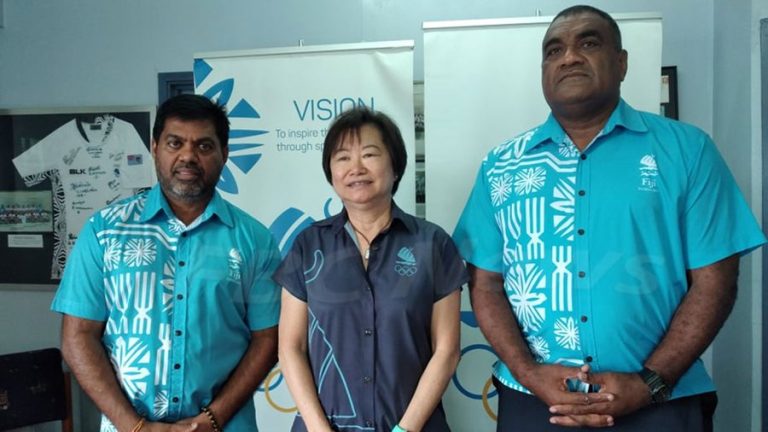
Former Fiji rugby union player Sale Sorovaki has been named as the Pacific country’s Chef de Mission for the Birmingham 2022 Commonwealth Games.

The 52-year-old made 19 appearances for his country between 1995 and 1998, scoring two tries.

He moved into sports governance and was Chef de Mission for Fiji at the 2017 Asian Indoor and Martial Arts Games in Ashgabat in Turkmenistan.

Sorovaki is currently the operations manager for Fiji Rugby Union, while he was head coach of the sevens team which took part at the 2014 Summer Youth Olympic Games in Nanjing.

At the 2011 Pacific Games in Noumea, Sorovaki was section manager for rugby sevens.

He has a diploma in management of Olympic sports organisation and is a level three qualified World Rugby coach, as well as a certified World Rugby trainer.

The centre played club rugby in New Zealand for Wellington and Manawatu, and also spent four years in Japan with Kintetsu Railway.

“I have a good sense of working with people and trying to connect with them regardless of what sport they represent,” Sorovaki said.

“I’d like to bring out the best from athletes and challenge them to be their best versions.”

Fiji has won three gold medals, four silver and eight bronze in its Commonwealth Games history.

The country will place big focus on rugby sevens in Birmingham, with the men due to enter as the back-to-back and reigning Olympic champions.

Despite this success, they have never won the Commonwealth Games title where they have claimed three silver medals.

Fiji’s women won Olympic bronze at Tokyo 2020 this year.

Elsewhere, Ajay Ballu has been named as Chef de Mission for the 2022 Pacific Mini Games in Saipan in the Northern Mariana Islands.

He competed as an archer at the 2003 and 2007 Pacific Games, before moving to governance roles.

Ballu was general manager at the 2018 Commonwealth Games in Gold Coast, and at the 2019 Pacific Games in Samoa.

SOURCE: INSIDE THE GAMES/PACNEWS

National Capital District Governor Powes Parkop urges PNG to take tough stand on West Papua

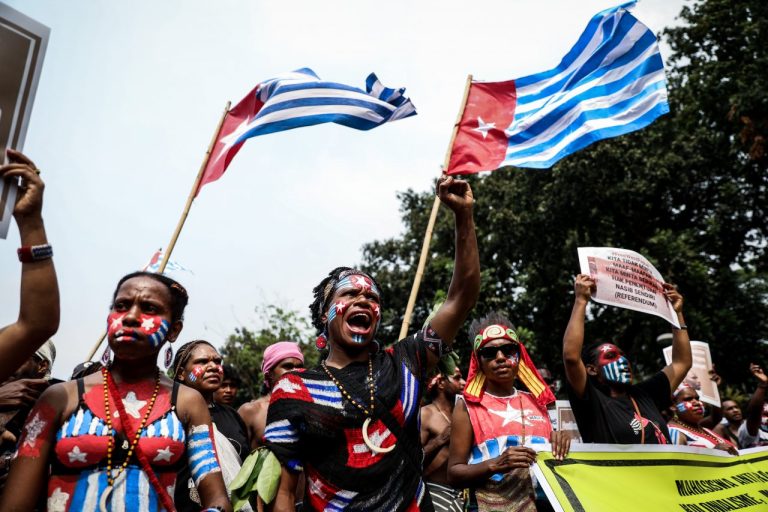
Papua Guinea National Capital District(NCD) Governor Powes Parkop has called on the government to revise and adopt a more courageous policy on West Papua.

He said this when raising a series of questions to Foreign Affairs Minister Soroi Eoe in recognition of the West Papuan declaration of Independence on 01 December, 1961.

“Hiding under a policy of ‘Friends to All, Enemy to None’ might be ok for rest of the world but it is a total capitulation to Indonesian aggression and illegal occupation. It is more a policy of seeing no evil, speaking no evil and to say no evil against the evils of Indonesia,” he said.

“Do we plan to raise the matter in the Melanesian Spearhead Group (MSG) and if so, when?

“What have we done or plan to do to apply pressure on Indonesia to allow the UN Human Rights Rapporteurs to visit the territory to inquire into the specific human rights complaints and the general human rights conditions in west Papua consistent with the Resolution of the Pacific Islands Forum in 2019.

“What steps are we doing to assist the ACP Countries escalate the resolution adopted in Nairobi Kenya on West Papua to the United Nations?

“Considering that PNG is a key member of MSG and MSG has recognised the United Liberation Movement for West Papua (ULMWP) as an observer Member of the MSG, what plans do we have to provide support to the ULMWP?

“Can we allocate them funds from our budget or space here in PNG to step up an office capacity to pursue their right to self-determination.

“Imagine if in 1974 when we had declared self-government and Indonesia invaded and no-one came to our assistance.

Imagine in 1980 when the French manipulated Jimmy Steven’s to stop the independence of Vanuatu and imagine if Sir Julius Chan and government then did not send the Kumul Force to Espiritu Santo.

“When are we going to have the courage to speak the truth on what is happening on our ancestral land to the West?

“We continue to live in silence and fear. How long are we going to allow fear to dictate our decisions and actions and do what is morally and ethically correct? Why are we afraid of Indonesia?”

Prime Minister James Marape raised a Point of Order clarifying that Standing Orders did not allow questions challenging government policies by making inferences, references and assumptions.

Marape said while these were matters of sovereignty and the Governor had every right to ask the questions, he should get straight to the questions instead of making political statements that bordered on government policy.

Eoe said he would make a detailed response on the government policy on the West Papua issue after discussion with Cabinet.

SOURCE: POST COURIER/PACNEWS

Britain re-joins major Pacific body

0

The United Kingdom has re-joined the Pacific Community, 17 years after severing ties with the regional organisation.

It was one of the six founding members of the then South Pacific Commission in 1947 – along with Australia, New Zealand, the United States, France and the Netherlands – but pulled out after closing many of its high commissions in the Pacific.

In the past two years the UK has re-opened high commissions in Tonga, Samoa, and the embassy in Vanuatu, and expanded its Suva base.

A spokesperson for the British High Commission in Suva, Samantha Harrison, said re-joining the Pacific Community now is appropriate.

Harrison said the UK is already a member of Secretariat of the Pacific Regional Environmental Programme (SPREP) and a dialogue partner with the Pacific Islands Forum.

“So, it is part of our commitment to the region to support those institutions and to support the important work that the PC does on a range of issues that the UK also is keen to tackle. For example, climate change, promoting human rights and responsibilities, protecting the marine environment and supporting the prosperous development of Pacific economies.”

Harrison said the UK’s priorities are the mobilisation of its development aid, both bi-laterally and multi-laterally.

She said this is aimed at helping countries build resilience, which is also a goal of the Pacific Community.

The Pacific Community focusses on major cross-cutting issues, such as climate change, disaster risk management, food security, gender equality, human rights, non-communicable diseases and youth employment.

SOURCE: RNZ PACIFIC/PACNEWS

COP26 Glasgow Climate Pact – “We didn’t come home empty handed”

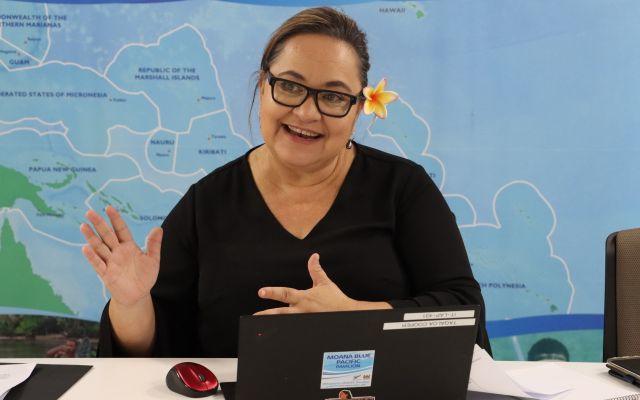
By Opinion by Tagaloa Cooper

The odds are always stacked against the Pacific region in the United Nations Framework Convention on Climate Change (UNFCCC) process, and at COP26 we faced the additional challenge of Covid-19.

The Pacific nations contribute less than 0.06% of the world’s total greenhouse gasses, but are amongst the most vulnerable to the impacts of climate change. Already facing a battle for our voices to be heard, the global pandemic stretched our capacities to their limits this year.

In 2015, at COP21 in Paris, over 340 Pacific delegates attended. However, in Glasgow we had just over 100 Pacific delegates – many of whom are still making their way home or in quarantine.

Though small in population the Pacific has proved to be big in heart, dedication, and commitment through One CROP- Plus and Pacific Small Islands Developing States coordination as well as engagement in the Alliance of Small Islands States.

Reflecting on events in Glasgow, we must underscore that progress was made but not with the necessary commitment or urgency. When you consider 1.5 degrees Celsius as the benchmark for a liveable future for our Pacific people, COP26 was not a total success nor was it necessarily a failure. There is still a positive future to fight for and we didn’t come home empty handed.

Going into COP26, our delegations advocated for climate ambition and new commitments to stronger 2030 nationally determined contributions (NDC) targets and carbon neutrality by 2050.

What we have are countless pledges and stronger language; for parties to strengthen and significantly boost their NDC. To ‘ratchet’ ambition and revisit NDCs and Net Zero targets more regularly than every five years – all to reach 1.5 degrees’ target.

COP26 finalised the remaining and contentious areas of the Paris rulebook in transparency, global stocktake and carbon markets. While our region may have little benefit in carbon trading and markets, due to our almost zero greenhouse gas emissions (GHG), our voice and presence is vital in upholding environmental integrity. We were successful in reaching consensus on 5% of share of process for adaptation, and mixed results on carry over carbon credits and voluntary overall mitigation greenhouse emission.

We expressed disappointment for failing to obtain the USD$100 billion per year funding goal, which is now expected to be delivered in 2023. This is funding that we need in our region to help us both mitigate and adapt to climate change. There was also the call to increase funding available specifically for adaptation, funding which should be provided by the developed countries.

While we didn’t achieve this, we did see the goal to double funding provided for adaptation by 2025 which will mean an annual figure of approximately USD 40 billion to help developing countries adapt to the impacts of climate change. If combined with improved access, this will be an extremely welcome outcome for our region.

Our Pacific states called for a dedicated financial mechanism or facility specifically for Loss and Damage (L&D). However, there was disappointment as hopes for dedicated finance for L&D was watered down, resulting in the ‘Glasgow Dialogue’; an agreement to discuss future funding arrangements.

This is progress of sorts, but the refusal of some parties to engage in meaningful discussions on L&D remains a great concern. It does indicate that call of L&D finance will no longer be side-lined. We must keep the pressure up at COP27 and beyond.

In better news, developed countries were urged to provide funds for the operation of the Santiago Network that was established at COP25 to advance the work of Loss and Damage mechanisms.

We also acknowledge the gains achieved for our ocean, as Island Ocean States, we definitely did not leave COP26 empty handed. For the first time, our ocean is reflected in the outcomes and the final decision invited relevant work programmes under the UNFCCC to look at how to integrate our ocean in their work.

The preamble of the Glasgow Climate Pact highlights “the importance of ensuring the integrity of all ecosystems, including in forests, the ocean and the cryosphere, and the protection of biodiversity, recognized by some cultures as Mother Earth, and also noting the importance for some of the concept of ‘climate justice’, when taking action to address climate change.”

An annual dialogue to strengthen this ocean-based action is also to take place every May/June starting next year, in order to report back to the COP at the end of each year.

These are achievements, although there are many more to keep striving for. With these outcomes we sit on the cusp of new waves of action.

We need more action, commitments and drive to make this Paris Agreement promise a reality and we have that on the table for next year at COP27. While we didn’t get this at COP26, Parties have said they will come back with another round of more ambitious climate plans next year with stronger 2030 targets.

The COP26 President, Alok Sharma, stated that 1.5 is alive but with a weak pulse. Our Pacific islands are determined more than ever to breathe life into the 1.5. This legacy is what we need for our Pacific survival, hence we continue to be committed to the call to Flex for 1.5 across 2022 and at COP27 next year.

Our youth in Glasgow, led by Pacific Climate Warriors, made a tribute on the last days to the negotiators inside the room by quietly marching in the corridors in a line with the flags of the Pacific. Their message to the negotiators was ‘hold the line’ – we were united in our Pacific solidarity to do so.

In the end, the Glasgow Climate Pact was far from perfect, the Pacific did gain ground and we will keep moving forward gain even more ground at COP27. SPREP has started planning and will work with One CROP Plus to ensure the continuity of service to our region, for the benefit of our planet and humanity. Watch this space.

We acknowledge and pay tribute to the work of our negotiators and champions at COP26, those youth and non-government representatives present and those who supported the delegations from capitals to amplify the Pacific voice.

It is the voices of the most vulnerable that powers the climate change multilateral system to do what is right for our planet.

In the end, our Pacific voice matters, and must stay the course.

Oue tulou, Thank you.

*Tagaloa Cooper is the Director of Climate Change Resilience of the Secretariat of the Pacific Regional Environment Programme (SPREP) leading the One CROP-Plus mechanism which is a collective of Pacific regional organisations and others, that work together to support Pacific Island Parties at COP26. SPREP is the lead coordinating agency of One CROP-Plus that includes Forum Fisheries Agency, Pacific Islands Forum Secretariat, Secretariat of the Pacific Community, University of the South Pacific and the Pacific Islands Development Forum, UN Development Programme and the UN Environment Programme.

SOURCE: RNZ PACIFIC/PACNEWS


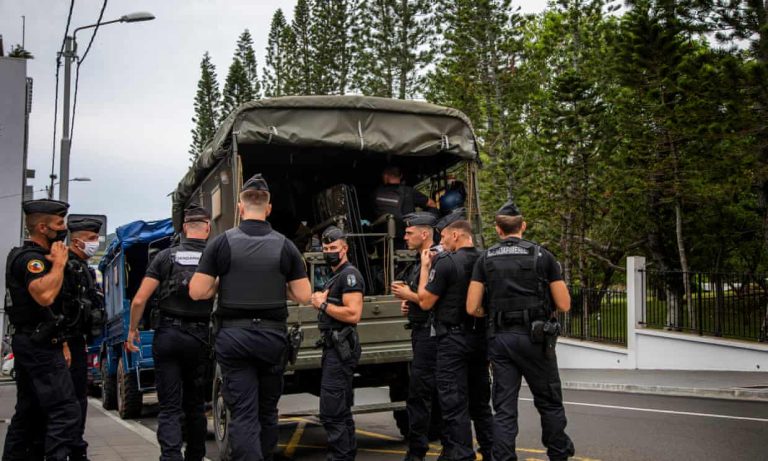
Emmanuel Macron’s dangerous shift on the New Caledonia referendum risks a return to violence

By Rowena Dickins Morrison, Adrian Muckle & Benoît Trépied

With the growing possibility of a pro-independence victory, France is derailing decolonisation in a bid to shore up its position in the Indo-Pacific

The French government’s decision to hold New Caledonia’s self-determination referendum on 12 December, despite the resolve of pro-independence parties not to participate, is a reckless political gambit with potentially dire consequences.

The referendum will be the third and final consultation held under the 1998 Noumea accord – successor to the Matignon accords which ended instability and violence between the Kanak independence movement and local “loyalists” and the French state in 1988. By organising this month’s referendum without the participation of the Indigenous Kanak people, who overwhelmingly support independence, France is undermining the innovative and peaceful decolonisation process of the last 30 years, founded on French state neutrality and seeking consensus between opposing local political parties.

One reason for the pro-independence request to postpone the referendum until late 2022 is concern that the April 2022 French presidential elections will result in national political interference. In 2019, the French government and New Caledonia’s political parties agreed that the referendum should not take place in close proximity to the presidential elections for this reason. In June 2021, the government broke this agreement and unilaterally fixed the referendum date. While within France’s power, this runs counter to the consensual foundation of the Noumea accord.

A key factor influencing Emmanuel Macron’s shift away from neutrality is the growing possibility of a pro-independence victory. “Loyalist” voters won the two previous referendums in 2018 and 2020, but the vote for independence grew from 43.3% to 46.7%. The pool of previously abstaining and newly enrolled pro-independence voters means that the prospect of independence is now more real than ever.

Added to this is France’s weakened strategic position in the Indo-Pacific following the announcement of the Aukus alliance and Australia’s withdrawal from its submarine deal with France. New Caledonian independence ostensibly threatens to further diminish France’s position in the region.

To scuttle the decolonisation process, however, would not only be reactionary, but also short-sighted. Pro-independence parties advocate a close association, partnership or “interdependent” relationship with France in the event of independence. There is little to suggest that France could not preserve its strategic interests with an independent New Caledonia.

Another interrelated factor is Macron’s electoral calculus in the lead up to the presidential elections. Macron’s primary opponents are predicted to be from France’s far right, an electorate overwhelmingly in favour of keeping New Caledonia French.

The dangerous political game being played by Macron in relation to New Caledonia recalls decisions made by French leaders in the 1980s which disregarded pro-independence opposition, instrumentalised New Caledonia’s future in the national political arena, and resulted in some of the bloodiest exchanges of that time.

The main reason that pro-independence parties and the Kanak Customary Senate wish to postpone the referendum is the devastating local impact of the Covid-19 pandemic since September 2021. With Kanak communities in customary mourning, effective campaigning cannot take place. In citing an improving health situation as the basis for its decision to maintain the referendum date, France has shown a lack of understanding and respect that goes against another foundational element of the Noumea accord: the recognition of Kanak identity and custom.

With the likely abstention of most pro-independence voters, the victory of the “loyalist” vote against independence is a foregone conclusion. The legal validity of the referendum is unlikely be open to challenge under French law. Nevertheless, without the participation of the pro-independence electorate, the legitimacy of the outcome is undermined.

At the international level, in light of this outcome and the continued assertion by Kanak of their right to self-determination, New Caledonia will likely remain on the UN Special Committee on Decolonization’s list of Non-Self-Governing Territories. France will again be a colonial power feeding instability in New Caledonia and the Indo-Pacific through its unwillingness to peacefully decolonise.

At the local level, following the referendum, the French government has fixed a transition period of 18 months during which it intends to engage with pro- and anti-independence parties to prepare a new “consensual project” for New Caledonia. However, effective dialogue will be difficult if not impossible to establish given the inevitable gridlock over the legitimacy of the referendum and the broken trust between Kanak and the state.

France’s departure from neutrality and the consensual approach which has maintained peace for three decades’ risks reigniting the violence that engulfed New Caledonia in the 1980s. As at that time, the threat of violence today comes from both pro- and anti-independence supporters.

The Noumea accord was enshrined within France’s constitution to protect it from the vagaries of national politics. These appear nevertheless to have caught up with it in its final hour. New Caledonia is on the brink of a volatile socio-political crisis, with no discernible resolution in sight.

Rowena Dickins Morrison is an independent political scientist and legal scholar who has worked at the Australian National University, Canberra, the Ecole des Hautes Etudes en Sciences Sociales, Paris, and the Université Jean Monnet, Saint-Etienne

Adrian Muckle lectures in Pacific history at Victoria University of Wellington, New Zealand

Benoît Trépied is an anthropologist with the French Centre National de la Recherche Scientifique at the Ecole des Hautes Etudes en Sciences Sociales, Paris

SOURCE: THE GUARDIAN/PACNEWS
Pacific Community adopts 10-year plan at its annual meeting, setting out ambitious vision for future of the Blue Pacific

0

The Pacific Community (SPC) has set its vision for a sustainable, thriving and peaceful Blue Pacific with the endorsement of its new 10-year Strategic Plan 2021+ during the 51st Meeting of the Committee of Representatives of Governments and Administrations (CRGA) in Noumea, New Caledonia.

This strategic plan is the first to be co-developed directly with members, staff and stakeholders, including women and young people. Pacific indigenous languages have been incorporated for the first time in an SPC strategic plan through the values that will guide the organisation: aroha (care); kaitiakitanga (stewardship); enginkelap (generosity); and gida gaituvwa (unity). SPC has also invested in building strategic foresight capabilities among member representatives and its own staff to ensure the plan anticipates and can quickly adapt to the challenges and opportunities of the coming decade.

These efforts have ensured that the plan is not only a representation of the organisation’s current priorities but also a true reflection of voices from across the region.

During his presentation to the SPC membership, Jimmy Naouna, Senior Adviser Multilateral Relations for Government of New Caledonia, highlighted the importance of the consultative process and its impact on the final text of the strategic plan: “In the process of the co-development, we recognised our shared Pacific values and their centrality for ensuring SPC is fit for purpose for the next decade and for the successful implementation of the strategy.”

The new strategic plan outlines the ongoing commitment of SPC and its members in progressing the rights and well-being of all Pacific peoples through science and knowledge, guided by the organisation’s deep understanding of Blue Pacific contexts and cultures. Among the highlights of this new vision, SPC is emphasising climate change as the existential threat facing the region, alongside addressing the impact of the COVID-19 pandemic, and acknowledging the tremendous strengths of the Blue Pacific, including its culture and traditions, resilience, and island and ocean resources.

Food systems were highlighted by SPC Director-General Stuart Minchin as an example of how the new strategy would guide the organisation toward more integrated ways of working that respond to member needs. Many areas of SPC work contribute to food systems outcomes.

Through collaborative efforts SPC membership can strengthen data collection and analysis for more equitable food systems, promote Pacific-led innovation and research for climate resilient, sustainable food production, enhanced biosecurity capability and contribute to more productive and healthier communities through digital capabilities, testing and developing technologies.

Just as importantly SPC can make a major impact in increasing awareness of the important role and contribution of Pacific food systems across the region and around the world.

The strategic plan compliments the region’s 2050 Strategy for the Blue Pacific Continent and, combined with national sustainable development plans and strategic plans developed in other Council of Regional Organisations in the Pacific (CROP) agencies, provides a comprehensive window into the ambitions of the Pacific.

The plan’s implementation will begin immediately, with a monitoring and tracking process in place to ensure the organisation is working as one towards the vision of a resilient and sustainable Pacific.

Peseta Noumea Simi, Chief Executive Officer, Ministry of Foreign Affairs and Trade for Samoa, in her comments to the CRGA representatives, stressed the seriousness of the challenges facing the Pacific and the importance of the plan for the future of the region: “The bonds that connect us as a Blue Pacific region continue to be tested due to climate change, geopolitical conflict and COVID-19. SPC now has a robust and adaptive strategy to ensure that it meets member needs, responds to changing member priorities, and supports coordination with other development partners and our CROP family.”

With CRGA endorsement, the Strategic Plan 2021+ comes into effect with Conference adoption, becoming the foundation of SPC’s work plan and, in combination with the 2050 Strategy for the Blue Pacific Continent, a clear pathway towards a sustainable and resilient Pacific future.

SOURCE: SPC/PACNEWS

Solomon Islands PM ‘must take responsibility’ for Honiara tragedy, says Wale

Solomon Islands Opposition leader Matthew Wale has rejected the prime minister’s claim that he and other opposition members were behind last week’s rioting in the capital of Honiara.

Wale claimed that the false statements were aimed at diverting the public’s attention from Prime Minister Manasseh Sogavare’s “own failures” in dealing with the crisis.

Wale said Sogavare “must recognise his role in this tragedy”.

“These recent events are the culmination of the prime minister’s leadership style which stretch back throughout his tenure,” the opposition leader said.

Wale said he had repeatedly made calls for the prime minister to initiate dialogue with the restless province Malaita.

“I have stated on several occasions the need for the prime minister to have constructive dialogue with Malaita,” he said.

“In light of the deteriorating relationship between the province and national government, I specifically urged the prime minister last year to lead a delegation to Malaita to deal with their issues’.

Sogavare had failed to do this.

“His negative attitude to deal with these issues is also reflected in the recent events when he ran away and refused to engage in dialogue with the people who marched to Parliament.”

Reflecting on the damage from the rioting, Wale said that what had happened in the last few days was truly a tragedy.

“As a leader, I lament with the people who have suffered losses and condemn what has happened.

“Because of the large damage that has occurred these past days, the public’s impulse to blame someone is understandable.”

The Central Bank of Solomon Islands (CBSI) estimated the loss to the local economy at US$28 million. Three people died in the Chinatown fires.

The prime minister must not take advantage of this and divert the public’s attention from his actions and omissions which had directly contributed to the problem, Wale said.

The opposition leader called on the prime minister to “stop blaming others” for his own failures and “take responsibility as a true leader.

SOURCE: SBM ONLINE/PACNEWS

Stay connected

529FansLike
172FollowersFollow
156SubscribersSubscribe
- Advertisement -