Solomon Islands has supported 140 of 181 recommendations made during its fourth Universal Periodic Review (UPR), while noting 41 recommendations covering sensitive social and legal issues.
The recommendations noted by Solomon Islands include those relating to consensual same-sex relationships, the decriminalisation and legalisation of abortion, and ratification of the Second Optional Protocol to the International Covenant on Civil and Political Rights aimed at abolishing the death penalty.
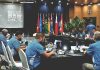
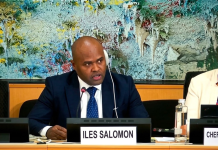
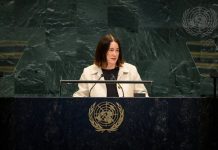
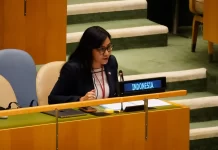
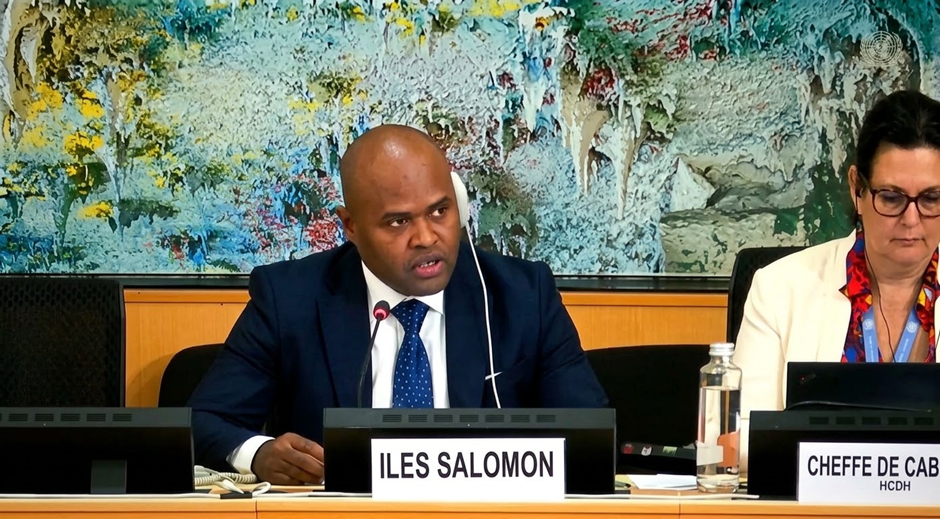
The outcomes were adopted during the 63rd Session of the United Nations Human Rights Council in Geneva following Solomon Islands’ review by the UPR Working Group on 11 May 2026.
The review was led by a Troika comprising China, Malawi and Switzerland.
During the review, States and stakeholders also raised concerns about extremely high levels of violence against women and the very low representation of women in political decision-making.
Solomon Islands’ human rights obligations were also scrutinised against its participation in core international human rights instruments.
Five core international human rights treaties remain unsigned by Solomon Islands, including the International Covenant on Civil and Political Rights (ICCPR), the Convention against Torture and Other Cruel, Inhuman or Degrading Treatment or Punishment (CAT), and the Rome Statute of the International Criminal Court.
The country also has yet to ratify specific International Labour Organsation conventions.
The Solomon Islands delegation reaffirmed that human rights are guaranteed under the Constitution and national legislation and said the Government remained committed to the principles of universality, indivisibility and interdependence of all human rights.
It said noting the 41 recommendations should not be interpreted as a lack of commitment to human rights.
As a least developed country and small island developing State, Solomon Islands said adequate resources and implementation capacity must be available before it assumes additional international obligations.
The Government said further consultations with relevant authorities and stakeholders would be required on the noted recommendations and called on international partners to provide technical assistance and capacity-building.
The delegation highlighted Solomon Islands’ recent accession to the United Nations Convention against Transnational Organized Crime as a key development since the previous review.
It said the accession demonstrated the Government’s commitment to tackling transnational organised crime, including human trafficking, and called for continued international cooperation and capacity-building support.
Solomon Islands also reaffirmed that establishing a national human rights institution in accordance with the Paris Principles remained a national priority.
The delegation said efforts would be accelerated to establish an independent and fully functional institution before the next UPR cycle.
It also linked its human rights commitments to national development priorities, including universal free education, energy and telecommunications development, critical infrastructure, constitutional and governance reforms, mining sector reform, financial sector modernisation, climate change mitigation and resilience, and disability inclusion.
The Government said these priorities formed part of a broader effort to integrate human rights into sustainable development and ensure no one was left behind.
Solomon Islands said it remained committed to fulfilling its international human rights obligations and advancing the welfare, dignity and rights of all Solomon Islanders.
The Ministry of Foreign Affairs and External Trade acknowledged the support of the Ministry of Justice and Legal Affairs, Ministry of Women, Youth, Children and Family Affairs, other government ministries and agencies, and regional and international partners in preparing and presenting the national report.