

New Zealand has called on the next United Nations Secretary-General to take a stronger role in preventing and resolving conflicts, defend the UN Charter and push for reforms to restore confidence in the organisation.
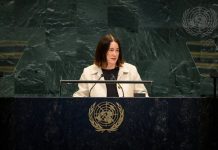
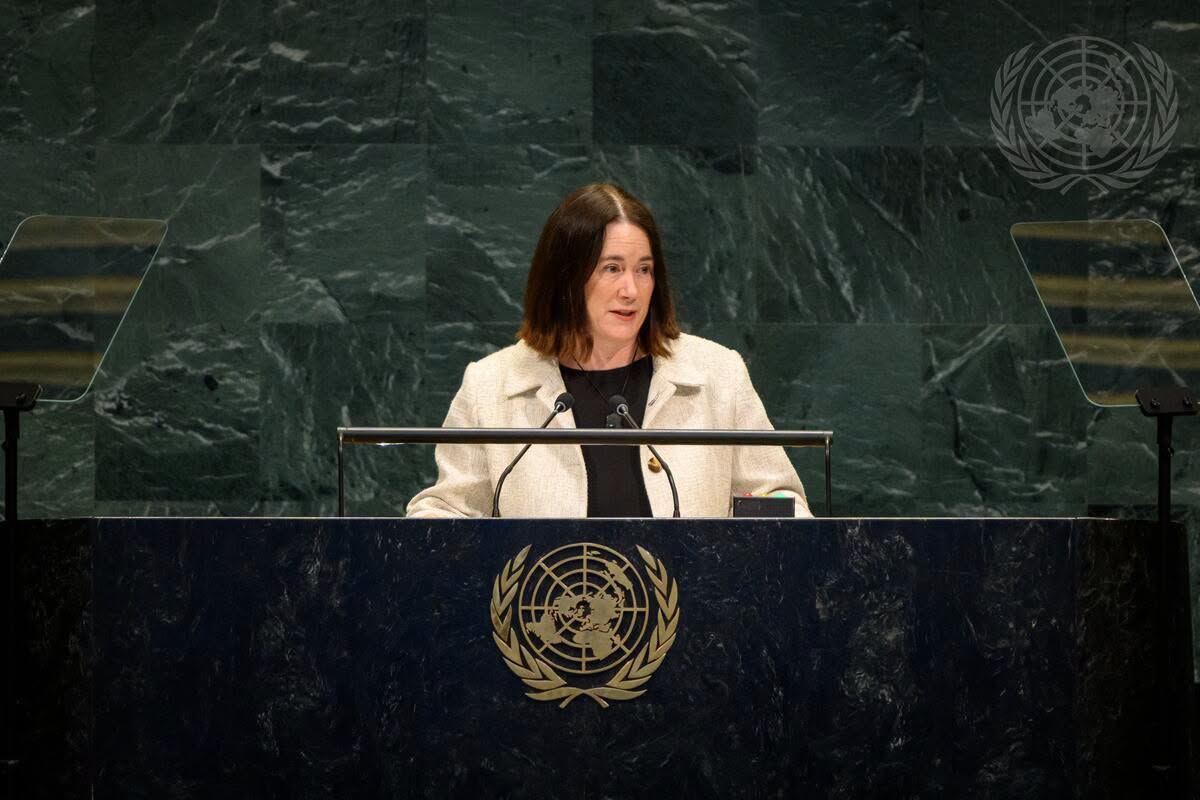
Delivering New Zealand’s High-Level Statement to the 81st session of the UN General Assembly, Permanent Representative to the UN Victoria Louise Hallum said the world was becoming more contested, fragmented and volatile, with conflicts increasing and humanitarian needs growing.
“The number of active conflicts in the world has doubled in the past 20 years.
“The number of conflict related deaths has reached levels not seen in decades,” Hallum said.
She said fundamental rules governing state behaviour were increasingly being violated, while human rights were being ignored and development gains had slowed.
Hallum said these challenges reinforced the need for a functioning multilateral system based on international law and the UN Charter.
“We regard the UN Charter with its core principles of sovereign equality of states, territorial integrity, the prohibition of the use of force and respect for human rights as irreplaceable,” she said.
New Zealand called on the next Secretary-General to be a “courageous guardian” of the UN Charter and to assert the organisation’s role in peace and security.
Hallum said member states remained responsible for preventing and resolving conflicts but the Secretary-General must be able to act on conflict prevention, mediation and peacemaking.
“The Secretary General should never have to ask permission or forgiveness for acting to prevent or resolve conflict,” she said.
She called for stronger UN action on conflicts in Sudan, Ukraine and Gaza.
On Ukraine, New Zealand called for a sustainable and just end to Russia’s invasion consistent with Ukraine’s sovereignty and territorial integrity.
On Gaza, Hallum urged the next Secretary-General to help move a fragile ceasefire towards lasting peace and preserve conditions for a two-state solution.
She also called for efforts to end hostilities in the Persian Gulf and restore freedom of navigation through the Strait of Hormuz under international law.
She criticised the repeated use, or threat, of the veto to prevent the Council from acting.
“Too frequently has the veto or the threat of the veto been abused to block the Council from fulfilling its responsibilities,” she said.
New Zealand said it would continue pressing for a more effective, credible, transparent and representative Security Council and confirmed it was seeking a seat for 2039-40.
Hallum also highlighted nuclear disarmament, maritime law, climate change, human rights and development as priorities for the next Secretary-General.
She said the deterioration of the global non-proliferation regime should concern all countries and called for the preservation of the Nuclear Non-Proliferation Treaty.
New Zealand also called for continued adherence to the UN Convention on the Law of the Sea, describing it as the framework governing activities in the world’s oceans.
For the Pacific, Hallum said climate change remained the region’s greatest threat.
“As Pacific Island Forum leaders recently reaffirmed in Palau, climate change remains the single greatest threat to the livelihoods, security and wellbeing of Pacific peoples,” she said.
She welcomed the UN political declaration on sea-level rise, particularly its recognition of the preservation of maritime zones and the presumption of continued statehood despite sea-level rise.
Hallum also called for stronger protection of international humanitarian and human rights law, citing growing attacks on civilians, humanitarian workers and medical personnel.
On UN reform, she said the organisation needed to focus on results rather than the number of mandates or meetings it produced.
“We need a United Nations that is focused on its core tasks disciplined and accountable, one where every dollar delivers maximum impact,” she said.
She said member states must also take responsibility for the UN’s financial and legitimacy challenges by meeting their financial obligations in full and on time.
Hallum said reform could not be left to the Secretary-General alone.
“Ultimately, the health, relevance and effectiveness of the United Nations depends primarily on its members, not its Secretary general,” she said.
She ended by calling for renewed commitment to sovereignty, international law, dialogue, cooperation and the peaceful settlement of disputes.
“At a time when conflict is rising, trust is eroding and geopolitical competition is intensifying, we should not conclude that multilateralism has failed.
“We should conclude that it is needed more than ever,” Hallum said.