


By Pita Ligaiula in Koror, Palau
Forum Fisheries Agency (FFA) Director-General Noan Pakop has called for stronger regional surveillance and monitoring to protect Pacific fisheries, saying the future value of the region’s tuna resources depends on keeping illegal fishing under control.
Speaking at a Forum Fisheries Agency side event in Palau on “Securing Our Blue Pacific: Integrated Monitoring, Control and Surveillance and the Future of the Regional Fisheries Surveillance Centre,” Pakop said Pacific countries could not meet the growing surveillance challenge alone.
“Our ocean is our life, our economy, and our shared inheritance.
“Our fisheries give daily meaning to that connection. They feed our communities, sustain livelihoods and generate revenue for central government services,” Pakop said.
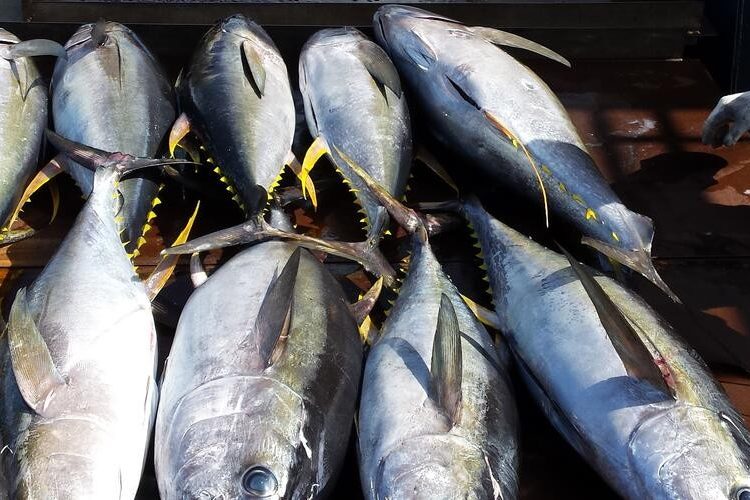
Pakop said tuna remained one of the Pacific’s most valuable shared resources, generating more than US$500 million annually in access fees and around US$1.2 billion in export earnings for FFA members.
However, he said Pacific Island countries faced continued pressure to retain more of the value generated from their fisheries.
“There is considerable pressure to retain more of its value within the region.
“Fully realising that potential begins with protecting the resource,” Pakop said
Pakop said Pacific Island countries, despite being large ocean states, faced major challenges in monitoring and protecting their vast exclusive economic zones.
“As large ocean states, we are responsible for vast waters.
“No country can meet the surveillance challenge alone,” he said.
He said regional cooperation, combined with national efforts and support from partners, was essential to protecting the Pacific’s fisheries.
“Our strength lies in combining national efforts with regional cooperation and the support of committed partners,” Pakop said.
The Director-General acknowledged the work of fisheries officers, analysts, patrol crews and partners involved in regional monitoring, control and surveillance operations.
“Officers conducting inspections, analysts connecting information, crews patrolling vast distances, and partners contributing expertise and surveillance assets — much of this work happens beyond public view,” he said.
Pakop said the Regional Fisheries Surveillance Centre(RFSC) provided a critical platform for connecting information, people and operations across the Pacific.
“The Regional Fisheries Surveillance Centre connects information, people and operations across our region.
“It helps national authorities detect suspicious activities and target enforcement where it matters most,” he said.
He said the Centre strengthened the ability of individual FFA members to exercise their sovereign rights, including countries with limited patrol and surveillance assets.
But Pakop warned that surveillance systems must continue to evolve as illegal, unreported and unregulated fishing becomes more sophisticated and wider maritime security threats increase.
“As illegal, unreported and unregulated fishing evolves, and wider maritime threats grow, our capabilities must keep pace,” he said.
Pakop said investment in a modern and fit-for-purpose Regional Fisheries Surveillance Centre facility would strengthen the Pacific’s ability to analyse information and coordinate surveillance and enforcement operations.
“A modern, fit-for-purpose Regional Fisheries Surveillance Centre facility will strengthen our ability to analyse information, coordinate surveillance operations and support members.
“It is an investment in the security of our fisheries and the long-term resilience of Pacific economies,” he said.
He said the discussion at the Forum side event was focused on practical questions about how regional cooperation should operate and what it must deliver in the future.
“How does this cooperation work? What must it deliver in the future? And how can we strengthen the partnership that sustains it?” Pakop asked.
Pakop said the Pacific’s experience in managing and protecting its fisheries showed what could be achieved through collective action.
He said maintaining those gains would require continued unity among Pacific Island countries and strong partnerships with those supporting regional surveillance efforts.
“Sustaining that achievement requires positive unity amongst members and strong partnerships,” he said.
Pakop said the Regional Fisheries Surveillance Centre provided practical support for the principles being promoted at the 55th Pacific Islands Forum Leaders’ Meeting under Palau’s theme of Building Economies, Life, Action and Unity.
“The Regional Fisheries Surveillance Centre gives practical structure to both.
“It embodies the theme of this latest meeting — Building Economies, Life, Action and Unity,” he said.
Pakop said the long-term task for the Pacific was to ensure that fisheries resources remained secure and continued to provide benefits for future generations.
He said stronger cooperation and investment in regional surveillance would be central to meeting that goal.