By Pita Ligaiula in Koror, Palau
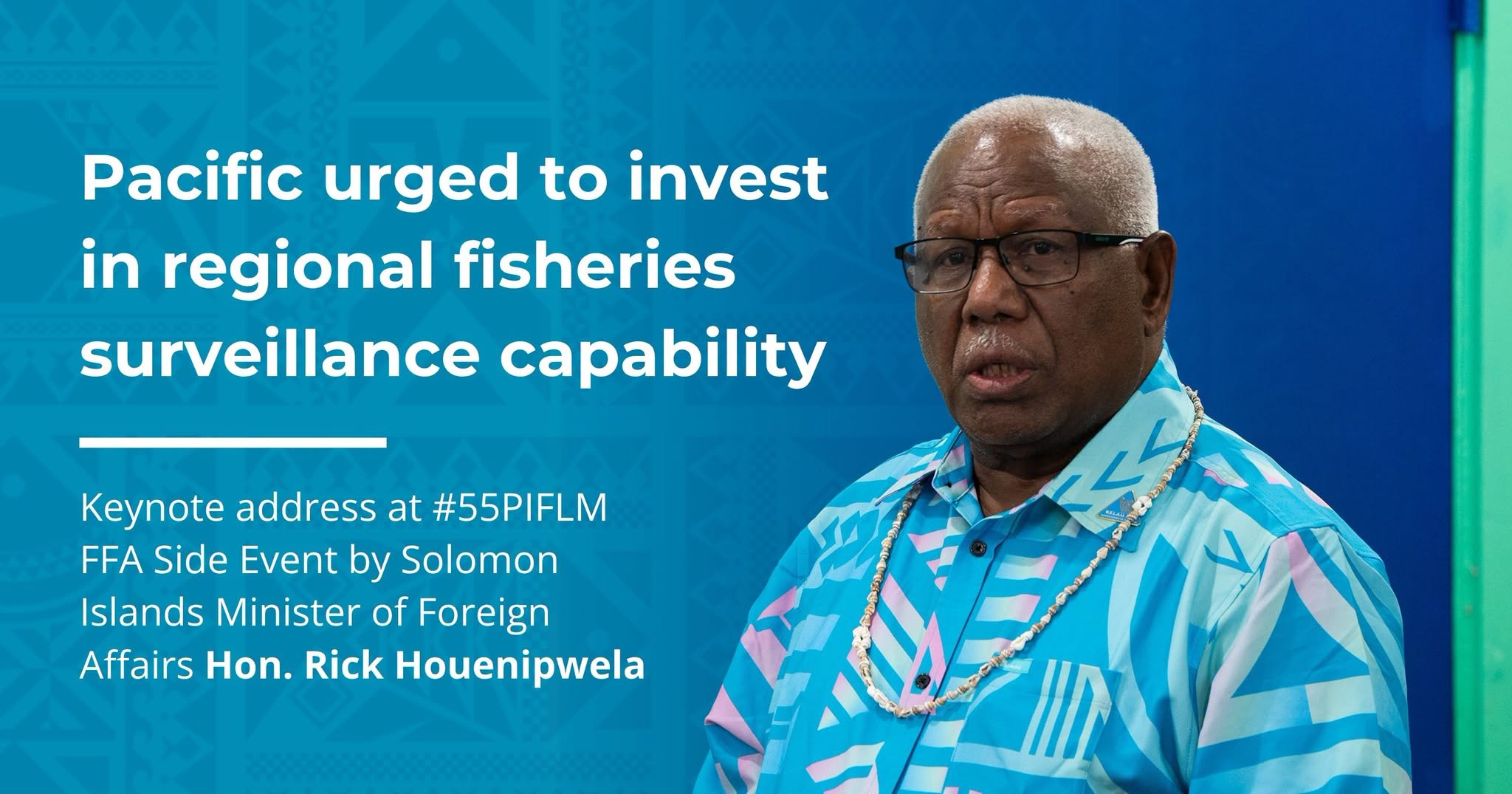
Solomon Islands Foreign Minister and head of delegation Rick Houenipwela has called on development partners and philanthropic organisations to help fund a new Regional Fisheries Surveillance Centre (RFSC), warning that Pacific countries cannot protect their vast ocean and fisheries resources alone.
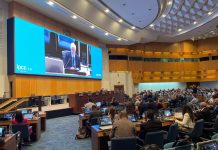
Speaking at the Forum Fisheries Agency (FFA) side event, “Securing Our Blue Pacific: Integrated Monitoring, Control and Surveillance and the Future of the Regional Fisheries Surveillance Centre,” Houenipwela said the centre needed more space, modern equipment and additional investment in Pacific expertise to meet growing threats.
“The centre needs more space. They need space to expand, equipment to modernise and people to have skills.
“In short, they need the funds to build the new RFSC at the FFA,” Houenipwela said.
He urged development partners and philanthropic organisations to provide financial support as soon as possible for a modern and resilient Regional Fisheries Surveillance Centre at the Forum Fisheries Agency headquarters in Honiara.
“The Regional Fisheries Surveillance Centre is a strategic regional resource, a successful platform for cooperation and a worthy investment in sovereignty, economic security and the sustainable future of our Blue Pacific,” he said.
Houenipwela said Pacific fisheries remained one of the region’s most important strategic resources, supporting food security, employment, government revenue and economic development.
“Fisheries are a strategic regional resource, central to our food security, employment, revenue, culture and prosperity — one of our largest regional gold mines of renewable resources,” he said.
He said the Western and Central Pacific Ocean produced more than half of the world’s tuna catch, with a billion-dollar industry operating largely within Pacific waters.
That placed Pacific Island countries in a position of major economic opportunity but also imposed significant responsibility to ensure the resources were sustainably managed and protected from illegal, unreported and unregulated fishing.
“Our exclusive economic zones cover an ocean space the size of Africa and China combined.
“No single Pacific Island country can monitor this area alone. Our strength lies in collective action,” Houenipwela said.
Houenipwela said the Regional Fisheries Surveillance Centre had demonstrated the value of regional cooperation for more than three decades.
Honiara has hosted the FFA Secretariat, including the Regional Fisheries Surveillance Centre, since 1979.
“As the Foreign Minister of Solomon Islands, I am proud that Honiara hosts the FFA Secretariat, including the Regional Fisheries Surveillance Centre,” he said.
The Foreign Minister said the Centre brought together information, technology, expertise and surveillance assets to support FFA members and strengthen the regional maritime picture.
“It brings together information, technology, expertise and surveillance assets to support all 17 FFA members, maintaining a regional maritime picture, identifying risks and coordinating operations so that national efforts become part of a coordinated Pacific response,” he said.
He said estimates showing a considerable decline in illegal, unreported and unregulated fishing since 2016 demonstrated that regional cooperation was delivering results.
“This is proof that regional cooperation delivers real results,” Houenipwela said.
But Houenipwela warned that the challenge was changing, with non-compliance and misreporting by licensed vessels becoming harder to detect through traditional surveillance methods.
“Our task is far from complete.
“The threat is shifting towards misreporting and non-compliance by licensed vessels, harder to detect through traditional surveillance alone,” he said.
He said the Pacific would need stronger electronic reporting and monitoring, satellite capability and data analysis to keep pace with changing risks.
Houenipwela also warned that Pacific countries faced wider maritime threats, including transnational organised crime and drug trafficking.
He said the partnerships and information-sharing systems developed through fisheries surveillance could help build a more integrated understanding of activities across the region.
Houenipwela said a future Regional Fisheries Surveillance Centre would require stronger infrastructure and sustained investment.
“Our future RFSC will require resilient infrastructure, secure and modern technology, sustained access to surveillance assets, stronger analytical capability and continued investment in Pacific people,” he said.
He said this must be backed by political commitment from FFA members and “genuine, enduring partnerships.”
The Foreign Minister acknowledged the contributions made by development and security partners over many years, including support for patrol boats, aerial surveillance, satellite information, training and technology.
But he said future partnerships must strengthen Pacific ownership rather than create competing systems.
“Our partnerships must strengthen Pacific ownership, build long-term regional capability and avoid fragmentation or duplication, leaving behind stronger institutions and a more resilient regional surveillance system,” Houenipwela said.
Houenipwela said regional surveillance did not weaken national sovereignty but instead strengthened the ability of Pacific countries to exercise their rights across vast ocean areas.
“The RFSC brings together national sovereignty and regional solidarity,” he said.
“It demonstrates that cooperation does not diminish our sovereign authority. It strengthens our ability to exercise that authority across the vast ocean spaces entrusted to us,” he said.
He said Pacific governments also had responsibilities to make regional cooperation effective, including maintaining confidence in information-sharing arrangements, strengthening national laws and institutions and investing in fisheries, police, customs, immigration and defence personnel.
“Above all, we must continue to approach the protection of our ocean as a shared responsibility,” he said.
Houenipwela linked the work of the Regional Fisheries Surveillance Centre to Palau’s Forum theme of Building Economies, Life, Action and Unity.
“Life, because our fisheries sustain our people, communities and economies,” he said.
“Action, because commitments must be supported by information sharing, technology, capability and enforcement.”
“Unity, because no country can secure our share of the ocean alone,” he said.
Houenipwela said he had visited the Regional Fisheries Surveillance Centre and had been impressed by its existing capabilities, but said more investment was needed to meet future challenges.
“I was very impressed with its capabilities,” he said. “But the centre needs more space.”
He also highlighted opportunities for greater cooperation with other maritime surveillance facilities in the region.
“I had the opportunity to visit the Maritime Surveillance Centre in Fiji just a couple of weeks ago. I think there is a lot that we can do together in terms of collaboration,” he said.
As the immediate past Chair of the Pacific Islands Forum, Houenipwela called on leaders, regional organisations and partners to support the development of a modern surveillance facility.
“I encourage leaders, members, regional organisations and partners to support the development of a modern, resilient, fit-for-purpose RFSC,” he said.
“The ocean connects us. Its resources sustain us. Its protection is a responsibility we share.”
He said the protection of Pacific fisheries was ultimately an investment in the region’s sovereignty, public revenues, economic security and future generations.
“Let us continue our collective approach with purpose, vigilance and unity, securing our Blue Pacific and building economies that deliver lasting benefits for our people,” Houenipwela said.