
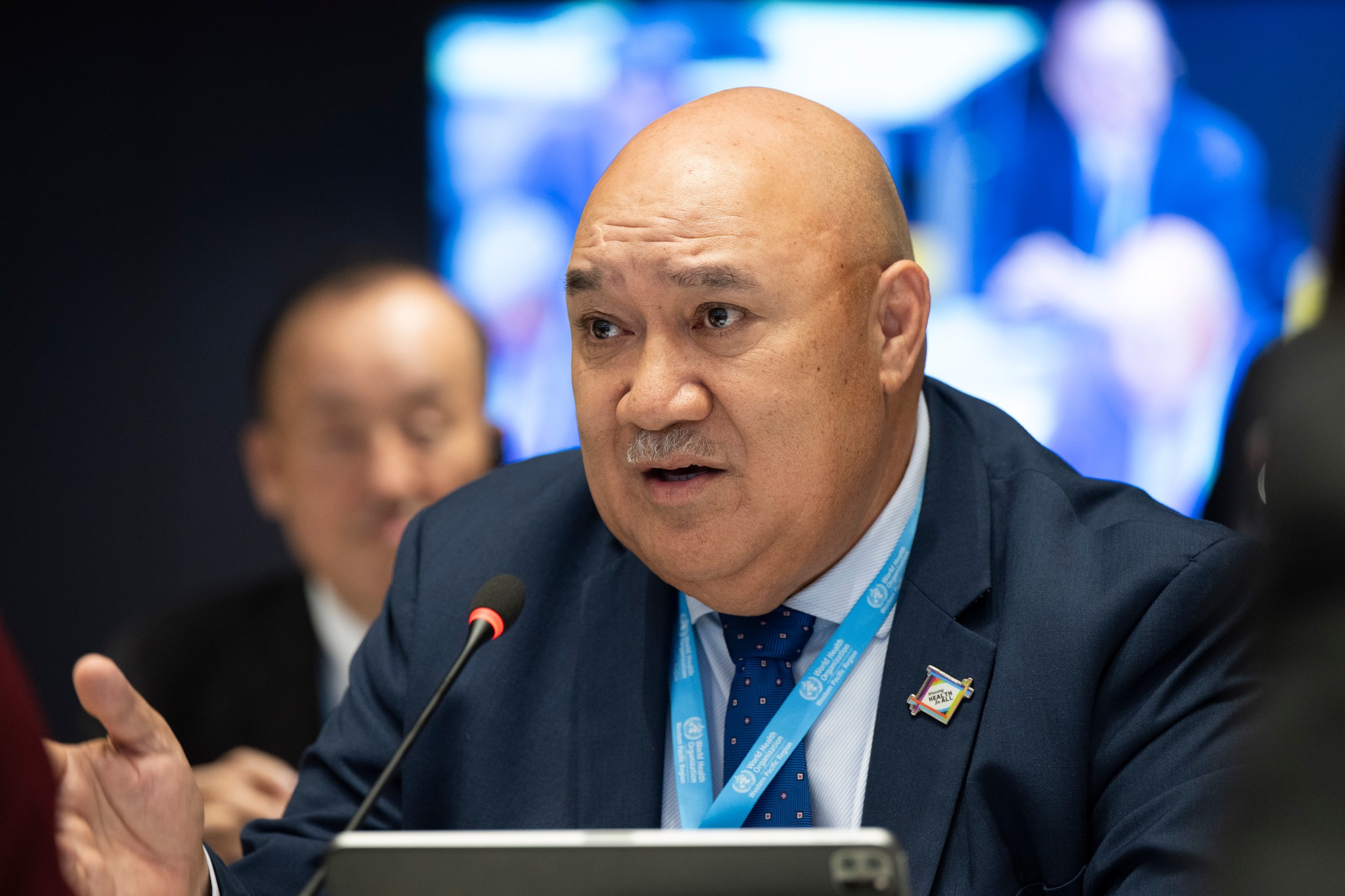
World Health Organisation (WHO) Western Pacific regional director Saia Ma’u Piukala has backed growing calls for the climate crisis to be formally declared a public health emergency of international concern, warning Pacific countries are already living with the impacts of climate change every day.
At the World Health Assembly (WHA) in Geneva, Dr Piukala highlighted the findings by the independent Pan-European Commission on Climate and Health, convened by World Health Organisation Regional Office for Europe, which concluded that evidence supporting such a declaration was “abundantly clear.”
The Commission warned that climate change poses immediate and long-term threats to health, food security, water security, economies and national security.
“Far from being a fading priority or fake news, climate change poses an immediate and long-term threat to health, economic, food, water, environmental, personal, community and national security,” the Commission stated.
Dr Piukala said the findings strongly reflected the realities facing Pacific countries and communities across the Western Pacific region.
“For us, climate change is not a distant threat. It is already affecting health, livelihoods and security,” he said.
“From small island states facing rising seas, to cities exposed to heatwaves, flooding and typhoons, and communities burdened by air pollution and climate-sensitive diseases – we see the impacts every day.”
He said Pacific Island countries had been warning the international community for years about the growing dangers posed by climate change.
“Pacific island countries have long sounded the alarm. Their call to recognise climate change as a health emergency reflects decades of lived experience. And we fully support elevating climate change within national and global security agendas,” Dr Piukala said in a statement posted on X.
Dr Piukala also highlighted the work of WHO Regional Office for the Western Pacific and The Lancet on sea level rise, health and justice, aimed at strengthening evidence and shaping policy responses focused on equity.
He called for stronger coordinated action from governments and communities.
“We must act together – through whole-of-government and whole-of-society responses, with health at the centre.”
Dr Piukala also acknowledged the leadership of former Iceland Prime Minister Katrín Jakobsdóttir, WHO Europe Regional Director Hans Kluge and climate and health adviser Robb Butler for advancing the climate and health agenda globally.