



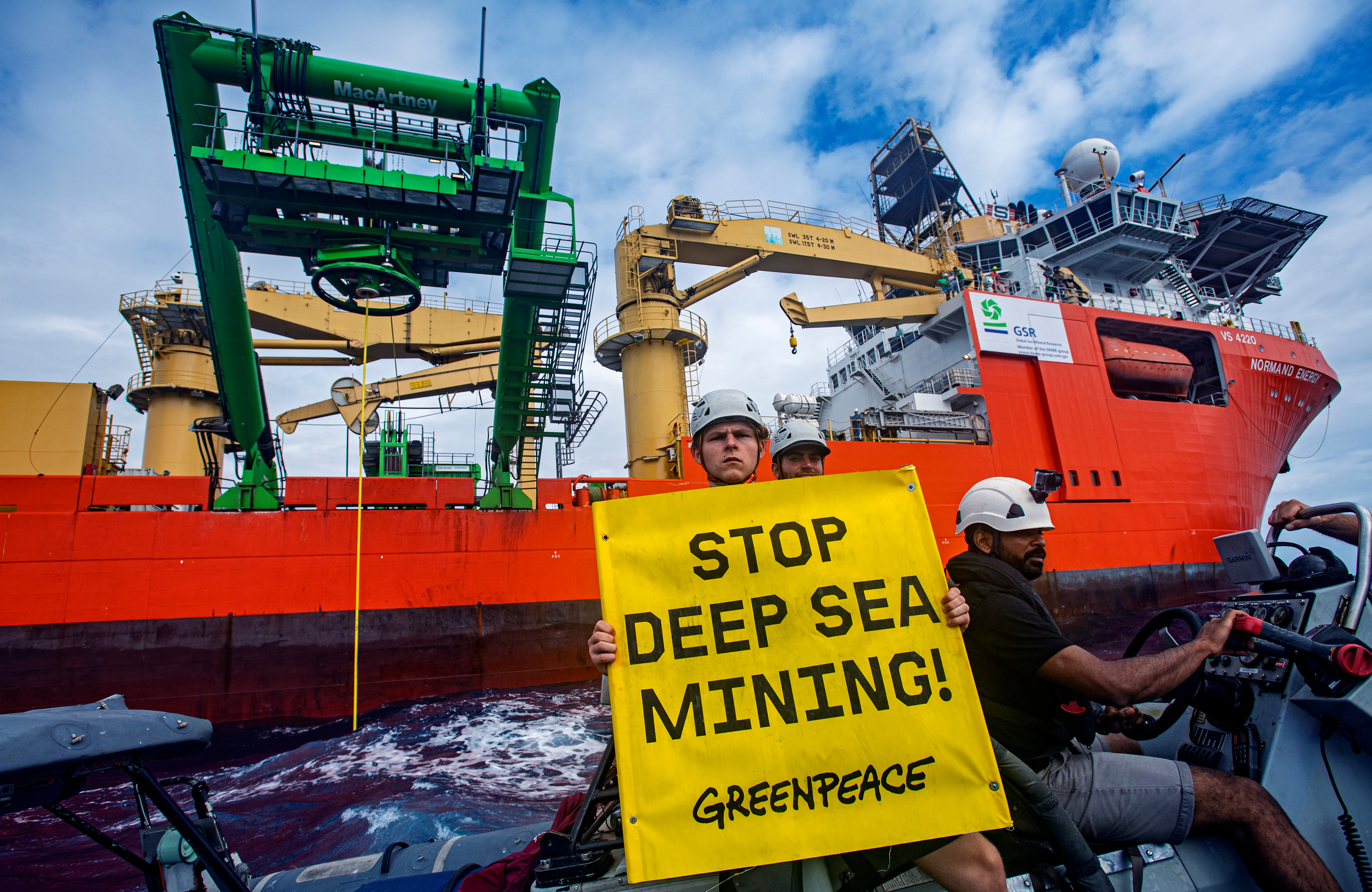
Pacific civil society groups have warned that proposed deep-sea mining under the International Seabed Authority (ISA) framework would shift environmental and social risks onto Pacific Island countries, while multinational corporations capture the vast majority of financial returns.
The concerns were raised at a press conference in Suva by members of the Pacific Regional Non-Government Organisations (PRNGO) Alliance, including the Pacific Conference of Churches, the Pacific Network on Globalisation(PANG), the Fiji Council of Social Services(FCOS), and Greenpeace Australia Pacific.
The alliance cited new independent research commissioned by Greenpeace International. It found Pacific Island countries could receive only around US$46,000 annually in the short term from deep-sea mining revenues, rising to about US$241,000 annually in the medium term. Meanwhile, mining companies could receive more than US$13.5 billion annually under a proposed six-mine scenario.
The report, authored by legal professor Dr Harvey Mpoto Bombaka and development economist Dr Ben Tippet, examined revenue-sharing proposals submitted to the ISA Finance Committee between 2022 and 2025. It concluded that after administrative and institutional costs are deducted, little would remain for redistribution to developing states.
The findings also highlight a stark contrast with existing ocean-based industries. The Marshall Islands, for example, earn about US$31 million annually from tuna fishing access fees, compared to an estimated US$11,000 in projected short-term deep-sea mining revenues.

Political Coordinator for Greenpeace Australia Pacific, Rae Bainteiti, said the figures raised serious questions about who would truly benefit from deep-sea mining in the Pacific.
“The report showed how much states can earn from deep sea mining under this ISA regime, which is just thousands of dollars compared to these millions and billions of dollars that these mega companies can earn,” Bainteiti said. “So we tend to ask, who benefits the most?”
The report found Pacific Island countries are likely to experience some of the earliest and most significant environmental and socioeconomic impacts from deep-sea mining due to their proximity to proposed mining zones in the Pacific Ocean.
Bainteiti said Pacific economies already receive higher returns from sustainable ocean industries than those projected from deep-sea mining and called for greater inclusion of Pacific perspectives in ongoing discussions, including the ISA Pacific Small Island Developing States Regional Workshop on the “Deep Seabed Sustainable Blue Growth Initiative”.
“These reports are ready for sharing. They are like what is needed in this discussion to fill the gaps. And to have a balanced discussion is not just looking at CSOs as advocates or the enemies in the discussion, but also equal partners and complementary partners to fill in the needed gap of knowledge.”

Oceans Campaigner for the Pacific Network on Globalisation, Laisa Nainoka, said Pacific communities were being asked to carry environmental risks for an industry offering little real benefit to the region.
“Rebranding this activity of deep-sea mining does not make it sustainable. Nor does it make it safe,” Nainoka said. “The science is clear and has always been clear. Deep-sea mining is irreversible. The harm that it causes is irreversible.”
She said the Pacific was again being positioned to solve problems created elsewhere.
General Secretary of the Pacific Conference of Churches, Reverend James Bhagwan, said Pacific people could not afford to sacrifice the ocean’s health for uncertain economic returns.
“We can’t mine what we don’t understand, we can’t call destruction development, and we can’t call extraction stewardship,” Reverend Bhagwan said, adding that greater transparency is needed in how the industry is presented to Pacific governments and communities.
“The challenge is that we provide a counter-narrative to the commercial interests of deep- sea mining,” he said. “Are people hearing the whole story or just the sales pitch?”
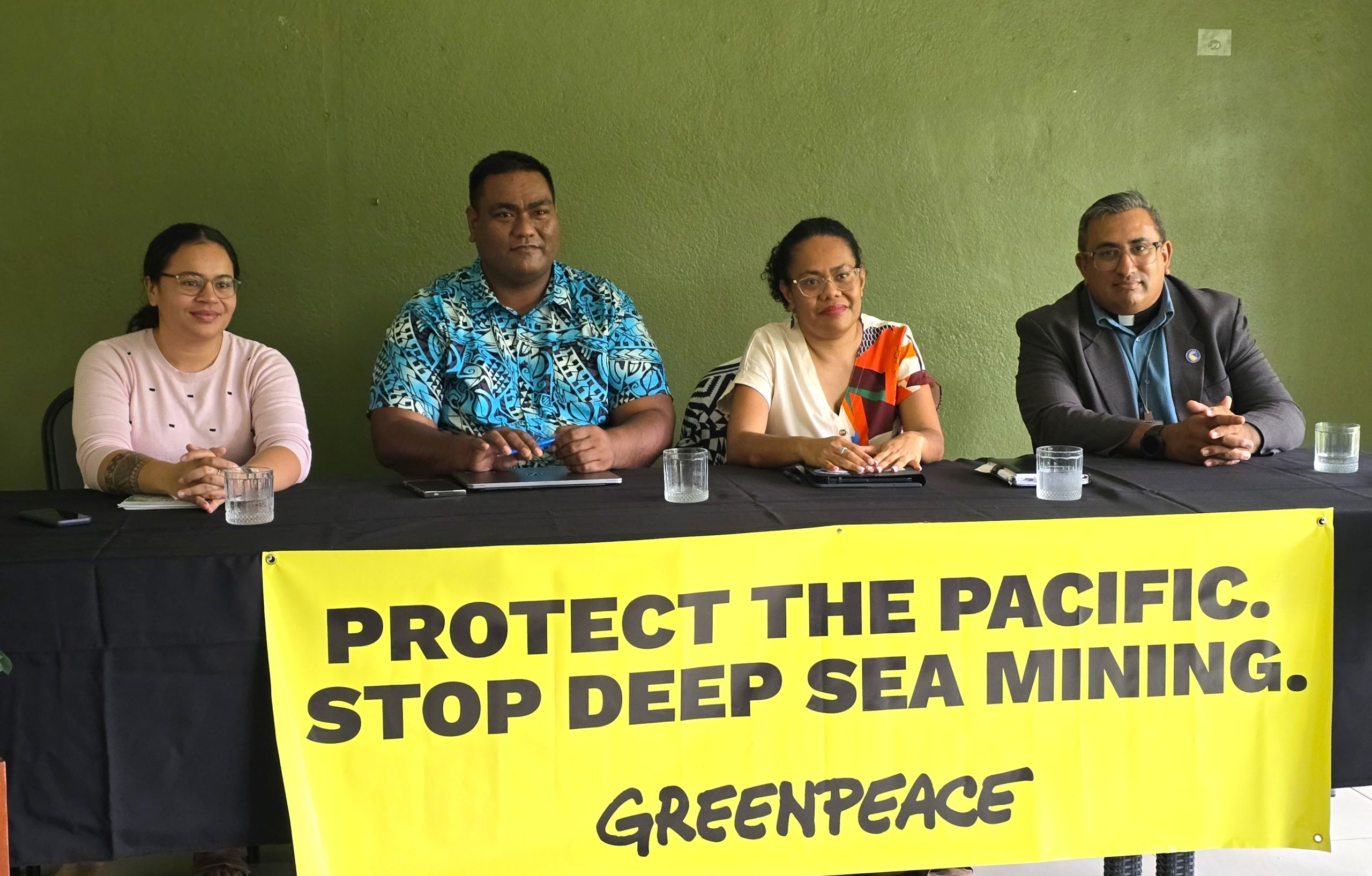
Reverend Bhagwan urged due diligence in assessing potential risks before any development proceeds.
He said that if risks are too high, or cannot be properly understood or mitigated, then a precautionary pause should be considered.