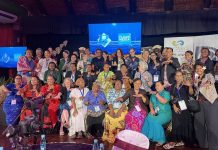
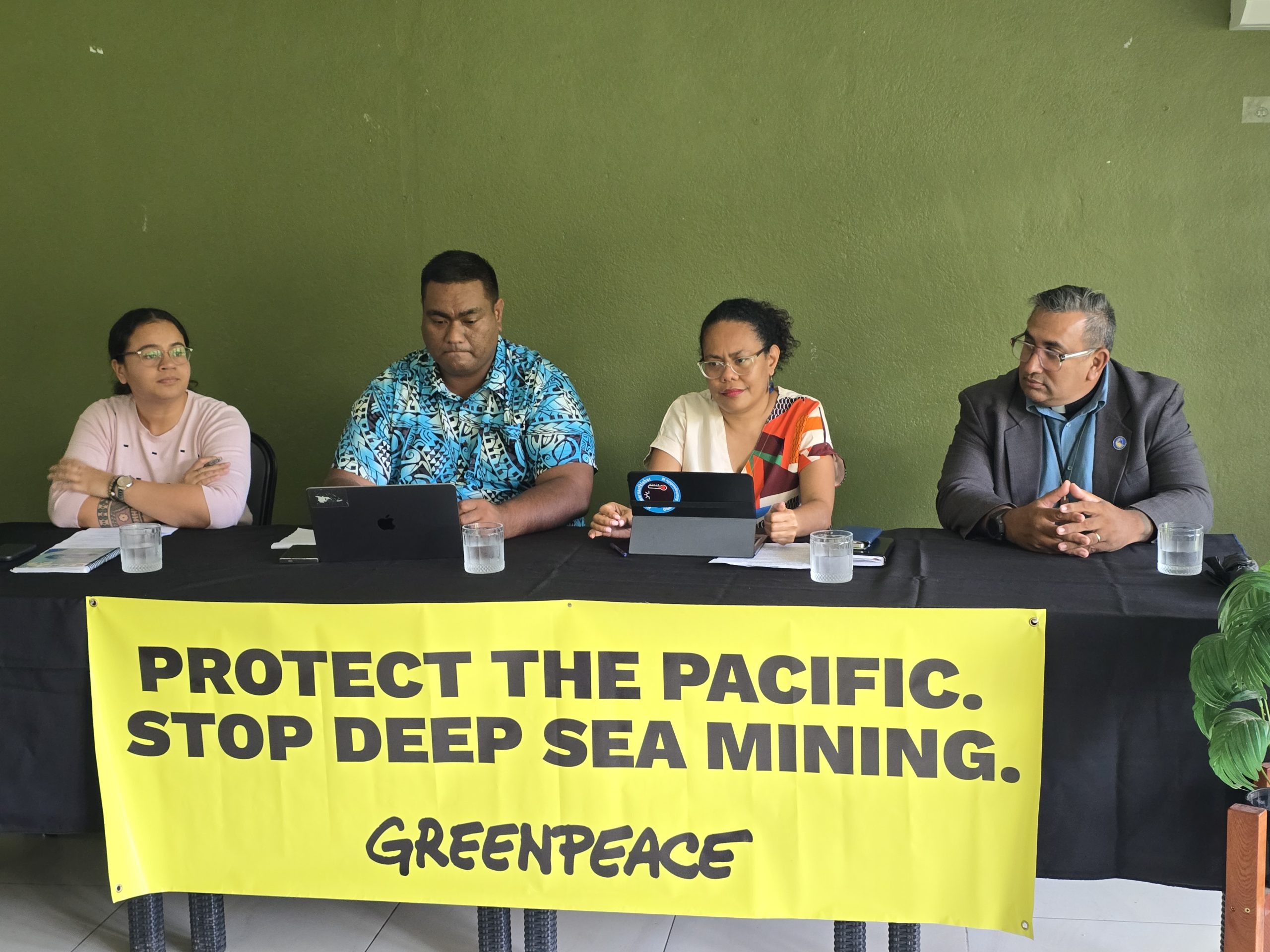
Pacific civil society organisations have condemned their exclusion from a regional International Seabed Authority (ISA) workshop in Fiji, warning that decisions on deep-sea mining are being shaped without the full participation of Pacific voices.
The criticism was raised by members of the Pacific Regional Non-Government Organisations (PRNGO) Alliance at a press conference Tuesday as the ISA Pacific Small Island Developing States Regional Workshop on the “Deep Seabed Sustainable Blue Growth Initiative” commenced in Suva from 19 – 21 May.
The alliance, comprising the Fiji Council of Social Services (FCOSS), Pacific Conference of Churches (PCC), Pacific Network on Globalisation (PANG) and Greenpeace Australia Pacific, said civil society had been sidelined from formal discussions despite the implications of deep-sea mining for Pacific livelihoods, identity and ocean governance.
Executive Director of the Fiji Council of Social Services (FCOSS), Vani Catanasiga, said Pacific civil society was disappointed by its exclusion from the formal process, despite long-standing participation in national policy consultations.
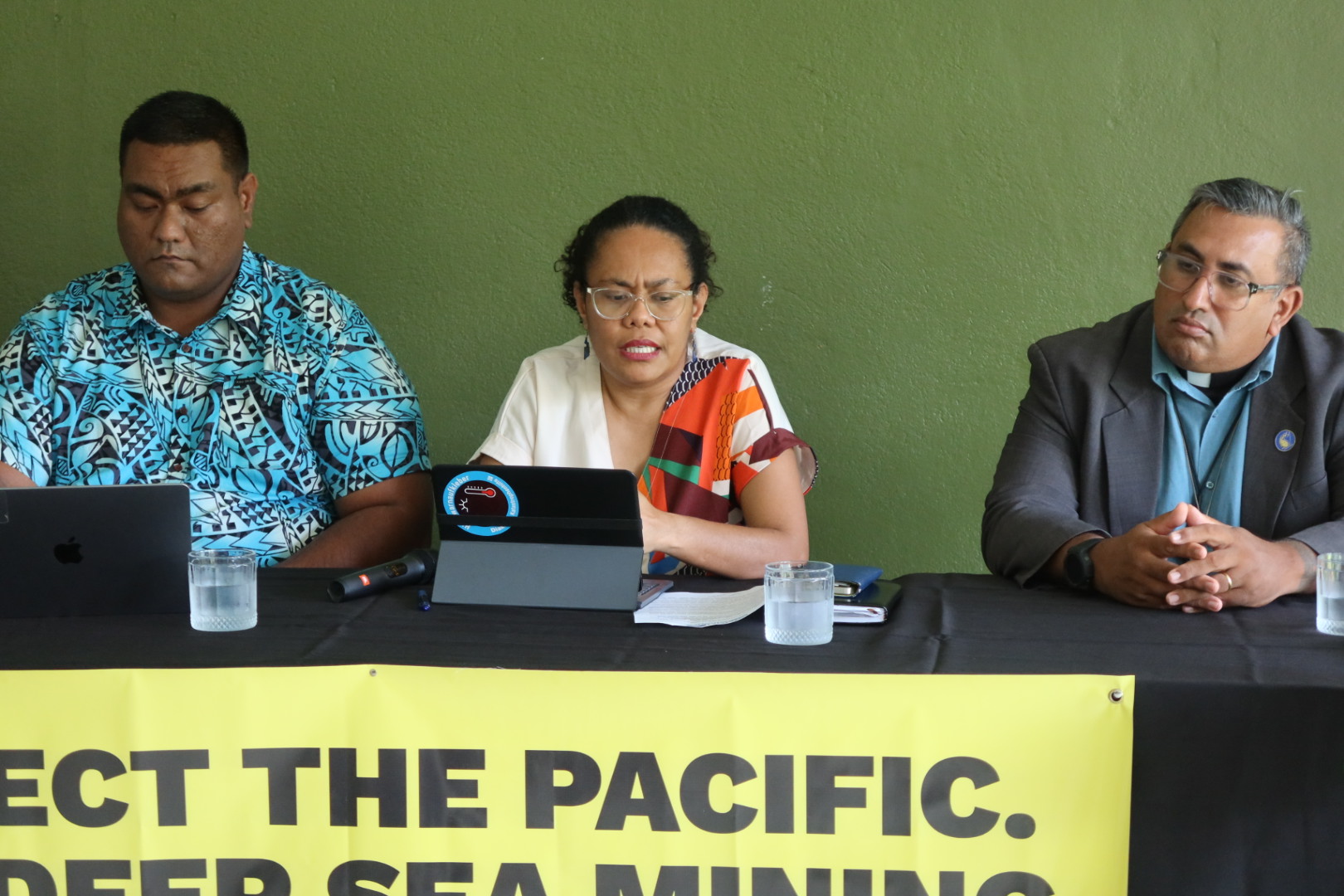
“We are here to perhaps share our concerns around the exclusion of civil society organisations in the discussions that are currently taking place,” Catanasiga said.
She said civil society had historically been included in Fiji’s national decision-making processes, including constitutional reviews and mining legislation consultations.
“Our government has always opened the space for civil society to meaningfully contribute to these discussions… So we’re disappointed that civil society has been sidelined in this conversation.”
Catanasiga said Pacific people should not be treated as external stakeholders in discussions about the ocean.
“We want to remind the ISA that Pacific people… they’re not stakeholders to be consulted with. We are supposed to be in that room having a conversation.”
She said civil society had already produced research and analysis that should inform regional decision-making, warning that the current process risked narrowing the discussion to regulatory readiness.
General Secretary of the Pacific Conference of Churches (PCC), Reverend James Bhagwan, said deep- sea mining was not only a technical or economic issue, but also a moral and spiritual one.
“It is a question of ethical leadership, of ocean guardianship, justice and spiritual responsibility,” Bhagwan said.
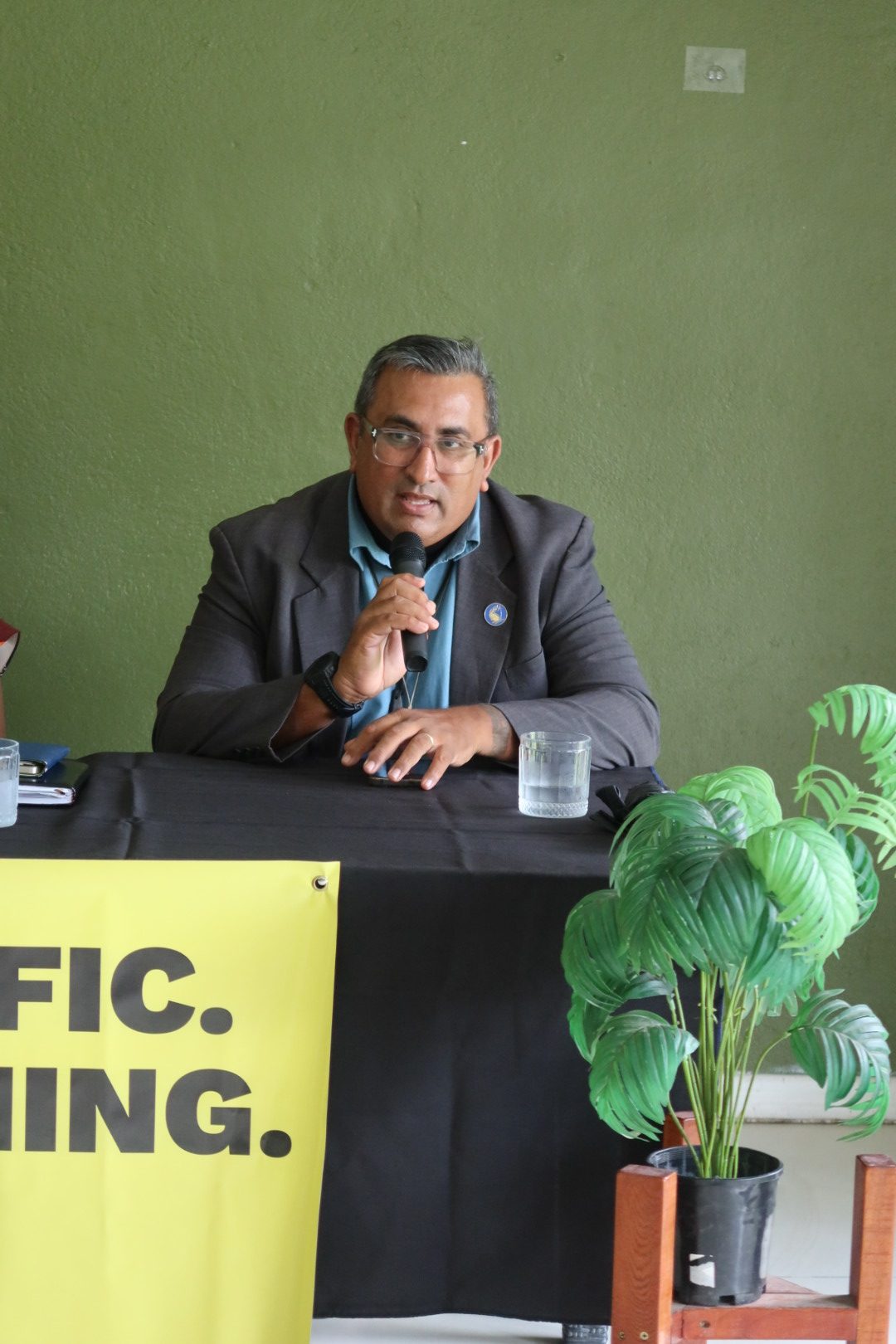
He said the ocean holds deep cultural and spiritual meaning for Pacific peoples.
“The ocean is not an empty space. It is not simply a resource. It is our common home, our provider,our ancestor, our climate regulator and part of God’s creation. And in the Pacific, we have often said that the Pacific, the ocean is us, and we are the ocean.”
Bhagwan warned that deep-sea mining would have consequences that extend beyond present generations.
“To mine the ocean is to wound the life system that holds our people, our islands and our future generations together.”
He said the Pacific Conference of Churches continues to call for a precautionary pause or moratorium.
“So a moratorium or at the very least a precautionary pause is the only sensible way forward for our Oceania region.”
Oceans Campaigner at the Pacific Network on Globalisation (PANG), Laisa Nainoka, criticised what she described as attempts to rebrand deep-sea mining as “sustainable blue growth”.
“Rebranding this activity of deep-sea mining does not make it sustainable. Nor does it make it safe,” she said.
She said scientific evidence showed the impacts would be irreversible.
“Deep-sea mining is irreversible. The harm that it causes is irreversible.”
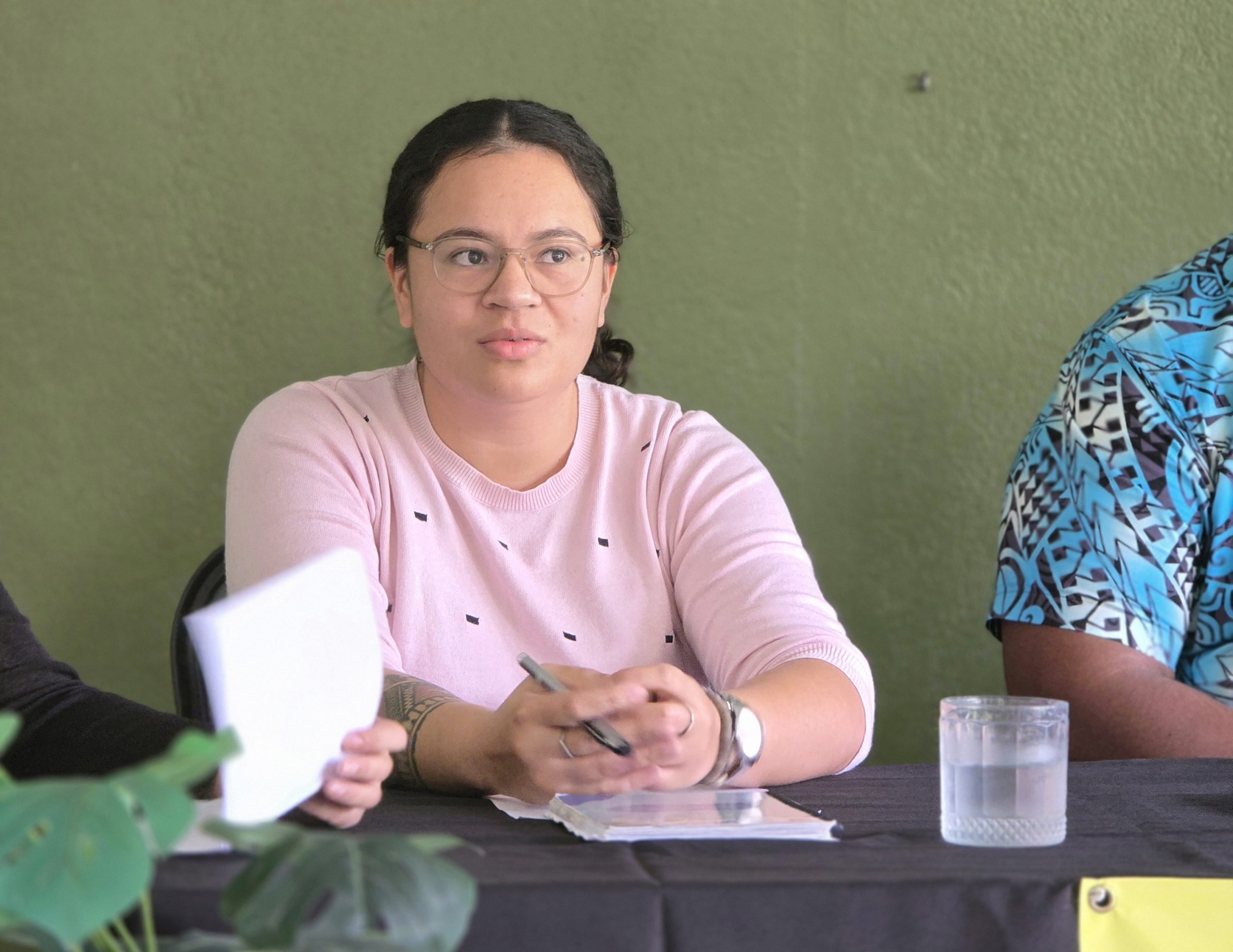
Nainoka said civil society was being excluded from meaningful participation in the workshop discussions.
“The workshop is missing a critical voice in the room, and that’s us. Not just usually limited to observers, but we are more than that.”
She said Pacific identity and livelihoods are inseparable from the ocean, warning that exclusion undermines informed decision-making.
The PRNGO Alliance continues to call for a precautionary pause or moratorium on deep-sea mining in the Pacific, and for civil society participation to be formally recognised within International Seabed Authority processes.