
World Health Organisation Western Pacific regional director Dr Saia Ma’u Piukala says the health impacts of the climate crisis are now a central issue at the 79th World Health Assembly in Geneva, warning countries must show real progress ahead of COP31 in Türkiye later this year.
“The health impacts of the Climate crisis are high on the agenda at the 79th World Health Assembly this week in Geneva,” Dr Piukala said in a statement posted on X.
“And not a moment too soon.”
Dr Piukala said countries must now demonstrate concrete progress on the Belém Health Action Plan (BHAP), which emerged from COP30 and focuses on integrating health adaptation into climate policy.
“We must collectively demonstrate progress on the Belém Health Action Plan – BHAP – that emerged last year from COP30, as we prepare for COP31 this November in Antalya, Türkiye.”
He said the BHAP had already gained broad international backing.
“The BHAP underscores the urgency of integrating health adaptation into climate policy.”
“Endorsed by more than 40 countries, the plan aims to build climate-resilient health systems capable of withstanding extreme weather and related disease outbreaks.”
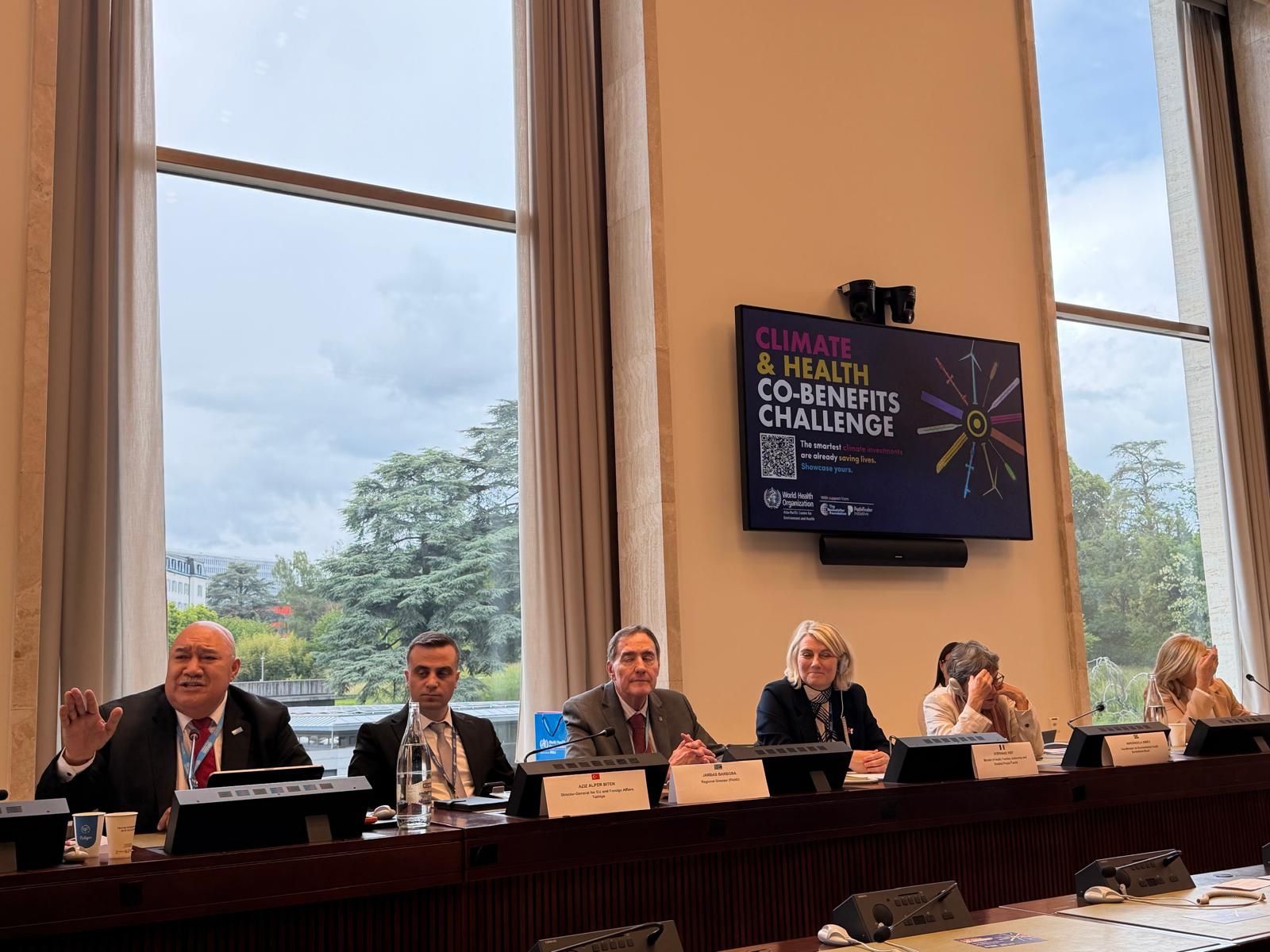
Dr Piukala also announced the launch of the Climate and Health Co-benefits Challenge, aimed at gathering evidence of climate action delivering measurable health benefits.
“To showcase progress being made in the Western Pacific and globally, I’m proud to launch the Climate and Health Co-benefits Challenge – showcasing climate interventions that are saving lives.”
The initiative is supported by The Rockefeller Foundation and the Pathfinder Initiative.
“With support from The Rockefeller Foundation and the Pathfinder Initiative, our new open call invites governments, researchers and organisations to submit real-world evidence of climate action delivering measurable health gains, ahead of COP31.”
Dr Piukala said the challenge responds to a major gap in global climate and health policy.
“The Climate and Health Co-benefits Challenge responds to a critical gap.”
“Although the health benefits of ambitious climate action are well recognised in theory, documented real-world examples often remain disconnected from decision-making and funding processes.”
He said WHO hopes the initiative will encourage governments to invest more in climate and health programmes.
“We’re hoping that concrete examples will inspire countries and prove how crucial investing in climate and health is.”
Dr Piukala thanked WHO’s Asia-Pacific Centre for Environment and Health in Seoul for leading the initiative.
“My thanks to our Asia-Pacific Centre for Environment and Health – based in Seoul and led by Dr Sandro Demaio – for conceptualising and managing the Challenge, demonstrating WHO Western Pacific’s leadership on the frontlines of climate and health.”
He also acknowledged support from Australia’s Special Envoy for Climate Change Adaptation and Resilience, Kate Thwaites.
“And thanks as well to Kate Thwaites, Australia’s Special Envoy for Climate Change Adaptation and Resilience for championing the Challenge – and the wider cause!”
Dr Piukala said climate change remained a global threat affecting every generation.
“Ultimately, it’s an existential issue that impacts each and every one of us – and generations to come – no matter who we are or where we live,” he said.