


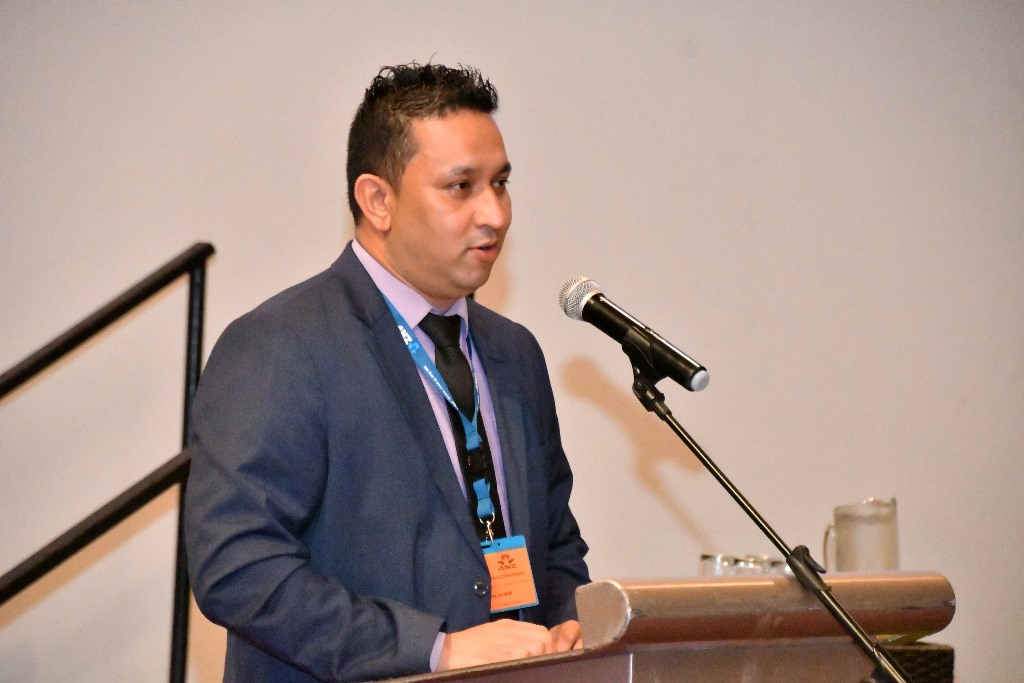
The Fiji Medical Association (FMA) says Government’s push to introduce drug testing for officials must be guided by science, ethics and human rights, warning that poorly designed systems can do more harm than good in addressing substance abuse in Fiji.
FMA President Dr Ronal Kumar said while the association supports efforts to tackle illicit drug use, including methamphetamine, drug testing must not be treated as a stand-alone disciplinary tool.
The association acknowledged Government’s recent steps, saying it “acknowledges the Government’s recent steps to introduce drug testing among government officials and recognises the seriousness of illicit drug use, particularly methamphetamine, as a growing national concern.”
It also stated its support for protecting public institutions.
“The FMA supports efforts to protect public safety, integrity and confidence in public institutions.”
However, Dr Kumar stressed that the approach must go beyond enforcement.
“However, we emphasise that drug testing is a medical, ethical and public-health issue and not merely a disciplinary one. Therefore, this must be governed by: – clear policy – scientific evidence – and human-rights principles”
The FMA warned that drug testing, if poorly designed, risks unfair outcomes and legal challenges.
“International experience shows that drug testing, when poorly designed, can lead to: misinterpretation of results, unfair consequences for workers, legal and constitutional disputes and stigma that discourages people from seeking help”
It also highlighted that common urine testing does not necessarily indicate impairment.
“Urine drug testing, which has been widely reported in the media, detects drug metabolites rather than current impairment. A positive result does not necessarily mean a person is intoxicated, unsafe to work, or using drugs at the time of testing. This distinction is particularly important for substances such as cannabis”
The FMA said testing must not be used in isolation.
“For drug testing to be credible, ethical and effective, it must form part of a well-designed national framework, not operate in isolation.”
Citing international practice, Dr Kumar said most countries apply targeted testing rather than blanket screening across the public service.
“The International Labour Organisation explicitly warns that testing should never be the sole or primary response to drug problems in the workplace.”
“The UK government explicitly states employers should limit testing to employees who genuinely need to be tested.”
“Australia’s Department of Home Affairs runs drug testing as part of a formal integrity and workplace safety framework, not a public-confidence exercise.”
“New Zealand regulators emphasise that drug testing alone does not manage risk and must sit within a broader policy framework.”
“The World Anti-Doping Agency (WADA) embeds human-rights principles into testing standards, recognising the seriousness of bodily and reputational intrusion.”
The FMA said there is limited international precedent for blanket testing without safeguards.
“There is little international precedent for blanket, whole-of-civil-service testing without a comprehensive policy framework. Where drug testing exists, it is almost always accompanied by strong governance, medical oversight and treatment pathways.”
Dr Kumar also emphasised that drug dependence is a health condition, not just a disciplinary matter.
“The FMA stresses that substance use disorders are recognised medical conditions. Evidence consistently shows that punitive, shame-based approaches worsen outcomes, while early assessment, counselling and treatment are more effective for individuals, workplaces and society.”
It added that recovery should be prioritised over punishment.
“Drug testing should therefore prioritise risk management and recovery, not punishment alone.”
The association urged Government to adopt safeguards before rolling out any programme.
The FMA calls on Government to ensure that any drug-testing programme is supported by the following minimum safeguards:
These include a clear national policy, saying it “defines the purpose of testing (e.g. safety, not morality), specifies who is tested, when, and under what circumstances, and sets out consequences and support pathways transparently.”
The FMA also called for “proportionate and risk-based testing” and warned against blanket screening.
“No employment or disciplinary action based on screening tests alone” and “mandatory confirmatory laboratory testing for all non-negative results.” it further stressed,
On governance, it called for “independent medical review of positive results” and protection for prescribed medications and medical explanations.
It also urged safeguards for rights, including “informed consent, confidential handling of health information, and clear appeal and review mechanisms.”
The FMA said any system must also include treatment pathways.
“Referral to assessment, counselling and treatment services” and “treatment and rehabilitation prioritised over punitive measures, especially for first or early findings.”
Dr Kumar said the association is not rejecting drug testing but wants it properly structured.
“To be clear, the FMA is not opposed to drug testing. On the contrary, we believe drug testing can play a useful role when it is evidence-based, proportionate and ethically implemented.”
He said the association is ready to work with Government.
“The Fiji Medical Association stands ready to work with Government, regulators and employers to help design a credible, humane and effective drug-testing framework that genuinely contributes to a healthier and safer Fiji,” he said.