
Fiji has recorded a dramatic jump in its media freedom rating to be in the top 25 nations globally while Samoan government press restrictions have seen its rating plummet in the latest World Media Freedom Index.
Advocacy group Reporters Sans Frontières (RSF) said globally it was the first time since the index was first compiled in 2001 that more than half of the world’s countries fell into the “difficult” or “very serious” press freedom categories.
The index released annually for World Press Freedom Day covers 180 countries but reports on only four of two dozen Pacific island nations and territories, including Tonga and the lowest ranked in the region Papua New Guinea.
Three years after Fiji repealed its draconian media laws, it has climbed into the top tier of countries with free or mostly free media, recording a steep 15-point increase, the index’s second highest annual move globally after Syria.
Fiji has now risen from a low of 89 in 2023 to the 24th position, reflecting the change in government after coup leader Frank Bainimarama lost power in the 2022 election.
Associate Professor Shailendra Singh, Head of Journalism at the University of the South Pacific in Fiji, told Pasifika TV the ranking is a reflection of a freer media environment but there is no room for complacency.
“There is the growing tension between the media and the Government, and the bolder the media becomes, the more they test the Government tolerance for scrutiny and criticism,” he said, highlighting accusations of misinformation levelled at the media by Fiji’s Information Minister Lynda Tabuya last week.
“She criticised the doorstopping by a Fijian journalist and stated that this type of practice should be banned.
“This is a reminder that the fight for media freedom never ends and there are always new challenges cropping up, we can never let our guard down and any ethical breaches on our part makes for a stronger case for greater controls on the media.”
Fiji’s improved ranking was in contrast to the global trend for erosion of media independence, which also saw Samoa lead the way down for other Pacific nations surveyed.
Samoa posted the largest fall in the Pacific, plunging 15 points to 59th place, and the second greatest decline globally after Niger.
An acrimonious relationship between Prime Minister La’aulialemalietoa Leuatea Schmidt and local journalists, particularly the Samoa Observer newspaper which he has banned from government press conferences, has been a major factor.
Pacific Islands News Association (PINA) last November issued a statement of “deep concern” and that it represents “a serious threat to media freedom, public access to information, and democratic accountability in Samoa and the wider Pacific region.”
La’aulialemalietoa rejected PINA’s position saying the Government had “documented evidence of unprofessional reporting and breach of media ethical standards that led to this action”.
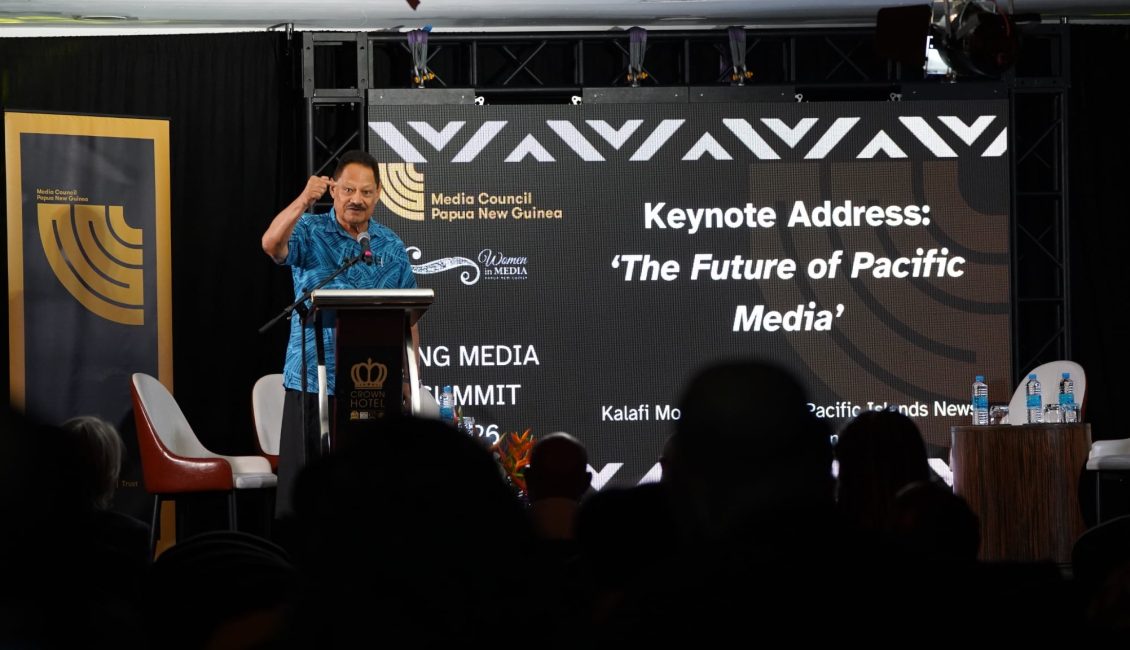
President of PINA, Kalafi Moala told Pasifika TV the Samoan Government must improve its approach.
“The Samoa Observer has for decades followed the tradition of holding power to account and they’ll be the first one in trouble if there’s an issue there,” he said.
Overall Moala said he sensed the political mood toward media freedom in the Pacific had shifted.
“Throughout the Pacific, the governments are trying to learn from the past and that freedom of the press goes in hand-in-hand with democracy,” he told Pasifika TV at the Media Council of PNG’s (MCPNG) annual summit in Port Moresby.
“These are not the governments of the ’60s, ’70s or ’80s, these are new governments with a whole new crop (of politicians) coming up and they’re far more aware of the fact they’ve got to be more democratic.”
Papua New Guinea is the lowest ranked Pacific island nation at 73rd place, but is up five points, and slowly climbing.
Its rating dropped 32 points in 2024 to 91st place after Prime Minister James Marape’s Government announced plans to tighten the media laws and proposed registering journalists.
Extensive lobbying efforts by the MCPNG has seen the Government moderate its position.
“I’m really, really proud of it being part of the Media Council of Papua New Guinea,” said MCPNG Secretary Belinda Kora.
“We realised that when we went to sit down with authorities responsible for communication and technology, and our prime minister, the lack of understanding they have of our roles, which led to a parliamentary inquiry and for the first time in the history of this country, the recommendations of that inquiry were actually adopted by the parliament.
“So, when we’re sitting down with them, we’re making them aware and also educating them about why it is important to protect our rights.”
Tonga slipped five points to 51st position in the rankings but Mr Moala, founder and editor of Talanoa ‘o Tonga and who was imprisoned in 1996 for contempt of parliament, said he could not fathom why.
“Right now, with a new government and new prime minister elected, I’m just absolutely amazed,” he said.
“We’ve never had a government like that for the last 20 years, he (Prime Minister Lord Fatafehi Fakafānua) is having regular press conferences every week, is open for interviews with media, he personally and his government actively want information to come out of every department.
“We’re going in a direction and moving at a speed in terms of media freedom I’ve never seen before.”
Not ranked by RSF are Pacific island nations like Nauru, Kiribati and Tuvalu with little or no independent media, nor those with dynamic media environments like Solomon Islands and Vanuatu.
None of the territories or colonies of France and the United States are separately monitored or mentioned in the report.
“It is very sad that they (RSF) only concentrate on these four nations because it’s probably convenient to them,” he said.
“The whole Pacific is much bigger than that and our concern at PINA is there’s no coverage of any Micronesian country or territory.
“You’ve got Palau, you’ve got issues in the Marshall Islands, the American territories like Guam and so on.”
Only Australia and New Zealand were specifically mentioned in RSF’s Asia-Pacific annual regional report, despite the very significant gain made by Fiji and fall by Samoa by international standards.
Reporters Sans Frontières did not respond to Pasifika TV questions on why it does not cover all of the Pacific along with the 180 other nations.
Its report for Indonesia also does not mention West Papua where some of its harshest media restrictions are imposed, including bans of foreign media and regular internet blackouts during times of conflict, and where local journalists face intimidation.
Press freedom in the Pacific’s main donor partners – Australia, China, New Zealand and United States – continues to fall despite their provision of journalism training in the region.
New Zealand remains the highest ranked Pacific Islands Forum (PIF) member country at 22nd place but has fallen six points since last year, while Australia continues its declined, falling a further four points to sit at 33rd place.
The United States also continued its downward slide, falling seven points to 64th position, which RSF said was due to “President Donald Trump’s systematic weaponisation of state institutions, including funding cuts to public broadcasters”.
In April 2024, the Trump administration cut funding to Radio Free Asia, and its BenarNews Pacific service, ending coverage of the region, though it has now resumed with an almost exclusive focus on China related stories.
Other media initiatives impacted by the US cuts included Internews and OCCRP.
China at 178th sits third from the bottom of the index, just above North Korea and Eritrea.
Reporters Sans Frontières said “the Government has dramatically expanded its repressive toolkit in recent years, including a raft of national security laws that are regularly invoked to imprison journalists”.
“With 121 media professionals currently behind bars, China is the world’s largest jailer of journalists.”