


Collective efforts have delivered an exceptional result in global fisheries management, representing not only a Pacific achievement but a milestone of global significance.
That is the message from Forum Fisheries Agency (FFA) as the region marked World Tuna Day, highlighting strong tuna stocks and billion-dollar revenues while warning that illegal fishing, climate change and unequal benefits threaten long-term sustainability.
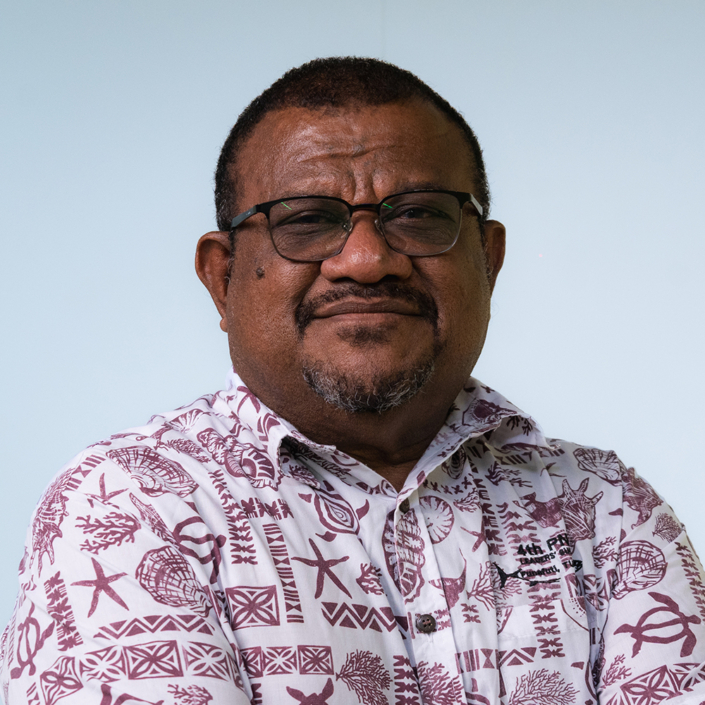
In an opinion editorial, the Director-General of FFA, Noan Pakop said tuna remains central to Pacific economies, cultures and food security.
“The annual World Tuna Day on 02 May, gives us a moment to reflect on its significance to us as Pacific people, whose lives and cultures revolve around the ocean. From our ocean to supermarket shelves around the world, tuna feeds millions of people and drives global seafood trade. For Pacific Island Countries and Territories, tuna is more than just a commodity that generates revenue – from time immemorial, it has been a cornerstone of food security and livelihoods.”
He said this year’s theme puts the spotlight on responsibility and long-term thinking.
“This year’s theme, Advocating for Tuna Conservation, is a timely reminder of our responsibility to ensure sustainability for future generations. We owe it to our children and grandchildren, and for this to happen, we need to be more responsible, smart, and strategic in how we consume, how we fish, and how we understand our relationship with the ocean.”
Pakop highlighted the scale of the industry, with tuna generating more than US$1 billion annually for Pacific Island countries, while access fees alone bring in around US$500 million each year.
He said current stock levels remain stable but warned that pressure is increasing.
“For the time being, according to scientific data, our tuna stocks remain healthy despite increasing pressure – but for how long? Skipjack, yellowfin, bigeye, and albacore stocks – the four key commercial species, are still estimated to be in reasonable numbers.”
The FFA head credited decades of coordinated regional action for this outcome, including joint surveillance operations such as Kurukuru, Rai Balang, Tui Moana and Island Chief.
He said those efforts have also reduced losses from illegal fishing.
“In 2016, it was estimated that more than US$150 million worth of tuna was being siphoned from Pacific economies through predatory and illegal fishing practices. Through strengthened surveillance, improved data systems, and closer cooperation between fisheries agencies, customs, police, and other partners, these losses were reduced by 72 percent by 2021, to approximately US$43.18 million. This demonstrates that our surveillance efforts, as part of broader regional cooperation, are delivering results.”
Despite that progress, Pakop said major threats remain.
“Illegal, Unreported and Unregulated (IUU) fishing remains one of the greatest threats to our tuna stocks.”
He also warned that climate change is beginning to reshape ocean conditions, creating new risks for fisheries management systems built over decades.
“Another challenge we are facing at the moment is climate change, which is driving shifts in ocean conditions and, in turn, impacting tuna stocks. This will no doubt test the resilience of management systems that have taken years to build.”
Beyond conservation, he said the next challenge is ensuring Pacific countries get a fairer share of the value generated from their resources.
“At present, only a small share – around 15 percent of that tuna is processed within the region. Most of it leaves in raw form, and with it, much of the potential value. For Pacific Island countries, closing that gap is critical. More onshore processing means more jobs, more skills, and more income staying within local economies.”
Pakop highlighted regional initiatives such as the East New Britain Initiative as a pathway to building stronger value chains within the Pacific.
“This is where initiatives like the East New Britain Initiative (ENBi) can be effective. The idea is to connect the strengths of different countries, whether it is infrastructure, processing capacity, fuel supply, or access to fish, to build regional value chains that keep more benefits at home.”
He said this approach aligns with the broader goals of the 2050 Strategy for the Blue Pacific Continent, aimed at building a more resilient and economically secure region.
Pakop also stressed that managing tuna is not just a regional issue but a global responsibility, pointing to frameworks such as the United Nations Convention on the Law of the Sea.
“World Tuna Day is also a reminder that the Pacific cannot manage its tuna resources on its own. International frameworks, including the United Nations Convention on the Law of the Sea and regional fisheries agreements, play a critical role in setting the rules for sustainable fishing.”
He said the Pacific has shown that sustainable management is possible, but momentum must be maintained.
“The Pacific has shown that managing tuna well is within the realm of possibility. It can be managed sustainably when countries work together. Healthy stocks, reduced illegal fishing, and strong regional cooperation are achievements worth recognising and sustaining.”
Pakop said the next phase will require deeper cooperation, innovation and stronger efforts to ensure benefits are shared more fairly.
“Conservation requires a multi-dimensional and continually evolving approach, not a one-off effort. It must be a regional effort, involving the marshalling of technical, economic, and political resources to protect our tuna stocks and ensure that the benefits are shared more equitably.”
He also called for continued action across the region and beyond.
“This is what World Tuna Day means. So, let us conserve, let us protect, and let us ensure the sustainability of our tuna resources for the future of our Pacific and generations to come,” said Pakop.