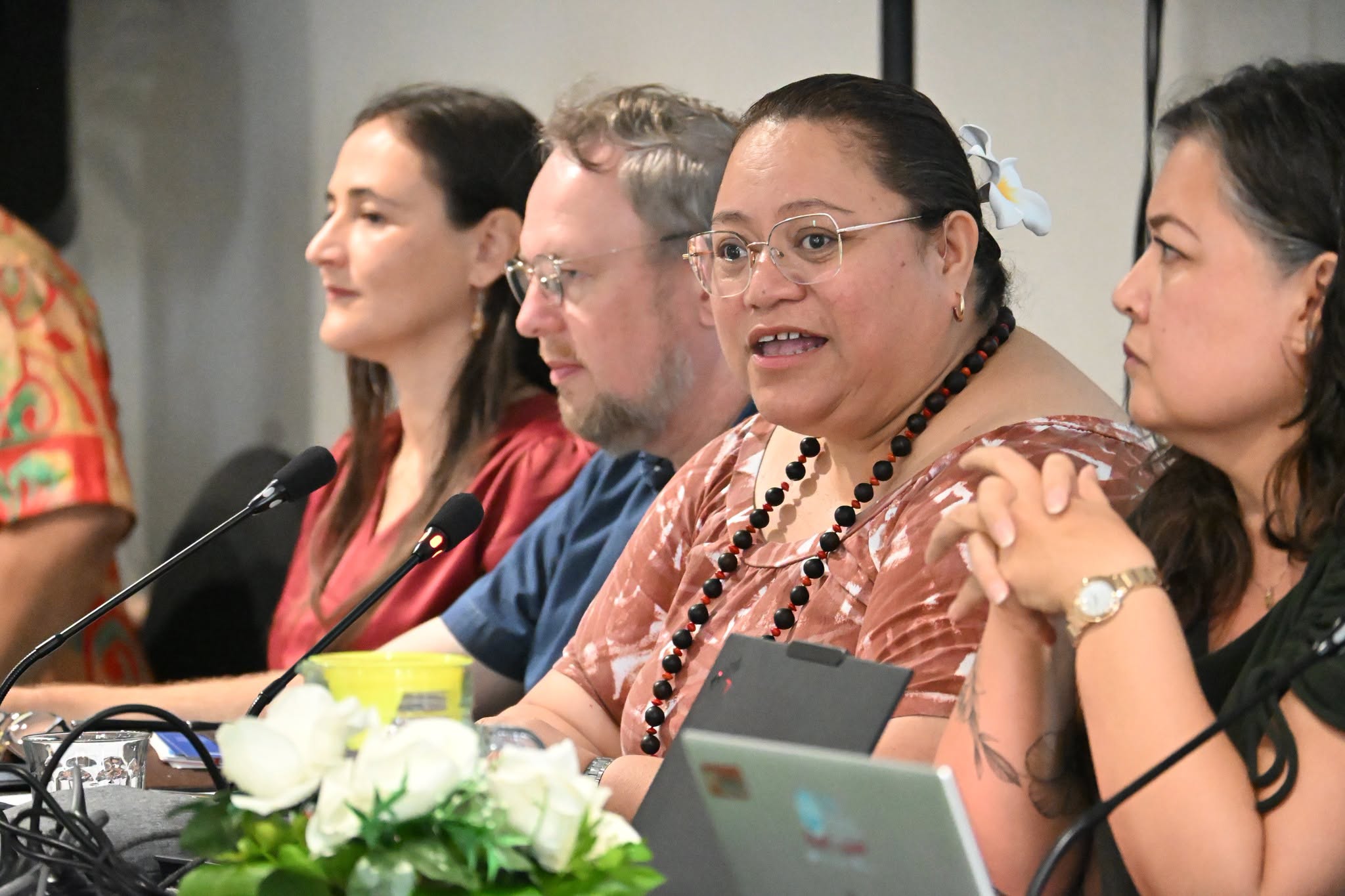
Members of the Pacific Islands Forum Fisheries Agency (FFA) met Thursday with the Chair of the Western and Central Pacific Fisheries Commission (WCPFC), Dr Josie Tamate, and the WCPFC Secretariat to share their expectations for the Commission’s annual session, which opens in Port Vila on Monday.
Forum Fisheries Committee (FFC) Chair Daniel Kerrigan of New Zealand opened the meeting and outlined the issues Members have worked through this week including South Pacific albacore, bigeye tuna, transhipment, the review of Article 30, and climate change, along with scheduling for the Commission meeting.
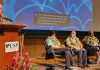
(L-R) FFA Director-General Noan David Pakop and FFC Chair Daniel Kerrigan of New Zealand during a meeting with WCPFC Chair and Secretariat in Port Vila, Vanuatu, on 26 November 2026. (Photo: FFA)
FFA Director-General Noan David Pakop thanked Dr Tamate and the Secretariat team for meeting with Members, saying it was a valuable chance to prepare together for the week ahead.
FFA Members’ priorities for the 23rd Regular Session of the Commission (WCPFC23) are:
* Article 30: turning the Convention’s commitments to Small Island Developing States and Territories into practical support across the Commission’s work, guided by the independent review and the assistance needs identified by FFA Members.
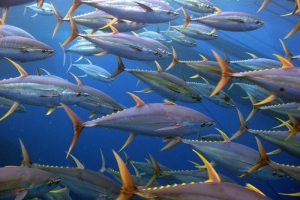
*Bigeye tuna: a landmark management procedure that would be the Commission’s first to cover both purse seine and longline fisheries. It would share conservation responsibilities more fairly between the two fishing methods while recognising the economic interests of Pacific Island countries.
*South Pacific albacore: agreement on an allocation framework for EEZs and the high seas south of 10 degrees south. The framework would put into effect the management procedure the Commission adopted in December 2025, with strong management and monitoring requirements grounded in the rights and special requirements of developing States, particularly Pacific Small Island Developing States and Territories.
*Transhipment and monitoring: stronger monitoring and compliance, including a ban on transferring fish between vessels on the high seas until the Commission adopts clear guidelines.
*Data reporting: better fisheries data reporting across the region.
*Climate change: protecting Pacific Island countries’ fishing rights and economic interests as climate change shifts where tuna are found.
*Equitable obligations: matching stronger management requirements in coastal States’ waters with equivalent requirements for high seas fisheries.
Dr Tamate set out her own priorities for the session, including decisions on the Commission’s work for next year and the role of its working groups. The Secretariat took Members through preparations for an agenda that grows busier every year and asked for their feedback on the meeting papers and arrangements.
WCPFC23 gets underway in Port Vila from 30 November to 5 December 2026. A Special Session of the Scientific Committee takes place Friday.
Senior fisheries officials from FFA’s 17 Members have been meeting in Port Vila this week for the 145th Forum Fisheries Committee Officials Meeting (FFC145), their final preparations before WCPFC23. The FFC is FFA’s governing body. Before each Commission session, its officials agree on shared positions and negotiating approaches so that FFA Members go into the Commission with one voice and a clear set of priorities.
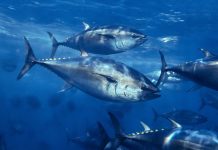
The WCPFC manages tuna stocks across the Western and Central Pacific Ocean (WCPO), the world’s largest and most productive tuna fishery. Each year the Commission considers scientific advice, reviews compliance, and adopts conservation and management measures for fleets fishing in the region. Over 50 percent of the WCPO tuna catch comes from FFA Members’ waters.
The 17 FFA Members are Australia, Cook Islands, Federated States of Micronesia, Fiji, Kiribati, Marshall Islands, Naoero, New Zealand, Niue, Palau, Papua New Guinea, Samoa, Solomon Islands, Tokelau, Tonga, Tuvalu and Vanuatu.