

Fiji and Australia have brought their first-ever defence alliance into force, committing to respond jointly to an armed attack on either country in the Pacific, while opening the agreement to other Pacific nations.
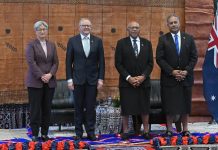
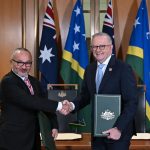
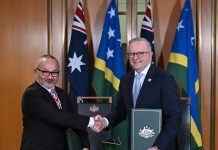
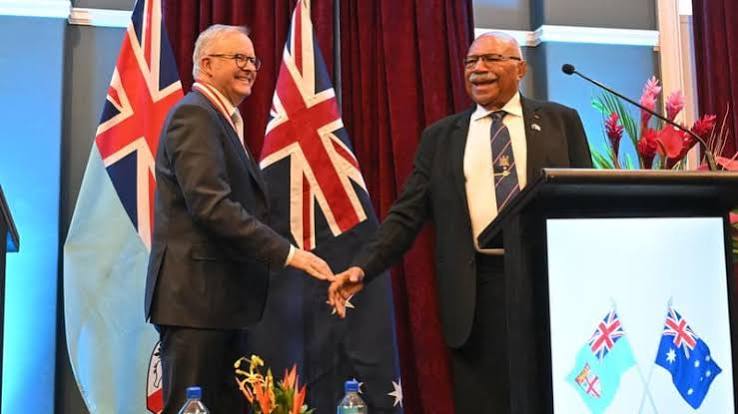
Fiji Prime Minister Sitiveni Rabuka and Australian Prime Minister Anthony Albanese marked the entry into force of the Vuvale Union and Ocean of Peace Alliance, also known as the Veitacini Treaty, on Thursday.
Under the Veitacini Treaty, the two countries acknowledge that an armed attack on either Fiji or Australia within the Pacific would endanger their own peace and security, as well as the security of the region.
They have declared they would act to meet the common danger, in accordance with each country’s domestic processes.
The joint statement describes the alliance as the highest act of trust between two nations and a historic step in the defence relationship between Fiji and Australia.
“Australia was honoured when Fiji initially proposed the Ocean of Peace Alliance – Fiji’s first alliance with any country,” the leaders said.
The agreement reflects their shared position that both countries are stronger together in a changing and challenging strategic environment.
The alliance is open to accession by other Pacific nations, subject to agreement by Fiji and Australia.
The leaders also marked the entry into force of the Vuvale Union, a broader framework for cooperation covering economic development, security and people-to-people links.
They said the Union was guided by durability, sovereignty and regionalism, and based on genuine partnership, close consultation and mutual respect.
The agreement is intended to give effect to the Pacific Leaders’ Blue Pacific Ocean of Peace Declaration by providing a framework for Fiji and Australia to jointly address challenges facing the region.
The two countries will move to implement initiatives covering transnational crime and illicit drugs, healthcare, infrastructure and economic security.
They will also deepen cooperation in education, skills, sport and mobility.
The leaders said the two agreements would strengthen collective security and prosperity, protect the sovereignty and democracy of both countries and reinforce Pacific solidarity.
Implementation will be driven through an officials-level Vuvale Bukmak and a ministerial-level Vuvale Forum.
Bukmak, a Yolŋu Matha word meaning “everyone together”, will bring officials together to advance the initiatives, while the Vuvale Forum will provide a platform for ministerial engagement.
The forum will also promote engagement with traditional and cultural leaders, religious groups, communities and businesses.
The two agreements place Pacific regionalism at the centre of the partnership, with the leaders reaffirming their commitment to the Pacific family.