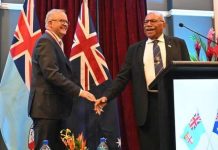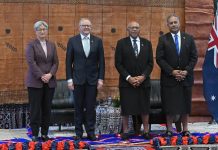
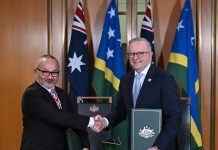

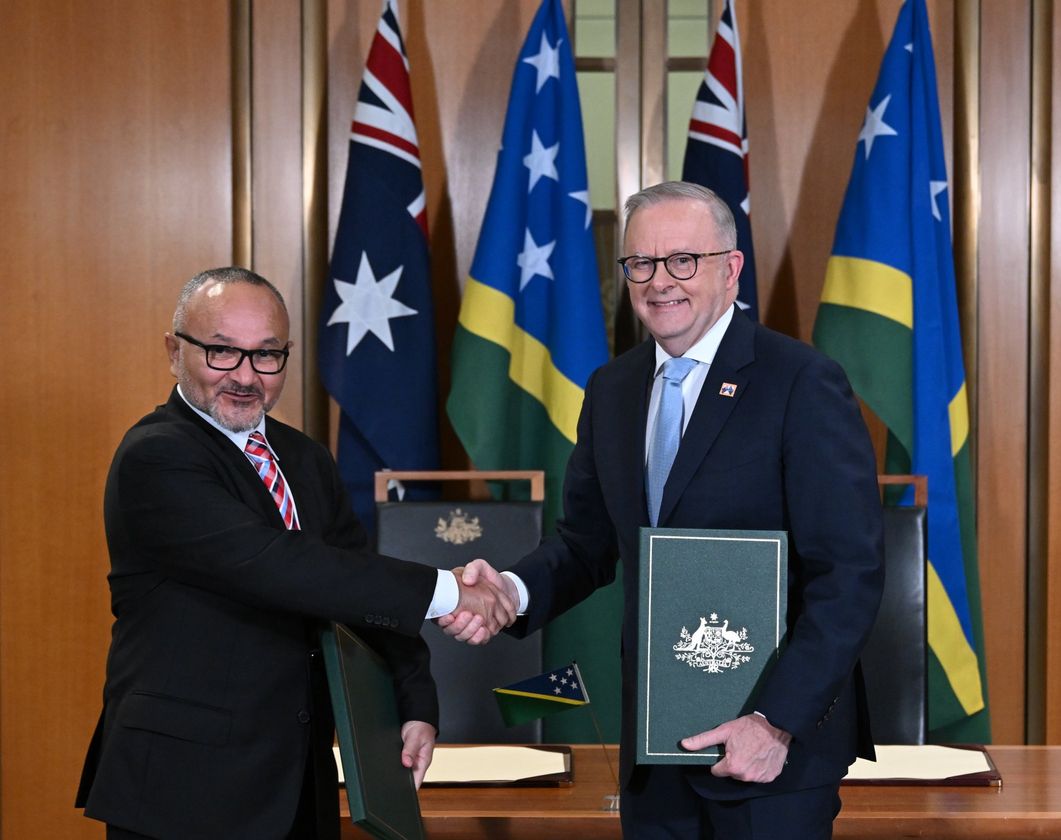
Australia’s new treaty with Solomon Islands strengthens Canberra’s security position in the Pacific and marks a major shift in Honiara’s security partnership, Australian Minister for Pacific Islands Affairs and Defence Industry Pat Conroy says.
Speaking to ABC Radio National, Conroy described the agreement as a “180-degree turn” from 2021, when the Morrison government allowed Solomon Islands to sign a security pact with China.
He said Solomon Islands’ decision to select Australia as its primary security partner was a sovereign choice and the result of Australia’s patient diplomacy.
The treaty means all four Melanesian countries — Papua New Guinea, Fiji, Vanuatu and Solomon Islands — now have agreements with Australia that, at a minimum, preclude foreign military bases in the region, Conroy said.
“That is huge for Australia. It increases our safety and security, but also means we’re strong economic partners in the development of these countries,” he said.
Conroy said the agreement would also deliver education and employment opportunities for Solomon Islanders, including through Australia’s commitment to free education.
He cited figures showing that only two-thirds of Solomon Islands children attend primary school and just 16 percent complete Year 12, saying improved access to education would have significant benefits for the country’s society and economy.
The treaty also provides migration pathways for Solomon Islanders seeking employment in Australia’s aged care and early childhood education sectors.
Conroy said the programme would be demand-driven, with the number of workers depending on Australian employers taking up the opportunity.
He said Australia would prioritise countries such as Solomon Islands under the expanded Pacific Australia Labour Mobility (PALM) scheme, which already provides employment opportunities for thousands of Pacific workers.
Conroy said Pacific workers sent home an average of AUD$1,500(US$995) a month, providing income for families while helping Australian employers address labour shortages.
The expansion into aged care and early childhood education would also build skills that could benefit workers and their home countries when they return.
“As they build their own care sector, they’ll have experienced workers that are trained in Australia to work in their area,” he said.
Conroy described the arrangement as a “win-win” for Australia and Solomon Islands, linking employment opportunities with skills development and stronger economic ties.
The treaty follows Solomon Islands’ decision not to renew its 2022 security agreement with China and establishes a broader framework for security and development cooperation with Australia.