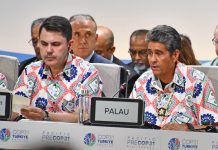
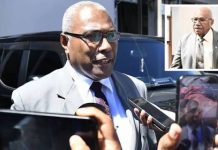
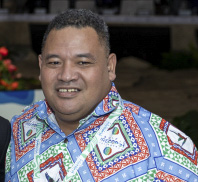
Tuvalu’s Climate Minister has hit back at claims that last week’s Pre-COP event hosted by his country was a flop, while saying a phase-out of fossil fuels must be part of the discussion around COP31 in Türkiye.
Dr Maina Vakafua Talia also told SBS News his nation welcomed a landmark Australian High Court decision on coal and gas emissions, which provoked outcry from the mining sector, as a “clear signal” of moral responsibility.
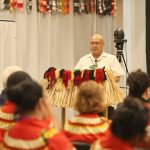
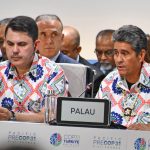
Tuvalu, whose population numbers around 10,000, hosted a leader’s gathering at last week’s Pre-COP event shared with Fiji, part of a compromise struck by Australia to divide hosting rights with Türkiye.
The event came under heavy Australian media scrutiny, with shadow energy minister Dan Tehan labelling the event an “embarrassment” and a “flop” over the low number of leaders attending beyond a group from the Pacific.
While Talia acknowledged the Tuvalu meeting was only able to attract two global leaders from outside the Pacific (Timor-Leste and Mauritius), down from five initially expected, he described the turnout as “a big achievement for Tuvalu and for the Pacific.”
“We need to be very ambitious,” he told SBS News in Canberra, talking up the event’s shift from “a boring dialogue” to “a more moving, emotional engagement” focused on the challenges facing low-lying communities like his.
“The leaders were able to see for themselves, engage with the young ones, engage with our elders. One of the high representatives that came to Tuvalu told me, ‘My heart bleeds when I saw the kids, when I saw our elders. Now I understand’.”
The Taku Pakasoa Declaration agreed to at Pre-COP urged nations to act to keep the 1.5-degree climate target in reach, as well as increasing access to Climate Finance.
But there appears to be a diminishing appetite among nations for November’s Antalya agreement to contain language focused on the phase-out of fossil fuels like Coal and Gas.
Türkiye’s climate minister Murat Kurum, who will oversee the COP31 presidency, told the Guardian last week the world is “already in a transition” away from fossil fuels, reportedly suggesting the issue could be addressed indirectly through other means.
“If we are to discuss the 1.5 degrees, we are literally discussing the phasing out of fossil fuels,” Talia said.
“We are talking about the backbone of some economies, but this is the reality that we have to face, and we really need to change the whole narrative, to change our priorities … to ensure that the survival of other peoples is always there.”
Talia, who is set to share a related panel with energy minister Chris Bowen in Canberra, said he had faith Australia “can do more with the power that they have” to make the case for strong action, standing up to nations like India, Russia and China who are likely to argue for a moderate approach.
While leaders were gathering for Pre-COP, Australia’s High Court delivered a landmark climate decision, finding in the case of Mount Pleasant Coal Mine in New South Wales, planning authorities must consider the entire carbon footprint of the project, including the emissions produced by the burning of fossil fuels overseas.
The decision referenced the 2025 International Court of Justice ruling brought on by Vanuatu, which found nations have international law obligations to protect the climate.
Talia said the Australian High Court ruling showed the impact of that ICJ precedent, and was one long-awaited by the Pacific nation.
“”This is a good signal, a very clear signal, not just for the Pacific countries. It’s really a moral responsibility for countries,” he said.
The Australia-Tuvalu Falepili Union signed in 2024 was the first bilateral agreement to contain a significant pathway around climate mobility, with more than half the nation’s population applying in the initial ballot.
“There is no treaty in this world we can allude to say that this is 100percent,” Talia said, conceding “there are challenges, but they are manageable at the moment.”
He said the risk of a brain drain was one his government would have to manage but rejected the claim the treaty was “creating an avenue for people to escape”.