


The United Arab Emirates has called for climate negotiations to move beyond declarations and deliver financing and projects that improve the lives of communities facing the impacts of climate change.
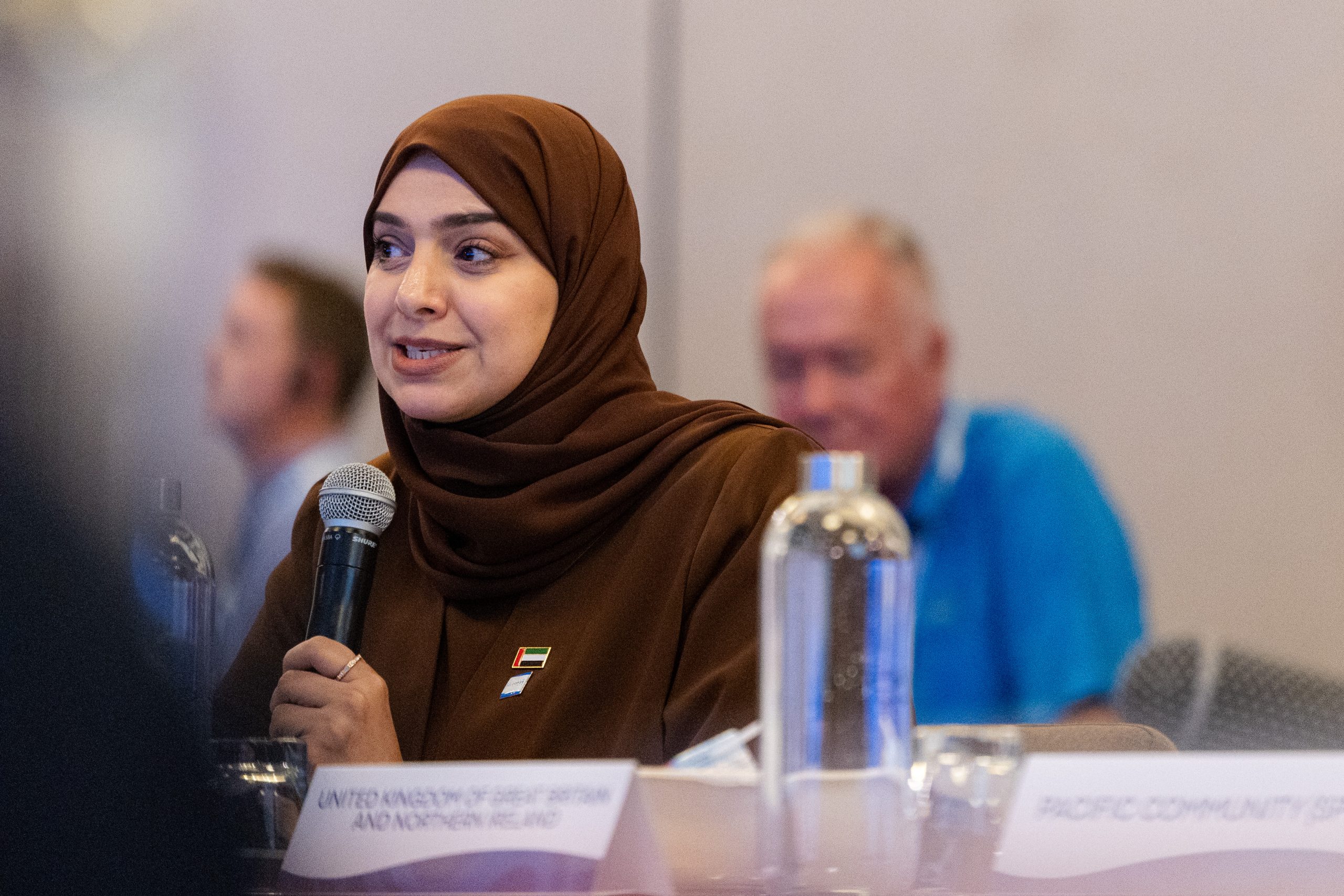
UAE Minister of Climate Change and Environment Dr Amna bint Abdullah Al Dahak Al Shamsi said the Pacific Pre-COP31 discussions must help turn international climate commitments into practical action, highlighting Tuvalu’s coastal adaptation project as evidence of what partnerships and predictable finance can achieve.
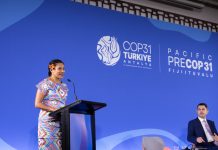
“Our overarching priority should be moving consensus to financing and implementation,” Al Shamsi told Pacific leaders at the Pre-COP31 plenary in Denarau.
She said the leaders’ visit to Funafuti had provided a direct example of climate adaptation being implemented on the ground.
“We all had the privilege of standing on the shorelines of Funafuti at Tuvalu’s Coastal Adaptation Project, witnessing firsthand climate adaptation in practice and building resilience for communities,” she said.
Al Shamsi said the project demonstrated the importance of predictable and appropriate climate finance, combined with international partnerships.
“TCAP offers a practical example of how predictable, fit-for-purpose finance and international partnerships can really deliver measurable adaptation outcomes on the ground,” she said.
She said the UAE welcomed the Pacific-led climate dialogue and remained committed to international climate finance and solidarity.
The minister said the UAE’s approach had been based on partnerships, with climate finance directed towards practical programmes.
She highlighted UAE’s pledge of US$100 million towards the initial capitalisation of the Fund for Responding to Loss and Damage at COP28 in Dubai.
She also emphasised the launch of Altérra at COP28, with US$30 billion in commitments aimed at mobilising climate investment at scale.
In the Pacific, Al Shamsi said a US$50 million UAE-Pacific Partnership Fund, financed through the Abu Dhabi Fund for Development and implemented by Masdar, had supported renewable energy projects across 11 Pacific island countries.
She also cited a US$10 million allocation under the Community Resilience to Natural Hazards programme to support communities across Asia and the Pacific facing natural hazards.
Al Shamsi said the UAE remained committed to ensuring Pacific island countries were not left behind in the global transition to a more resilient and sustainable future.
“Climate progress cannot be measured by negotiated declarations alone.
“It must be felt in the lives of people and safer coastlines, secure water supplies, reliable clean energy and thriving ecosystems,” she said.
Reflecting on the leaders’ visit to Tuvalu, Al Shamsi said the people involved in the coastal adaptation project had left a strong impression on her.
“One of the things that struck me the most is not just the project and the implementation that we saw on the ground, but it is the people around it,” she said.
She said the resilience and optimism of Tuvalu communities placed a responsibility on governments and international partners to deliver on their commitments.
“They are not only optimistic, they are resilient and they are courageous, and it is our responsibility to make sure that we deliver to their hopes and dreams,” Al Shamsi said.
She said no country could meet the climate challenge alone and that success would ultimately depend on what governments could deliver together.
“We have our shared responsibility, but the success can only be measured with what we can deliver together,” she said.