


By Pita Ligaiula in Koror, Palau
For Pacific Island countries, the challenge of climate finance is not simply about securing more money.
It is also about having the capacity, institutions, systems and expertise needed to access, manage and invest that money in ways that strengthen development and build long-term resilience.
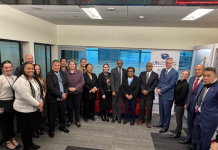
That distinction was at the centre of discussions led by Karlos Lee Moresi, Programme Adviser and Climate Finance & Resilience Team Leader at the Pacific Islands Forum Secretariat (PIFS), during a Pacific Islands Forum Secretariat and Pacific Islands News Association (PINA) Regional Media Training Workshop in Palau.
Moresi said climate finance was often discussed almost entirely through the lens of international negotiations under the United Nations Framework Convention on Climate Change (UNFCCC).
But, he said, negotiations were only one part of a much bigger challenge facing Pacific Island countries.
“I want to make a distinction between climate finance in the negotiation space, which is under the UNFCCC, and climate finance in terms of its application and the effectiveness of its utilisation.
“These are two quite distinct propositions,” he said
Beyond the negotiations
According to Moresi, international negotiations establish the case for climate finance by highlighting the impacts of climate change on Pacific communities, the scientific evidence and the importance of limiting global warming to 1.5 degrees Celsius.
“The UNFCCC process is putting forward the why — the need for climate finance.
“That is based on the impacts that we are experiencing in the region and the established narrative around the impacts and suffering that our people are facing, as well as the ongoing challenges identified by the science,” he said
But once finance is secured, Moresi said, the focus must shift from why the Pacific needs money to how that money can be effectively used.
For the region, the ultimate question is whether climate finance can strengthen development and help Pacific communities withstand the growing risks associated with climate change.
Climate as a risk premium
Moresi described climate finance as a “risk premium on development”.
Using water security as an example, he said investment in water infrastructure was fundamentally a development need.
However, climate change creates additional risks that require additional investment.
“Water, in its primary essence, is a development need.
“But because of the expected impacts of climate change, we need additional finance on top of that. If you are doing a water security project, the impacts of climate change mean you need additional financing,” he said.
The additional investment, he said, was necessary to ensure development projects could withstand the increasing impacts of climate change and continue delivering benefits over the long term.
This approach also links climate action directly to the Pacific’s broader economic and resilience agenda, including regional economic development strategies and the Framework for Resilient Development in the Pacific.
“The resilience development concept straight away links it into economic development,” Moresi said.
The question is how
The Pacific Climate Finance Access and Mobilisation Strategy is therefore focused not only on why the region needs climate finance, but also on the practical questions surrounding access and use.
“How do we access finance, and what do we access finance for?” Moresi asked.
Pacific countries, he said, were still not receiving the level of climate finance they needed.
But the quality of financing was equally important.
“We want the quality of access to be mostly grants-based, and it should not create further debt or financial pressure on our national systems,” he said.
For small island economies already facing debt pressures and limited fiscal space, the difference between grants and loans can have major consequences.
Climate finance, Moresi said, should help strengthen Pacific economies rather than create additional financial burdens.
A US$2.6 billion challenge
The scale of the Pacific’s climate adaptation challenge remains enormous.
Moresi said the region’s adaptation needs were estimated at about US$2.6 billion a year through to 2030, while funding available from major climate finance mechanisms remained far below what was required.
The gap means Pacific Island countries cannot rely solely on institutions such as the Green Climate Fund.
“We have to look elsewhere,” he said.
The region must broaden its financing base to include multilateral development banks, other international financial institutions, the private sector and philanthropic organisations.
“The Climate Finance Access and Mobilisation Strategy is about expanding the financing base.
“How do we access broader funding than through the Green Climate Fund or other climate funds so that we can actually meet our needs?,” he asked.
That effort requires coordination among Pacific leaders, technical experts, bilateral partners and international financial institutions.
Development banks and climate risk
Moresi also highlighted the changing role of development banks such as the Asian Development Bank (ADB), which has increasingly positioned itself as a climate-focused development partner for the Pacific.
The shift reflects a growing recognition that climate change can threaten the very infrastructure and development investments that banks are financing.
“ADB was a heavy infrastructure development investor in the region.
“I started to realise that they also need to overlay what I call the climate premium, or the climate risk, on top of that to protect their own investment and also to extend the longevity and effectiveness of those investments in our member countries,” he said.
Climate considerations, therefore, are increasingly becoming part of mainstream development financing rather than being treated as a separate issue.
Capacity before capital
But Moresi stressed that getting more money into the Pacific was not simply a matter of asking donors and financial institutions for additional funding.
“The initial focus of the mobilisation strategy is actually on capacity and institutional strengthening,” he said.
For Pacific countries, stronger systems are needed to manage finance effectively, including public financial management, reporting, monitoring and project preparation.
“We need to capacitate our member countries to have the institutional strength and systems needed to access finance.
“We need to have our own capacity to develop projects and national development plans, identify regional priorities and have the capacity to absorb that money,” he said
This, he suggested, is one of the most important challenges facing the region.
Even when funding is available, countries must have the technical expertise and institutional systems needed to prepare projects, meet funding requirements, manage implementation and demonstrate results.
Without those systems, the Pacific risks being unable to fully benefit from the finance it has fought for in global negotiations.
Aligning national priorities
Moresi also called for stronger alignment between national development plans, national adaptation plans and national climate commitments.
“There needs to be alignment.
“We are spending a bit of time strengthening alignment across national systems, but also linking that to the regional architecture,” he said.
Stronger alignment, he said, would help ensure that climate finance is directed towards nationally identified priorities and supports broader development objectives.
Only after national systems and institutions are strengthened can Pacific Island countries maximise their ability to access and effectively use climate finance.
Building value at home
The discussion on resilience and finance also extended beyond climate change.
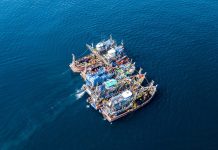
Moresi outlined several economic development initiatives that could come before Pacific leaders, including proposals relating to fisheries and the development of a regional fisheries fund.
The goal, he said, should be to move beyond simply exporting raw resources and instead create greater value within Pacific economies.
In fisheries, that could mean greater investment in processing, innovation, market development and new products that generate stronger economic returns for Pacific communities.
“We should be looking at innovative ways of differentiating our products instead of just selling licences and allowing fishing boats to come and take the fish away,” he said.
The same principle, he said, could apply across other Pacific industries.
Protecting Pacific identity
Moresi pointed to the region’s kava industry as another example of how Pacific countries could create greater value through ownership, identity and cultural recognition.
He said the proposed Kava Declaration was intended to explore issues of ownership, identity, trademarks and the cultural value associated with kava, while creating opportunities for Pacific countries to promote and export the product collectively.
He compared the concept with geographical protections associated with products such as Champagne.
“The plant grows elsewhere, but the term kava is very specific to the cultural practices around it,” he said.
“It gives a certain identity and a certain value, and that is what we are trying to get our leaders to agree to through a Kava Declaration,” he said
The broader objective is to ensure that Pacific resources and products generate greater value for Pacific communities.
When disaster erases development
Climate change, however, is not the only risk facing Pacific development.
Moresi warned that disasters could wipe out years of economic and social progress almost overnight, creating a different and urgent type of financing need.
“When I talk about the risk premium of human development, disasters are definitely a potential, or absolute, risk to our development,” he said.
He highlighted the experience of Pacific countries such as Fiji, where a major disaster can destroy infrastructure and livelihoods built up over many years.
“Twenty-four hours can wipe away a decade of development.
“That is a totally different kind of risk and requires a different, specific kind of financing.” Moresi said.
For small island countries, the challenge is therefore not simply to finance future development, but also to protect the development gains that have already been achieved.
More than money
For Moresi, the success of climate finance in the Pacific cannot be measured simply by the amount of money pledged or announced at international conferences.
The more important test is whether Pacific Island countries have the systems, institutions, projects and long-term strategies needed to turn that finance into meaningful and lasting development.
The Pacific, he said, must continue pushing for greater and better-quality climate finance.
But it must also invest in its own ability to access, manage and absorb that funding.
In the end, the region’s climate finance challenge is about more than money.
It is about ensuring that every dollar accessed helps Pacific communities build stronger economies, protect development gains and become more resilient to a future defined by climate change and increasing disaster risks.
For the Pacific, securing climate finance is only the first step. Having the capacity to use it effectively may be just as important.