
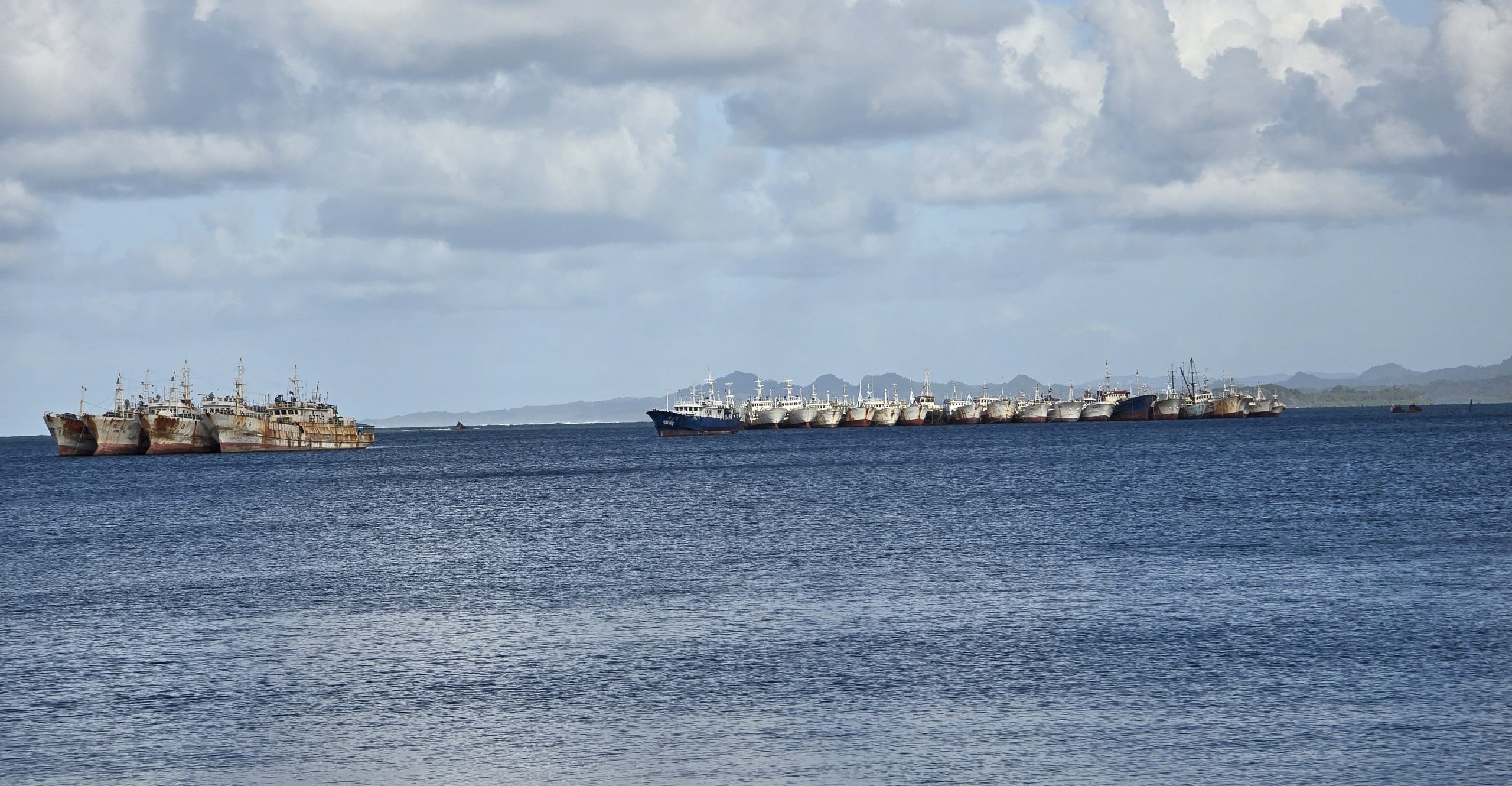
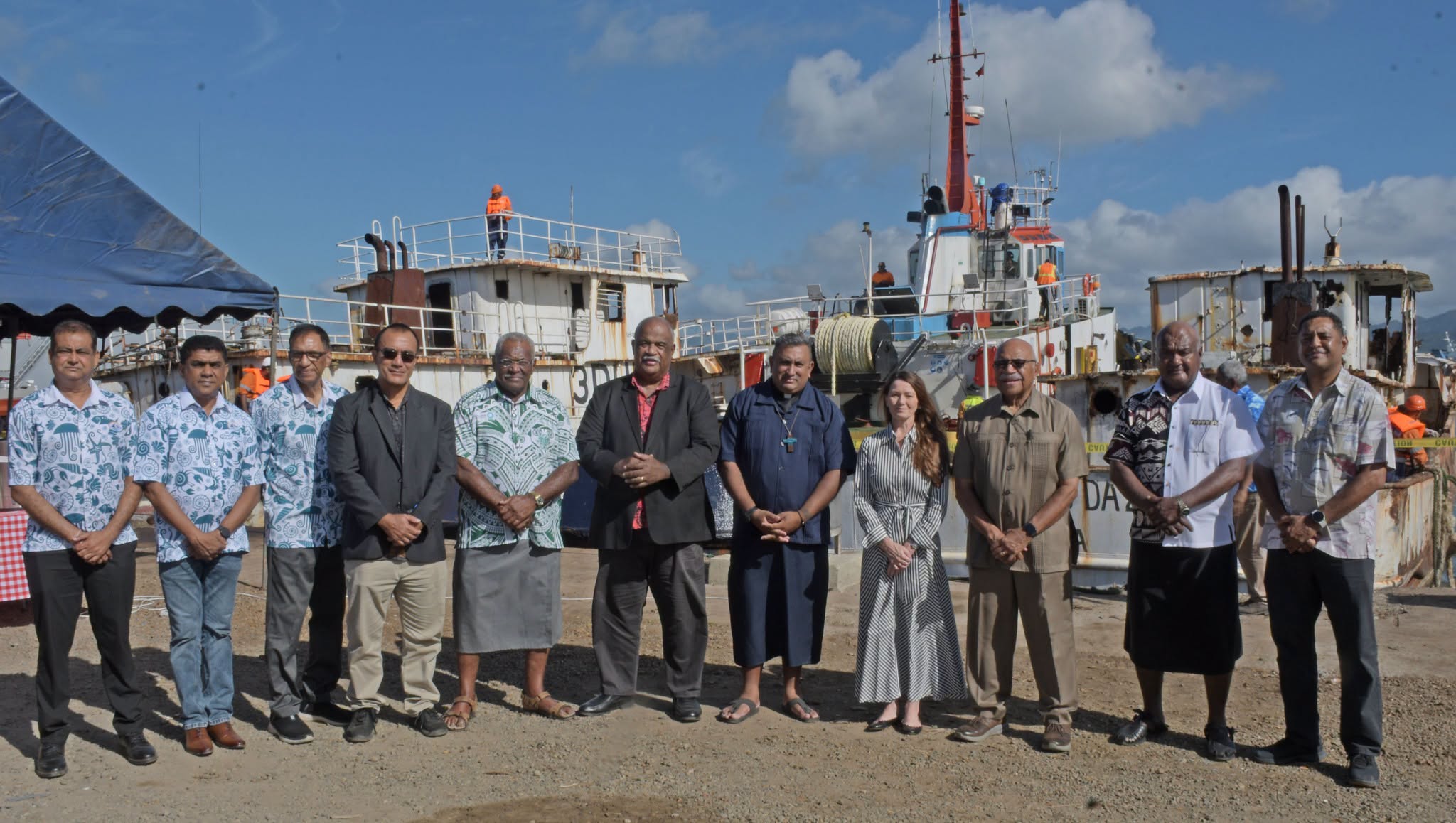
Fiji has launched a US$1 million initiative to remove 17 high-risk derelict vessels from Suva Harbour as the Government moves to improve maritime safety, protect the marine environment and strengthen accountability for abandoned vessels.
The initiative, supported by the Captain Johnathan Smith Fund established through a partnership between the Fiji Government and the Waitt Foundation, will focus on the removal of the vessels while also supporting legal and regulatory reforms aimed at preventing vessel abandonment in the future.
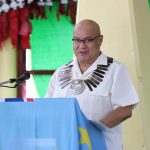
Speaking at the launch, Fiji’s Prime Minister, Sitiveni Rabuka, said the initiative was not simply about clearing old vessels from the harbour, but about restoring the harbour’s broader environmental, maritime and economic functions.
“This is important because the challenge before us is not simply about removing old vessels,” he said.
“It is about restoring the health and functionality of our harbour, protecting our marine environment, improving maritime safety, strengthening accountability, and ensuring that the burden of abandoned vessels does not continue to fall on Government, communities and future generations.”
The Government says derelict vessels pose risks to navigation and marine ecosystems, with the potential to obstruct waterways, introduce pollutants, damage coastal habitats and affect fisheries and other food sources relied upon by coastal communities.
“For our coastal communities, these vessels are much more than an eyesore,” he said.
“They represent environmental risks, navigational hazards and lost economic opportunities. They can interfere with access to fishing grounds, affect marine habitats and undermine the productive use of our coastal waters.”
He said removing the vessels was therefore part of Fiji’s wider commitment to sustainable ocean management and Marine Spatial Planning.
“Our ocean is one of Fiji’s greatest national assets. It supports food security, livelihoods, tourism, fisheries, transport, trade, culture and our national identity. We must therefore manage it strategically and sustainably,” he said.
Rabuka said the project brings together several government agencies, including the Ministry of Environment and Climate Change, Ministry of Public Works, Meteorological Services and Transport, the Maritime Safety Authority of Fiji and Fiji Ports Corporation Limited, through the Joint Maritime and Enforcement Committee.
“When we bring together our different mandates, expertise, resources and partnerships, we can deliver solutions that are greater than the sum of our individual efforts,” he said.
However, he said removing the vessels alone would not solve the problem.
“Removal alone is not enough. We must address the systems and regulatory gaps that allow vessels to become derelict in the first place,” he said.
“The objective must be simple: those responsible for vessels must also be responsible for their proper management, maintenance and eventual disposal,” he said.
“Government resources should not continually be required to address liabilities created by irresponsible abandonment.”
He said communities should also not be left to bear the environmental and economic costs, while future generations should not inherit the same problems.
The initiative is also being linked to Fiji’s broader ambition to sustainably manage its ocean resources and fully protect 30 percent of its ocean through effective marine conservation and management measures.
Rabuka said Fiji could not credibly plan for a healthy and productive ocean while abandoned vessels continued to threaten marine ecosystems, navigation and economic activity.
He also connected the project to Fiji’s aspiration for the Pacific to become an “Ocean of Peace”, saying the concept extended beyond security at sea to ensuring the ocean remained safe, healthy, productive and resilient.
“A cleaner and safer Suva Harbour supports healthier marine ecosystems and provides a stronger foundation for maritime activity, fisheries, tourism, transport and investment,” he said.
The initiative also has an economic dimension, with Rabuka saying well-managed ports and maritime spaces are critical economic infrastructure that can support trade, investment and business activity.
As Fiji works towards its goal of achieving High Income Country status by 2050, he said environmental protection and economic growth must be pursued together.
“Environmental protection is not a constraint on economic growth. Properly managed, it is an enabler of sustainable and enduring growth,” he said.
Rabuka said Fiji’s broader environmental and sustainable development commitments must also be translated into practical action.
“These commitments are meaningful only when translated into action on the ground,” he said.
The Prime Minister said the removal of the 17 vessels should ultimately lead to a stronger system capable of preventing the problem from recurring.
“Let us use this milestone to build a stronger system that prevents the problem from returning. Let us continue to protect our ocean as an economic, environmental, cultural and strategic asset capable of supporting prosperity for generations to come,” he said.