


Climate change is already costing Pacific Island countries billions of dollars while destroying livelihoods, damaging ecosystems and threatening cultural identity, traditional knowledge and communities’ ability to remain on their land, a new regional report has found.
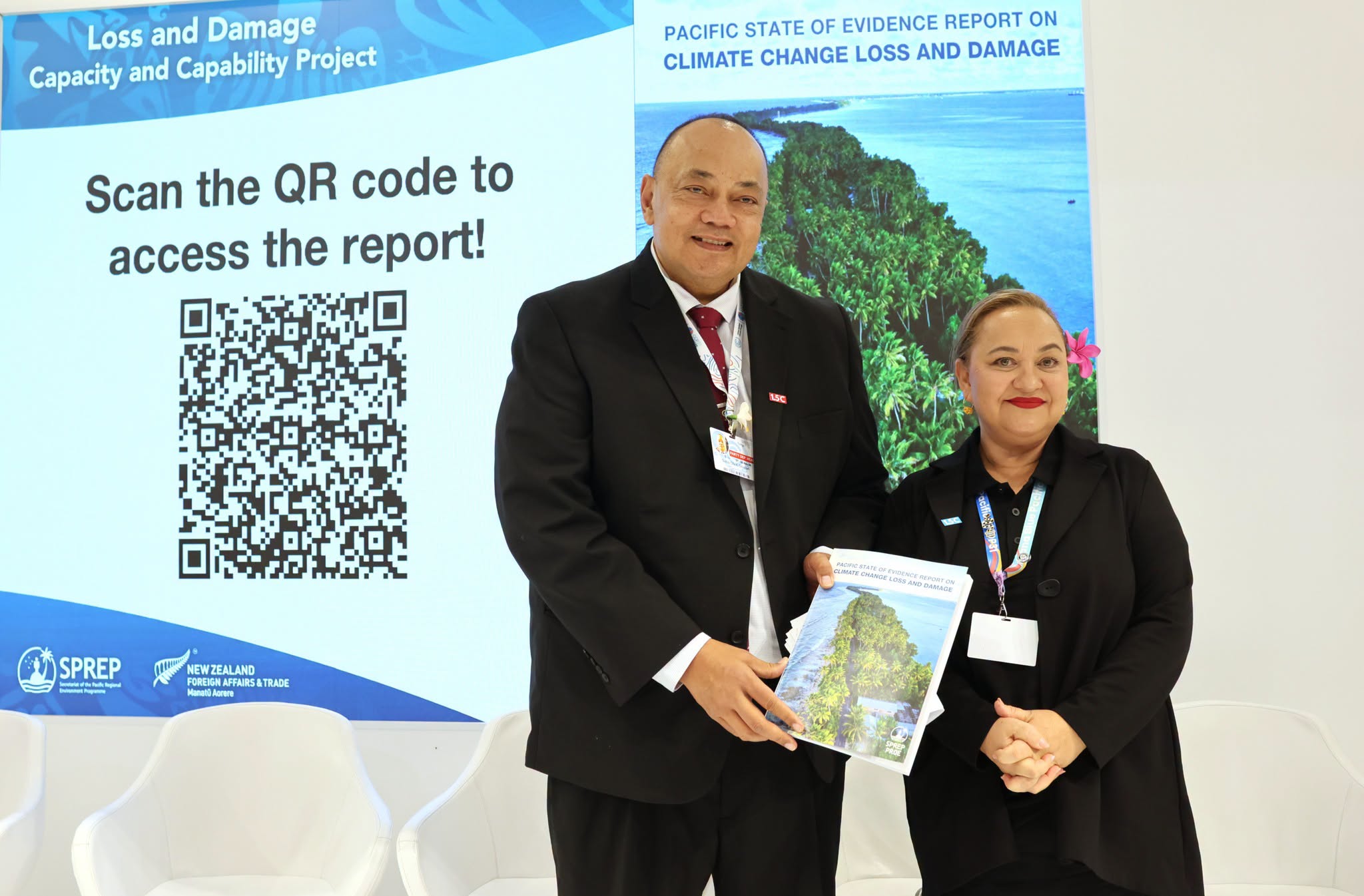
The Pacific State of Evidence Report on Climate Change Loss and Damage, released by the Secretariat of the Pacific Regional Environment Programme (SPREP), documents the economic and non-economic impacts of climate change across 14 Pacific Small Island Developing States and Tokelau.
The report says individual tropical cyclones have caused damage equivalent to 30 to 70 percent of annual national Gross Domestic Product (GDP) in some Pacific countries, placing significant pressure on government finances and development.
Fiji’s experience with Tropical Cyclone Winston in 2016 illustrates the scale of the damage, with losses estimated at FJD$1.98 billion (US$868.4 million), equivalent to about one-fifth of the country’s GDP.
Tropical Cyclone Pam caused an estimated US$449 million in damage in Vanuatu in 2015, while Cyclone Gita resulted in an estimated US$164.1 million in damage in Tonga in 2018.
The report says Pacific Small Island Developing States collectively contribute less than 0.03 percent of global greenhouse gas emissions but face disproportionate consequences from climate change.
It estimates climate financing needs in the Pacific at between 6.5 and nine percent of GDP, or almost US$1 billion annually.
Beyond the immediate destruction caused by cyclones and floods, the assessment identifies rising sea levels, saltwater intrusion, drought, ocean warming and acidification as continuing threats to freshwater supplies, food production, infrastructure and marine ecosystems.
It warns that repeated climate events are reducing the time and resources available for communities and governments to recover before further damage occurs.
The assessment examines nine priority sectors: agriculture, forestry and food security; fisheries and marine resources; water; energy; health; infrastructure and connectivity; tourism; biodiversity and ecosystems; and education and human development.
It finds that damage to essential services can trigger wider economic and social consequences.
Electricity outages, for example, disrupt water pumping, healthcare, communications and refrigeration, while damaged roads, ports and telecommunications networks restrict emergency responses and access to markets.
The report also highlights losses that cannot easily be measured in monetary terms, including the destruction of cultural heritage, burial grounds and sacred sites, displacement, loss of traditional knowledge and disruption to relationships with ancestral lands.
It says restoring infrastructure and replacing lost income do not necessarily restore cultural practices, community identity or connections to place.
The assessment identifies significant gaps in the available evidence, particularly on slow-onset climate impacts, household costs, informal livelihoods and long-term effects on culture, ecosystems and community wellbeing.
Remote and outer island communities are also underrepresented in existing research, while information on the different impacts experienced by women, people with disabilities and other vulnerable groups remains limited.
The report cautions that the absence of documented evidence should not be interpreted as an absence of climate impacts.
It also says differences in assessment methods and geographical coverage make it impossible to calculate a reliable total monetary value for climate-related loss and damage across the region.
Among its recommendations, SPREP calls for Pacific countries to strengthen national loss and damage assessments, improve scientific monitoring of slow-onset impacts and develop culturally appropriate ways to document non-economic losses.
It recommends updating the regional evidence report every four to five years and strengthening post-disaster needs assessments to include losses affecting subsistence production, informal livelihoods, health, education and community wellbeing.
The report also recommends that Pacific countries use the evidence to strengthen their access to international climate finance, including the Fund for Responding to Loss and Damage.
It says the regional assessment should be formally submitted to the United Nations Framework Convention on Climate Change as the Pacific’s evidence submission on loss and damage.
The report was developed by SPREP with funding support from the New Zealand Ministry of Foreign Affairs and Trade through the Loss and Damage Capacity and Capability Project.
It consolidates available evidence published primarily between 2010 and January 2026 and provides a regional foundation for future research, planning and climate finance discussions.
The assessment concludes that climate change loss and damage is a continuing challenge for the Pacific, with existing evidence capturing only part of the losses experienced by communities across the region.