

Fiji is exploring strategic cooperation with Malaysia and PETRONAS to strengthen fuel security, build strategic reserves and reduce the country’s vulnerability to disruptions in global energy markets.
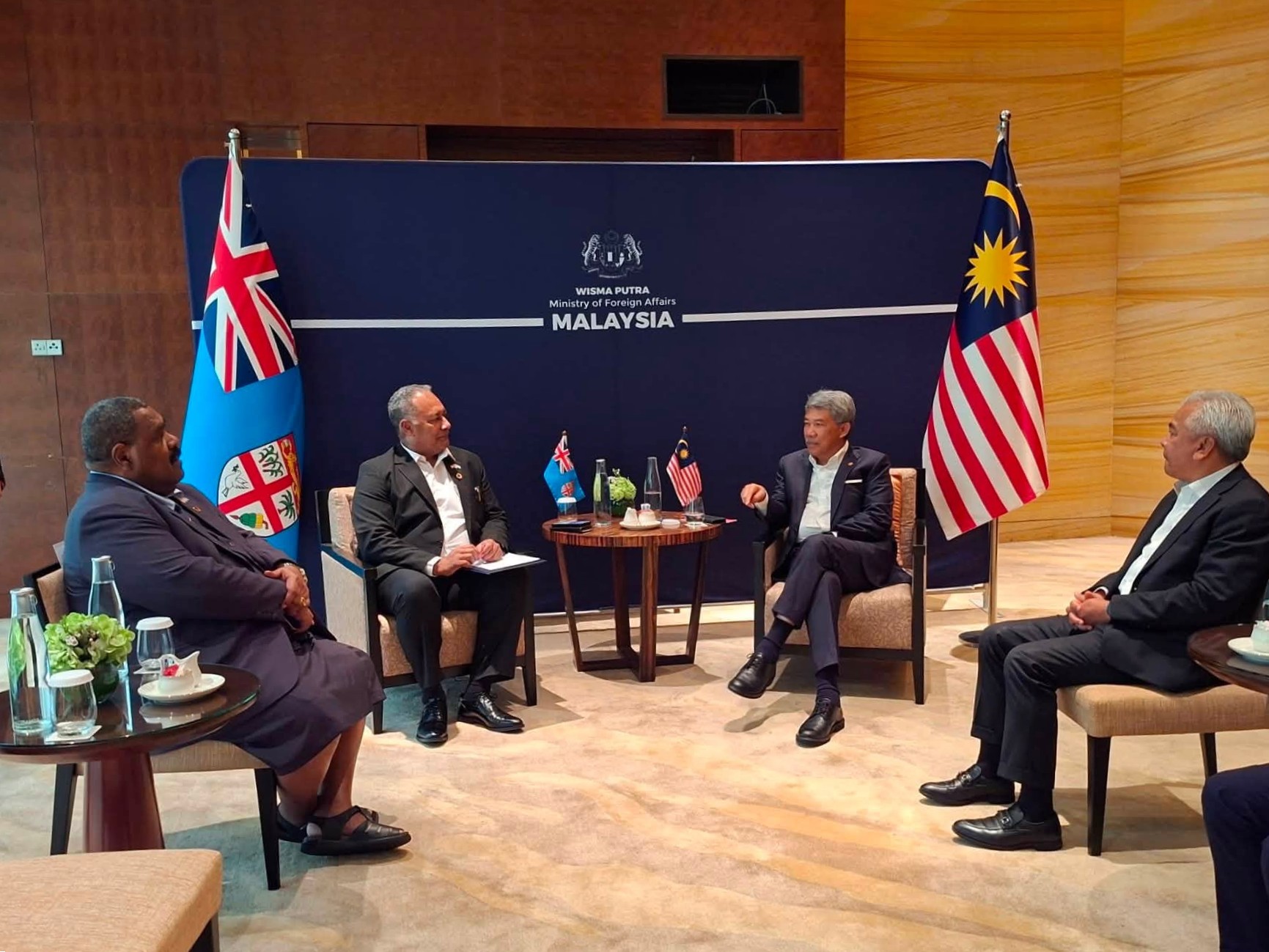
Fiji’s Minister for Foreign Affairs and External Trade, Sakiasi Ditoka, raised the issue during separate meetings with PETRONAS Executive Vice President and Chief Executive Officer, Downstream, Datuk Sazali Hamzah, and Malaysia’s Minister of Investment, Trade and Industry, Datuk Seri Johari Abdul Ghani.
The discussions formed part of Ditoka’s official working visit to Malaysia and follow Fiji’s recent high-level engagements with Singapore and Australia aimed at strengthening partnerships amid continuing volatility in global fuel markets.
Fiji, as a small island developing state heavily dependent on imported petroleum products, is vulnerable to disruptions to international shipping, rising freight costs and congestion, which can have significant impacts on fuel supplies and prices.
With PETRONAS, Ditoka explored the possibility of Fiji being included in existing oil storage and stockpiling arrangements involving international partner countries.
“The recent global fuel volatility and Middle East shipping disruptions have underscored that small island developing nations cannot rely solely on spot-market arrangements,” stated Minister Ditoka.
“Securing Fiji’s energy supply chain is vital not only for our 900,000 citizens but also for our maritime neighbours who rely on Fiji as a regional hub. Partnering with a global energy leader like PETRONAS allows the Coalition Government to build true long-term resilience for Fiji and the wider Blue Pacific.”
The meeting also considered technical support for Fiji’s planned National Fuel Security Strategy, including fuel storage and supply-chain infrastructure.
Ditoka also expressed interest in PETRONAS’ investments in renewable energy, sustainable biofuels and lower-carbon energy solutions as Fiji looks to diversify its energy sources.
“Fiji is looking to build resilience, not dependence. We want to work with partners who can help us strengthen our systems, diversify our options and prepare for the future. We see PETRONAS as a potential partner in that journey,” Minister Ditoka said.
Discussions with Malaysia’s Investment, Trade and Industry Minister also focused on strategic fuel reserves, emergency supply assurances, resilient supply chains and long-term energy infrastructure.
The talks included the possibility of pre-positioned offshore fuel storage and stronger maritime supply arrangements.
Johari shared Malaysia’s experience in strategic fuel security and stockpiling arrangements with international partners, providing an opportunity for Fiji to assess how Malaysian expertise could support its long-term energy security.
“Energy security is a critical component of national security for small island developing states,” stated Minister Ditoka.
“Malaysia’s advanced refining capabilities and world-class energy infrastructure make it a natural strategic partner. Exploring a formal and structured arrangement on fuel security and off-shore stockpiling reflects our Coalition Government’s proactive commitment to protecting Fijian families and local businesses from international price shocks.”
The two sides also discussed expanding trade and investment, technology transfer and industrial cooperation, including greater Malaysian investment in Fiji and improved market access for Fijian products.
Ditoka welcomed Malaysia’s continued partnership with Fiji and said the reopening of Fiji’s High Commission in Kuala Lumpur would provide a platform to deepen bilateral relations.
The discussions are expected to continue through official and technical channels to identify practical areas for cooperation on fuel security, energy infrastructure, trade and investment.