

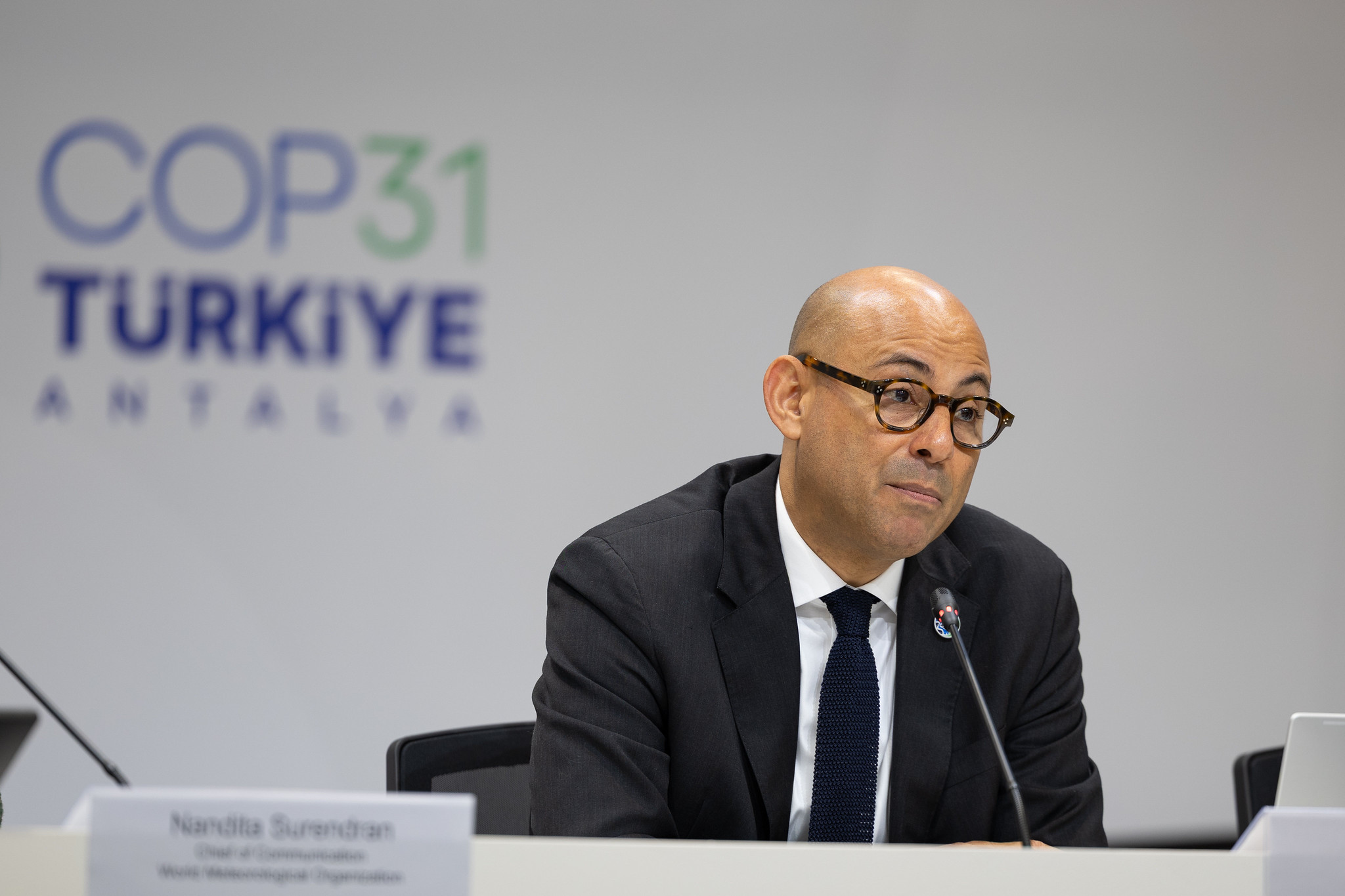
UN Climate Change Executive Secretary Simon Stiell has urged governments and businesses to accelerate the shift to clean electricity, warning countries they must choose between electrification and continued exposure to volatile fossil fuel prices.
“Nations now face a choice: electric or shock. Rewire the global economy for the electricity age. Or accept ongoing fossil fuel cost pain for families, firms, and national budgets,” Stiell said.
Speaking at the COP31 Presidency press conference in Antalya, Türkiye, Stiell said electrification was a practical solution that could reduce household costs, cut pollution and protect national economies from the instability of fossil fuel markets.
He said COP31 must focus on delivering practical outcomes through negotiations and the Global Climate Action Agenda, which are designed to help countries implement their international climate commitments and national plans.
Stiell said the conference was taking place amid growing climate destruction and economic pressures, with climate-related disasters affecting millions of people and damaging national economies.
He said fossil fuel price volatility had also increased economic pressures this year, contributing to inflation and uncertainty for households and businesses.
“No COP has a magic wand that can solve these multiple crises overnight. But each recent COP has delivered significant steps forward and COP31 must too,” he said.
Stiell said clean electricity offered countries an opportunity to reduce their dependence on fossil fuels, pointing to the falling cost of renewable energy.
“Clean energy is cheap energy,” he said, citing International Renewable Energy Agency figures showing that 90percent of large renewable energy projects are now cheaper than fossil fuel alternatives.
He said renewables had overtaken coal in global electricity generation, marking significant progress since the Paris Agreement was adopted more than a decade ago.
However, Stiell warned that the global energy transition remained uneven, with many countries requiring greater support to expand clean energy and access to electricity.
He said up to 75 percent of energy demand could already be electrified using existing technologies, but countries needed to accelerate their deployment.
“Up to 75 percent of energy demand can already be electrified with existing technologies,” he said.
“We need to roll out those solutions faster, to far more communities in more countries, as we continue expanding access to electricity.”
Stiell said the COP31 Presidency’s 35-by-35 electrification target, which aims to increase electricity’s share of global final energy consumption to 35percent by 2035, could help accelerate the transition.
He also pointed to growing support from the private sector, saying 180 companies with combined annual revenues of almost US$1.7 trillion were calling on COP31 to “seize the electric advantage”.
He urged governments, businesses, cities and states to support the electrification push and turn commitments into practical action.
Stiell said the climate crisis required sustained work rather than quick fixes, but COP31 presented an opportunity to accelerate solutions.
“There’s no quick fix to climate. There is a ton of hard work ahead,” he said.
“But our climate solutions step-up creates a real chance for faster progress here at COP31. And we must take that,” he said.