


The El Niño extreme weather pattern could cost the global economy up to US$11 trillion and seriously impact food security, said the UN agency tackling rural poverty in developing countries on Monday.
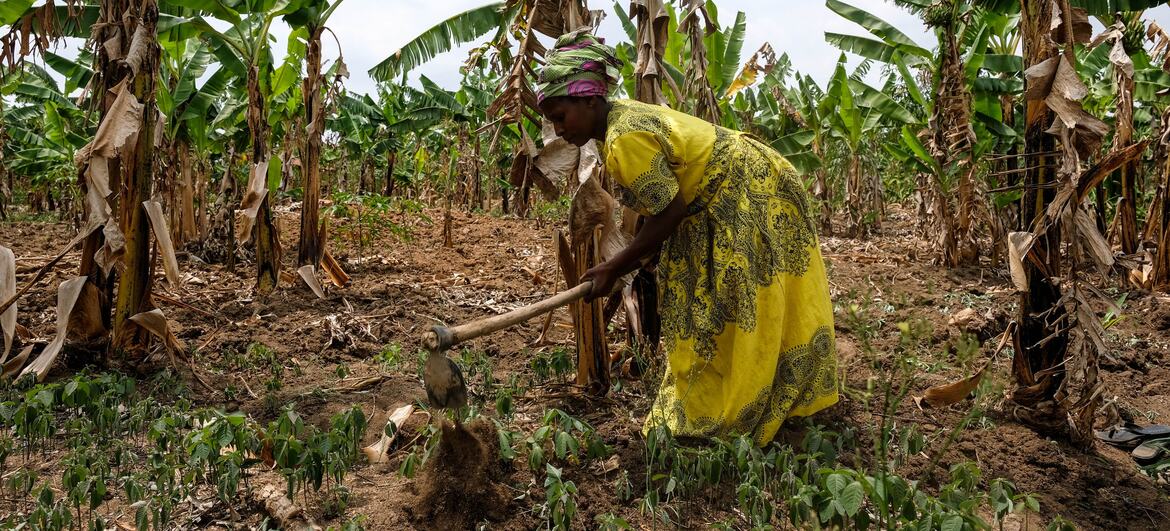
The new IFAD report identifies El Niño as one of several overlapping climate and economic shocks affecting small-scale food producers and rural economies, warning that agricultural disruptions can ripple through the wider economy.
In 2026 alone, global energy and fertiliser shocks drove up costs across food systems within a single planting season – from production and processing to transport and distribution.
To strengthen rural economies’ resilience to overlapping shocks, the report calls for bundled investments that help farmers access markets, agricultural inputs, technologies, and financial services, including credit and weather insurance.
“Resilience is not built by investing in single interventions, but by connecting investments in inputs, markets and finance so that gains in one area are not lost in another,” said Alvaro Lario, President of the International Fund for Agricultural Development (FAD).
IFAD modelling shows that combining these measures is nearly twice as effective at protecting farm incomes when drought and price shocks strike simultaneously.
Financial support alone, such as insurance, reduces farm-income losses by 9.8 percent, while combining investments in inputs, markets and finance cuts losses by 18.7 per cent.
In April this year, roughly 146.5 million Indians were exposed to an extreme heatwave with temperatures hitting a sweltering 47℃.
In Europe, provisional estimates of excess mortality across Europe exceeded 30,000 people over the summer, with approximately 16,000 excess deaths estimated during the 22–28 June heatwave alone.
A few months later, a Himalayan glacier collapsed causing a catastrophic downstream flash flood in late August, which killed more than 1,300 people in Nepal.
The streak of exceptional global temperatures, with melting ice and rising sea levels, will continue in the ongoing year and a very strong El Niño event is set to unleash more extreme weather well into 2027, a report from the World Meteorological Organisation (WMO) revealed on Monday – ahead of crucial COP31 talks in Türkiye.
The WMO State of the Climate Update 2026 details that the past 12 years have individually been the warmest on record, with the past four years topping the list.
Global average surface temperature for the period of January to September 2026 was approximately 1.47°C above the pre-industrial average and is expected to rise till the end of the year due to El Niño’s warming effect, which has been proliferating since August.
It is expected to be the strongest on record, by December.
Around 90 percent of the excess heat, trapped by greenhouse gases, is absorbed by the ocean, and 2026 is on track to be the tenth consecutive year of record ocean warmth.
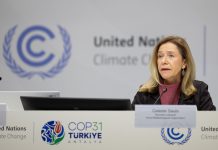
“El Niño doesn’t add new heat to the planet. It releases heat from the ocean, which is the warmest ever measured. There is simply more heat available to release,” said WMO Secretary-General Celeste Saulo.
Meanwhile, sea levels are the highest on record, and sea-surface temperatures set monthly records during 2026.
Glaciers continue their long-term retreat: the ice lost in 2025 would have filled five Olympic swimming pools every second of the year.
“We have entered a new age of climate extremes. A supersized El Niño is colliding with a planet already superheated by manmade climate change,” said UN Secretary-General António Guterres.
“Climate records keep falling. The human costs keep rising. And those least responsible are suffering first and worst.”
He urged leaders to “get serious” about reducing emissions faster, accelerating a transition from fossil fuel and delivering funds and protection that “vulnerable countries need”.
Dr Saulo highlighted that the El Niño will be a risk multiplier, as heatwaves, tropical cyclones, and rainstorms intensify faster than historical baselines prepared us for.
“Hundreds of millions of people this year have been exposed to unbearable extreme heat, whilst the catastrophic ice and rock collapse and flash floods in Nepal highlighted the compound risks facing communities in fragile, warming high-mountain terrain,” she said.
The final State of the Global Climate 2026 report is set to be issued in March 2027.