

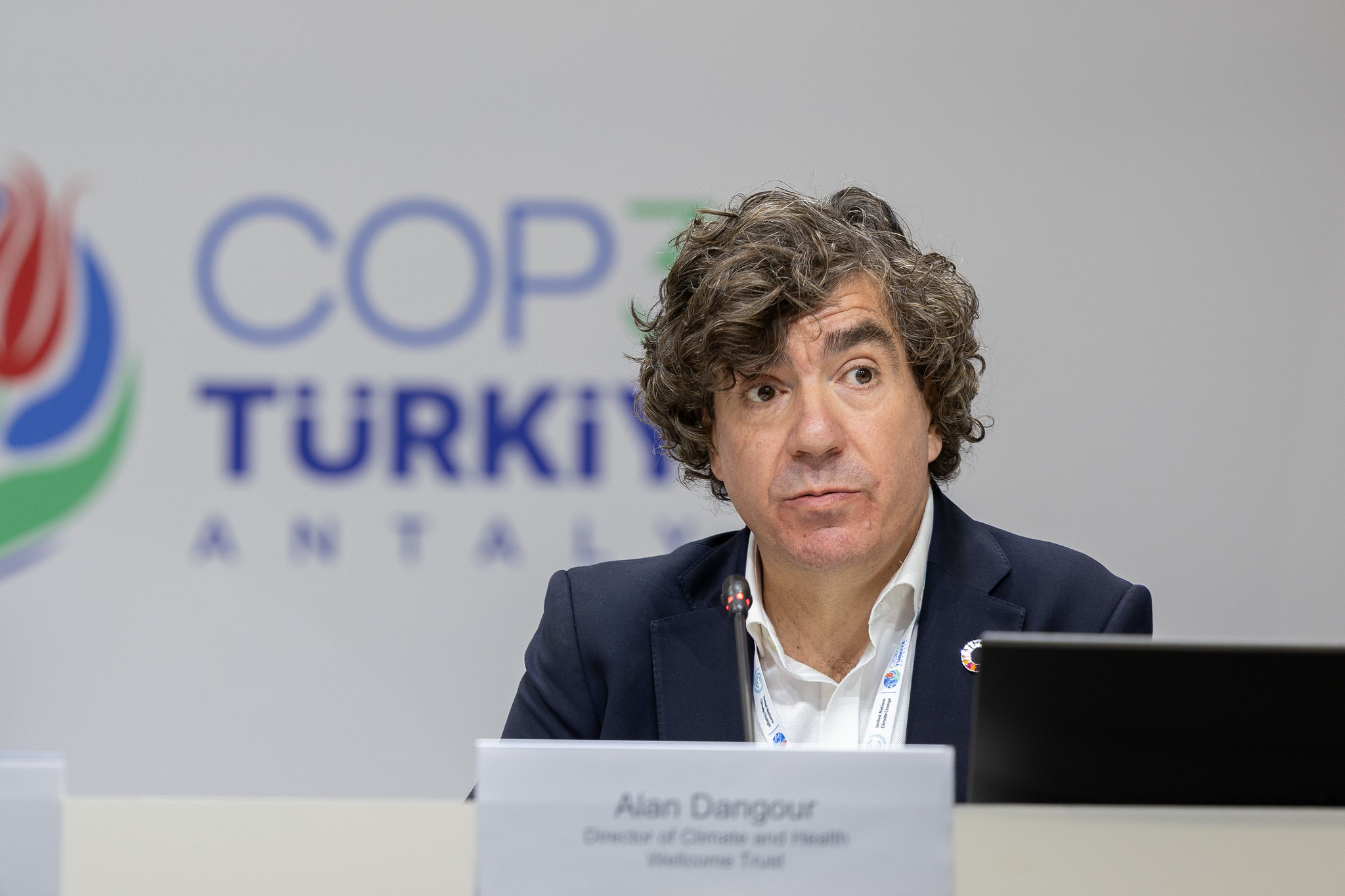
More than three million people die each year from fossil fuel-related air pollution and extreme heat, with climate change increasingly threatening human health, livelihoods and food security, Wellcome Director of Climate and Health Alan Dangour says.
Speaking at a World Meteorological Organisation (WMO) press conference at COP31 in Antalya, Türkiye, Dangour said the latest State of the Climate Update showed the world was facing record greenhouse gas concentrations, rising temperatures, melting sea ice and rising sea levels, alongside an unprecedented El Niño.
He said the scientific warnings had been clear for years, but global action remained too slow and insufficient to protect people.
“The response to the warning bells we’ve been hearing for so many years is not large enough and nowhere near fast enough – and this matters because people’s lives and livelihoods are at stake,” Dangour said.
He said climate negotiations needed to focus more directly on the impact of climate change on people, rather than concentrating primarily on atmospheric and environmental indicators.
“Because really, the main character at the centre of this story is not the atmosphere, the land, the ocean or the ice – it’s us. You and me, your family and your community,” he said.
Dangour said climate change was affecting every region, with communities facing increasing health risks from extreme heat, drought, air pollution and changing rainfall patterns.
He cited findings from the Lancet Countdown annual report, funded by Wellcome, which estimated that fossil fuel pollution and human-caused climate change were responsible for more than three million deaths annually.
Dangour said nearly 52 per cent of the world’s land experienced extreme drought for at least one month in 2025, the second-highest level on record.
The drought was affecting farmers and outdoor workers, while changing patterns of groundwater storage were creating additional risks for food security and sanitation.
However, Dangour said many solutions were already available and could deliver immediate health benefits.
He said reductions in fossil fuel-related air pollution had helped prevent more than 300,000 deaths annually in at least 77 countries over the past decade.
Electrification, cleaner energy, heat early warning systems and climate adaptation measures could further reduce deaths and ease pressure on healthcare systems.
“Electrification and cleaner energy will both save lives and reduce healthcare costs,” he said.
Dangour also announced that the Climate and Health Funders Coalition had awarded more than US$225 million in its first year to support work on extreme heat, air pollution, climate-sensitive infectious diseases and data systems.
The coalition, established at COP30 in Belém with more than 35 philanthropic organisations and an initial joint commitment of US$300 million, had also attracted an additional US$150 million in commitments from new and existing funders.
He said governments, businesses and development partners needed to increase investment in climate and health solutions, particularly for communities most exposed to climate impacts.
Dangour highlighted the health risks of extreme heat for pregnant women and their babies, saying stronger policies and practical measures were needed to protect vulnerable groups.
At the Pre-COP31 meeting in Fiji, Wellcome and its partners launched a global call to action for health guidelines, information, plans and data to protect pregnant women from extreme heat.
He said children, pregnant women, outdoor workers and older people needed greater protection as temperatures continued to rise.
Dangour urged governments and businesses to put human health at the centre of climate decisions and measure progress by the lives saved and improvements in health outcomes.
“We must change course and put the health and wellbeing of people at the heart of our response to climate change – measuring success not through emissions targets or degrees Celsius but by lives saved and health outcomes improved,” he said.
“The state of the climate is now in reality the biggest indicator of the state of human health.”
He said climate negotiations must recognise the direct consequences of decisions for communities around the world.
“And we should approach climate negotiations as though people’s lives depend on them, because they do,” Dangour said.