



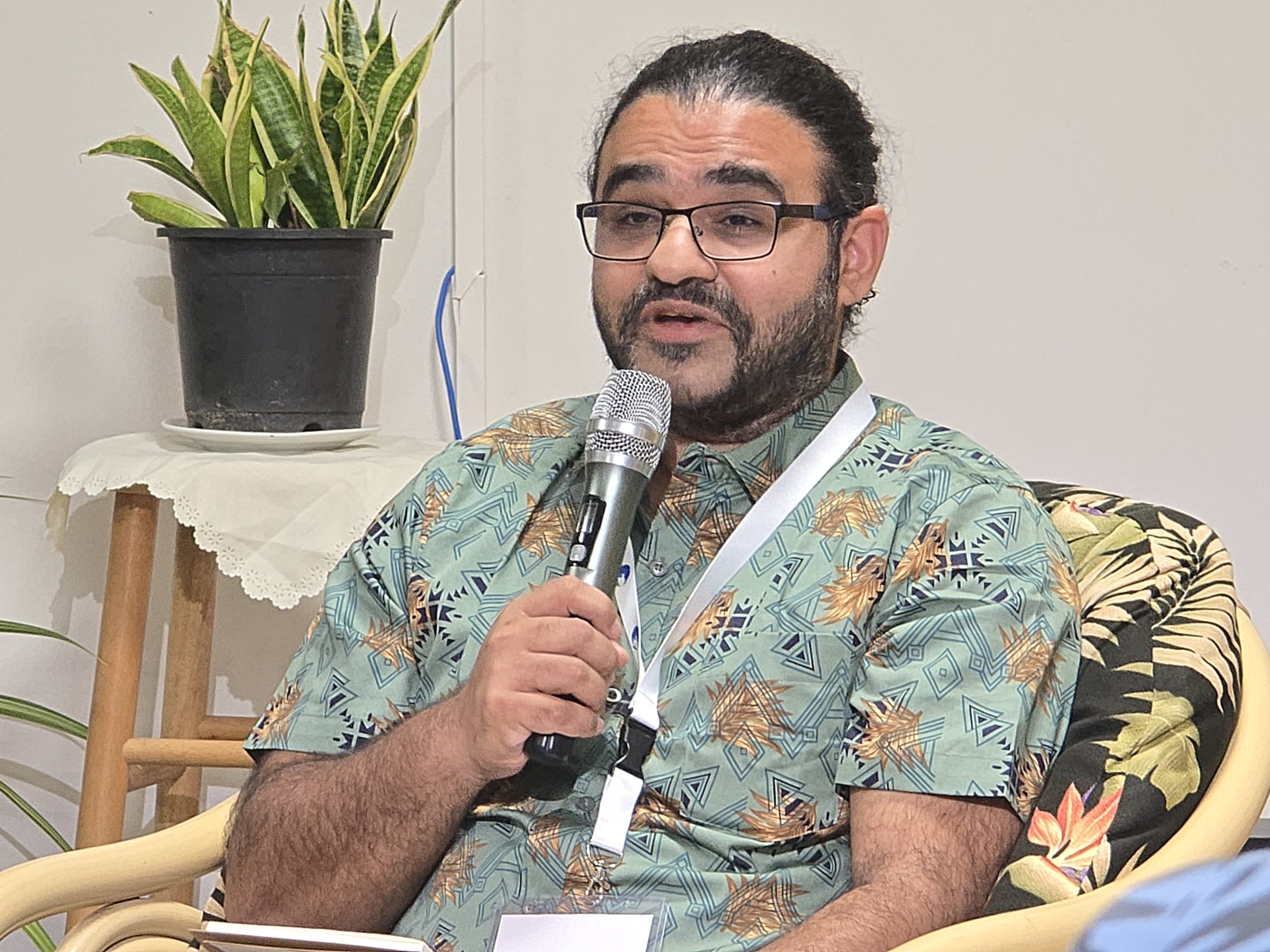
A senior international law expert has raised concerns about power imbalances and inconsistencies in global ocean and climate negotiations, warning that behind-the-scenes diplomacy often diverges from public commitments and sidelines Pacific and Global South voices.
Pradeep Singh, a legal scholar with 15 years of experience in international law and the law of the sea, said his work in multilateral negotiations has exposed what he described as “hypocrisy” in global decision-making processes.
“You see things that make a lot of sense, but at the same time don’t make any sense at all,” Singh said.
He said public statements made during negotiations often differ significantly from positions taken in closed-door discussions.
“What is said publicly can be encouraging, but behind closed doors the reality is often quite different,” he said.
Singh said this disconnect is evident across several international ocean governance processes, including negotiations on the Biodiversity Beyond National Jurisdiction (BBNJ) Agreement and deep-sea mining.
He noted that negotiators who advocate strong environmental protections in one forum often take different positions in discussions at the International Seabed Authority (ISA).
“Many of them then coming to the International Seabed Authority for negotiations on deep sea mining and suddenly taking a very different view on what they sort of presented,” he said.
He said such inconsistencies raise questions about the credibility of international decision-making on ocean issues.
Similar challenges, he said, are also seen in UN climate negotiations, where proposals from Pacific and African countries are often overlooked.
“It’s really disheartening that when proposals or initiatives come from Africa or from the Pacific, so often are they dismissed or sidelined as opposed to when proposals come from other Western countries,” he said.
Despite this, Singh said Pacific nations continue to play an influential role in shaping international ocean governance.
He pointed to initiatives led by countries such as Tuvalu and Vanuatu, which have helped elevate ocean and climate issues in global legal discussions and strengthened the region’s voice on the international stage.
On multilateral negotiations more broadly, Singh cautioned against compromise that undermines core principles, saying countries must be willing to defend their positions.
“The one phrase that you will hear very often is the spirit of compromise,” he said. “But sometimes the compromises being asked for are really not acceptable. And this is where it’s important to draw red lines.”
He said it was encouraging to see more countries standing firm in international negotiations.
“More and more countries now standing up and saying, ‘No, this is our right, this is our position, and we are going to defend it to the best of our abilities,’” he said.
Singh said the challenges facing international ocean governance underscore the need for decisions that reflect the interests of communities most dependent on the ocean. He said he came across a quote during a visit to the Fiji Museum that stayed with him.
“Our ancestors understood that the health of the ocean reflects the health of the people,” he said.