

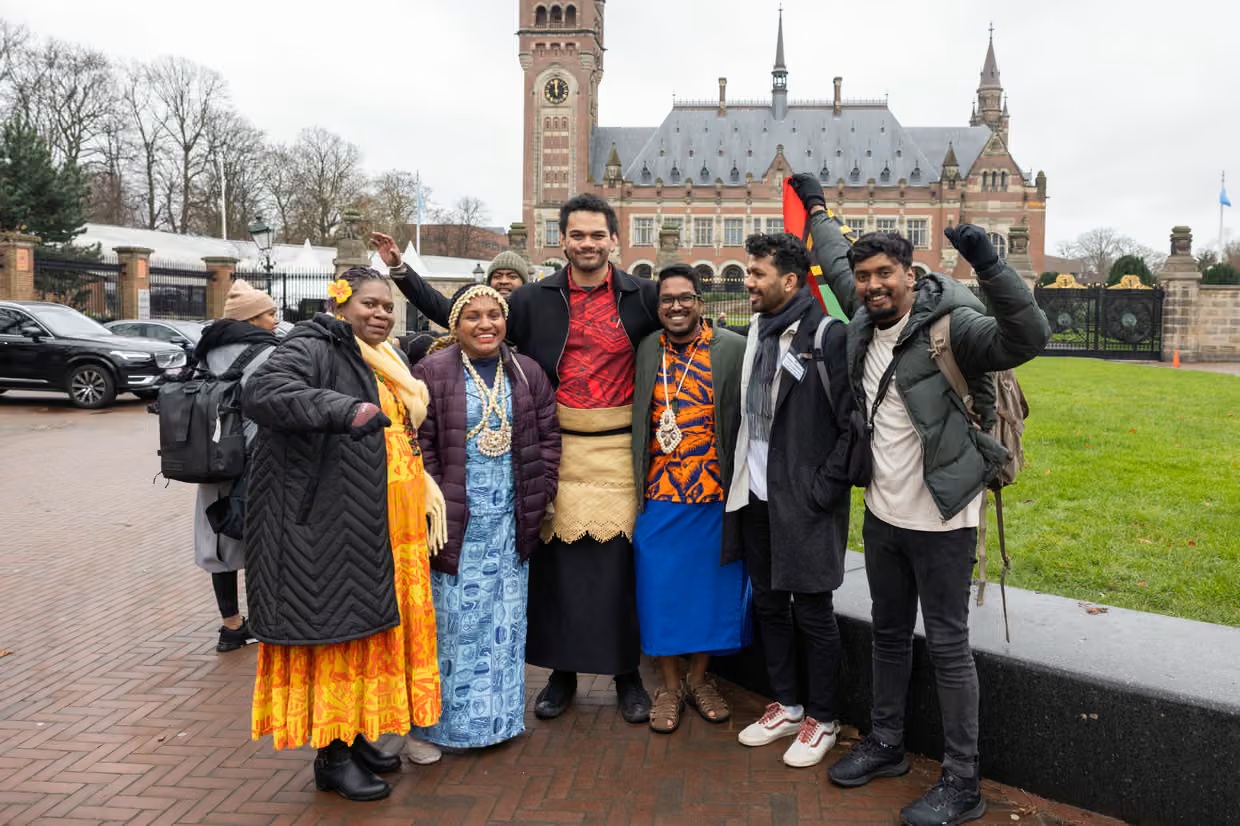
Six years ago, a group of 27 University of the South Pacific law students in Vanuatu asked what many believed was an impossible question.
Could some of the world’s smallest island nations persuade the International Court of Justice (ICJ) to clarify what international law requires countries to do about climate change?
On 23 July 2025, the world’s highest court answered them unanimously.
The campaign, launched by Pacific Islands Students Fighting Climate Change (PISFCC), has since become one of the Pacific’s most significant diplomatic achievements, resulting in a landmark ICJ Advisory Opinion that legal experts say has reshaped international climate law.
But for those who started it, the journey began with nothing more than determination.
“There was no budget, no office, no standing, no recognition, really,” PISFCC Director Vishal Prasad recalled during a webinar marking one year since the advisory opinion.
“In 2019, in a classroom, 27 students decided the world’s highest court should be asked what obligations states have.”
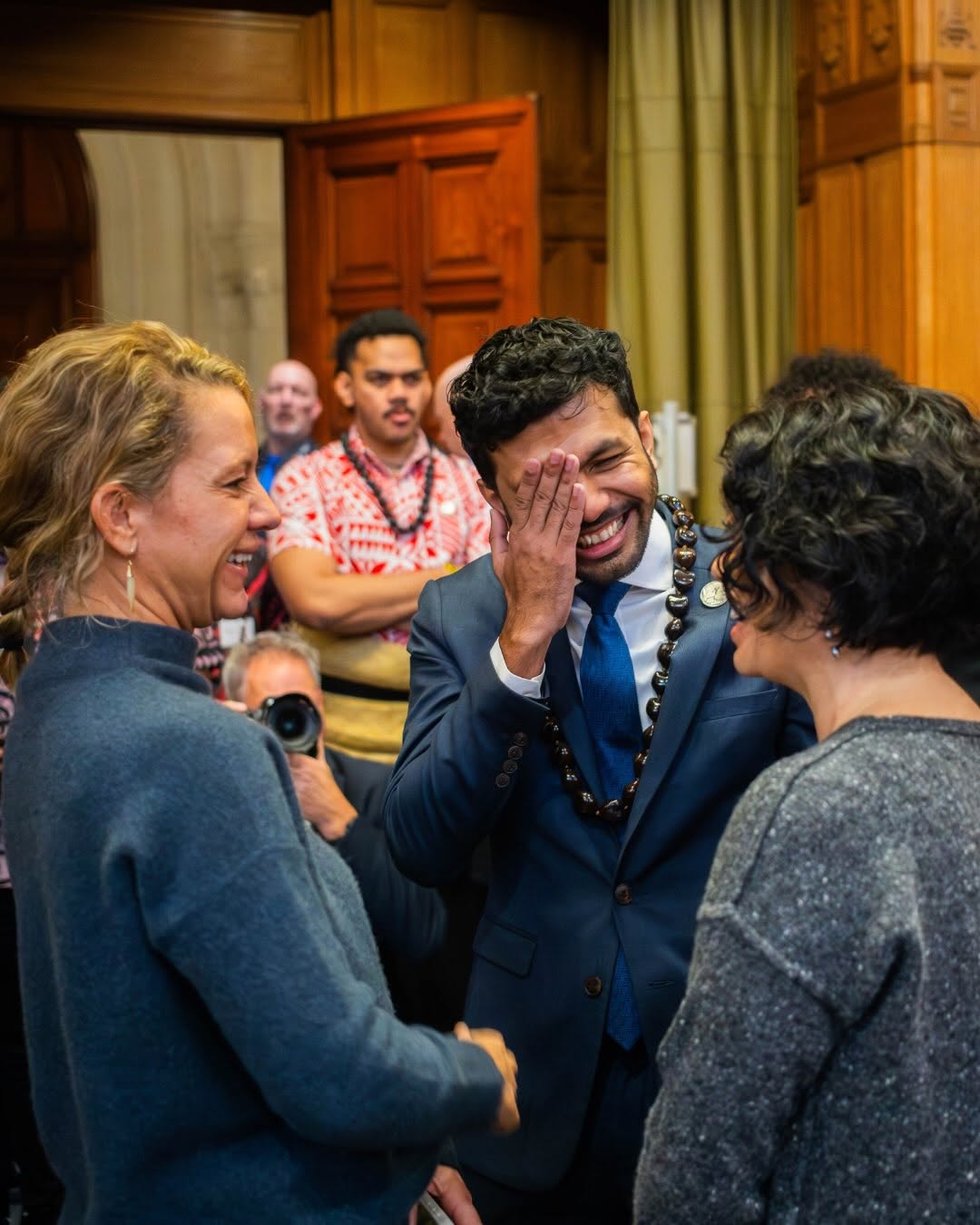
What followed surprised even those leading the campaign.
The Vanuatu Government adopted the proposal before the Pacific Islands Forum rallied behind it. Countries from every region joined the initiative, culminating in the United Nations General Assembly adopting a consensus resolution requesting the ICJ’s advisory opinion.
“From a classroom to the bench of the world court, and then back to the floor of the General Assembly in six years,” Prasad said.
“No region has done this before.”
“The countries the world calls small moved international law further than many have done in a generation — not with wealth, not with armies, not with immense diplomatic might, but with the moral authority that was matched to the moment.”
Greenpeace Australia Pacific’s Head of the Pacific, Shiva Gounden, said the campaign reflected something uniquely Pacific.
“It didn’t start in a parliament sitting or a UNGA room,” he said.
“The spark was lit in the spirit of a handful of Pacific youth in universities.”
“Monumental initiatives of justice usually start with one person and become a movement. In this case, in the true Pacific way, it started off as a small collective with limited resources, limited time, limited reach, but an unlimited, never-ending connection to the spirit of Vanua and Moana.”
Gounden said the movement succeeded because it united students, governments, scientists, Indigenous leaders, lawyers and communities across the Pacific.
“We trained our young people, we mobilised our communities across the islands, ensuring our roots were deep before we reached for the global stage.”
“We didn’t just walk into the UNGA, we sailed right up to it.”
“When we finally entered the International Court of Justice, we didn’t walk in alone.”
“You saw women who sustain our island food systems. You saw children and youth fiercely refusing to surrender their futures. You saw Indigenous elders standing side by side with international lawyers. You saw scientists’ hand in hand with government leaders.”
“They didn’t just present legal precedent. They presented lived realities.”
That approach, he said, helped change the conversation.
“The 1.5-degree threshold is no longer just a desperate plea from climate scientists. It is a legal imperative.”
“The court affirmed what frontline communities have been saying for decades — that the destruction of our climate is not just a natural tragedy, it is a profound and actionable injustice.”
International Policy Lead for the Pacific Islands Climate Action Network, Dr Sindra Sharma, said the ruling strengthened the legal tools available to climate-vulnerable countries by confirming that broader international law continues to apply alongside the Paris Agreement.
“The court unanimously rejected the argument that the Paris Agreement displaces broader international law obligations,” she said.
International Indigenous and Human Rights lawyer Alofipo So’o alo Fleur Ramsay described the advisory opinion as “the most important judicial pronouncement to date on climate change,” saying it confirmed states have legal obligations to protect the climate system and could be held responsible if they fail to do so.
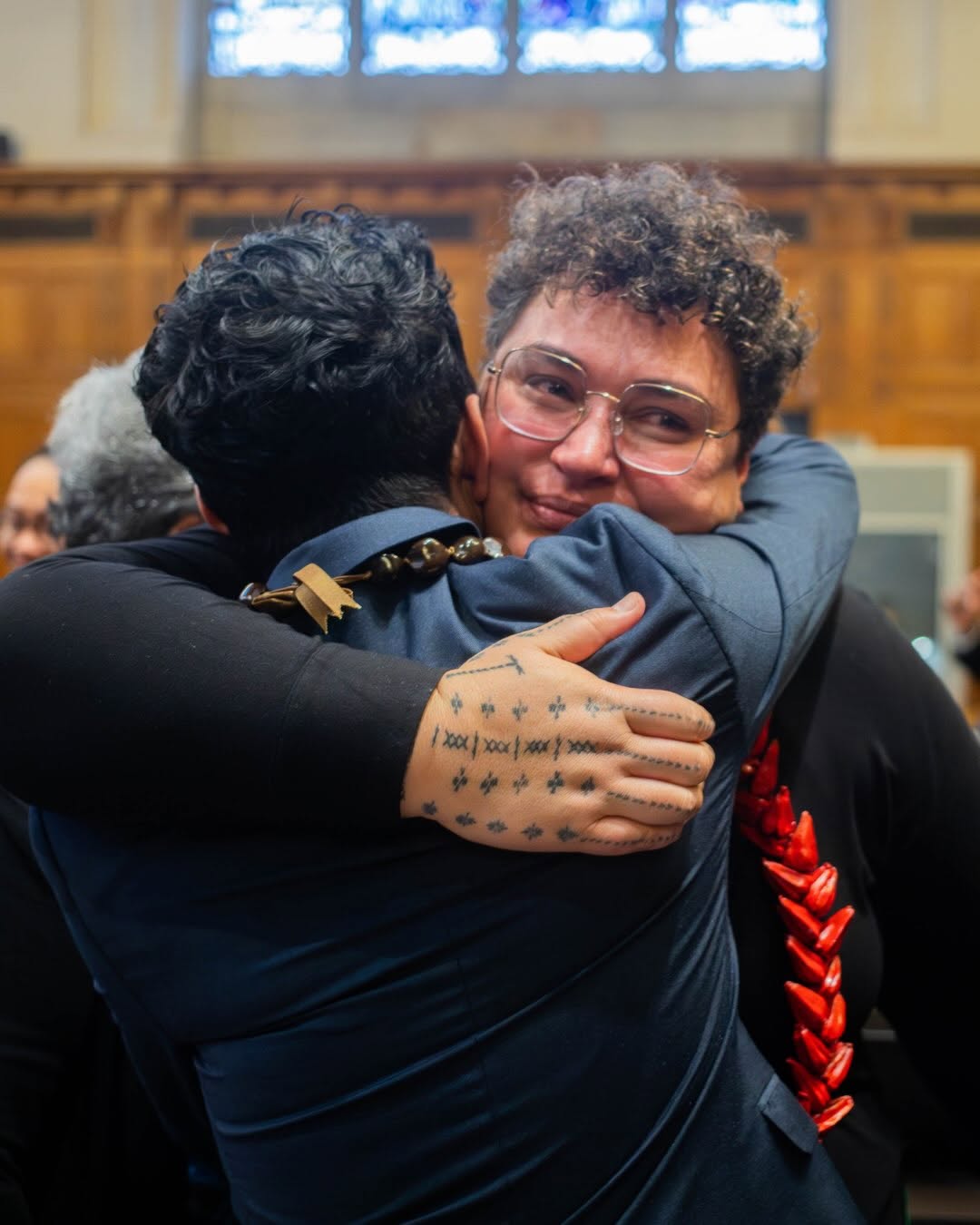
But both speakers stressed the ruling was never intended to be the end of the campaign.
“This advisory opinion strips away the veil of voluntary pledges,” Gounden said.
“Expanding coal, oil and gas operations are no longer just environmentally reckless. It defies international legal duties.”
Prasad said the responsibility now lies with governments to turn the court’s findings into action.
“The ruling is not self-executing,” he said.
“It has force only where someone insists on it.”
He said the generation that asked the question now intends to ensure the world acts on the answer.
“The 27 students who started this were no older than you, no more certain than you might be currently.”
“What you inherit is not a victory to admire, but a commitment we have to keep,” he said.