

By Pita Ligaiula in Koror, Palau
The Green Climate Fund (GCF) is finalising discussions on how it can support the establishment of the Pacific Resilience Facility (PRF), as Pacific leaders push to secure US$500 million in initial capitalisation for the Pacific-led financing mechanism.
In an interview with PACNEWS on the sidelines of the Pacific Islands Forum Leaders Meeting in Palau last week, GCF Executive Director Mafalda Duarte and GCF Regional Director for Asia and the Pacific Hemant Mandal described the PRF as a complementary, Pacific-led facility that could strengthen efforts to deliver climate finance and resilience support to communities.
Duarte said the GCF was finalising arrangements to support the establishment of the PRF through its readiness programme.
“Setting up of the Pacific Resilience Facility, we are actually supporting standing it up with our readiness funding,” Duarte said.
She explained that GCF readiness funding provides grants to countries to strengthen institutional capacity, update Nationally Determined Contributions and National Adaptation Plans, and develop new policies and regulations.
The programme can also support the institutional capacity of direct access entities.
“We are supporting the setting up of PRF, and we see it as a complementary initiative to what we are doing.
“Let’s see how, once they are established, how we can think of the partnership in the future,” Duarte told PACNEWS.
Mandal said discussions were continuing on how the GCF could help the PRF become fully established and operational.
“There have been very constructive discussions about how we can help them set up and establish,” he said.
He said the PRF could complement the GCF’s existing efforts to support communities and strengthen last-mile delivery of climate finance.
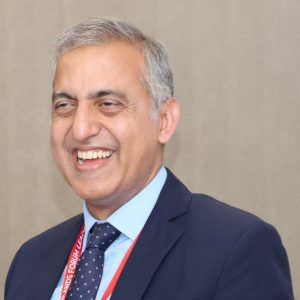
“If you look at the PRF, we’ve been doing the last-mile engagement and we will continue to do it,” Mandal said.
“But I think this is extremely critical that the Pacific leaders obviously want a facility that they can leverage.”
Mandal stressed that the establishment of the PRF would not replace the GCF’s work in the Pacific.
“It doesn’t mean we’ll stop doing it. It just means we’ll have somebody else as a very valued partner who will actually be helping us and helping the communities provide what’s required on the ground,” he said.
He said some Pacific countries were also exploring how GCF resources could potentially be used to strengthen the regional facility.
“There are countries which are exploring how GCF resources can be actually used to bolster the PRF as well, and we are very supportive of that.
“As I see it, they’re getting the commitments, they’re building it together.
“We’ve gone through those growing pains, so to the extent we can help them actually pull that together as well, that’s something that we are exploring,” he told PACNEWS
Former Fiji Ambassador and Permanent Representative to the United Nations, Dr Satyendra Prasad, said the PRF represented the biggest collective resilience investment ever attempted by Pacific leaders.
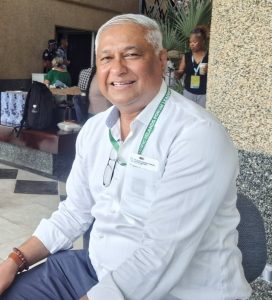
“The Pacific Resilience Facility is the single largest thing ever attempted by the leaders of the Pacific,” Prasad said.
He said the facility was designed to build resilience quickly and across the Blue Pacific.
“Building resilience at speed and across the Blue Pacific” was the objective, he said.
Prasad said that once fully operationalised, the PRF could grow into a US$1.5 billion investment facility capable of providing up to US$200 million annually to strengthen and rebuild resilience in Pacific communities.
“In short, when fully operationalised, it will be a US$1.5 billion investment facility providing the region up to US$200 million annually to rebuild resilience across its communities,” he said.
Prasad said the proposed scale was proportionate to the climate crisis confronting the region.
“This is proportionate to the scale of the climate crisis. Some may even argue below where ambition needs to be, but I think this is in the right zone,” he said.
He said the Pacific was calling on international partners to help meet the facility’s initial US$500 million capitalisation target.
“The Pacific has called on its friends and on the international community to help meet its US$500 million capitalisation target,” Prasad said.
He said some of the region’s smallest and most climate-vulnerable countries were already making voluntary contributions to the facility.
“Some of the smallest and most vulnerable countries of the Pacific are already making voluntary contributions into this.
“If not anything else, this should inspire countries to stand up and take notice,” Prasad told PACNEWS.
The GCF engagement comes as Pacific Islands Forum leaders reaffirmed the PRF as the region’s “pre-eminent climate finance investment priority”.
In their 2026 Leaders’ Communiqué, Forum leaders welcomed the entry into force of the Agreement to Establish the Pacific Resilience Facility on 6 May 2026.
They also acknowledged the inaugural PRF Council Meeting, hosted and chaired by the Republic of the Marshall Islands.
Leaders welcomed progress towards operationalising the facility, supported the timely appointment of the PRF Board and welcomed progress on community-impact initiatives.
The PRF is being developed as a Pacific-led financing mechanism aimed at delivering resources directly to communities and supporting locally led resilience projects.
Forum leaders said regional advocacy for the facility’s capitalisation would be intensified through the 81st United Nations General Assembly, pre-COP meetings and COP31.
Leaders said substantial progress had been made towards the PRF’s initial US$500 million capitalisation target.
According to the communiqué, existing pledges to the facility were valued at US$162 million up to the 54th Pacific Islands Forum.
Leaders also welcomed further pledges from Norway of US$1.05 million, Palau through GCF readiness support, Papua New Guinea of US$4.5 million, the Republic of the Marshall Islands of US$1 million and the United Kingdom of US$14 million.
The Forum called on the international community to make new and additional pledges matching the ambition of the Pacific-led facility.
Leaders also agreed that the full list of PRF pledges would be released by the interim PRF Board and displayed prominently on the Pacific Islands Forum-PRF website, with updates provided at each Board meeting.
The Forum Troika Leaders, together with Tonga and Papua New Guinea, will lead the capitalisation effort.
The GCF’s engagement adds support from a major global climate finance institution as Pacific leaders seek to establish and capitalise the PRF as a mechanism capable of directing finance closer to communities.
For Mandal, the objective is for the PRF to strengthen, rather than duplicate, existing climate finance efforts.
“It just means we’ll have somebody else as a very valued partner,” he said, “helping the communities provide what’s required on the ground.”.