

The United States has called for the abolition of the United Nations Special Committee on Decolonisation, dismissing its annual work and visits to the Pacific as a waste of UN resources.
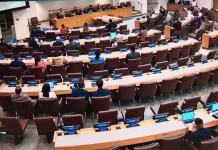
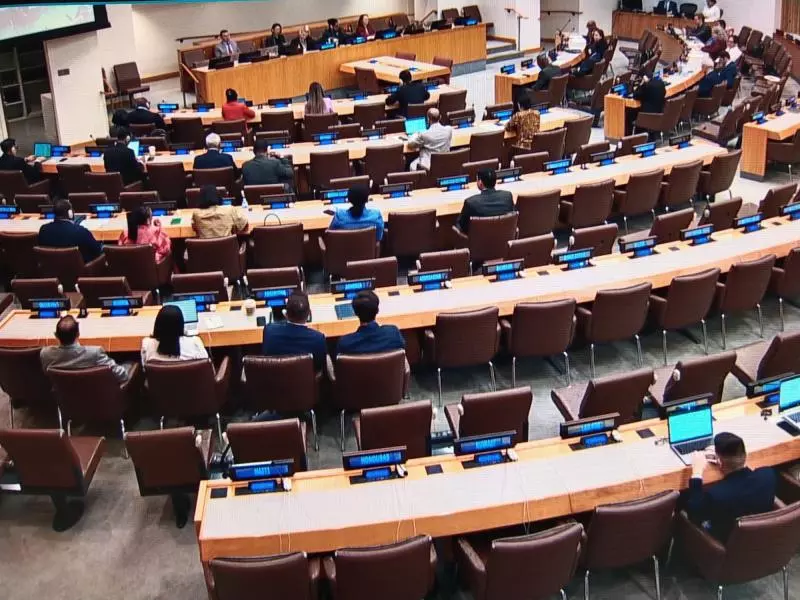
Speaking at the UN Fourth Committee on 15 October, the United States said the committee had “outlived its original purpose” and urged the termination of its mandate, escalating its opposition to the international decolonisation process.
The committee, formally known as the Special Committee on Political and DecoloniSation, considers the status of non-self-governing territories and supports their peoples’ right to self-determination.
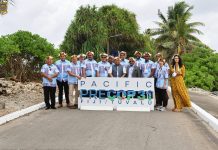
Six of the 17 territories remaining on the UN list are in the Pacific: American Samoa, French Polynesia, Guam, New Caledonia, Tokelau and Pitcairn.
The United States criticised the committee’s annual consideration of decolonisation resolutions and described its visits to the Caribbean and South Pacific as “yearly junkets”.
“Revisiting the same texts every year wastes the UN’s time and resources, as do the special committee’s yearly junkets to resorts in the Caribbean and South Pacific,” the US representative said.
The United States also argued that independence should not be the only outcome of a decolonisation process, saying people in non-self-governing territories should be able to choose independence, free association, integration with the administering state or another political status freely determined by them.
“The Special Committee should not presume to speak for these peoples, or intervene in the internal affairs of a sovereign state and its relations with non-self-governing territories,” the representative said.
However, Washington also reiterated its opposition to criticism of a U.S federal court ruling that blocked Guam’s planned self-determination plebiscite.
It reaffirmed the United States’ sovereign right to conduct military activities in accordance with its national security interests and international law.
The U.S representative further argued that foundational UN texts on decolonisation, including General Assembly Resolution 1514 of 1960, were non-binding and did not necessarily reflect international law.
Resolution 1514, adopted in 1960, declared that colonialism should be brought to an end and affirmed the right of peoples to self-determination.
The U.S and Israel were the only countries to vote against all resolutions and decisions under the agenda item, according to the U.S statement.
On the initial resolution concerning non-self-governing territories, 160 countries voted in favour, while the United States and Israel voted against it.
Voting on other resolutions was more divided, including proposals addressing whether colonialism should encompass economic coercion and other contemporary practices.
Washington also accused the committee of becoming a forum for political and ideological disputes rather than focusing on the interests of people living in the remaining territories.
The U.S representative cited Puerto Rico, which was removed from the UN list of non-self-governing territories by General Assembly Resolution 748 in 1953, arguing that the committee continued to hold annual hearings despite that decision.
The United States concluded by calling for the committee’s mandate to be ended, saying people in the remaining territories should not be used as political instruments by other governments.
The U.S position comes as the Pacific continues to press for greater international attention to the right of territories in the region to determine their political futures.
The six Pacific territories on the UN list have different political and constitutional relationships with their administering powers, making self-determination a continuing issue for the region.