
By Sera Tikotikoivatu-Sefeti
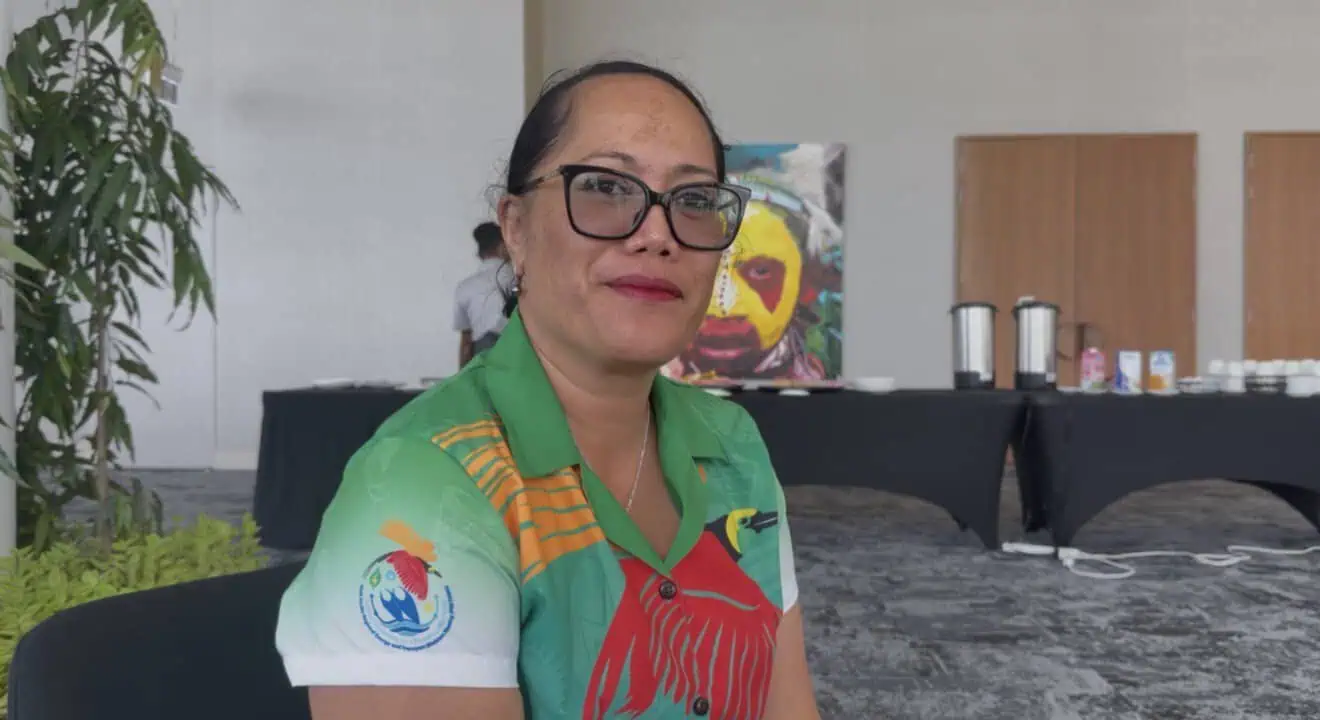
“We need the Ministers to endorse it, so we can implement it.”
For Amy Ngatamaine, that is more than a call to action. It is a reflection of where the Pacific maritime sector now stands: years of planning, consultation and strategy-building, now at a point where leaders must decide whether it moves from paper to practice.
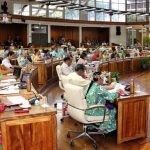
As Pacific transport ministers gather here for the sixth Pacific Regional Energy and Transport Ministers’ Meeting, maritime officials are pushing for one of the region’s most ambitious transport blueprints yet: the Pacific One-Maritime Framework (POMF).
“We have been talking about it, now it’s time for implementation,” Ngatamaine said.
The Pacific One-Maritime Framework is being developed by the Pacific Community and regional maritime, aligned to the Pacific Islands Forum 2050 Strategy for the Blue Pacific.
It aims to strengthen maritime safety and security, improve shipping access for remote islands, support decarbonisation, build workforce capacity, improve digital systems, strengthen climate resilience, and increase inclusion across the sector.
And for women like Ngatamaine, it is also about representation.
In a region where the ocean connects everything, the maritime industry has long remained one of its most male-dominated sectors.
Ngatamaine’s journey into that space was far from conventional.
Before stepping into transport, she worked in finance. Numbers, structure, predictability. But when the COVID-19 pandemic disrupted economies and jobs across the Pacific, she began reassessing her future.
Instead of staying in familiar territory, she chose challenge.
“I wanted something different. Something that would push me,” she said.
That decision led her into maritime security at the Ministry of Transport Cook Islands and eventually to leading the Pacific Women in Maritime Association, a regional network advocating for women’s inclusion in maritime leadership.
But entering the sector came with resistance.
“There were challenges, yes,” she admits. “But I also had male colleagues who supported me, who believed in what women can bring to the industry.”
That balance between barriers and allyship has shaped her leadership.
For Ngatamaine, visibility is critical.
“We want women to be seen, to be heard, and to be part of decision-making,” she said.
That ambition is now being shaped into PacWIMA’s proposed five-year strategy for 2026, targeting two of the sector’s most persistent challenges: gender imbalance and workplace harassment. But beyond inclusion, Pacific maritime leaders are also confronting a growing reality that is fuel insecurity.
Global instability, supply chain disruptions and rising fuel prices have exposed how vulnerable Pacific island economies remain to imported fuel.
For countries like the Cook Islands, where transport and tourism depend heavily on fuel, the risks are immediate.
“Fuel is unpredictable. We cannot rely on one source anymore,” Ngatamaine said. That uncertainty is accelerating the search for alternatives.
Across the Pacific, countries are exploring renewable options including solar, wind and cleaner fuel systems, but the transition is proving complex.
Ngatamaine says one of the biggest lessons is that infrastructure alone is not enough.
“It’s not just about installing solar panels,” she said. “It’s about making sure communities can maintain them, understand them, and benefit from them long-term.”
She points to a challenge many Pacific countries know too well, technology arriving without the training or systems needed to sustain it.
“It is not an overnight fix, and we had solar power that was donated to the outer islands, but people weren’t trained to maintain it, so it just fell apart,” she said.
It is one reason regional cooperation remains central to the Pacific One-Maritime Framework.
The strategy recognises that Pacific countries cannot solve shipping, fuel security, decarbonisation and workforce gaps in isolation.
For Ngatamaine, some of those solutions are already in the region.
“There are solutions already happening across the Pacific,” she said. “We just need to learn from each other.”
Over the next three days, Pacific transport ministers will consider the framework as part of wider regional transport discussions, with endorsement seen as a major step toward implementation.
For Ngatamaine and many others working behind the scenes, the hope is simple: that this meeting delivers more than another outcome statement.