

A leading Pacific academic warns New Zealand’s political parties are still using “systems of control” to manage Pasifika despite Labour’s warm talk of “whanau” and ACT’s promises of “accountability”.
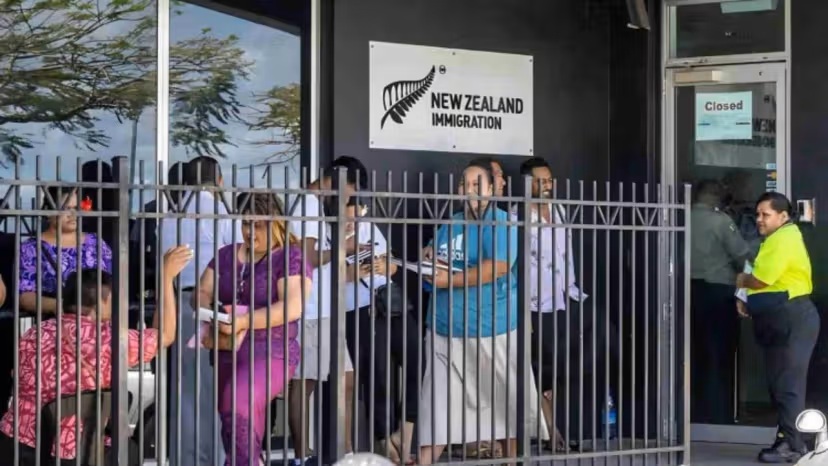
Sāmoan Dr Melani Anae, who is also chair of the Polynesian Panther Party Legacy Trust, says the current immigration debate proves that policymakers still view Pacific mobility through a “suspicion framework” rooted in the 1970s Dawn Raids.
Her comments follow Labour’s promise to unveil a new ‘whānau-based’ travel policy this election, aimed at making travel between New Zealand and the Pacific easier.
Labour’s immigration spokesperson Phil Twyford told Pacific Mornings that the Pacific shouldn’t be treated like “any other part of the world”.
“It’s [the Pacific region] whānau for us,” Twyford said. “Therefore, making it easier for people to move around the region and particularly in and out of New Zealand is critically important given what a big Pasifika community we have.
“So we’ll be making an announcement during the campaign in this space.”
But Anae argues that both major parties are still avoiding the real issue, which is New Zealand’s historical obligations to the region.
“Both Labour and ACT treat migration as an economic tool and they avoid confronting New Zealand’s historical obligations to the Pacific,” Anae told PMN News.
“The language has changed but the governance of Pacific mobility hasn’t.”
Meanwhile, Green MP Teanau Tuiono says Labour needs to stop talking and start moving on to visa-free access.
Tuiono says the Greens have long supported Pacific visa waiver access and the policy needs to be developed alongside Pacific governments.
“When I was in Sāmoa recently, they were keen on visa waiver access and so you’ve got to be able to work with the different governments who might actually want this,” Tuiono told PMN.
“Because the converse to that is making sure that it works not just for us over here, but for people over there in the islands.”
Anae says any renewed focus on overstayers will feel like a target on the backs of Pacific communities.
“Pacific travel has long been filtered through a suspicion framework rooted in the legacy of the Dawn Raids,” she says.
“Until policymakers explicitly confront that history, Pacific mobility will keep being treated as a compliance risk rather than a regional relationship.”
She says New Zealand should explore direct Pacific visa waiver pathways, reciprocal mobility agreements, and a broader Pacific mobility compact similar to the Trans-Tasman model.
“The real political question is: does Aotearoa New Zealand see Pacific mobility as a privilege to be granted or a relationship to be honoured?” Anae says.
ACT Party MP Parmjeet Parmar says the policy is about fixing a system that is no longer working and restoring public trust.
“Immigration is an issue which is quite serious and it needs to be dealt with in a serious manner… we are trying to come up with a solution based on evidence,” Parmar told Terite.
“Our immigration plan is about ensuring that we are able to give our best to our New Zealand families,” she says.
Twyford maintains the party’s relationship with Pasifika remains strong. He pointed to the “incredible loyalty” of Pacific voters in West Auckland.
But Dr Anae says loyalty goes both ways and the community is still waiting for a migration system that reflects true family ties.