


By Pita Ligaiula in Koror, Palau
Pacific Islands Forum leaders have adopted a new Pacific Pact on Gender and Climate Action, committing to increase women’s influence in climate decisions, strengthen gender-based climate data and ensure climate finance reaches women and communities on the frontline of the climate crisis.
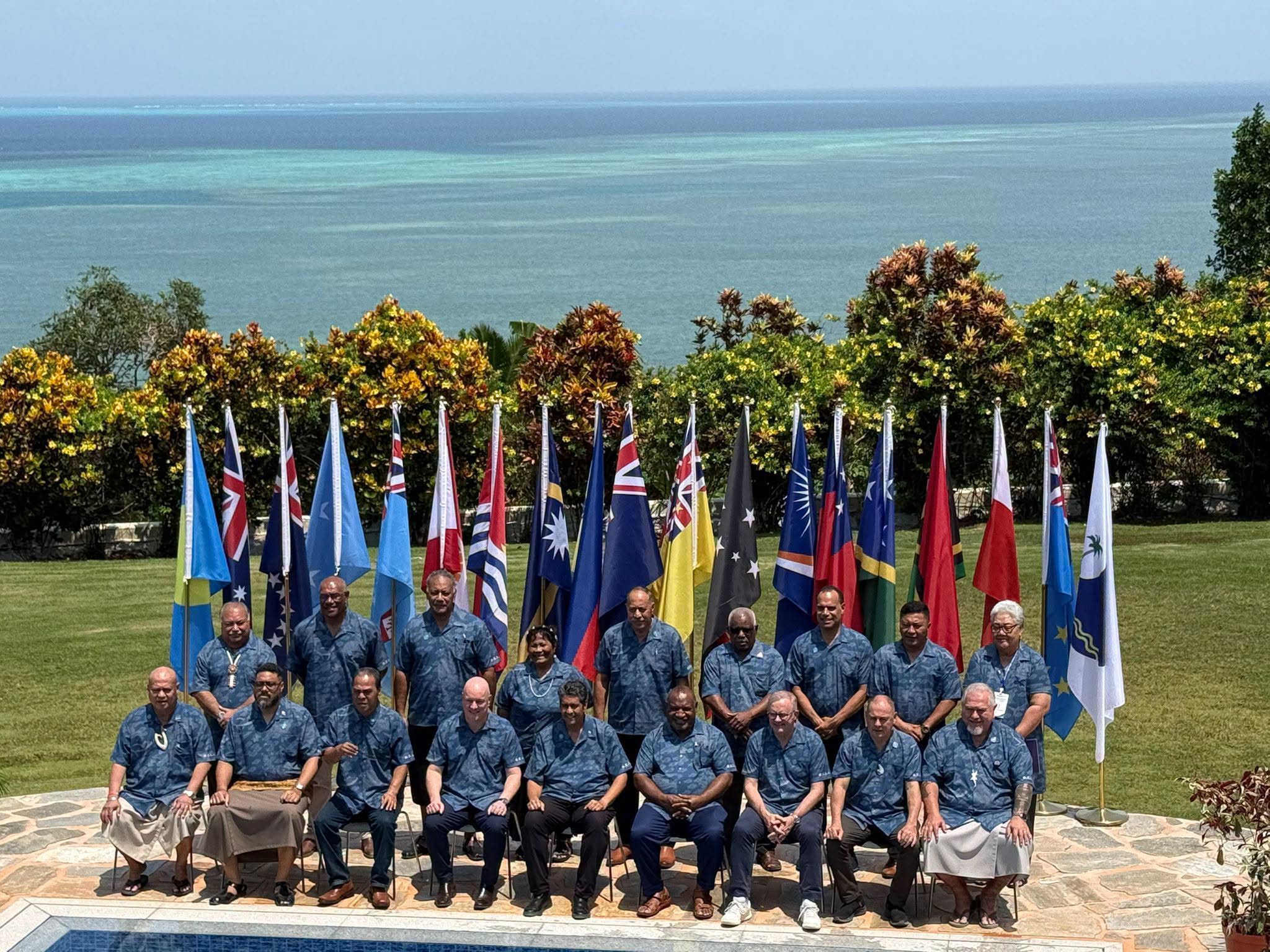
The Pact, endorsed by Forum leaders at their 55th meeting in Palau, sets out a regional commitment to gender-responsive climate action as Pacific countries prepare for pre-COP31 meetings and the COP31 climate conference.
Leaders said the Pact would support the effective implementation of the Belém Gender Action Plan while recognising the different priorities, capacities and circumstances of Forum Island members.
The agreement focuses on three areas: promoting Pacific women’s leadership in climate decision-making, strengthening gender-responsive climate data and evidence, and advancing gender-responsive approaches to climate finance.
“Pacific women’s leadership, knowledge, agency and contributions” are critical to sustaining resilient communities, healthy oceans and sustainable livelihoods, the leaders said.
Women to have greater say
Forum leaders committed to strengthening women’s representation in national climate delegations, ministerial portfolios and climate governance bodies.
They also agreed to sustain a network of Pacific women climate negotiators to ensure continuity across international negotiations.
“We commit to advance women’s leadership and voice in climate action at every level,” the Pact said.
Leaders said women should also have a greater role in determining how climate responses are designed and delivered.
They committed to placing women in the governance of national climate finance entities and strengthening their participation in engagement with the Fund for Responding to Loss and Damage and other climate funds.
“We will carry Pacific women’s leadership into the ocean–climate forums where our future is decided,” the Pact said.
The agreement also recognises Pacific women’s traditional and Indigenous knowledge as climate leadership.
Leaders said women play a central role in community-level adaptation and hold knowledge of seasons, water, marine ecosystems and food systems.
“We commit to value this knowledge and leadership alongside formal qualifications and titles, and to ensure it shapes the climate decisions taken in our countries and our region,” the leaders said.
Closing the data gap
The Pact also addresses gaps in climate and gender data across the Pacific.
Leaders committed to build evidence based on Pacific realities while acknowledging existing data constraints and capacity gaps.
They agreed to develop Gender Country Profiles using a climate and disaster lens, with countries updating the profiles according to their own national timelines.
The Forum will also develop indicators that capture areas often missed by global data systems.
These include women’s adaptation work, traditional ocean knowledge, customary marine tenure and livelihoods linked to reef gleaning, near-shore fishing, post-harvest processing and coastal cultural economies.
Leaders said the data must be based on what is “measurable and meaningful” in Pacific communities.
The Pact also supports the implementation of Nationally Determined Contributions and National Adaptation Plans, alongside regional cooperation and community-led initiatives.
Climate finance must reach women
A central commitment of the Pact is to ensure climate finance produces equitable and inclusive outcomes and reaches those most vulnerable to climate change.
Leaders said they would push for climate finance to reach communities and civil society organisations directly, including women-led organisations and women’s community groups.
The Pact recognises that these groups carry much of the everyday work of building resilience and often reach women beyond the scope of national institutions.
“We will press for climate finance to reach communities and civil society organisations directly, including women-led organisations and women’s community groups,” the leaders said.
Forum members also committed to tracking and verifying gender outcomes across multilateral climate funds, bilateral funding, private sector finance and other climate funding sources.
The Pact directs particular attention to coastal and reef-dependent communities, where many Pacific women’s livelihoods, food security and traditional knowledge are concentrated.
Leaders said adaptation finance must better reflect where Pacific women live and work and how they depend on coastal and marine resources.
Call to climate partners
Forum leaders said Pacific climate leadership could not be separated from the region’s responsibility to protect the Blue Pacific Continent.
They recognised women as custodians of traditional and Indigenous knowledge, customary marine tenure and resource management practices and said women play critical roles in ocean-based economies, food systems and community resilience.
The leaders are now calling on development partners, climate funds and the international community to recognise the Pact and the Pacific Resilience Facility as Pacific-led contributions to gender-responsive climate action.
“We, Pacific Leaders, call on our partners, on the climate funds, and on the international community gathering at pre-COP31 and COP31 to recognise this Pact and the PRF as the Pacific’s own contribution to gender-responsive climate action,” the Pact said.
The leaders said international support should align with the commitments that Pacific countries had set for themselves.
The Pacific Pact on Gender and Climate Action adds a gender dimension to the region’s wider push for stronger climate action, greater access to finance and community-led resilience, with Forum leaders making clear that women must have a greater role not only in responding to climate change but in deciding how the Pacific responds to it.