
By Nic Maclellan
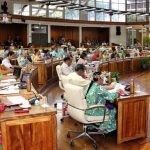
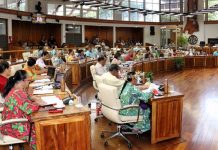
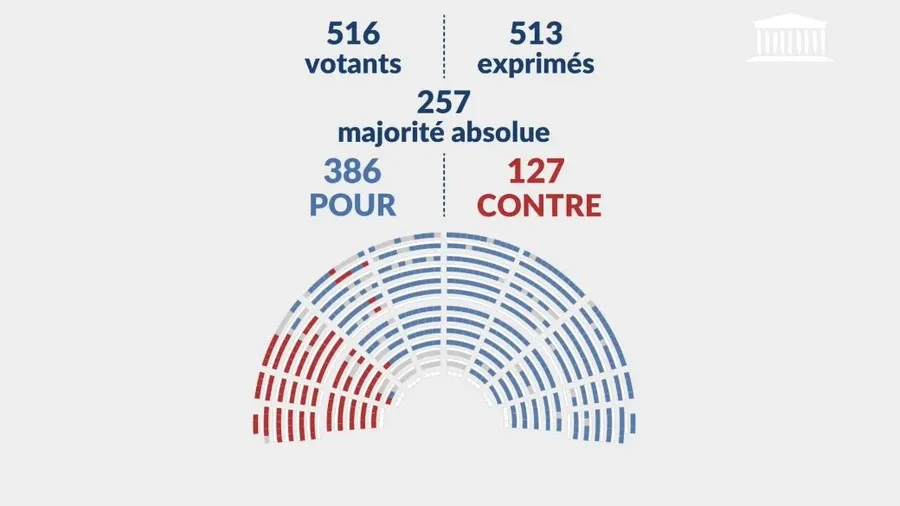
In a 386 – 127 vote, the French National Assembly has voted to expand New Caledonia’s electoral rolls for next month’s elections for three provincial assemblies and national Congress.
The elections, last held in 2019, have been postponed three times, but will now be held on 28 June.
The adoption of an organic law by the French parliament on 20 May will expand the voting rolls by an estimated 10,569 locally born voters, who did not meet the existing definition of New Caledonian citizenship established by the 1998 Noumea Accord. This includes 4,145 people under customary law (that is, indigenous Kanak) and 6,424 voters under common law.
However, a further amendment proposed by Prime Minister Sébastien Lecornu’s government, to include the spouses and partners of these voters, was rejected by a single vote 164-163. Some members of President Emmanuel Macron’s governing bloc and the Socialist Party voted No on this amendment, fearing that its addition would invalidate the main legislation for constitutional reasons.
In Paris, most of the Left deputies in the National Assembly voted No on the legislation, reflecting the critique from New Caledonian deputy Emmanuel Tjibaou during the parliamentary debate: “Reopening the debate on the electorate a month before the provincial elections, after the campaign has already begun, is to radicalise positions on the issue once again.”
Tjibaou, president of the largest independence party Union Calédonienne, said: “The FLNKS is clear: we are not opposed to changes to the electoral rolls, but only within the framework of a comprehensive agreement that confirms the path to decolonisation.”
For decades, anti-independence parties in New Caledonia have lobbied to expand voting rights, by setting a new cut-off date to re-define New Caledonian citizenship. The full “unfreezing” of the restricted roll for local political institutions could have added an estimated 37,492 French nationals who currently cannot vote (a substantial group — most opposed to independence — in a country of 268,000 people).
A unilateral attempt in 2024 by French President Emmanuel Macron to fully open the electoral rolls triggered six months of conflict that left 14 dead, with hundreds arrested and a shattered economy. Then talks between the French State and New Caledonian leaders led to a draft political statute in July 2025 to replace the Noumea Accord, dubbed the Bougival Accord.
However the main independence coalition Front de Libération Nationale Kanak et Socialiste (FLNKS) opposed the new Accord, arguing it overturned key elements of the 1998 Noumea Accord, including the restricted electoral rolls for the local political institutions: the three provincial assemblies in the North, South and Loyalty Islands, and the 54-member national Congress of New Caledonia.
Instead, a compromise proposal to only include more locally born New Caledonians onto the rolls was suggested in May 2025 by New Caledonian Senator Georges Naturel. The anti-independence politician feared any move to fully “unfreeze” the provincial rolls could open the way for more conflict, as erupted in May 2024.
Prime Minister Lecornu’s decision to push through Naturel’s voting legislation came after last month’s vote in the National Assembly to reject the Bougival Accord. Noting the collapse of the government’s key strategy for New Caledonia, Emmanuel Tjibaou said that “the government is now trying to salvage what it can by any means necessary. This is not a serious approach, especially when we are discussing such a sensitive issue.”
During the parliamentary debate, New Caledonian deputy Nicolas Metzdorf – a leader of the Loyalists bloc – highlighted the disappointment of the anti-independence electorate that voted to remain within the French Republic during three referendums in 2018-2021. Metzdorf suggested that “they will still wonder whether they voted correctly for New Caledonia to remain French. Because the position of those New Caledonians who defend French New Caledonia is that all French citizens living in New Caledonia should be able to vote in New Caledonia’s local elections.”
While welcoming the latest National Assembly vote, Metzdorf criticised the failure of some members of the governing coalition to support the amendment to add spouses and partners to the rolls. Reflecting the Loyalists’ turn away from President Emmanuel Macron towards the far Right, Metzdorf said “We have nothing more to expect from this Parliament.”
After the 28 June provincial elections, Prime Minister Lecornu has proposed a return to tripartite discussions, attempting to revive a new political statute for New Caledonia this year before the French presidential elections in May 2027. But unlike the FLNKS, Metzdorf has spurned Lecornu’s call for talks in July: “There is no point in returning to the negotiating table.
Islands Business will be reporting from New Caledonia during the electoral campaign, in the lead up to the 28 June elections.