

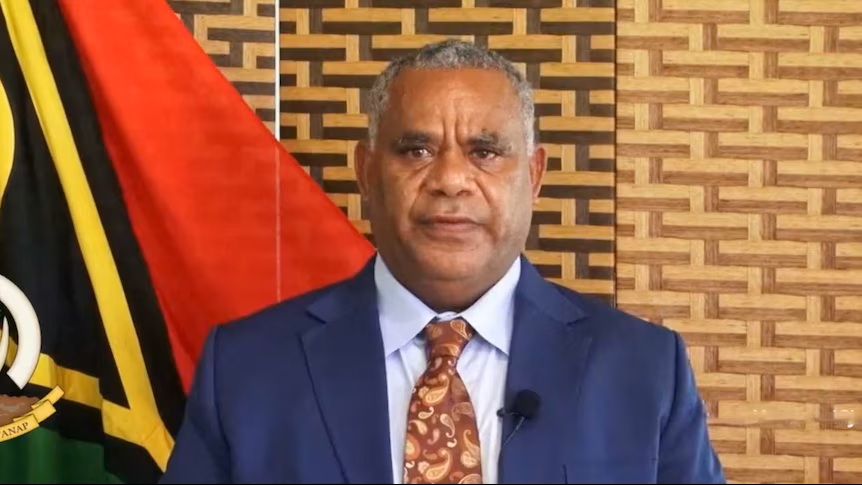
Vanuatu Prime Minister Jotham Napat has confirmed the government will sign the landmark Nakamal Agreement with Australia, as well as the Namele Agreement with China.
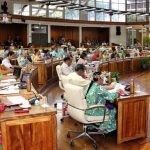
PM Napat revealed this in Parliament after Union of Moderate Parties (UMP) Member of Parliament for Tanna constituency, Andrew Wilbur Napuat, asked during Oral Questions time if the PM could give the Government’s stand on the months long negotiated Nakamal Agreement, whether it will be signed or not, and if it is possible for MPs to have access to its content.
PM Napat then revealed there are two agreements that the Government will sign.
“The first is the Nakamal Agreement that the Government will sign with Australia, the other is the Namele Agreement that the Government plans to sign,” he said.
PM Napat said many have raised questions in relation to the content of the Nakamal Agreement and that it has taken some time for a few of the ministers and a taskforce that spearheaded the negotiations. He said the only delay is because “a lot of the wordings in the Nakamal Agreement undermined our sovereignty”.
“The Council of Ministers (COM) is of the view that we cannot sign anything that undermines our sovereignty, so it took some time for us to go back and forth with the Office of the Attorney General (OAG), which can provide clear directions on the content, especially on two critical issues in the Nakamal Agreement,” he explained.
“The first is on Security and the second deals with Critical Infrastructure. These are the two areas of concern.
“In the first draft of the Nakamal Agreement, Australia stated that for any critical infrastructure, we are to ask for advice or seek approval from them. This already undermines our sovereignty.
“It’s words like these that we are not satisfied with and thus it takes time for us to renegotiate until everyone is happy with the content, then we can come back to COM for the COM to give its final blessing for us to sign the Nakamal Agreement.”
The PM said the Nakamal Agreement is not what the general public may perceive as a security pact agreement.
“It’s just an agreement as itself, it has nothing to do with security pact except for a clause inside the Nakamal Agreement that relates to security, and if everyone can recall we passed under the National Security Act, one of the changes was we do not want to allow any outside force, or even use of military inside our territory. This overrides every agreement that we sign,” he explained further.
“Inside the clauses of the Nakamal Agreement, there are provisions that if we are not satisfied with it, we can always walk out. It does not mean it is an agreement that we can’t get out of.
“There are also provisions that cover whether we agree or disagree with certain aspects, we can return to the table to discuss it.
“So it is a framework that after the signing, there will be supplementary agreements that we will sign, specifically to do with different sectors which we will negotiate out of.
“This is just a summary of what is in place. So the OAG has given clearance to the wordings of this Nakamal Agreement for us to proceed to sign.”
PM Napat then elaborated on the Namele Agreement with China.
“The Namele Agreement with China… is another strategic cooperation and has nothing to do with security pact,” he said.
“Unfortunately our development partners use their interests to undermine us and that is why we stand to say ‘we are friends to all and enemies to none’. We do not want to favour one party over the other, we are open to every donor partner coming in that’s why we took quite a while to look at the wordings.
“The Namele Agreement, as we speak, COM has already mandated the Office of the Prime Minister to execute it, and clear it also, that is just another strategic cooperation.”
The PM added the information was held back and not shared with members because of confidentiality matters in the agreement until COM, through the National Security Council, can clear it, but he does not see any restrictions on sharing the information with MPs.