Home Blog Page 571

Portugal coach fears Fijian physicality in Pool C clash

0

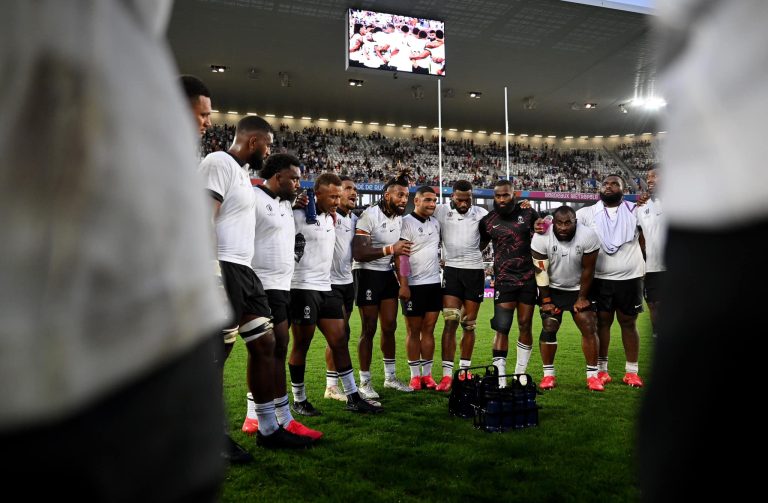
Portugal coach Patrice Lagisquet said his team continued to surprise him with the standard of their play but he feared that Fijian physicality might be too much for them in their final World Cup match next weekend.
Portugal gave Wales and Australia scares in their Pool C matches with what Lagisquet calls their “Total Rugby” style and came within a missed kick of beating Georgia only to have to settle for a draw.

“I’m still surprised by the quality of this team, which rises to every challenge and manages to rival teams like Wales and Australia,” Lagisquet told reporters on Monday.

“Even though we lost by heavy margins compared to the way the game went, these players are surprisingly generous and talented. I don’t want it to stop. This group has unsuspected resources.”

Portugal’s target coming to Lagisquet’s native France was to get a win and to do that in Toulouse on Sunday they will have to get past a Fiji team who have beaten Japan, England and Australia this year.

The team will have the support not only of their own passionate fans but also of the Wallabies, who need Portugal to beat Fiji and not allow the Pacific islanders a bonus point to reach the quarter-finals.

Lagisquet said he could not look to Georgia’s match against Fiji, where the Georgians led 9-0 at halftime but lost 17-12, as a blueprint for his Portugal team.

“We don’t have the same quality as Georgia or the same DNA. We don’t yet have enough experience to control our game,” he said.

2On the other hand, we can take inspiration from their defensive quality, because they defended high and prevented the Fijian powerhouse from expressing itself.”

Portugal dominated large parts of Sunday’s match against Australia in Saint Etienne but lost 34-14 after conceding four tries to Wallabies forwards and another to hulking Fijian-born winger Marika Koroibete.

“My fear is a bit the same as before the Australia game,” Lagisquet said of Sunday’s clash.

“I’m afraid that the physical dimension of the Fijians will drain us, that we’ll end up cracking and that it will be difficult to hold out for 80 minutes,” he said.

SOURCE: REUTERS/PACNEWS

Fiji shrug off ‘outside noise’ as England World Cup clash looms on horizon

0

Fiji have insisted they will block out the “outside noise” surrounding the prospect of a World Cup quarter-final showdown against England, with the scrum-half Frank Lomani adamant the Pacific Islanders’ historic win at Twickenham last month would count for nothing.

Fiji stumbled to the cusp of what would be only a third appearance in the last eight with a jittery comeback win against Georgia in Bordeaux. Lomani came off the bench to kick seven vital points and leave Fiji within touching distance of the knockout stages after showing signs of nerves with a quarter-final spot beckoning.

After Australia’s bonus point win on Sunday, Fiji require just a solitary match point against Portugal next weekend to make sure of their place in the last eight. Assuming Wales beat Georgia – no foregone conclusion given the manner in which the latter played on Saturday – Fiji would advance in second place and face England in Marseille in two weeks’ time.

Last month Fiji clinched an impressive 30-22 win at Twickenham – the first time they had beaten England – but Lomani said: “That is history. England are a better side, for us we are just worrying about our team. We don’t worry about outside noise. We just focus on every game as a final. Even if we play England in a quarter-final, we are just going to play how we play.”

Levani Botia, who was named man of the match against Georgia after exerting his usual influence at the breakdown as well as teeing up Vinaya Habosi for the decisive try with a fine offload, has detailed the impact a place in the quarter-finals would have for Fiji. “It would mean a lot for us,” he said.

“We’ve got nothing. We have each other here. We see each other as a family. We play to represent ourselves, our families, our culture and our brothers. We play for those who are behind us and try to show them we are fighting for them.

“We don’t expect it to be an easy game against Portugal next week. We watched how they played. They were tough as well. I think that’s a good thing. We feel next week is going to prepare us for the quarter-final so we need to be at the same level. We can’t be in our comfort zone – we need to push up a little bit.”

England, meanwhile, have already qualified as pool winners for the last eight with a game to spare and can welcome Tom Curry back from suspension for the final pool match against Samoa on Saturday. Curry was sent off after less than three minutes in England’s opener against Argentina – his only appearance since Steve Borthwick took over – but has been straining at the leash in training as he prepares for his return.

“He is good, he is training well and he is in a good place,” the captain, Owen Farrell, said. “I don’t think there is too much revving up that Tom can do anyway – he is pretty much 100 percent every time you are out there training. I am sure he has got a bit of frustration at not being involved and I am sure he can’t wait to show what he can do and get out there with the team,” he said.

SOURCE: THE GUARDIAN/PACNEWS

Samoa to target England playmaker Marcus Smith in bid for major upset

0

Marcus Smith will be a marked man if he lines up at full-back again against Samoa next week with the Pacific islanders wary of the threat posed by England’s attacking livewire.

Samoa go into Saturday’s match without any realistic hopes of reaching the knockout stages but can seal third spot in the pool to guarantee qualification for the 2027 World Cup. More than that, however, locking horns with England gives them the opportunity to claim a major scalp in a rare encounter with one of the established nations.

Japan’s victory over Samoa last Thursday ensured England will go through to the quarter-finals as pool winners but Steve Borthwick is still likely to field a strong side with the knockout stages in mind. That could mean Smith gets another shot at full-back and Samoa are on red alert for the 24-year-old playmaker, according to their No 15 Duncan Paia’aua, who scored his side’s second try in the 22-28 defeat by Japan.

“He played amazingly at full-back [against Chile],” said Paia’aua. “He had a bit of freedom with the ball. He’s a natural runner. If you give him a little bit of freedom he’s going to do something special. If he starts at full-back again we’ll give him a little bit.”

After selecting a clutch of former All Blacks, who are available due to World Rugby’s decision to change its eligibility criteria in November 2021, Samoa harboured high hopes of reaching the knockout stages in France. Narrow defeats by Argentina and Japan have ultimately proved their undoing but Paia’aua believes they can take heart from how their fellow Pacific islanders Fiji defeated England at Twickenham last month.

“We’re an underdog in this tournament and everyone loves an underdog story,” he added. “We want to beat England more than anything, so we’ll put everything into the last game and hopefully get the result. It’s like a cup final for us. Those are the games that we live for. We want to play against the best, we want to be the best but as a Tier 2 nation we’re not lucky enough to have all the resources the Tier 1 nations have. What we do have is a lot of pride for our country. We want to do what Fiji is doing, beat those Tier 1 nations and close that gap a little bit more.

“It motivates us so much because if they can do it we can do it. Us Pacific islanders, we might go to war on the field but we’re always backing each other. To see them doing so good, to see a Tier two nation in the Pacific doing so well, is only going to motivate us and put more belief in the boys. If one of the Pacific islander teams is playing another country we’re always backing that Pacific island team. We’ll all be watching and supporting. Big love for our Pacific island nations. So happy to see them doing well.”

Samoa have never beaten England but showed their pedigree over the summer by defeating Japan and running Ireland close in Bayonne, eventually going down 17-13 to the world No 1 side. “It showed against Ireland, the boys really want to play those sort of games,” said Paia’aua.

“The more games like that we can play against the Tier 1 nations the better our country will get. We just need more time together. England have the Six Nations, the Wallabies have the Rugby Championship, we only have the PNC [Pacific Nations Cup], like two or three weeks together, every year. It’s hard for us to get Test matches.”

SOURCE: THE GUARDIAN/PACNEWS

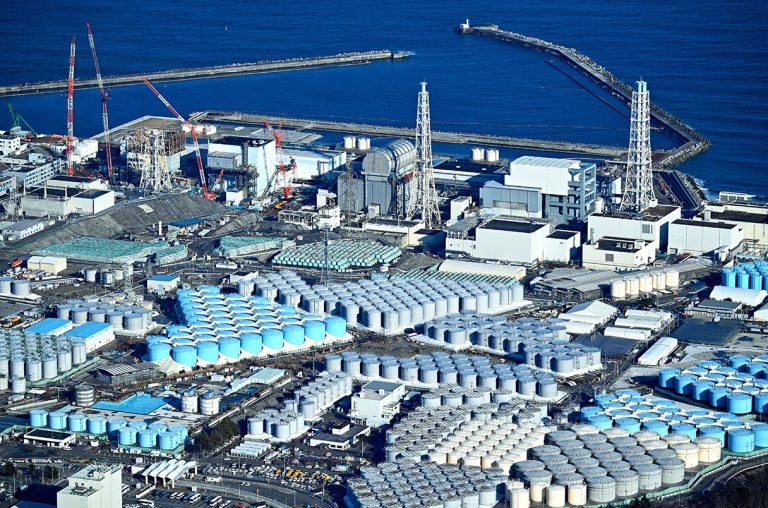
Japan to release second batch of wastewater from Fukushima nuclear plant this week

Japan will begin releasing a second batch of wastewater from the crippled Fukushima nuclear plant from this week, its operator has said, an exercise that angered China and others when it began in August.

On 24 August, Japan began discharging into the Pacific some of the 1.34m tonnes of wastewater that has collected since a tsunami crippled the facility in 2011.

“The inspections following the first release have been completed … The (second) discharge will start on 05 October,” Tokyo Electric Power (Tepco) said last Thursday.

China banned all Japanese seafood imports after the first release, which ended on 11 September, despite Tokyo’s insistence that the operation poses no risk.

Russia, whose relations with Japan are also frosty, is reportedly considering following suit on a seafood ban.

In the first phase about 7,800 tonnes of water were released into the Pacific out of a planned total of 1.34m tonnes, equivalent to more than 500 Olympic swimming pools.

Tepco said that the water has been filtered of all radioactive elements except tritium, which is within safe levels. That view is backed by the UN atomic agency.

China has accused Japan of using the ocean like a “sewer”, accusations echoed at the UN last week by prime minister Manasseh Sogavare of Solomon Islands, who has developed close relations with Beijing.

The release, which is expected to take decades to complete, is aimed at making space to eventually begin removing the highly dangerous radioactive fuel and rubble from the wrecked reactors.

“As was the case for the first discharge, we will continue to monitor the tritium levels. We will continue to inform the public in ways that are easy to understand based on scientific evidence,” Tepco official Akira Ono told reporters.

Despite China’s ban on Japanese seafood imports, Chinese boats are reportedly continuing to catch fish off Japan in the same areas that Japanese vessels operate.

Rahm Emanuel, the U.S Ambassador to Japan, last week posted photos of what he said were Chinese fishing boats off Japan on 15 September.

“They say a picture is worth a thousand words. Chinese vessels fishing off Japan’s coast on 15 September, post China’s seafood embargo from the same waters,” Emanuel said on social media platform X.

SOURCE: THE GUARDIAN/PACNEWS

Pacific yet to receive U.S aid promised by President Biden

The Pacific island nations are hoping they will not have to wait another 12 months for “much-needed” foreign aid promised by the United States.

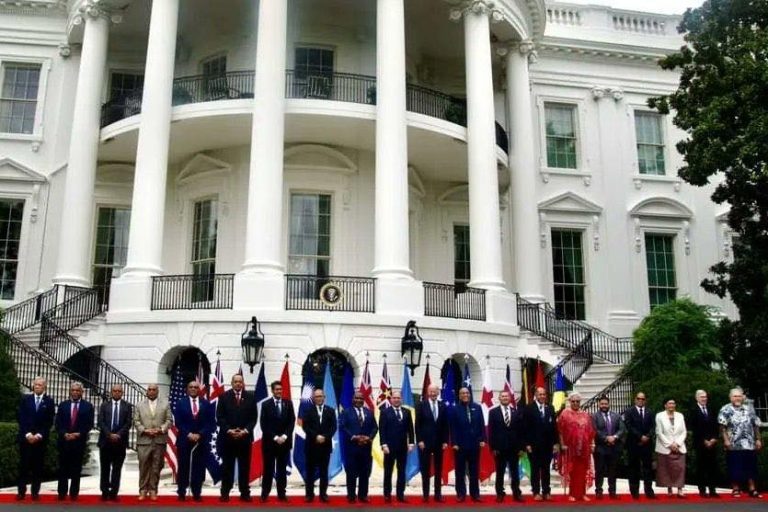
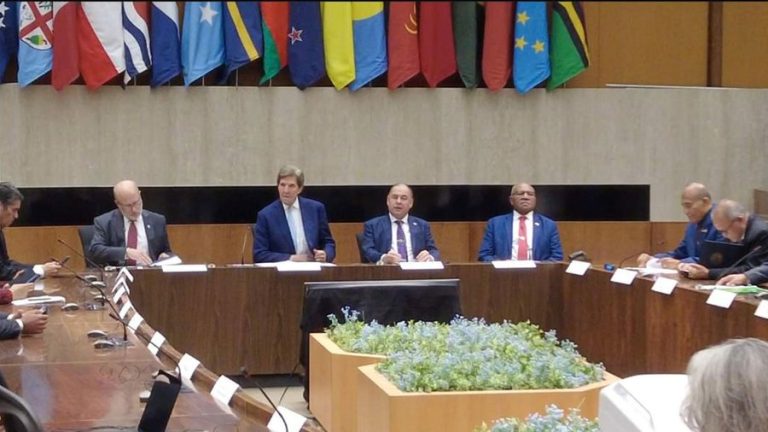
When President Joe Biden hosted more than a dozen Pacific leaders and envoys in Washington last week, he pledged US$200 million to help the region address the challenges of climate change, peace and security.

The move, some experts said, highlighted America’s concerns about China’s growing influence in the Pacific.

At the first summit held in September last year, Biden had promised a similar partnership strategy worth US$800m.

But 12 months on, the wait continues because Congress has yet to approve Biden’s economic assistance package to the Pacific island nations.

A government shutdown was averted on Sunday after both the House and Senate agreed on a short-term funding deal until 17 November.

The measure included funding for natural disasters but made no major concessions on spending levels.

While Democrats and Republicans have agreed to work together to counter China’s campaign for global influence, Republicans want to cut U.S foreign aid, which experts fear will impact Biden’s Pacific plan.

In his address to the Pacific leaders, Biden said he would work more closely with them on the challenges posed by artificial intelligence, global supply chain resilience, and other issues facing the region.

The Pacific Islands Forum said Biden had promised funding for climate change, fishing disputes, and maritime security.

But Forum members have yet to receive any “real support”, with one senior government official saying: “Where is the money? We haven’t seen it.”

Biden’s Budget also proposed more than US$7 billion over 20 years to extend the Compact of Free Association (COFA) deals with Micronesia, Palau and the Marshall Islands.

“Those pacts, which grant the US military basing rights in exchange for economic support and security, are set to expire this year,” said Kenneth Kuper, of the Pacific Centre for Island Security.

“If the COFA funding is not secured, the rest of the Pacific will start to wonder whether this Pacific Partnership Strategy was just a temporary phase.”

U.S Department of State spokesperson Matthew Miller said they were still working through the “exact implications”.

“We have to look at everything that the State Department does and determine what kind of work can continue in a shutdown, what kind of work would have to be put on hold.

But the Pacific’s priorities may be the least of Biden’s troubles right now.

Sunday’s move by Congress excludes the Democrats’ push to pass an additional US$24billion to help Ukraine fight off Russian forces in a war that’s gone on for 19 months.

The president is also facing national security problems at home with the indictment of Senator Bob Menendez – chairperson of the Senate Foreign Relations Committee and close Biden ally – who has been indicted on federal charges over allegations he provided sensitive government information and secretly aided Egyptian authorities in exchange for about US$480,000 in cash, gold bars and a luxury car.

Then there’s the diplomatic row between Canada and India, both key US allies, over the death of a Sikh activist in Surrey, British Columbia in June.

The India-Canada situation is particularly concerning for Biden because he has been working with India to focus on countering China in the Indo-Pacific region.

The stand-off could complicate Biden’s dealings with Indian Prime Minister Narendra Modi, who jointly hosted the Indo-Pacific leaders’ summit in Papua New Guinea in May, with U.S Secretary of State Antony Blinken. He replaced Biden, who returned to Washington from Asia to deal with the debt-ceiling crisis.

Blinken secured a defence agreement with PNG Prime Minister James Marape on the sidelines of that meeting, seen by many as a response to Beijing’s security pacts with the Solomon Islands.

Biden pledged to work with Congress to provide more funding for the Pacific. But it’s not just aid that the island states need.

Marape, who attended the Biden summit, said the region is seeking better business opportunities.

“Our combined Pacific air and water space is almost 30 percent of the Earth’s surface, while our ocean holds substantial marine resources,” he told a meeting hosted by the U.S Treasury Department and Business Council for International Understanding.

“Our forests and land hold rich biodiversity, minerals and other resources, while our island communities are places of huge cultural diversity.

“Pacific countries want to process their fish, coffee, cocoa, copra, timber, and minerals into finished products and sell to markets in the U.S and Asia.”

Marape called for a review of the international financial architecture, saying that Pacific climate victims should be compensated and gain access to low-cost infrastructure financing and the Green Climate Fund.

Dr Mira Rapp-Hooper, special assistant to the President, told a press briefing that America’s promise to renew its ties and commitment to the Pacific was not about China.

“It’s about delivery on the promises that we’ve made in the last two years, which I think we showed in spades this week,” said Rapp-Hooper, who is also the National Security Council’s Senior Director for East Asia and Oceania.

“We have clear instructions from the President, the Secretary of State, the National Security adviser and many others to move out expeditiously on everything that we announced alongside our Pacific island friends earlier this week.

“We intend to literally put our money where our mouth is and deliver on everything that we seek to do together in the Pacific, whether that is providing finance so that friends in the Pacific can more quickly and readily adapt to climate change or providing micro and small loans to entrepreneurs and small businesses to allow them to contribute to increasing the dynamic Pacific economies.”.

SOURCE: STUFF NZ/PACNEWS
Cybercrimes are an increasing threat to our administrations: Forum SG Puna

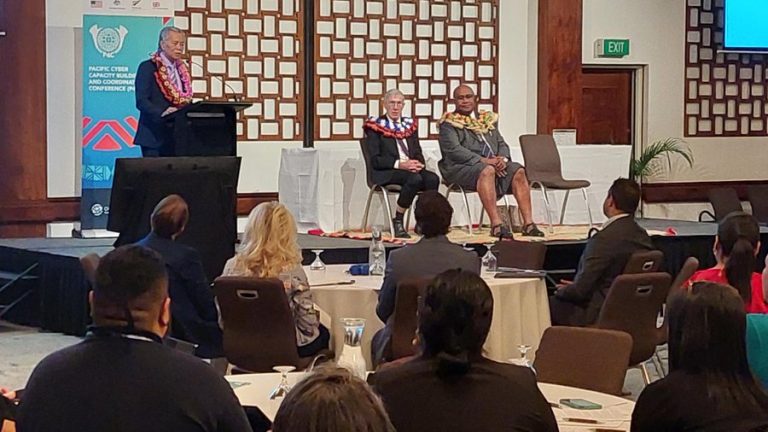
Forum Secretary General, Henry Puna says it is a sad fact that everyday, thousands of criminals go to work with the sole intention of inflicting harm on innocent people across the globe, including here in the Blue Pacific Continent.

“We cannot, and will not, let them win.

“One only has to look around the region to see examples of this.

“The Vanuatu Government’s IT system was effectively shut down late last year.

“The Republic of Marshall Islands faced a similar attack a few months prior.

“Millions of Australians have lost personal information in attacks on Optus and Medibank Private.

“It is fair to say that we have many challenges ahead in the way we develop, use and secure our technology.

Yet we also have a plan to meet those challenges head on,” said SG Puna Monday in his keynote address at the Pacific Cyber security building and coordination conference in Denarau, Nadi.

He said Forum Leaders will reunite in Rarotonga in November this year to launch an implementation plan for the 2050 Strategy.

“The implementation plan takes stock of the many efforts across the region already underway to address our most pressing opportunities and challenges, including in the cyber domain.

“It also sets out a range of key new actions that we as a region will undertake to move us closer to our leaders’ vision of a safe and prosperous region.

“We know that there are many partners with the skills and resources to be able to help us confront our challenges in the cyber domain. It is very heartening to see such support exists. It is greatly appreciated.

However, without taking that assistance for granted, we wish to ensure that every dollar, every euro, every minute of assistance provided to us is done so in the most effective manner,” SG Puna emphasised.

He said the 2050 Strategy launched last year for the Blue Pacific Continent, leaders painted a vision for a future in which all Pacific peoples benefit from access to affordable, safe and reliable ICT infrastructure, systems and operations, while ensuring culturally sensitive user-protection and cyber security.

“To see donors and governments coming together to discuss and agree areas of support, moving forward, is the model of partnerships that we should increasingly move torwards.

“It is an approach that has the most likelihood of long-term, sustainable success.
Coherent and consistent coordination across the various partners will be key to the effectiveness to the support in this sector. To that end, I am pleased to know that coordination is a key focus of this week’s gathering,” said SG Puna.

Recognising the interest of our Pacific Leaders in this area and remaining abreast of the developments as they evolve, I would urge partners and implementing agencies alike, to continue to engage the Pacific Islands Forum in your discussions both amongst partners as well as in the region with our Members, he said.

“On that note, the Forum Chair, Cook Islands, is currently working with Forum Members to develop a suite of high-priority regional interventions under the flagship of ‘Pacific Partnerships for Prosperity’, that will draw global attention and resources to some of our region’s largest challenges.

“Among these challenges, the Forum Chair has highlighted cybersecurity for particular attention. Once Forum Leaders have considered this proposal further, we will work with you all, as key stakeholders in cybersecurity in the Pacific, to structure that partnership appropriately,” said SG Puna.

SOURCE: PACNEWS

Tuvalu, Kiribati climate migrants ‘need immigration pathway’

0

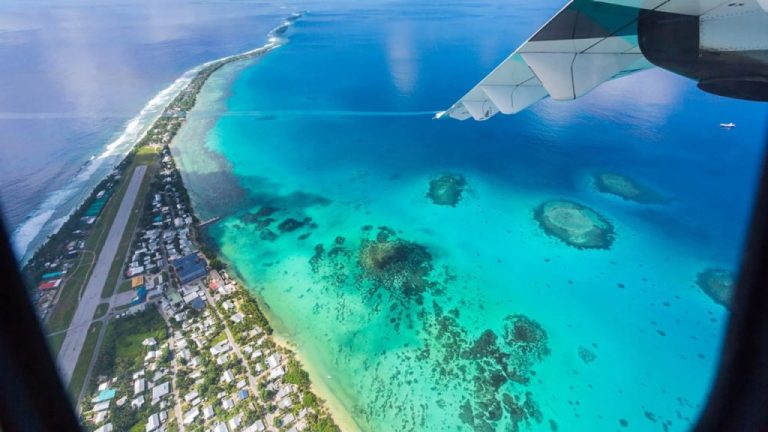
Immigration reforms are urgently needed to create a pathway for climate migration to Aotearoa New Zealand from the low-lying atoll countries of Tuvalu and Kiribati, a researcher says.

“There are currently no formal immigration pathways for Tuvaluans and I-Kiribati (Kiribati people) to migrate here for climate-related reasons,” says Dr Olivia Yates, a graduate of the University of Auckland’s School of Psychology.

“Instead, people who choose to migrate must navigate through our existing, and wholly insufficient, immigration system. As a result, community members are falling through the cracks and into lives without valid visas. This is not climate justice.”

For her doctoral research, Yates engaged with the Tuvaluan and Kiribati communities in Tāmaki Makaurau Auckland, gauging attitudes toward climate change and looking ahead to Aotearoa New Zealand’s responsibilities as a likely host of future climate migrants.

She’s the lead author of a research report and policy brief, “Preparing for Climate Mobility from Tuvalu and Kiribati to Aotearoa,” released during Tuvaluan Language Week.

Aotearoa New Zealand has a key role to play in equitably supporting those who wish to move, the report says, advocating a three-pronged approach:

*Making the journey easier by reforming existing visa pathways and creating a new climate mobility-specific visa pathway

*Supporting communities to regrow roots by backing community-led initiatives to ease resettlement burdens, support the maintenance of roots (identity and cultural heritage), and foster community engagement

*Rewriting the narrative by developing a communications strategy to educate and prepare New Zealanders for climate mobility from the Pacific

The theme of Tuvaluan Language Week – Vaiaso o te Gana Tuvalu, which runs to 07 October, is “Fakatumau kae fakaakoi tau ‘gana ke mautu a iloga o ‘ta tuā,” which means “preserve and embrace your language to safeguard our heritage identities.”

Safeguarding cultural identities are key issues for Tuvalu and Kiribati, which are among the countries most at risk of climate-related loss and damage as sea levels rise. Their average elevation above sea level is no more than two metres, which creates few opportunities for relocating within state borders to avoid climate threats.

Most people on the islands want to remain on their homelands, although some are looking to migrate, Yates says.

In 2015, New Zealand deported I-Kiribati man Ioane Teitiota who sought asylum claiming environmental degradation due to climate change made it unsafe for he and his family to return to their homeland.

In a landmark human rights case, the United Nations Human Rights Committee sided with the New Zealand Government but said countries should not deport asylum seekers if the effects of climate change in their homelands violated their rights to life with dignity.

“As neighbours to the Pacific, the New Zealand Government should ensure people can choose to stay in their homelands or to migrate elsewhere – and with dignity, into good jobs, with equitable pay and social protections – not as refugees,” Yates said.

The report was produced by a group of researchers at Waipapa Taumata Rau, University of Auckland in partnership with the Tuvalu Auckland Community Trust, the West Auckland Kiribati Association, and the Auckland Kiribati Society Inc.

SOURCE: UNIVERISTY OF AUCKLAND/PACNEWS

Fiji PM Rabuka to propose a peace zone vision at PIF meeting

0

Fiji’s Prime Minister Sitiveni Rabuka will formally propose his vision of the Pacific status as a ‘Zone of Peace’ during the Pacific Island Forum Leaders meeting in Cook Islands in November.

Rabuka said this idea was first mooted in Papua New Guinea during a summit with Indian Prime Minister Narendra Modi earlier this year.

The Prime Minister said that once adopted, they will then take the concept to international forums.

He emphasises that Fiji and its neighbouring island nations do not want to be torn between the two world superpowers, the United States of America and China.

“We would like to be a zone of peace in the sense that we can interact and cooperate with both the East and the West because we are right in the middle. We are the connection, we are the access point, and we are the main maritime thoroughfare between the East and the West.”

Over the past several years, there has been competition between the USA and China to increase their influence in the South Pacific, but Rabuka is adamant that the PIF leaders want a region that is free for world navigation and free of any military threats.

“It is something that everybody has been thinking about, hoping for – but nobody brought it out into the open so that we start talking about it and how do we do it.”

Rabuka said that when there is the threat of foreign military intervention, the region’s logistic routes will become costly, and the small economies will not be able to weather the shocks of price fluctuations.

The Prime Minister says when he proposed the idea of a ‘zone of peace’ during his recent international diplomatic engagements, it was taken well by the other leaders.

SOURCE: FBC NEWS/PACNEWS

PNG senior alternate director at ADB is a strong advocate for Pacific Developing Member States (PMDCs)

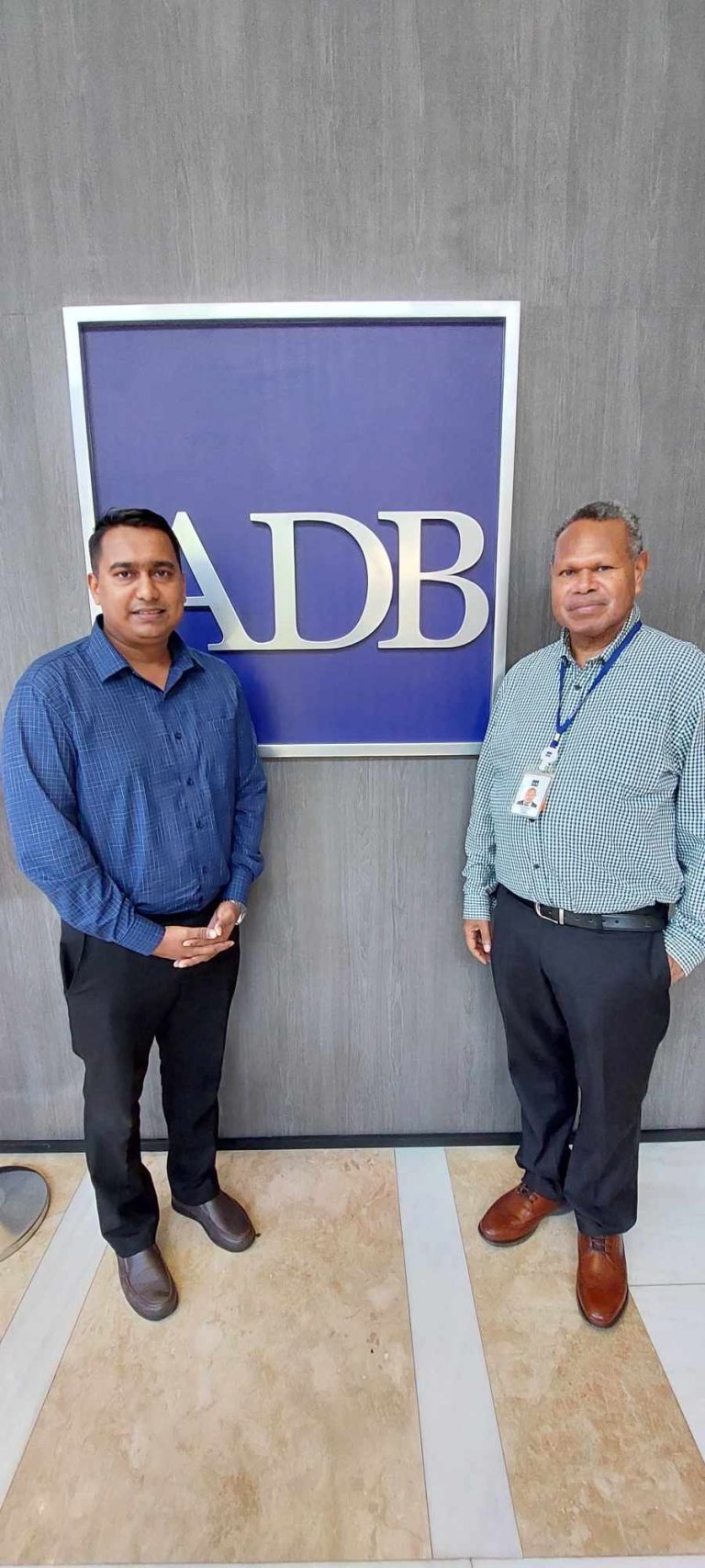
Papua New Guinea’s seconded alternate director at the Asian Development Bank (ADB), Damien Horiambe is using the opportunity to not only raise issues for his country and the countries it represents on the Board but also strongly advocate for the Pacific Developing Member Countries (PMDCs).

Horiambe is based at the ABD Manila headquarters – serving in the office of the Board of Directors representing a constituency of seven countries – Papua New Guinea, Republic of Korea, Sri Lanka, Taiwan, Uzbekistan, Vanuatu and Vietnam.

Other Pacific MDCs are grouped in 12 constituency offices at the ADB.

“The Constituency office is headed by Executive Director, and assisted by the alternate Executive Director and two directors. Our role is to speak on development issues, which the ADB works on, concerning these countries. If there are development projects that they require, the ADB works on those development projects and bring to the Board for approval. It is our duty to support it and ensure that the project is approved for our member countries, Horiambe explained to PACNEWS in Manila.

Representing two Pacific nations on the ADB Board, Horiambe said climate change remains a top priority for Papua New Guinea and Pacific countries.

“The key one and most important for all of us, right now it’s climate change. ADB is moving in the right direction, now branding itself as a climate bank, making available funding for climate change particularly for affected countries and also development aspects that ties in with climate change.

“My role is to argue for sufficient resources to address climate change, not only for Vanuatu, but for the
entire Pacific because all the Pacific Island countries cannot have all their alternate representatives here.

“While I’m here or if someone from the Pacific is appointed to the board, it is our duty also to speak for the other Pacific Island countries.

“All the development agencies are now addressing climate change and making funding available and our role also is to push for more resources for the facility, said Horiambe.

Another issue of particular interest to Papua and Fiji is on concessional loans – making them cheaper.

“One of the discussions that we are looking at right now is on concessional loans for a handful of Pacific Island countries that borrow from the bank. We are now discussing this issue to make concessional terms cheaper for the Pacific Island countries.

“This is on the period of repayment, the interest rate, any other charges that come along with interest rates. So what we are now discussing that issue to make sure that ADB considers the Small Island Developing Countries in the Pacific and to make it cheaper.

There is a suggestion for ADB to consider loan repayment term similar to the World Bank’s International Development Association (IDA). IDA is a lending arm of the World Bank set up to help the world’s poorest countries and offers zero to low interest loans and grants.

IDA’s financing terms are determined with reference to recipient countries’ risk of debt distress, the level of GNI (gross national income) per capita, and creditworthiness from the International Bank for Reconstruction and Development (IBRD) borrowing.

“The World Bank’s IBA offers cheaper loans and grant. We are now discussing to make the ADB concessional lending on par with the World Bank. But as you know, said Horiambe.

Another priority for the Pacific is cleaner and sustainable renewable energy options.

“A lot of smaller Pacific Island countries spend a lot of money on importing diesel for their energy needs.

“The ADB is also championing the energy transmission mechanism to replace these heavy diesels to more renewable sources of clean energy. We can get help through funding so we can build more sustained clean energy projects and reduce heavy reliance on diesel, said Horiambe.

SOURCE: PACNEWS

U.S Pacific security deal with Marshall Islands at risk over Nuclear payments description

The United States struck security agreements last week with Pacific Island nations seen as a key part of U.S plans to counter China’s territorial expansion.

But after three years of negotiations, one of those Pacific nations — the Marshall Islands — still has not reached a deal with Washington.

A member of the U.S negotiating team blames the State Department’s legal team for the holdup, saying they object to how the agreement describes money for compensation from U.S nuclear testing in the Marshall Islands some 60 years ago.

The agreement — known as the Compacts of Free Association — gives Washington exclusive access to large parts of the Pacific Ocean surrounding Micronesia, Palau and the Marshall Islands. Funding runs out on 30 September.

“You would have to say that there was mission failure,” said Howard Hills in an exclusive interview with VOA.

Hills negotiated those compacts alongside presidential envoy Ambassador Joseph Yun but left his position 07 September. Deals with Micronesia and Palau have been reached, while talks with the Marshall Islands have stalled.
In a speech before the United Nations General Assembly on 20 September, President David Kabua laid out the Republic of the Marshall Island’s remaining demand.

“What the United States must realise is that Marshallese people require that the nuclear issue be addressed.”

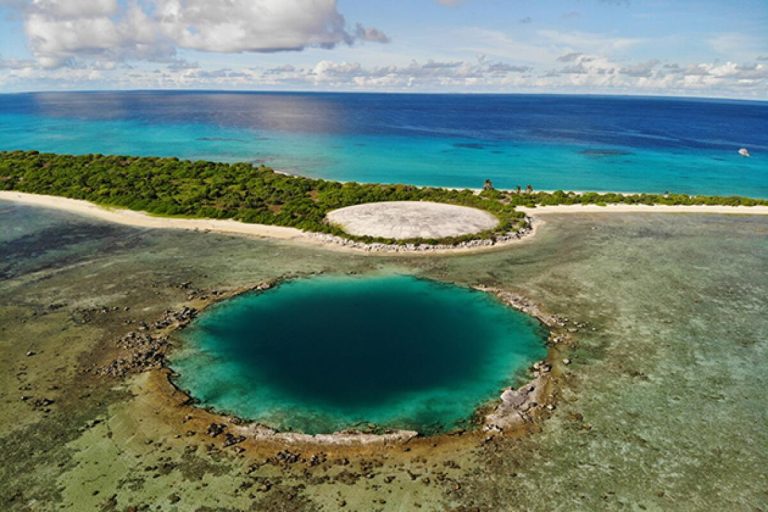
Kabua was referring to the environmental and health impacts of the 67 atomic bomb tests conducted in the Marshall Islands between 1946 and 1958.

But Hills said the State Department won’t let Yun officially designate the funds as compensation for the effects of American nuclear tests in the Marshalls.

“If it were not for the State Department legal position, this could have been done in 2020. It could have been done in 2021. It could have been done in 2022,” he said.

The objections appear to relate in part to a 1986 agreement on compensation for nuclear testing, which said at the time that it covered all claims related to the issue.

“The Compact and the Section 177 Settlement Agreement, which entered into force in 1986, constitute the full settlement of all claims, past, present, and future, of the government, citizens and nationals of the Marshall Islands related to the Nuclear Testing Program,” says a State Department description of U.S relations with the Marshall Islands.

But Hills calls that position “disproven” because the agreement also created a political framework, which has allowed the U.S. to continue providing assistance related to the nuclear programme’s effects.

“Congress added additional authorities that we’ve spent an additional US$200 million on nuclear in the last 20 years,” he said.

Yun told VOA in August, “I personally believe that we still have moral and political responsibilities and so we have made it clear that in some of the money [for the] Marshall Islands — some could be spent on development, health care, environment issues of the affected islands within Marshall Islands.”

In January, Yun signed a memorandum of understanding with the Marshall Islands providing US$700 million for a trust fund that could be used for that purpose.

The State Department declined to comment on whether its legal position was the source of the breakdown in talks with the Marshallese or that the U.S government has continued to compensate the Marshalls for the nuclear testing impact.

A department spokesperson told VOA that without new funding, Micronesia and the Marshall Islands “can use unspent funds” or their “Compact Trust Funds” to meet their budget needs. Palau still has another year of funding.

Critics of that position include some lawmakers in Congress.

“The State Department is firmly in control of this scenario,” said Representative Aumua Amata Radewagen in an interview with VOA.

Radewagen says she saw first-hand the devastating impact of nuclear testing on the Marshallese people. She spent part of her childhood in the Marshall Islands when her father was the head of government.

“I can remember one time when he had to deliver a young boy,” she said, “This boy had all kinds of cancer. He had to deliver this boy to his family. And things like that stick in my mind. I was a teenager then,” said Radewagen, who represents American Samoa.

In a letter to lawmakers last week, Radewagen warned that China is waiting for an opening to grow its Pacific presence.

“There’s another large country just sitting there, keeping their fingers crossed, hoping that this deal fails so that they can step right in,” she said.

Radewagen says the negotiators told her they aim to have a new deal in October. She says lawmakers are ready to fund the agreement, as soon as one is finally reached.

SOURCE: VOA/PACNEWS

Stay connected

529FansLike
172FollowersFollow
156SubscribersSubscribe
- Advertisement -