

Home Blog Page 1208

Fiji records 241 new cases of COVID-19, One death reported

Fiji has reported 241 new cases of COVID-19 infections and one death Monday.

Ministry of Health permanent secretary Dr James Fong says five cases are prison officers from Suva who are undergoing 14 days’ quarantine at the FSC Compound in Rakiraki as part of essential movement from red zone to green zone when they tested positive.

“They were undergoing 14 days’ quarantine at the FSC compound as part of the essential movement from the red zone to the green zone when they tested positive,” Dr Fong said.

He said the remaining cases are from the Lami-Suva-Nausori containment zone.

Dr Fong said there are 106 cases from existing areas of interest and 17 from the following new areas of interest includes the Fiji Times, Food City Suva, Matanisivoro Settlement, National Kidney Centre-Nadera, Suva City Council and Tamavua-i-Wai.

“The remaining cases are contacts of known cases, cases that were seen in screening clinics and were swabbed, and cases under investigation to determine possible sources of transmission,” Dr Fong said.

Dr Fong said a 50-year-old man from Newtown has been reported to be the latest COVID-19 death.

He said the man is believed to have died at home and was declared dead on arrival by doctors at the Valelevu Health Centre.

“He was reported to be in severe respiratory distress before death,” Dr Fong said.

“According to protocol, he was swabbed at the health centre, and tested positive. His death has been classified as a COVID-19 death by the doctors at the health centre.

“He had received the first dose of the vaccine early this month. He was not fully vaccinated.” said Dr Fong.

He also confirmed that a death previously reported as under investigation had now been classified as a COVID-19 death by doctors.

“This is a 62-year-old man from Grantham Rd who presented to the FEMAT field hospital in respiratory distress and died on the same day,” Dr Fong said.

“He had been having respiratory symptoms, including shortness of breath, for at least a week before presenting to FEMAT.

“According to protocol, he was swabbed and tested positive for COVID-19. He was not vaccinated.”

There are now a total of 17 deaths due to COVID-19, with 15 from the current outbreak that started in April.

One death is still under investigation to determine if it was caused by COVID-19.

He said eight COVID-19 positive patients died from pre-existing non-COVID-19 related illnesses that they had been receiving treatment for at the CWM Hospital in Suva.

There are currently 21 COVID-19 patients with severe illness admitted at CWM Hospital.

There have been 26 new recoveries reported since the last update, which means that there are now 3027 active cases in isolation.

There have been 3,726 cases during the outbreak that started in April.

The Ministry has recorded a total of 3,832 cases in Fiji since the first case was reported in March 2020, with 779 recoveries.

Fiji has tested a total of 150,878 samples since the second COVID-19 outbreak began in April this year.

Dr Fong said a total of 193,739 tests had been conducted since testing began in early 2020.

He said 2577 tests had been reported for 26 June.

He added that updated testing numbers from the Tamavua Twomey Laboratory had been received for June 25, therefore, the total testing number for that day had been updated.

The national seven-day daily test average is 2930 tests a day, and the national seven-day average daily test positivity is 7.9% and continues on an upward trend, he said.

Also, a total of 490 individuals were screened and 65 swabbed by the health mobile screening teams – bringing Fiji’s cumulative total to 659,926 individuals screened and 53,234 swabbed since the start of this mobile screening programme.

A total of 1138 individuals were screened and 279 swabbed at our 56 stationery screening clinics throughout the country.

This, to date, brings Fiji’s cumulative total to 211,474 screened and 27,598 swabbed at the stationery screening clinics.

SOURCE: FIJI TIMES/FBC NEWS

Australia to arm PNG patrol boats

The Australian Department of Defence has announced it will arm the Papua New Guinea Defence Force’s four new Guardian-class Patrol Boats.

The equipment will be delivered through the Pacific Maritime Security Programme along with a ‘comprehensive support and training package’, the department said on Friday.

Under the $2 billion (US$1.5 billion), 30-year programme, Australia will deliver 21 Guardian-class Patrol Boats to 12 Pacific Island nations and Timor-Lesté between 2018 and 2023. PNG received the first of these boats, HMPNGS Ted Diro, in 2018. The second, HMPNGS Rochus Lokinap, was delivered in 2021.

Two more 39.5 metre steel patrol boats are being designed and built by Austal in Western Australia.

PNG had requested the equipment, Defence said, noting that arming the boats would better enable the country to respond to the ‘maritime challenges’ it shares with Australia, including illegal fishing and transnational crime.

“This will ensure a continuity of Papua New Guinea’s sovereign capabilities, with its Pacific-class Patrol Boats previously armed,” the department said in a statement.

“This investment in Papua New Guinea’s sovereign defence capabilities will boost Pacific regional maritime security and contribute to maintaining a free and open Indo-Pacific.”

Defence said Australia and PNG were committed to signing a Memorandum of Understanding, to ensure compliance with their domestic and international obligations.

Australia’s security partnership with PNG is delivered through the Defence Cooperation Programmme in addition to the Pacific Maritime Security Programme.

SOURCE: THE MANDARIN/PACNEWS

Legal definition of ‘ecocide’ a new milestone in efforts to criminalise environmental mass destruction

A new, much-awaited legal definition of “ecocide” has moved the world a step closer to recognising the plunder and mass destruction of nature as criminal.

This raises the possibility of having ecocide included under the Rome Statute of the International Criminal Court (ICC), alongside four already recognised international crimes: genocide, crimes against humanity, war crimes and the crime of aggression.

That, however, will certainly take years – and in the meantime, a lot more damage will be done to the biosphere.

Besides, it cannot be applied retrospectively. And there are countries which do not recognise the jurisdiction of the ICC. Some argue that they have their own domestic laws to deal with crimes. As such, the ICC is a court of last resort – providing an opportunity to seek justice where normal efforts have failed.

Yet it remains historic and encouraging to put legal definition to ecocide, said legal and environmental analysts.

The draft – the final wording of which would still be negotiated- defines ecocide as “unlawful or wanton acts committed with knowledge that there is a substantial likelihood of severe and widespread or long-term damage to the environment being caused by those acts”.

The campaign to list ecocide in the Rome Statute continues influencing national and regional decision makers, and the term is more frequently used, gathering more ethical and legal weight.

This may make environmental offenders, including big corporations and complicit political leaders and bureaucracies, think twice.

The draft definition of ecocide was formulated by a global panel of legal experts co-chaired by Professor Philippe Sands, a law professor and director of the Centre on International Courts and Tribunals at University College London, and Senegalese jurist Elisabeth Dior Fall Sow.

It introduces a “new non-anthropocentric approach, namely putting the environment at the heart of international law, and so that is original and innovative”, Prof Sands said.

“The single most important thing about this initiative is that it’s part of that broader process of changing public consciousness – recognising that we are in a relationship with our environment, we are dependent for our well-being on the well-being of the environment, and that we have to use various instruments, political, diplomatic but also legal, to achieve the protection of the environment.”

The effort to list ecocide as a crime has been around since the late Swedish prime minister Olof Palme proposed it at the 1972 UN environmental conference in Stockholm.

The late Scottish lawyer Polly Higgins, who died in 2019, led a decade-long campaign for ecocide to be recognised as a crime against humanity.

Small island nations like Vanuatu and the Maldives have supported the idea. So too has the Pope.

In November 2019, Pope Francis proposed that “sins against ecology” be added to the teachings of the Catholic Church and “ecocide” should be a fifth category of crimes against peace at the international level.

He said acts that could be “considered as ecocide (include) the massive contamination of air, land and water resources, the large-scale destruction of flora and fauna, and any action capable of producing an ecological disaster or destroying an ecosystem.”

For ecocide to become an international crime, a member state of the ICC needs to formally propose the addition of ecocide to the Rome Statute. Sweden, where key political parties have supported it, is a likely candidate. State parties must also vote on it.

Shirleen Chin, a Hague-based international legal expert and environmentalist who has been lobbying for recognition of ecocide, told The Straits Times: “We don’t know if it’s ever going to be included in the Rome Statute, but… there is now political support, there is political traction.

“This definition is more deliberately made in collaboration with everybody, making it more global,” said Ms Chin, who founded the consultancy Green Transparency.

“We have the perspective of the Pacific islands… (and) Bangladesh. We have Africa, we have America, we have South America. So it’s a global culmination of legal knowledge and experiences.”

She added: “We’re not trying to say that (ecocide) is equal to genocide. Genocide stands alone as a very egregious crime.

“Our concern is to make sure that the earth is protected. If there is a law saying these types of acts are prohibited, that they can be a violation of international criminal law, that we can bring you to court as an individual or as an executive, then (offenders) will definitely think twice about the decisions they make.”

Listing ecocide under the ICC, is “a signal that ‘no’ means ‘no”, she said.

SOURCE: STRAITS TIMES/PACNEWS

Team Fiji names team to Tokyo 2020 Olympic Games

FASANOC’s Executive Board is making the following recommendations for Athletes and Officials to represent Team Fiji at Tokyo 2020 Olympic Games.

National Federations have been working hard in preparing their teams with final submissions forwarded to FASANOC’s Selection Justification Commission (SJC). The SJC has vetted the nominations from the respective National Federations and forwarded its recommendations to the FASANOC Executive Board.

The Board subsequently recommended the names of athletes and officials to the Board of Management for final approval. Due to current COVID-19 restrictions this approval was sought by an electronic poll and a majority approval has been received.

The Rugby lists contain a long list of athletes from which a final 13 players and 5 officials for the Men’s and Women’s teams will be named.

Team Fiji will be represented by 53 athletes and officials when the Games begin on 23 July 2021.

With the approval of the FASANOC Board of Management, an appeals process is now in place and athletes and officials who wish to appeal their non-selection may do so within 48 hours of the release of the Final Team List. The appeal window is for 48 hours starting from 5pm Monday 28 June to 5 pm Wednesday 30 June, 2021.

Appeals should be lodged in writing to the FASANOC Secretary General-CEO and must be emailed to lorraine@fasanoc.org.fj

The purpose of the Appeals Process is to give athletes and officials an opportunity to appeal their case if they feel they have been unfairly deprived of selection to represent Fiji at Tokyo 2020

The Appeals Tribunal makes its judgment based on the submission of the appellant and the Selection Criteria that had been submitted by the National Federation and approved by the FASANOC Executive Board. The decision of the Appeals Tribunal will be final and binding on the parties.

Team Fiji as approved by the FASANOC Board of Management is as follows:

Team Names
Athletics
1 Ratu Banuve TABAKAUCORO Athlete
2 Bola Petueli TAFO’OU Section Mgr/Coach
Judo
1 Tevita Maxwell TAKAYAWA Athlete
2 Takashi IWASAKI Section Mgr/ Coach
Rugby Sevens Men’s
1 Ratu Meli DERENALAGI Athlete
2 Taniela Sigalagilagi SADRUGU Athlete
3 Seremaia TUWAI Athlete
4 Kalione NASOKO Athlete
5 Kitione Taliga DAWAI Athlete
6 Waisea NACUQU Athlete
7 Alasio Sovita NADUVA Athlete
8 Ratu Josua VAKURINABILI Athlete
9 Rusiate NASOVE Athlete
10 Kavekini Tubuilea TABU Athlete
11 Kaminieli RASAKU Athlete
12 Jiuta Naqoli WAINIQOLO Athlete
13 Sireli MAQALA Athlete
14 Livai Ikanikoda KOROIGASAGASA Athlete
15 Ratu Napolioni BOLACA Athlete
16 Iosefo Masikau BALEIWAIRIKI Athlete
17 Asaeli TUIVUAKA Athlete
18 Joseva TALACOLO Athlete
19 Semi RADRADRA (WAQAVATU) Athlete
20 Aminiasi TUIMABA Athlete

21.Filimoni Botitu Athlete

22 Jone NIURUA Section Manager
23 Gareth Collins BABER Head Coach
24 Nacani Naravoro CAWANIBUKA S&C Coach
25 William Gock Hing KOONG Physiotherapist
26 Bradley Ian HARRIS Assistant Coach
27 Nicacio ANDRADE Men’s Management
28 Sakiusa Navakabau NAIKA 2nd Physiotherapist
Rugby Sevens Women’s
1 Rusila NAGASAU Athlete
2 Raijieli DAVEUA Athlete
3 Vani BULEKI Athlete
4 Sesenieli DONU Athlete
5 Vasiti SOLIKOVITI Athlete
6 Lavenia TINAI Athlete
7 Vitaieli BULOU Athlete
8 Lusia TISOLO Athlete
9 Ana Maria ROQICA Athlete
10 Tokasa SENIYASI Athlete
11 Rejieli ULUINAYAU Athlete
12 Mereula TOROOTI Athlete
13 Lavena CAVURU Athlete
14 Viniana RIWAI Athlete
15 Ana NAIMASI Athlete
16 Roela RADINIYAVUNI Athlete
17 Aloesi NAKOCI Athlete
18 Laisana LIKUCEVA Athlete
19 Reapi ULUNISAU Athlete
20 Adi Apisake Vela NAUCUKIDI Section Manager
21 Saiasi FULI Head Coach
22 Tikiko NAMAUA S&C Coach
23 Jennifer Kula KHALIK Physiotherapist
24 Timoci VOLAVOLA Assistant Coach
25 Malaki VOLAU Women’s Mgmt
26 Apenisa NASILASILA Women’s Mgmt
Sailing
1 Sophia Frances MORGAN Athlete
2 John Montagu MORGAN Section Mgr/Coach
Swimming
1 Taichi VAKASAMA Athlete
2 Cheyenne Victoria Rosimere ROVA Athlete
3 Sharon Tania SMITH Section Mgr/Coach
Table Tennis
1 Sally Ukenia YEE Athlete
2 Harvi Teruakai YEE Section Mgr/Coach
Medical
1 Jone Bakabaka NASOME Team Doctor
2 Sarote Luise Ieli NAKAORA Team Physiotherapist
Team Fiji Headquarters
1 Patrick Tasman BOWER Chef de Mission
2 Wayne Henry O’CONNOR General Manager
3 Ritesh RATIRAM Press Attaché
4 Jane Felicia NIUBALAVU Team Administrator.

SOURCE: FASANOC/PACNEWS

PNG Election dates approved

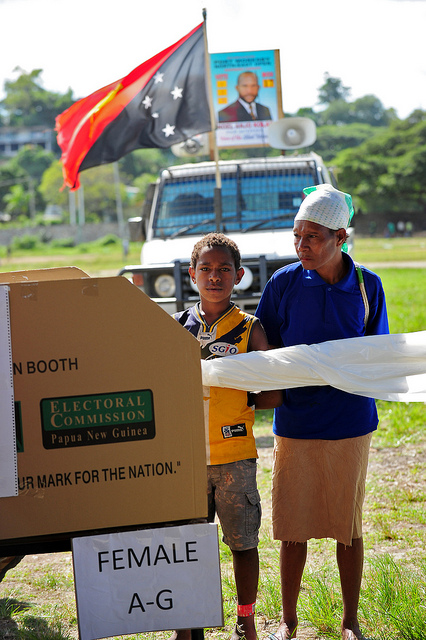
Papua New Guineans are expected to go to the polls to elect the 111 parliamentarians on 11 June 2022.

Nominations will be received at 4pm on 14 April to 4pm on 21 April.

Polling will start on 11 June.

The return of writs will be on or before 15 July.

Governor-General (GG) Grand Chief Sir Bob Dadae’s acting official secretary Bill Toraso said Sir Bob has approved the tentative dates.

“The dates and activities have been approved by the GG and has been handed back to the acting Electoral Commissioner Simon Sinai,” Toraso said.

“However, those dates can be reviewed by Sinai and returned to Sir Bob for further consideration and re-approval.”

Sinai confirmed receiving the dates from Sir Bob. “We are ready to prepare for the national election,” he said.

“We already have the operations and administration plans as we are experienced in running elections.

“We are now waiting for the required funding from the Government to start our preparation plans.”

Sinai said the next general election was just 10 months away and the Government was yet to provide funding for the common roll updating and security operations.

“We need K463 million (US$131 million) to prepare,” he said.

“We have already made a submission for K70 million (US$19.9 million) to Treasury for the electoral roll update and are awaiting the funds.”

Sinai said the cost of security operations was not included in the K463 million (US$131 million) proposed election budget.

SOURCE: THE NATIONAL/PACNEWS

PTI Australia delivers record Pacific investment deals through COVID-19

0

Pacific Trade Invest (PTI) Australia, an agency of the Pacific Islands Forum Secretariat, has launched its 2020 Annual Report, highlighting more than AUD$20 million (US$15 million) in export deals and a record nine investment deals facilitated in the region, despite the challenging environment.

PTI Australia Trade and Investment Commissioner, Caleb Jarvis, noted the impacts of the pandemic on the Pacific and the organisation’s work to keep supporting the private sector through and beyond this crisis.

“In a year where COVID-19 closed international borders, interrupted trade routes and caused devastating financial effects on the people and economies of the Blue Pacific, we pivoted to support 582 businesses across 16 countries in 2020, almost one third of which were women-led businesses,” said Jarvis.

He also acknowledged his team’s agility and innovation, and collaboration with PTI partners as key to delivering these results.

“Within a week, we reconfigured our programs across trade, investment, tourism and labour mobility to virtual and hybrid formats, finding new ways to help businesses – like access to digital resources,” said Jarvis.

“Collaborating with our global PTI network and partners then allowed us to deliver $20.04 million (US$15.2 million) in exports and $2.73m (US$2.04 million) in investments.

“We’ve fostered private sector sales to the Australian market and helped drive inter-regional trade, and initiatives like our Impact Support Programme have provided businesses with the tools they need to adapt, maintain and expand their operations.”

Understanding the reality being faced by the Pacific’s private sector in 2020 has been key to supporting the region and making effective use of resources.

Substantiating the feedback received from extensive networks in the region, PTI Australia released its biennial Pacific Islands Export Survey and implemented the Pacific Business Monitor – a longitudinal survey series of the Pacific’s private sector to determine the ongoing effects of the pandemic.

“With our team unable to travel, the Pacific Business Monitor has ensured governments, donors, regional organisations, media and our partners have been informed with the latest quantifiable data about the pandemic’s impact on businesses,” said Jarvis.

“The insights we’ve gathered cover everything from business confidence through to the bottom line, forms of support required, tactics being adopted to continue operating, and the effects on people’s mental health. The data allows us to advocate for the Pacific’s private sector at a regional level as well as inform the design and delivery of our own programmes.”

Investing in and accelerating regional digital development and capacity building played a significant part in the agency’s work.

“The pandemic has confirmed that our digital approach is on the right track; we’ve seen the needs of those we work with change rapidly in this space and continue to extend and adapt our programs of work to help businesses bridge the digital divide,” said Jarvis.

“In 2020, we delivered 23 online workshops to help Pacific businesses participate more in the digital economy, launched our Social Media for e-Business Scholarship, a first in the region, and refined our e-Commerce connector series.”

Looking ahead, Jarvis reinforced the agency’s commitment to supporting Pacific businesses and the communities that rely on them.

“We’ll continue to work with our partners and businesses through trade and investment to support them chart a path out of the pandemic to economic recovery and beyond, as we pursue the Pacific Islands Forum’s vision of a bright and prosperous future for all people of the Pacific,” he said.

SOURCE: PTI AUSTRALIA/PACNEWS

We’ll resolve Samoa’s crisis using ‘Pacific way’: Puna

The Pacific Islands Forum Secretary General Henry Puna says they are using the “Pacific Way” to assist Samoa resolve its two-months-running constitutional crisis.

In his first talanoa session recently with the media from the region following his appointment, the former Cook Islands prime minister said they will use the “Pacific Way” and have offered their support to assist Samoa.

“We’re trying to deal with it in the Pacific Way,” Secretary-General Puna said.

“And we have made a media statement that I’m sure is well received, indicating that we are standing by to offer support when and if required by our friends.

“But our position is that we should allow the judicial process currently underway to take his course, because of our respect for the rule of law.”

According to SG Puna, both leaders of the Human Rights Protection Party and the Fa’atuatua i le Atua Samoa ua Tasi (FAST) have assured they are prepared to respect the Court’s decision.

“And then when that process is complete and I believe it’s well on the way, then it’s also heartening to know that both leaders, [FAST. and [HRPP] have already indicated that they are prepared and committed to respecting the outcome of the judicial process.

“And that’s a really positive development.”

However, caretaker Prime Minister Tuilaepa Sa’ilele Malielegaoi remains defiant, despite assuring regional governments including the Suva-based Forum Secretariat that he and his party will respect the decisions of the Court.

In comments made on his party’s official Facebook page on Saturday night, the veteran politician scoffed at the appeal by the FAST for the Parliament to be convened, after the Appellate Court last Friday refuted claims that Tuilaepa and senior HRPP members have been peddling in recent weeks that the House cannot sit until the sixth woman MP is appointed.

“They wanted to understand the decision made a while back that said there should be six women [in Parliament] but the extra seat will only be invoked after the petitions and by-elections,” Tuilaepa said.

“Upon hearing this, it isn’t hard to understand. But it seems like it was very hard for FAST to understand and this is why they went back to ask. I am utterly shocked by this.

“I am shocked. It’s like them asking, can you please say that again? It’s like pursuing gossip.”

The Australian government, one of Samoa’s major donor partners, released a statement on Saturday urging Tuilaepa’s HRPP and the FAST to convene the Parliament so Samoa’s new government can be formed.

“We urge all parties to cooperate, with a view to convening the parliament and enabling the formation of a government,” reads a joint statement issued by Australia’s Minister for Foreign Affairs and International Development and the Pacific, Senators Marise Payne and Zed Seselja.

“This year Australia and Samoa mark 50 years of diplomatic relations, achieving much together and in the region.
“We look forward to continuing our cooperation with Samoa to strengthen our bilateral links and promote a stable, inclusive and prosperous region.”

The call by the Australian government marks a shift in Canberra’s position on the two-month-old political stalemate, which previously took a middle ground and called for all parties to respect Samoa’s democratic institutions and uphold the rule of law.

SOURCE: SAMOA OBSERVER/PACNEWS


FAST swearing-in unlawful but Parliament must sit: Supreme court

The Samoa Supreme Court has declared the swearing in of the Faatuatua ile Atua Samoa ua Tasi (FAST) party on the lawns outside Parliament was unconstitutional but has also ordered Parliament to convene within seven days from today, a decisive moment in the nation’s power crisis.

The Court has warned that any attempts to obstruct the Legislative Assembly meeting will amount to contempt of Court and Parliament and subsequently will force the Court to validate the invoked principle of necessity “so that the business of the nation can proceed”.

The decision from the court follows an application from the Attorney General to stop the legal effect of an impromptu swearing in ceremony held by FAST on 24 May.

The court has also made several orders instructing the Attorney General to advice all actors in the Constitution to comply with the Supreme Law requirement for the Legislative Assembly to meet.

The decision bars the FAST party from legally using their swearing-in oaths from that day but found they can be reinstated should there continue to be obstructed to Parliament’s meeting.

Attorney General, Savalenoa Mareva Betham-Annandale sought the interim orders arguing the ad-hoc session that took place outside Parliament was unlawful. She relied on a constitutional role of the Head of State and other bureaucrats to carry out the ceremony but did not participate. FAST claimed the move was to uphold a mandatory requirement under the Constitution for parliament to convene within 45 days after April’s election day.

Some 26 elected member of parliament from FAST were forced to meet outside the Parliament lawn after finding the House locked on the last day the Legislative Assembly was supposed to meet. On the other hand, the Human Rights Protection Party (HRPP) boycotted the meeting calling for fresh elections to resolve the political impasse.

In the absence of the Head of State and others who did not turn up on the day FAST said it called other individuals relying on the legal principle of necessity to convene Parliament.

Justice Vui Clarence Nelson, Justice Lesatele Rapi Vaai and Justice Fepuleai Ameperosa Roma presided the matter.

SOURCE: SAMOA OBSERVER/PACNEWS

Forum Secretary General welcomes civil society forum 2021

The Pacific Islands Forum Secretary general Henry Puna has welcomed the input of civil society leaders to regional policy, saying that regional stakeholders must rally together to “face the multiple challenges before us”.

At the opening sessions of the 2021 Pacific Civil Society forum today, Puna stressed that working together is imperative for the Forum and civil society groups.

“The world, and indeed our region, is at an unprecedented juncture in our history. Now more than ever, we must rally together as one Blue Pacific Continent to face the multiple challenges before us – we must work together to address the impacts of COVID- 19; face the challenges of the ongoing climate crisis head-on and secure the future of our Blue Pacific Continent.”

He told more than 30 civil society leaders in a livestreamed event via the Forum’s Facebook platform that they “bring an authentic and realistic voice to the regional policy space. You have the unique opportunity of annual dialogues with our Economic Ministers and our Leaders – whilst these have been useful, there is room to strengthen these dialogues further. I encourage you to be innovative and strategic in deciding what and how you approach these political conversations.”

Those political conversations have seen Forum economic ministers hear directly from civil society and private sector leaders in FEMM meetings, held virtually last year and again in 2021. “I would have hoped that our first meeting would have been in person, however, given our current circumstances, I do appreciate the opportunity to still engage and continue our dialogues on matters most pertinent to our region through this virtual platform,” the Forum Secretary General told the CSO forum.

“As you will all agree, conversation and dialogue has always been the foundation of our decision-making processes in our cultures and societies. It is in this spirit that I encourage us all to continue to engage in a robust and respectful manner on issues of key concern to our region and our people.”

It is the first CSO Forum for the new SG, who thanked regional activists for their messages to Japan on Fukushima.

“With Japan’s announcement to discharge nuclear treated water into the Pacific Ocean, I was pleased to learn that a group of CSOs and concerned Pacific youths that attended last year’s CSO Forum wrote a letter addressed directly to the Prime Minister of Japan in June titled ‘Dumping Hemi Tabu’ – Dumping is illegal. I look forward to seeing more of these types of targeted advocacy on our shared priorities, from CSOs,” he said.

He also assured the CSO forum of his ongoing intentions to keep up relationships between the Forum and regional stakeholders and partners, CSOs and community groups including women’s and youth organisations – “be assured that my intention is to build on this, moving forward. As alluded to earlier, current regional priorities including the development of the 2050 Strategy for the Blue Pacific Continent, COVID- 19 response and recovery work both at the national and regional level, climate change and nuclear legacy issues require our collective efforts.”

SG Puna thanked civil society leaders to raising their voices as a collective, saying the regional policy landscape and regional priorities are “no easy task and I commend you for taking on this challenge to ensure that your voices are heard through these collective, and often bureaucratic, processes– You must use this opportunity to make your voices heard and sow the seeds of change that you would like to see in our region and I very much look forward to the outcome of your discussions,” he said.

He also acknowledged the work of former SG, Dame Meg Taylor. “She has been instrumental in strengthening the inclusive element in regional dialogue and regional policy development in the Pacific which has brought about rich and robust discussions to topical regional policies, including the 2050 strategy and ocean governance.”

SG Puna thanked European Union and the Pacific Partnerships to End Violence Against Women and Girls for the ongoing support to continue to shape and enhance the engagement of civil society and their communities with the Pacific Islands Forum.

SOURCE: PACNEWS

COVID-19 Delta variant has potential to make ‘epidemic curve exponentially’

The head of the UN health agency expressed concern on Friday over the COVID-19’s delta variant, which he called “the most transmissible” mutation to date.

Tedros Adhanom Ghebreyesus, Director-General of the World Health Organisation (WHO) told journalists at a regular briefing that delta has been identified in at least 85 countries and is “spreading rapidly among unvaccinated populations”.

“As some countries ease public health and social measures, we are starting to see increases in transmission around the world”, he said.

A surge in cases translates to more hospitalisations, which continue to stretch healthcare workers and health systems while putting more at risk of death, according to the WHO chief.

He acknowledged that new variants are expected, saying “that’s what viruses do, they evolve” and stressed that by preventing transmission, we can stem the emergence of variants.

“It’s quite simple: more transmission, more variants. Less transmission, less variants”, Tedros spelled out, upholding that it is even more urgent today to prevent transmission by consistently using public health and social measures along with vaccines.

“This is why WHO has been saying for at least a year that vaccines must be distributed equitably, to protect health workers and the most vulnerable”, he said.

Maria Van Kerkhove, WHO Technical Lead on COVID-19, said, “the world situation is very fragile” and “countries must be cautious”.

Noting that Delta has proved “extremely contagious in any country it reaches”, she cautioned that it is being transmitted among unvaccinated people, “even in countries with high percentages of immunisation”.

“The delta variant can make the epidemic curve exponentially”, added Dr Van Kerkhove.

But Delta is not the only worrying mutation. According to the WHO expert, “there is a constellation of variants circulating”, including subvariants, four of which are very worrying.

“Vaccines and treatments work, but these viruses can evolve” she said, and the existing shots “may not work” over time, emphasising again that to minimize outbreaks, everyone must continue to maintain public health measures.

One of the most important ways WHO coordinates the response to COVID-19 and other emergencies is through its global network of emergency medical teams (EMTs).

When crises strike, WHO mobilises these health professionals to support national responses, treat patients, provide training and supervision, and ensure quality-care standards.

“Globally, WHO has certified teams from 20 countries, who have gone through a rigorous process of quality assurance to ensure they meet internationally agreed standards”, Tedros said, adding that another 87 countries are either in the process of being WHO certified, or are developing quality-assurance systems nationally.

Since the beginning of the pandemic, he said that WHO has helped deploy over 108 international EMTs and experts worldwide.

Last week, WHO and partners published new EMT deployment standards for a range of situations, “from natural disasters to epidemics and conflict situations”, the UN agency chief said.

“This represents a major step forward in ensuring emergency medical teams meet shared standards for quality of care, whether they are deployed nationally or internationally”, he said.

SOURCE: UN NEWS CENTRE/PACNEWS

Stay connected

529FansLike
172FollowersFollow
156SubscribersSubscribe
- Advertisement -