Home Blog Page 1168

The world could hit 1.5C warming in a decade. That’s terrible news for the Pacific

By Mark Howden and Morgan Wairiu

A new report from the Intergovernmental Panel on Climate Change (IPCC) finds that the world may warm by 1.5°C by the early 2030s, much earlier than previously estimated. It’s terrible news for the Pacific. With temperatures rising above 1.5°C, Pacific communities are likely to experience increasingly devastating climate change impacts.

The key takeaway from the IPCC report is that the more we know, the worse it looks. The planet is now already between 0.8°C and 1.3°C warmer than in pre-industrial times – moving frighteningly close to the 1.5°C threshold. This warming has already worsened temperature extremes, such as marine heatwaves that cause coral bleaching and heatwaves on land, with dangerous consequences for human health. Temperature and other climate extremes will become more intense, frequent and appear in more locations with every fraction of a degree that the planet warms.

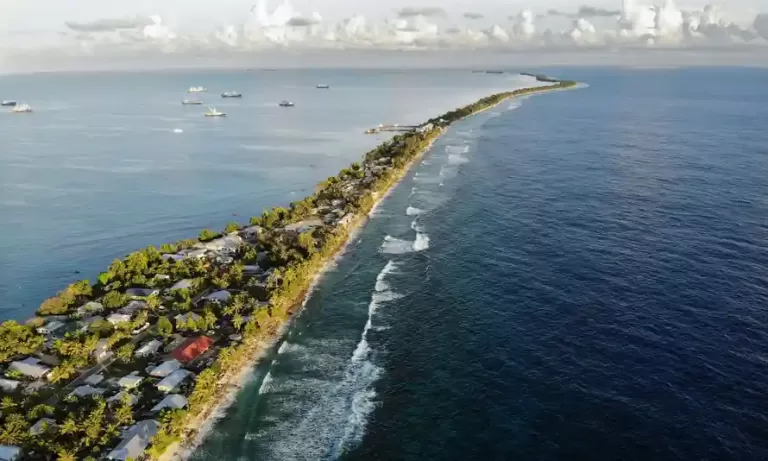
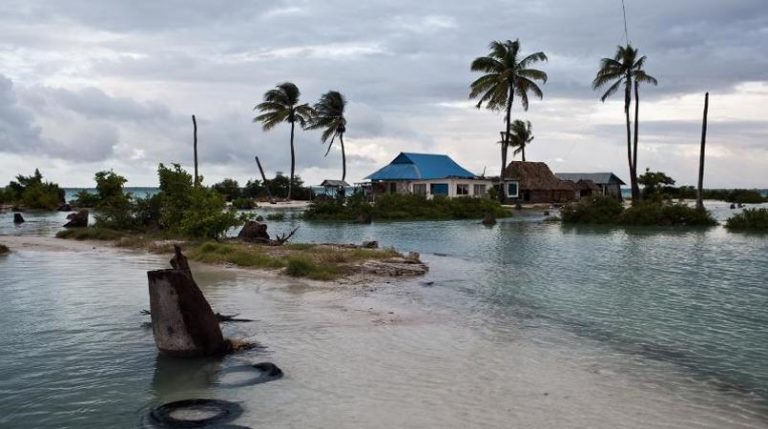
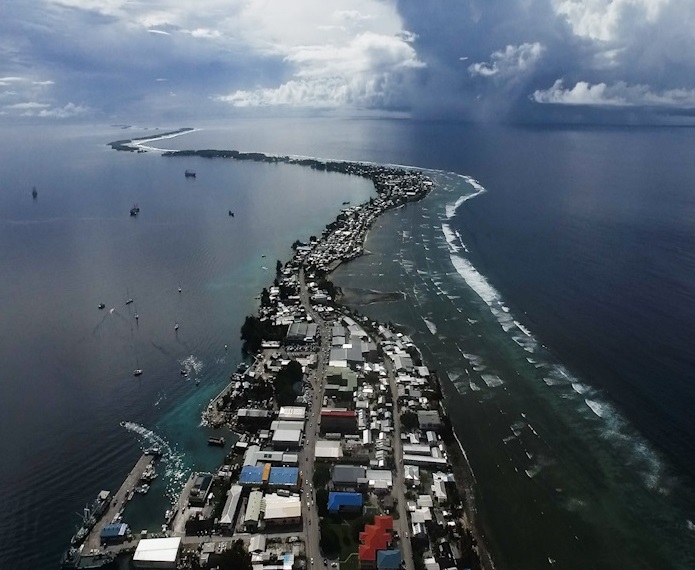
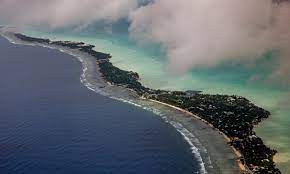
Some of the worst impacts will be in the Pacific. Particularly concerning for the region are some of the historical sea level rise analyses and projections in this new IPCC report.

In the western Pacific, sea levels rose faster than anywhere else in the world between 1993 and 2015, and by 2050 they will continue to rise by an additional 0.10–0.25 metres, irrespective of a reduction in greenhouse gas emissions. By 2100, Pacific communities will experience extreme coastal impacts unless the world takes strong action to reduce emissions now; one in 100-year coastal inundation events will occur annually (or more frequently) by 2100 at 20% more locations under a high-emission scenario.

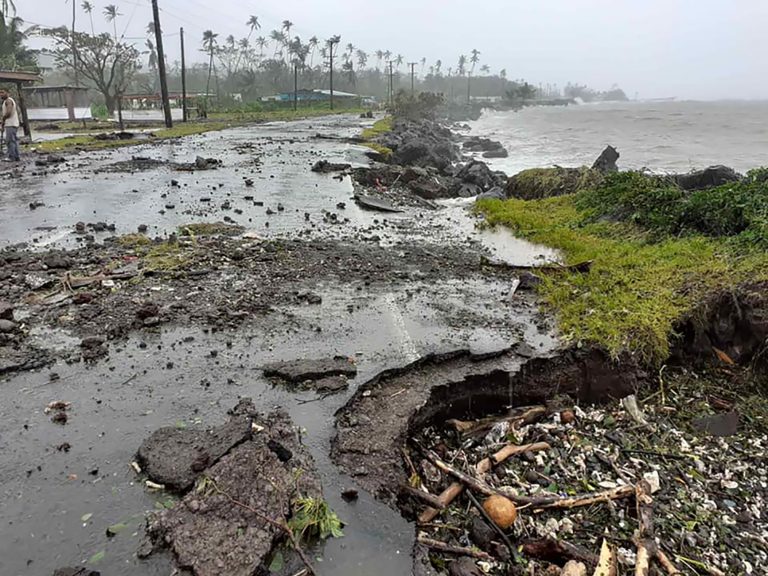
This impending sea level rise will create compound events with other climate factors. Although the Pacific is projected to generally face fewer cyclones under future warming, they are likely to become more intense. This, coupled with sea level rise, will worsen already deadly storm surge events in countries such as Fiji and Vanuatu.

Additionally, despite a projected increase in rainfall with future climate change in the equatorial Pacific, many locations will likely face greater water scarcity due to saltwater intrusion from rising seas and higher rates of potential evaporation due to increased temperatures. For example, a 20% decline in groundwater availability is projected by 2050 in the coral atoll islands of Federated States of Micronesia (FSM). Under a high sea level rise scenario, the availability of fresh groundwater in FSM could decline by more than half due to ocean water intrusion and drought events.

The report confirms that it is not possible to achieve the low level of warming aimed for in the Paris agreement unless we stop emitting high levels of greenhouse gas emissions, a point that has long been argued by Pacific peoples. This is because we now better understand and are more certain about how temperatures would increase based on a doubling of CO2 concentrations (a measure known as the equilibrium climate sensitivity). The range is now estimated to be 2.5°C–4.0°C, up from 1.5°C–4.5°C in previous IPCC reports. This means less chance of low temperature rises and more chance of high temperature rises for a given level of CO2.

If greenhouse gas emissions do not start to decline significantly before 2050, the world is extremely likely to exceed 2°C warming during the 21st century. To avoid the more extreme future climate scenarios detailed in the report requires serious emissions reductions. The emission scenarios that lead to lower levels of warming all require removing greenhouse gases from the atmosphere, as well as aggressive reduction of emissions. Declining emissions from the 2020s onwards and reaching net zero in the 2050s is the best-case scenario for keeping the planet below 1.5°C. Fortunately, there are many emerging opportunities to reduce greenhouse gas emissions. This includes transitioning to 100% renewable energy as rapidly as possible, decarbonising transport, reducing emissions from agriculture, and drawing down and storing atmospheric greenhouse gas emissions.

The findings from this IPCC report will be at the forefront of discussions at the forthcoming UN Climate Change Conference in Glasgow (COP26). Countries in the Pacific, along with other small island developing states, will lead the fight for a sub-1.5°C world by advocating for ambitious updates to all national commitments. They will do this by leading by example: setting the targets high and uniting under a common vision – a world in which we do not cross the line of 1.5°C in the next 10 years, or ever.

It is vital Australia and other non-Pacific nations join them.

Professor Mark Howden is a vice-chair of the Intergovernmental Panel on Climate Change and director of the Institute for Climate, Energy & Disaster Solutions at the Australian National University

Dr Morgan Wairiu, an expert in food security and climate change with the University of the South Pacific’s Pacific Centre for Environment and Sustainable Development (PaCE-SD)

SOURCE: THE GUARDIAN/PACNEWS

There’s no time left for empty promises says Pacific climate activist

The Pacific’s coral reef systems and coastal fisheries are set for extinction if wealthy nations don’t drastically and immediately cut greenhouse gas emissions.

An Intergovernmetal Panel on Climate Change report released Monday night pegs temperatures hitting as much as 3.9 degrees above industrial times, twice the 1.5 degree target.

Anything above 2 degrees is viewed as a death-knell in the Pacific.

A New Zealand climate scientist Professor James Renwick of Victoria University is one of the IPCC report’s lead authors and said it provides more certainty about our dire climate trajectory.

“1.5 degrees is likely to be reached and possibly exceeded within the next 20 years, between 2030 and 2040 let’s say, so the length of time we’ve got left to really take action to stop from the warming at something like 1.5 degrees or certainly below 2 degrees, is shorter than we were thinking,” he said.

Dr Renwick said immediate and drastic action needs to be taken to ensure a pathway to zero emissions by 2050 and to be half way there by 2030.

He said only then will we get close to the 1.5 degree target.

A senior adviser at the regional science agency, the Pacific Community’s Coral Pasisi, said it’s looking grim and the next 10 years are critical.

“All of the assessments done to date suggest that anything above 1.5 degree warming is going to be dire. And up until recently, even with the best commitments made by countries, within the next 10 years we’re likely to exceed the 2.5 degrees in warming.”

Pasisi said Pacific Community assessments on coastal fisheries and coral reef systems show warming above 1.5 degrees cuts by 80 percent the ability of those systems to maintain good health. She said a total collapse would be likely.

“We know that above 2 degrees, we are going to see 99 percent, up to 99 percent coral reef death rates which affect the whole ecosystem on which Pacific populations depend for their food security.”

Greenpeace Pacific’s Joseph Moeono-Kolio said the latest report indicates temperature rise is on a trajectory that could reach 3.9 degrees. He said despite ongoing warnings, emissions are getting worse and so are the prospects for the planet.

“If things don’t translate into actual implementable policies that are in line with the one-point-five target of the Paris Agreement, we’re actually headed towards warming of about 3.9 to 4 degrees which suffice to say would be absolutely catastrophic for the Pacific and the world at large,” Joseph Moeono-Kolio said.

He said the flooding in China and Europe, record temperatures across the northern hemisphere and wildfires raging out of control – is with a temperature rise at 1-point-1 degrees above pre-industrial times.

Joseph Moeono-Kolio said nations must commit to meaningful reductions at November’s global climate conference the COP26 in Glasgow.

“We need oil, gas and coal completely out of the electricity system by 2030 and then going net-zero by 2035 which places us at the best possible chance of reaching, of not superseding the 1.5 threshold.”

The Marshall Islands climate envoy Tina Stege agrees.

She said the droughts, worsening storms and rising seas should be a clarion call to the wealthiest 20 nations that produce 80 percent of greenhouse gas emissions.

“And of course targets alone aren’t enough. We need to see changes in the real economy, and governments making decisions that encourage markets to shift with the times. Two very obvious things that come to mind: phasing out fossil fuel subsidies and ending coal – steps that could drastically reduce emissions and enable a transition to a green economy.”

If the rhetoric is not met with political action, the world will remain on track for a temperature and sea-level rise that has not even been modelled.

For low-lying Pacific countries, it would likely mean their complete disappearance.

“There’s no time left for empty promises and world leaders need to work harder to cut emissions,” according to a Pacific climate change activists.

Brianna Fruean from the group Pacific Climate Warriors told Morning Report the findings were alarming but not unexpected and there’s no time left for inaction.

“We are past the time of our leaders saying “oh yep, this is existing, we aim to do this in in the far future, I think we don’t have time for that and we don’t have any space for those types of empty statements anymore.”

The IPCC report said deadly heatwaves, powerful hurricanes and other weather extremes happening now, are likely to become more severe.

SOURCE: RNZ PACIFIC/PACNEWS

UN report a “looming line in the sand for the Pacific”

The latest report from the United Nations’ Intergovernmental Panel on Climate Change has prompted one of the co-authors to warn that it represents a looming line in the sand for the Pacific.

Without further reductions in emissions before 2050, the IPCC’s vice chair, Professor Mark Howden, says the world is likely to exceed warming of two degrees Celsius before the end of the century.

The report suggests that will mean dramatic and devastating sea level rise, and fewer, but more intense cyclones across the Pacific islands.

But Professor Howden who is also the Director of the Institute for Climate, Energy and Disaster Solutions at the Australian National University, has told Pacific Beat the report also contains good news, in the sense that it explains very clearly what we need to do to avoid really problematic consequences for the Pacific.

“If we actually get our act together and go into one of the low emission pathways, then in fact things can be reversed. And so we might get a gentle increase in temperatures over the 1.5 mark, but then that starts to come back down.”

But in the meantime the IPCC report identifies the potential for what the scientists call compound impacts, when there are two separate types of changes in the climate system which when added together can make things worse, and these include cyclones.

For example Professor Howden says if you’ve actually got an increase in sea level, so the average sea level has gone up, damage to your coast is likely to increase and new risk of storm surge is also likely to increase, when a cyclone strikes.

“I think that’s part of the report; it’s actually starting to look at climate hazards as a set, rather than individually.”

The broad concern now of the scientists who compile the IPCC report, is that the targets on emissions reductions agreed in Paris six years ago may very soon be unachievable.

“That is a very real risk, that we won’t be able to stick with the Paris Agreement temperature goals,” said Professor Howden.

“And so we do acknowledge that in terms of the Pacific Islands, that’s a real part of the injustice that they feel in relation to this whole issue, that they’ve produced very few of the greenhouse gas emissions that are causing this problem, but they suffer the consequences.”

“And what this report does, I think, is it gives even more evidence and greater confidence for the argument that they’re likely to mount (at the UN climate talks) in Glasgow, for ramping up emissions reductions globally,” he said.

SOURCE: ABC/PACNEWS

Extinction of Small States is the price of inaction against Climate Change

Only rapid and drastic action against climate change can prevent a climate breakdown, according to the International Panel on Climate Change (IPCC) report released Monday.

Patricia Scotland, Secretary-General of the Commonwealth, stressed the urgency to heed this warning and act now to protect Commonwealth Small States.

“For over thirty years the Commonwealth has been raising the alarm on climate change, yet the window of opportunity for taking action to avoid irreversible consequences is now closing even more rapidly than scientists had previously predicted – and with it the prospects of safety and even survival for some of our Small and Vulnerable States. Jeopardising their continuing viability and sustainability would be too high a price to pay for failure to agree and implement urgent measures to prevent further damage,” said Secretary-General Scotland.

Commonwealth Small States comprise 32 of the Commonwealth’s 54 Member States spanning across 5 regions globally and their economies are subject to extreme volatility in the event of an external shock such as natural disasters. The increased frequency of climate disasters is threatening the progress of social and economic development in many Commonwealth Small States.

The IPCC data will inform climate negotiations ahead of the 26th UN Climate Change Conference of the Parties (COP26) in November. The report stresses that although many changes are irreversible, strong and sustained reductions in emissions of carbon dioxide (CO2) and other greenhouse gases can limit some of the worst impacts of climate change.

In the leadup to COP26, the Commonwealth Secretariat is building on the work of the Commonwealth Blue Charter, which works to protect our oceans and the Climate Finance Access Hub which aims to make sure that Commonwealth Small States can access the funds they need to tackle climate change.

Today, Secretary-General Scotland called on Commonwealth governments to act boldly and without delay, nationally and multilaterally:

“There has never been a greater need for cooperation and leadership among all nations, in the Commonwealth family and more broadly, to join together to deliver climate action. Only through urgent and decisive interventions with and for each other can we hope to create a safe and sustainable living planet for all people of this and future generations,” she said.

Media Contact
Commonwealth Spokesperson
Communications Division
Commonwealth Secretariat
Tel: +44 (0) 20 7747 6386
Email: media@commonwealth.int

SOURCE: COMSEC/PACNEWS

IPCC report: ‘Code red’ for human driven global heating, warns UN chief

Climate change is widespread, rapid, and intensifying, and some trends are now irreversible, at least during the present time frame, according to the latest much-anticipated Intergovernmental Panel on Climate Change (IPCC) report, released on Monday.

Human-induced climate change is already affecting many weather and climate extremes in every region across the globe. Scientists are also observing changes across the whole of Earth’s climate system; in the atmosphere, in the oceans, ice floes, and on land.

Many of these changes are unprecedented, and some of the shifts are in motion now, while some – such as continued sea level rise – are already ‘irreversible’ for centuries to millennia, ahead, the report warns.

But there is still time to limit climate change, IPCC experts say. Strong and sustained reductions in emissions of carbon dioxide (CO2) and other greenhouse gases, could quickly make air quality better, and in 20 to 30 years global temperatures could stabilise.

The UN Secretary-General António Guterres said the Working Group’s report was nothing less than “a code red for humanity. The alarm bells are deafening, and the evidence is irrefutable”.

He noted that the internationally-agreed threshold of 1.5 degrees above pre-industrial levels of global heating was “perilously close. We are at imminent risk of hitting 1.5 degrees in the near term. The only way to prevent exceeding this threshold, is by urgently stepping up our efforts, and persuing the most ambitious path.

“We must act decisively now, to keep 1.5 alive.”

The UN chief in a detailed reaction to the report, said that solutions were clear. “Inclusive and green economies, prosperity, cleaner air and better health are possible for all, if we respond to this crisis with solidarity and courage”, he said.

He added that ahead of the crucial COP26 climate conference in Glasgow in November, all nations – especiall the advanced G20 economies – needed to join the net zero emissions coaltion, and reinforce their promises on slowing down and reversing global heating, “with credible, concrete, and enhanced Nationally Determined Contributions (NDCs)” that lay out detailed steps.

The report, prepared by 234 scientists from 66 countries, highlights that human influence has warmed the climate at a rate that is unprecedented in at least the last 2,000 years.

In 2019, atmospheric CO2 concentrations were higher than at any time in at least 2 million years, and concentrations of methane and nitrous oxide were higher than at any time in the last 800,000 years.

Global surface temperature has increased faster since 1970 than in any other 50-year period over a least the last 2,000 years. For example, temperatures during the most recent decade (2011–2020) exceed those of the most recent multi-century warm period, around 6,500 years ago, the report indicates.

Meanwhile, global mean sea level has risen faster since 1900, than over any preceding century in at least the last 3,000 years.

The document shows that emissions of greenhouse gases from human activities are responsible for approximately 1.1°C of warming between 1850-1900, and finds that averaged over the next 20 years, global temperature is expected to reach or exceed 1.5°C of heating.

The IPCC scientists warn global warming of 2°C will be exceeded during the 21st century. Unless rapid and deep reductions in CO2 and other greenhouse gas emissions occur in the coming decades, achieving the goals of the 2015 Paris Agreement “will be beyond reach”.

The assessment is based on improved data on historical warming, as well as progress in scientific understanding of the response of the climate system to human-caused emissions.

“It has been clear for decades that the Earth’s climate is changing, and the role of human influence on the climate system is undisputed,” said IPCC Working Group I Co-Chair, Valérie Masson-Delmotte. “Yet the new report also reflects major advances in the science of attribution – understanding the role of climate change in intensifying specific weather and climate events”.

The experts reveal that human activities affect all major climate system components, with some responding over decades and others over centuries.

Scientists also point out that evidence of observed changes in extremes such as heatwaves, heavy precipitation, droughts, and tropical cyclones, and their attribution to human influence, has strengthened.

They add that many changes in the climate system become larger in direct relation to increasing global warming.

This includes increases in the frequency and intensity of heat extremes, marine heatwaves, and heavy precipitation; agricultural and ecological droughts in some regions; the proportion of intense tropical cyclones; as well as reductions in Arctic sea ice, snow cover and permafrost.

The report makes clear that while natural drivers will modulate human-caused changes, especially at regional levels and in the near term, they will have little effect on long-term global warming.

The IPCC experts project that in the coming decades climate changes will increase in all regions. For 1.5°C of global warming, there will be increasing heat waves, longer warm seasons and shorter cold seasons.

At 2°C of global warming, heat extremes are more likely to reach critical tolerance thresholds for agriculture and health.

But it won’t be just about temperature. For example, climate change is intensifying the natural production of water – the water cycle. This brings more intense rainfall and associated flooding, as well as more intense drought in many regions.

It is also affecting rainfall patterns. In high latitudes, precipitation is likely to increase, while it is projected to decrease over large parts of the subtropics. Changes to monsoon rain patterns are expected, which will vary by region, the report warns.

Moreover, coastal areas will see continued sea level rise throughout the 21st century, contributing to more frequent and severe coastal flooding in low-lying areas and coastal erosion.

Extreme sea level events that previously occurred once in 100 years could happen every year by the end of this century.

The report also indicates that further warming will amplify permafrost thawing, and the loss of seasonal snow cover, melting of glaciers and ice sheets, and loss of summer Arctic sea ice.

Changes to the ocean, including warming, more frequent marine heatwaves, ocean acidification, and reduced oxygen levels, affect both ocean ecosystems and the people that rely on them, and they will continue throughout at least the rest of this century.

Experts warn that for cities, some aspects of climate change may be magnified, including heat, flooding from heavy precipitation events and sea level rise in coastal cities.

Furthermore, IPCC scientists caution that low-likelihood outcomes, such as ice sheet collapse or abrupt ocean circulation changes, cannot be ruled out.

“Stabilising the climate will require strong, rapid, and sustained reductions in greenhouse gas emissions, and reaching net zero CO2 emissions. Limiting other greenhouse gases and air pollutants, especially methane, could have benefits both for health and the climate,” highlights IPCC Working Group I Co-Chair Panmao Zhai.

The report explains that from a physical science perspective, limiting human-induced global warming to a specific level requires limiting cumulative carbon dioxide emissions, reaching at least net zero CO2 emissions, along with strong reductions in other greenhouse gas emissions.

“Strong, rapid and sustained reductions in methane emissions would also limit the warming effect resulting from declining aerosol pollution”, IPCC scientists underscore.

Multiple, recent climate disasters including devastating flooding in central China and western Europe have focused public attention as never before, suggested Inger Andersen, Executive Director of the UN Environment Programme (UNEP).

“As citizens and as businesses and as governments, we are well aware of the drama,” she said “The drama exists, we have seen it and we heard about it in every news bulletin. And that’s what we need to understand, that the expression of what the science says is exhibited before our very eyes, and of course what this excellent report does is, it projects those scenarios outward, and tells us, if we do not take action, what could be the potential outcomes, or if we do take action, what will be a very good outcome.”

Apart from the urgent need for climate mitigation, “it is essential to pay attention to climate adaptation”, said the WMO chief, Peteri Taalas, “since the negative trend in climate will continue for decades and in some cases for thousands of years.

“One powerful way to adapt is to invest in early warning, climate and water services”, he said.”Only half of the 193 members of WMO have such services in place, which means more human and economic losses. We have also severe gaps in weather and hydrological observing networks in Africa, some parts of Latin America and in Pacific and Caribbean island states, which has a major negative impact on the accuracy of weather forecasts in those areas, but also worldwide.

“The message of the IPCC report is crystal clear: we have to raise the ambition level of mitigation.”

The Intergovernmental Panel on Climate Change (IPCC) is the UN body for assessing the science related to climate change. It was established by the United Nations Environment Programme (UNEP) and the World Meteorological Organisation (WMO) in 1988 to provide political leaders with periodic scientific assessments concerning climate change, its implications and risks, as well as to put forward adaptation and mitigation strategies.

In the same year the UN General Assembly endorsed the action by the WMO and UNEP in jointly establishing the IPCC. It has 195 member states.

Thousands of people from all over the world contribute to the work of the IPCC. For the assessment reports, IPCC scientists volunteer their time to assess the thousands of scientific papers published each year to provide a comprehensive summary of what is known about the drivers of climate change, its impacts and future risks, and how adaptation and mitigation can reduce those risks.

SOURCE: UN NEWS CENTRE/PACNEWS

IPCC report shows ‘possible loss of entire countries within the century’

Global heating above 1.5C will be “catastrophic” for Pacific island nations and could lead to the loss of entire countries due to sea level rise within the century, experts have warned.

The Pacific has long been seen as the “canary in the coalmine” for the climate crisis, as the region has suffered from king tides, catastrophic cyclones, increasing salinity in water tables making growing crops impossible, sustained droughts, and the loss of low-lying islands to sea level rise. These crises are expected to increase in frequency and severity as the world heats.

The warnings come as the Intergovernmental Panel on Climate Change (IPCC) published its landmark report on global heating on Monday, which showed that greenhouse gas emissions needed to be halved to limit heating to 1.5C above pre-industrial levels – a target that was included in the Paris Agreement only after sustained lobbying by Pacific island leaders.

“The [IPCC] report is very alarming,” Satyendra Prasad, Fiji’s Ambassador and permanent representative to United Nations, said. “It comes out exceeding where we all thought the estimates were … it brings forward some of the catastrophic scenarios that we have been thinking about in the Pacific of sea level rise, loss of low-lying lands, and possible loss of entire countries within the century. The timelines for these things will certainly be brought much closer.”

The IPCC report presented five scenarios based on varying levels of CO2 and other greenhouse gas emissions. Under the high and very high emissions scenarios outlined in the report, global heating is predicted to reach 3.6C and 4.4C above pre-industrial levels respectively, by the end of the century. Even in the intermediate scenario global warming of 2C would be extremely likely to be exceeded.

The report found that every additional 0.5C of global warming causes clearly discernible increases in the intensity and frequency of heatwaves, heavy rainfall, droughts and extreme weather events.

Ambassador Prasad said the impact of global heating had been felt across the Pacific for years.

“Catastrophic floods and storms have been occurring with considerable frequency: once in 50- to 100-year events have been happening every 10 years. Immediately one can conjecture that catastrophic cyclones, super cyclones, prolonged drought, will become much more frequent and much more intense across the Pacific small islands,” he said.

A new report by Greenpeace Australia Pacific has highlighted the stark climate injustice faced by the Pacific region, which is one of the lowest carbon-emitting regions in the world, responsible for just 0.23% of global emissions, yet has suffered some of the earliest and most severe impacts of rising global temperatures.

“If we look at what those impacts are, probably more than anywhere else, the Pacific is most hit,” said Dr Nikola Casule, head of research and investigations at Greenpeace Australia Pacific.

“We’re going to see more salinity, we’re going to see sea level rise … [that] would mean that significant parts of places like Kiribati, Vanuatu, Solomon Islands, just become uninhabitable.”

Joseph Sikulu, Pacific managing director of climate activist group 350.org, said that the IPCC report was “very sobering and alarming, but it’s not unexpected. You could tell already from the lack of leadership and ambition there has been globally on climate change, this was the direction we were heading in.”

Sikulu said the alarming reality warned of in the IPCC report, and the devastating real-world examples of the climate crisis playing out around the world – wildfires in the US, heatwaves in Canada, fires in Siberia, Turkey, and Greece, floods in China – are things that the Pacific has been warning about for years.

“That’s what we have been talking about for decades, because the climate crisis was at our doorstep long before it reached everybody else,” he said.

“The Pacific has always been viewed as the canary in the coalmine, signalling this crisis. Our reality has been used to highlight the climate crisis for decades … The conversation is shifting, everybody is now understanding the reality of the climate crisis, that’s why it’s import to centre frontline communities more than ever,” said Sikulu.

SOURCE: THE GUARDIAN/PACNEWS

UK calls for greater global ambition as UN finds world warming faster than previously estimated

The United Kingdom is calling for urgent global action in response to a UN report published today on the science of climate change, that says the planet has warmed more than previously estimated.

This latest report published by the Intergovernmental Panel on Climate Change (IPCC) is a stark warning from scientists around the world that human activity is damaging the planet at an alarming rate.

The report warns that climate change is already affecting every region across the globe and that without urgent action to limit warming, heatwaves, heavy precipitation, droughts, and loss of Arctic Sea ice, snow cover and permafrost, will all increase while carbon sinks will become less effective at slowing the growth of carbon dioxide in the atmosphere.

The report highlights that cutting global emissions, starting immediately, to net zero by mid-century would give a good chance of limiting global warming to 1.5C in the long-term and help to avoid the worst effects of climate change.

The Prime Minister Boris Johnson said:

“Today’s report makes for sobering reading, and it is clear that the next decade is going to be pivotal to securing the future of our planet. We know what must be done to limit global warming – consign coal to history and shift to clean energy sources, protect nature and provide climate finance for countries on the frontline.

“The UK is leading the way, decarbonising our economy faster than any country in the G20 over the last two decades. I hope today’s IPCC report will be a wake-up call for the world to take action now, before we meet in Glasgow in November for the critical COP26 summit.”

As extreme events are felt across the globe, from wildfires in North America to floods in China, across Europe, India and parts of Africa, and heatwaves in Siberia, COP President Alok Sharma has been negotiating with governments and businesses to increase global climate ambition and take immediate action to help halve global emissions in the next decade and reach net zero emissions by mid-century in order to keep the 1.5C goal set out in the Paris Agreement within reach.

The UK is already showing leadership with clear plans to reduce its emissions by 68% by 2030 and 78% by 2035, leading to net zero by 2050. Today, more than 70% of the world’s economy is now covered by a net zero target – up from 30% when the UK took over as incoming COP Presidency. May saw the establishment of the first net zero G7, with all countries coming forward with 2030 emission reduction targets that put them on a pathway to reaching this goal by 2050. However, today’s report shows that more action is urgently needed.

Some progress has been made since the Paris Agreement was signed in 2015. More than 85 new or updated Nationally Determined Contributions (NDCs) to 2030, representing over 110 parties, have been submitted to set out how countries will cut their emissions and address the climate crisis.

In a meeting with scientists Monday Alok Sharma encouraged countries that have not already done so, to urgently submit new or updated NDCs with their plans for ambitious climate action ahead of the vital COP26 summit later this year in Glasgow, particularly all major economies of the G20 who are responsible for over 80% of global emissions.

In response to the report, Sharma said:

“The science is clear, the impacts of the climate crisis can be seen around the world and if we don’t act now, we will continue to see the worst effects impact lives, livelihoods and natural habitats.

“Our message to every country, government, business and part of society is simple. The next decade is decisive, follow the science and embrace your responsibility to keep the goal of 1.5C alive.

“We can do this together, by coming forward with ambitious 2030 emission reduction targets and long-term strategies with a pathway to net zero by the middle of the century, and taking action now to end coal power, accelerate the roll out of electric vehicles, tackle deforestation and reduce methane emissions.”

UK International Champion on Adaptation and Resilience for the COP26 Presidency Anne-Marie Trevelyan said:

“The impacts of climate change are already affecting lives and livelihoods around the world, with increasing frequency and severity. Alongside the need to drive down emissions, this report rings the alarm to urgently help vulnerable communities adapt and build resilience – in developed and developing countries alike.

“Protecting the most vulnerable is a priority for the UK’s COP26 Presidency. World leaders must heed the science and work together to adapt to our changing climate, as well as act to avert, minimise and address loss and damage for those on the frontline.” .

SOURCE: UK GOVT/PACNEWS

Fiji records 603 new cases of COVID-19 and 18 new deaths reported

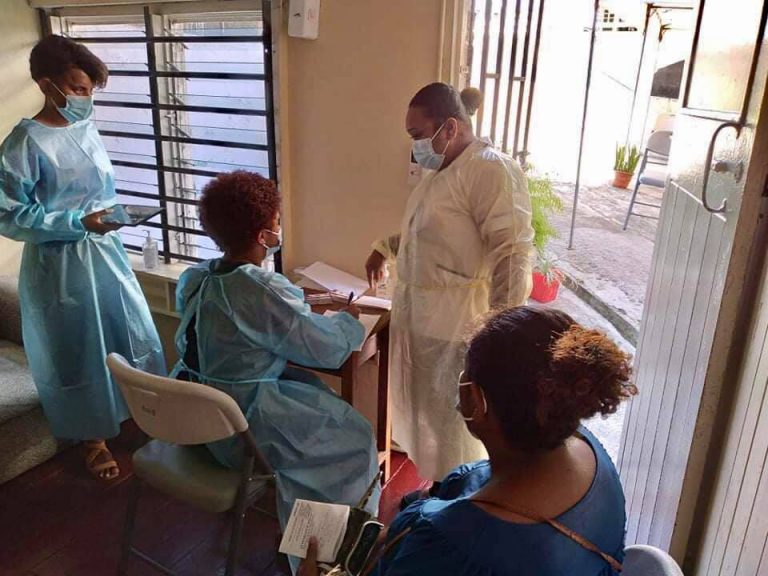
Fiji has recorded 603 new cases of COVID-19 and 18 new deaths Monday, increasing the total number of cases to 37,512 and 315 deaths in the island nation since the outbreak that started in April.

Permanent secretary for Health, Dr James Fong said 223 cases are from the Western division and 380 cases are from the Central division, in Vitilevu, Fiji’s main island.

“There have been 293 new recoveries reported since the last update, which means that there are now 24,420 active cases. 19,088 active cases are in the Central Division and 5,332 in the West.

“There have been 37,512 cases during the outbreak that started in April 2021. We have recorded a total of 37, 582 cases in Fiji since the first case was reported in March 2020, with 12,677 recoveries,” Dr Fong said.

Dr Fong said the 18 new COVID-19 deaths reported for the period of 04 – 09 August.

He said 12 deaths were reported from the Western division and seven deaths were reported from the Central division.

“The first COVID-19 death to report is an 83-year-old man from Lautoka. He presented to the Lautoka hospital in severe respiratory distress. He died four days after admission to the hospital on 06/08/2021. He was not vaccinated.

“The second COVID-19 death to report is a 79-year-old woman from Sigatoka. She was declared dead on arrival by the attending medical officer at the Sigatoka Sub-Divisional Hospital on 06/08/2021. This means that she died at home or on her way to the hospital. She was not vaccinated.

“The third COVID-19 death to report is an 86-year-old man from Sigatoka. He was declared dead on arrival by the attending medical officer at the Sigatoka Sub-Divisional Hospital on 05/08/2021. This means that he died at home or on his way to the hospital. He was not vaccinated.

“The fourth COVID-19 death to report is a 70-year-old man from Nadi. He presented to a medical facility in severe respiratory distress. His condition worsened in the medical facility and he died on the same day (07/08/2021). He was not vaccinated.

“The fifth COVID-19 death to report is a 75-year-old man from Lautoka. He was declared dead on arrival by the attending medical officer at the Lautoka Hospital on 06/08/2021. This means that he died at home or on his way to the hospital. He was not vaccinated.

“The sixth COVID-19 death to report is an 83-year-old woman from Lautoka. She was declared dead on arrival by the attending medical officer at the Lautoka Hospital on 06/08/2021. This means that she died at home or on her way to the hospital. She was not vaccinated.

“The seventh COVID-19 death to report is an 80-year-old man from Lautoka. He was declared dead on arrival by the attending medical officer at the Lautoka Hospital on 06/08/2021. This means that he died at home or on his way to the hospital. He was not vaccinated.

“The eighth COVID-19 death to report is an 88-year-old man from Ba. He presented to the Ba Mission Hospital in respiratory distress. He died two days after admission at the hospital on 07/08/2021. He was not vaccinated.

“The ninth COVID-19 death to report is a 49-year-old man from Nadi. He was declared dead on arrival by the attending medical officer at the Nadi Hospital on 08/08/2021. This means that he died at home or on his way to the hospital. He was not vaccinated.

“The tenth COVID-19 death to report is a 37-year-old woman from Nadi. She presented to Nadi hospital in severe respiratory distress. She was reported to have had symptoms of cough and shortness of breath for 5 days, and she had recently given birth. A medical team retrieved her and brought her to the Lautoka Hospital. She died five days after admission to the hospital on 07/08/2021. She was not vaccinated.

“The eleventh COVID-19 death to report is a 48-year-old man from Lautoka. He presented to the Lautoka Hospital in severe respiratory distress. He died two days after admission on 08/08/2021. He was not vaccinated.

“The twelfth COVID-19 death to report is a 60-year-old woman from Dawasamu. She presented to a medical facility in severe respiratory distress. She died on the same day at the medical facility (06/08/2021). She was not vaccinated.

The thirteenth COVID-19 death to report is a 63-year-old man from Nakasi who died at home on 07/08/2021. He was not vaccinated.
“The fourteenth COVID-19 death to report is a 70-year-old woman from Nakasi. She presented to the CWM Hospital in severe respiratory distress. She died 5 days after admission on 08/08/2021. She was not vaccinated.

“The fifteenth COVID-19 death to report is a 68-year-old man from Nasinu who died at home on 09/08/2021. He was not vaccinated.

“The sixteenth COVID-19 death to report is a 72-year-old woman from Nausori who died at home on 07/08/2021. She was not vaccinated.

“The seventeenth COVID-19 death to report is an 88-year-old woman from Naitasiri who died at home on 08/08/2021. She was not vaccinated.

“The eighteenth COVID-19 death to report is an 81-year-old woman from Naitasiri who died at home on 08/08/2021. She was not vaccinated,” said Dr Fong.

He said there have been 10 more deaths of COVID-19 positive patients.

“However, these deaths have been classified as non-COVID deaths by their doctors. Doctors have determined that their deaths were caused by serious pre-existing medical conditions and not COVID-19.

“There have now been 317 deaths due to COVID-19 in Fiji, with 315 of these deaths during the outbreak that started in April this year. The 7-day rolling average of COVID-19 deaths per day is 7.

“We also have recorded 168 COVID-19 positive patients who died from the serious medical conditions that they had before they contracted COVID-19; these are not classified as COVID-19 deaths,” Dr Fong said.

He said there are currently 289 COVID-19 patients admitted to the hospitals in Fiji.

“58 patients are admitted to the Lautoka Hospital, 68 patients are admitted at the FEMAT field hospital, and 163 were admitted at CWM hospital, St Giles, and Makoi. 66 patients are considered to be in severe condition, and 6 are in critical condition,” he said.

Dr Fong said the 7-day daily test average is 2795 tests per day or 3.2 tests per 1,000 population.

“The national 7-day average daily test positivity is 34.1 %.

“The 7-day average of new cases per day is 867 cases per day or 980 cases per million population per day.

“Daily cases numbers remain high, and daily test positivity remains high, indicating ongoing widespread community transmission in the Suva-Nausori containment zone. Cases are also increasing in the West with evidence of widespread community transmission in that division. We are also recording increasing numbers of people with severe disease and deaths in the West,” he said.

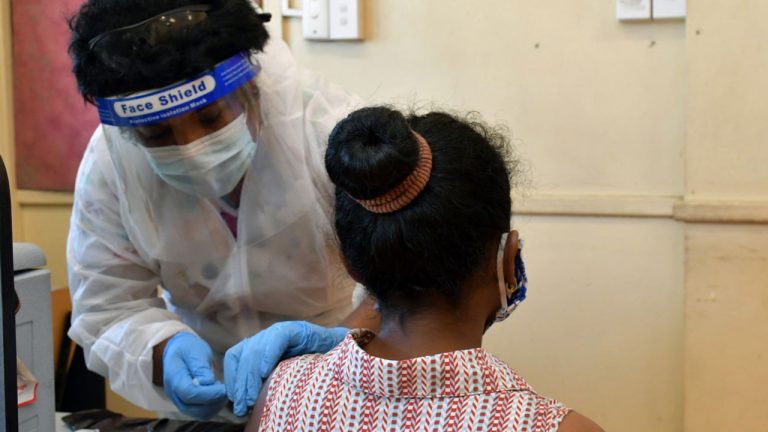
As of 08 August 512, 282 adults in Fiji have received their first dose of the vaccine and 178,606 have received their second doses. This means that 87.3% of the target population have received at least one dose and 30.4% are now fully vaccinated nationwide.

SOURCE: PACNEWS

UK to relax Covid-19 restrictions for Cop26 climate conference

The UK government is planning to relax key Covid-19 restrictions for delegates to the UN Cop26 climate conference to be held in Glasgow for two weeks this November.

Delegates from 196 countries are expected to attend the talks, viewed as one of the last chances for the world to agree limits on greenhouse gas emissions that would avoid the worst ravages of climate breakdown.

The government has offered vaccines to countries coming to the talks, to enable all delegates to be fully vaccinated before the event. However, officials were unable to say how many had taken up the offer.

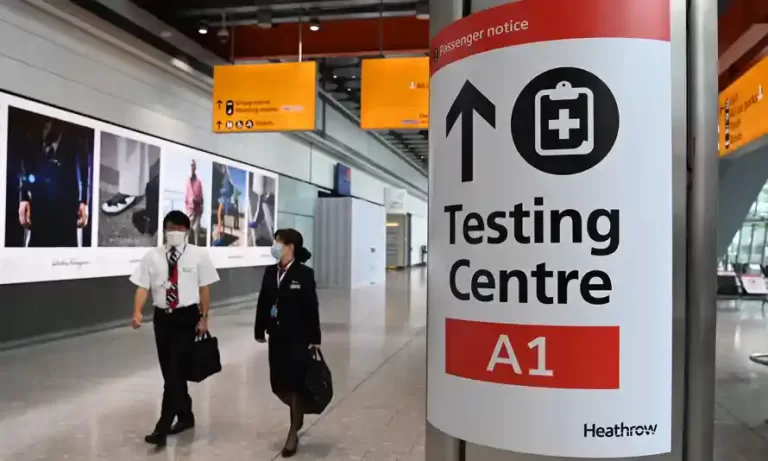
Those who are fully vaccinated and from red list countries will have to self-isolate for five days in hotels on arrival, and for 10 days if they are unvaccinated. Most attendees are expected to arrive through London.

All vaccines – most of which require two doses to give full protection – will be recognised by the government for the purposes of the event. Attendees will also be tested frequently throughout the event, but additional booster vaccines will not be required.

There will be no requirement for Cop26 attendees coming from amber or green list countries to self-isolate on arrival in the UK whether vaccinated or not, officials said.

As many as 30,000 were originally expected at the talks, which were set to take place last November, but had to be postponed by a year owing to the Covid-19 pandemic. Only about 20,000 are now expected at what will be the biggest diplomatic meeting on UK soil since the second world war, and the biggest UK-hosted public event since the 2012 Olympics.

Scientists warned on Monday, in a landmark report, that extreme weather caused by human actions was now widespread across the world and would get much worse unless countries take drastic action to cut emissions now. At Cop26, regarded as the most important climate talks since the Paris agreement was signed in 2015, countries will be asked to come forward with new commitments to reduce their carbon output in line with scientific advice.

The government has been determined to ensure a physical event rather than a virtual one, a stance praised by veterans of the UN talks, who said forging an international deal would be impossible without face-to-face negotiations.

Alok Sharma, the UK minister in charge of the talks, was heavily criticised in the Daily Mail and other media last Friday for flying round the world to meet other governments, racking up air miles and visiting red list countries without quarantine on his return, under exemptions approved by the government. However, Cop26 experts and green campaigners defended his actions, saying the trips were necessary to gain the trust and forge the relationships necessary for a successful outcome to the crucial talks.

Some of the preliminary negotiations for Cop26 have taken place online, but many countries were reluctant to commit to formal decisions without in-person talks.

Cop26 will open officially on Sunday 31 October, a day earlier than first planned, though world leaders will not arrive until Monday and Tuesday. The conference will continue for two weeks of intense negotiations, ending officially at 6pm on Friday 12 November, although based on previous years it is likely the talks will overrun by a day or more.

Many developing countries are likely to send only small delegations of a few people, but for larger countries such as the U.S, China and Europe, the delegations could run to more than 100 people. As well as the country delegates, representatives from business, the media, and civil society organisations around the world will be expected to take part.

In previous years, a few developing countries have registered large numbers of delegates who played no role in the proceedings. It is understood the UN will oversee the process to try to ensure there is no abuse, and any delegates found not to be involved will be judged to have invalidated their visas

SOURCE: THE GUARDIAN/PACNEWS

No signs of Delta mutation in Fiji

Fiji’s Health Ministry says it is aware that there may be a need for booster shots of COVID-19 vaccines if the Delta strain were to mutate.

Delta has been identified as highly transmissible, however, tests overseas have confirmed that the AstraZeneca vaccine is highly effective against the strain.

Head of Vaccination Taskforce, Doctor Rachel Devi said as of now, local authorities do not expect any variants to emerge.

“When and if that happens, definitely we’d need to look into booster doses. Science will eventually tell us when those booster doses come into play.”

Scientists around the world are on the lookout for any changes in the Delta strain which has gripped Viti Levu for close to four months.

The Delta strain is now in 65 other countries including the U.S, the UK and Africa and Asia – crippling health services in a new wave of the pandemic.

Fiji’s high vaccination rate is seen as a buffer against any possible variant emerging locally.

Close to 90 percent of the population has received the first dose and just over 30% are fully vaccinated.

SOURCE: FBC NEWS/PACNEWS

Stay connected

529FansLike
172FollowersFollow
156SubscribersSubscribe
- Advertisement -