Home Blog Page 1150

Trade and transportation key agenda items for Micronesian leaders’ summit

The leaders of Micronesia are holding their annual summit in Nauru, with the dominant subject to be trade and transportation.

This comes amid plans by all five members, Nauru, the Federated States of Micronesia, the Marshall Islands, Palau and Kiribati to leave the Pacific Forum.

This subject is on the agenda but the Nauru president, Lionel Aingimea urged frank and candid dialogue on the theme of “Sustainable Transportation and Trade through the Micronesian Region.”

He said it is vital under the circumstance of Covid-19, and is also “far-reaching, presenting an opportunity for our sub-region to work collectively and in collaboration to promote prosperity through economic development, peace, and security.”

Aingimea said the Micronesia region faces an “environment overwrought with challenges, prevalent and emerging, including Covid-19, climate change, food security, high transportation costs, intrusive geo-politics, security issues and of course our imminent withdrawal from the Pacific Islands Forum Secretariat.”

“Against this backdrop, we as leaders are duty-bound to navigate and guide our island nations towards a path of resilience and sustainability for future generations,” Aingimea said.

SOURCE: RNZ PACIFIC/PACNEWS

Fiji records 290 new cases of COVID-19, eight new deaths reported

Fiji has recorded 290 new cases of COVID-19 and eight new deaths Wednesday, increasing the total number of cases in the island nation to 46,936 and 502 deaths since the outbreak in April.

Permanent Secretary for Health, Dr James Fong said 128 cases are from the Western division, 137 cases are from the Central division in Vitilevu, Fiji’s main island and 25 cases are from the Eastern division on the island of Kadavu.

“There are 25 new COVID-19 positive cases in Kadavu. This means there are now 257 active cases of COVID-19 in Kadavu. All these individuals have been isolated.

“There have been 2,306 new recoveries to report since the last update, which means that there are now 17,124 active cases. 6,182 active cases are in the Central division, 10,680 active cases in the Western division, five active cases in the Northern division (Nabouwalu and Macuata) and 257 active cases in the Eastern Division (all in Kadavu).

“There have been 46,936 cases during the outbreak that started in April 2021. We have recorded a total of 47,006 cases in Fiji since the first case was reported in March 2020, with 29,067 recoveries,” Dr Fong explained.

He said the eight new COVID-19 deaths reported from 27 August- 01 September 2021. Seven deaths were reported from the Western division and one death was reported from the Central division.

“There have been three more deaths of COVID-19 positive patients. However, these deaths have been classified as non-COVID deaths by their doctors. The doctors have determined that these deaths were caused by a serious pre-existing medical condition and not COVID-19.

“There have now been 504 deaths due to COVID-19 in Fiji, with 502 of these deaths during the outbreak that started in April this year. As of 27 August the national 7 day rolling average of COVID-19 deaths per day is six. The 7-day rolling average for COVID-19 deaths per day in the Central division is two and in the Western division is four.

“We also have recorded 311 COVID-19 positive patients who died from the serious medical conditions that they had before they contracted COVID-19; these are not classified as COVID-19 deaths,” Dr Fong said.

He said there are currently 241 COVID-19 patients admitted to hospitals in Fiji.

“106 patients are admitted at the Lautoka Hospital, 18 patients are admitted at the FEMAT field hospital, and 117 admitted at CWM hospital, St Giles, and Makoi.

“15 patients are considered to be in severe condition, and 14 are in critical condition,” Dr Fong said.

He said a total of 333,386 samples have been tested since this outbreak started in April 2021, with 376,247 tested since testing began in March 2020.

“1435 tests have been reported for 31 August. The 7-day daily test average is 1384 tests per day or 1.6 tests per 1,000 population. Weekly testing is at 8.8 tests per 1000 population, which remains above the WHO recommended level of 4 per 1000 population per week.

“The national 7-day average daily test positivity is 23.9 percent, which is on a downward trend but still indicating a high level of community transmission,” Dr Fong explained.

As of 31 August, 560,336 adults in Fiji have received their first dose of the vaccine and 275,072 have received their second doses.

“This means that 95.9 percent of the target population have received at least one dose and 47.6 percent are now fully vaccinated nationwide,” Dr Fong said.

SOURCE: PACNEWS

Fiji Immigration appoints first female director

0

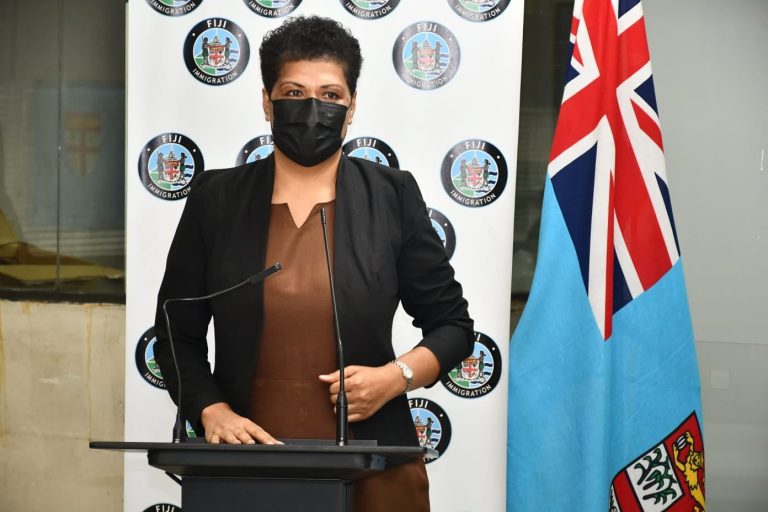
The Fijian Immigration department has announced the appointment of its new director, Amelia Kotobalavu Komaisavai with effect from 13 September 2021.

Komaisavai’s appointment was confirmed after a series of selection processes under the Open Merit Recruitment and Selection (OMRS) guideline.

Prior to this appointment as the new director, Komaisavai served as the Chief Policy and Research Officer at the Office of the Prime Minister before her appointment as the Acting Director for the Fijian Immigration department in August 2020.

In congratulating the new Director for the Fijian Immigration department, Permanent Secretary, Office of the Prime Minister, Immigration and Sugar Industry, Yogesh Karan said the appointment could not have come at a better time with the advancement of the Fijian Immigration department’s Information Communication and Technological (ICT) Infrastructure.

Karan further stated that the appointment of the new director is imperative given the recent upgrade of ICT infrastructure and implementation of emerging technologies which includes support towards online processing and assessment of all Immigration services.

“Komaisavai is no stranger to the position, as the former Acting director of the department, she has performed exceptionally well in the recruitment selection process ahead of the many potential candidates that vied for this position. I am confident that she will continue to lead the Department in its transition to e-platform and digitisation amidst the current COVID-19 pandemic,” he said.

Karan said that he is confident that the newly appointed director will ensure that the Fijian Immigration Department fully supports the Fijian Government’s commitment to ‘An inclusive, safe, secure, stable and prosperous Fiji’ through the comprehensive development of the Border Security and Immigration Service. In addition, Karan also stated that Komaisavai possesses a wealth of experience and skills which will, no doubt, further enhance the overall operations of the Department.

Komaisavai holds a certificate in Professional Diploma in Business, a Bachelor of Arts and a Master’s in Business Administration from the University of the South Pacific.

The Prime Minister and Minister for Immigration, Voreqe Bainimarama also welcomed Komaisavai’s appointment and congratulated her for being appointed as the first female Director of the Department.

SOURCE: FIJI GOVT/PACNEWS

Fijian Drua’s 37 strong squad set to hit the training track in November

0

The Fijian Drua hope to be on the training track in early November, as the countdown begins to their debut season in the revamped Super Rugby Pacific competition.

The first squad announcements are expected within a couple of weeks, along with the name of the coach who will lead the new franchise into battle next February.

But with confirmation of the Drua’s licence coming two months after the original deadline for compliance, Brian Thorburn, the Fiji Rugby Union’s General Manager Commercial, says they have missed out on some of their player targets because of the delay.

“There are some players who had to make decisions on contracts elsewhere,” Thorburn told Pacific Beat.

“But having said that we are really excited by the guys we’ve got, Fiji has such an enormous talent pool…we’re really confident that we’re going to be able to field a competitive team and bring some flair, high octane speed and excitement to the competition.”

Thorburn says details of the backroom team will also be made public soon, and the intention remains to run the Drua as an independent operation.

“Although the FRU will be a major shareholder, and they’ll be really influential and supportive, we’ll have a separate management structure.”

World Rugby has committed to fund the Drua to the tune of around $3.4 million (US$1.4 million) over three years, an investment which Brian Thorburn says is very welcome.

“It’s a significant contribution, a seven figure sum in Fijian dollars, so that’s a really, really big and important part of our revenue stream.”

As the pandemic rolls on, and with Fiji particularly hard hit, it’s not clear yet how many of the Drua’s home matches will played on home soil, or whether the team may have to follow the lead of the Kaiviti Silktails rugby league team and base themselves full time in Australia for year one.

But with domestic rugby suspended in Fiji right now, Brian Thorburn says they are keen to find a way to get the Drua squad into training as soon as possible.

“….our competitors in Australia and New Zealand, have had a lot of rugby under their belt this year. So we really want to get three months of solid work under our belt before we run out in February,” he said.

SOURCE: ABC/PACNEWS

NZ and Fiji’s Olympic success a “springboard” for Oceania Rugby’s ‘Women in Rugby… Respect’ month

0

Oceania Rugby hopes to capitalise on the region’s success at the Tokyo Olympic Games as it promotes female participation at all levels of the game during ‘Women in Rugby… Respect’ month.

Starting on Wednesday, Oceania Rugby will celebrate the achievements of Women in Rugby in the region through a series of themed events taking place throughout September.

October will mark a year until the start of Rugby World Cup 2021, and the regional governing body hopes that showcasing the accomplishments of women from Oceania can help to challenge stereotypes and inspire the next generation to get involved both on and off the pitch.

Since 2015, there has been a 200 per cent increase in the number of female rugby players worldwide, and the talent contained within the region was on full display during Tokyo 2020.

Olympic success celebrated

New Zealand won the gold medal at Tokyo Stadium, the country’s first in sevens, while the Fijiana beat Great Britain to secure bronze — becoming the first women from the Pacific Island nation to earn their place on an Olympic podium.

On Tuesday, 07 September, Fiji captain Rusila Nagausa and Rio 2016 gold medallist Sharni Williams will be among the panellists on a webinar entitled ‘The Olympic Experience’.

Also featuring Black Ferns Sevens team manager Toni Young and Australian match official Tyler Miller, the session will showcase on-pitch heroes and critical off-field leaders who play a pivotal role in their team’s success.

It is the first of four one-hour webinars that will be held across the next 30 days and will include an open Q&A for participants.

“Oceania is spring-boarding off wonderful success at the Tokyo 2020 Olympic Games,” Oceania Rugby General Manager, Bruce Cook said.

“The women’s rugby sevens tournament was of outstanding quality, New Zealand Black Ferns [Sevens] won their first ever Olympic gold medal in rugby sevens, and the Fijiana, through winning bronze, made history with not only their first women’s rugby medal, but Fiji’s first Olympic medal for any women.

“It is the perfect foundation for what will be a fantastic month of inspiration, discussion, and celebration.

“Oceania Rugby is committed to supporting women involved in rugby by making the collective successes visible, shared learning, inspiring women and men to be unstoppable together, and creating dialogue about girls and women in rugby.

“This month gives us all the opportunity to focus our efforts on these worthy objectives and continue to grow girls and women’s rugby across the amazing region which is Oceania.”

‘Dedicated to changing attitudes’
Subsequent ‘Women in Rugby… Respect’ webinars will discuss the coaching pathway for women in the region, female leadership success stories to learn from and the impact that strength and conditioning coaching can have on players.

Panellists will include the Black Ferns’ RWC 2021 Coaching Intern Whitney Hansen, former Samoa international Filoi Eneliko, World Rugby Women’s Executive Leadership Scholarship recipient Ana Tuiketai and Fiji’s strength and conditioning coach, Naca Cawanibuka.

National unions within Oceania are joining the campaign by delivering local girls and women’s focused clinics, festivals, education courses, and sharing stories of their local Women in Rugby champions.

“Our Member unions, partners and a range of programmes over the past four years have been dedicated to changing attitudes, making rugby safe and accessible to girls and women, providing a complete competition pathway, balancing boards, accelerating the development of women, and growing female representation in all roles both on and off the field,” Cook said.

“The initiatives are bearing fruit with unprecedented rates of participation by girls in the grassroots Get into Rugby programme across the region, a growing supporter base and increasing numbers of female coaches, match officials and board members, and flourishing elite level women’s competitions.”

Details of September’s ‘Women in Rugby… Respect’ month activities, including information on how to register for the webinars, are available on the Oceania Rugby website.

SOURCE: WORLD RUGBY/PACNEWS

Australian government supports Pacific Athletes to realise their Olympic dream

0

The impact of COVID19 left many Pacific nations in a difficult position in the lead up to the Tokyo Olympic Games. The pandemic created a series of event cancellations that reduced both training and qualification opportunities, significantly hampering the ability of many teams to qualify or compete at their best.

The Australia-Pacific Olympic and Paralympic Partnership project between the Department of Foreign Affairs and Trade (DFAT) and the Australian Olympic Committee (AOC) via PacificAusSports worked with athletes, teams, coaches and support staff in the lead up and throughout the Games to meet many of the challenges of the pandemic head on. The programme facilitated access to high performance training and qualification events.

The results of the programme have been outstanding, 82 athletes attended the Games, the combined nations broke five national records, achieved 16 personal bests and 36 season’s bests vastly surpassing expectations. The Fiji Rugby 7s where a highlight of the Games with the men’s side claiming the gold and the women’s side the bronze.

Gold medal winning Fijian men’s sevens rugby team in Tokyo.

The project through their National Olympic Committees gave athletes from Fiji, Federated States of Micronesia, Kiribati, Nauru, Palau, Papua New Guinea, Samoa, Solomon Islands, Tonga, Tuvalu, and Vanuatu – the opportunity to fulfil their Olympic dreams, many of which would never have been realised without this much needed support.

Oceania National Olympic Committee (ONOC) President and Acting Association of National Olympic Committees (ANOC) President, Dr Robin Mitchell, spoke about the support from the Australian Government and the critical impact it had on teams from the Pacific.

“The funding and support from the Australian Government came at a pivotal and decisive time in our final preparation and ensured our athletes were able to have the best possible preparation for Tokyo within the very challenging conditions.”

“Due to the pandemic, we have been challenged in our preparations and the Australian Government’s support to 11 of our National Olympic Committees lessened much of the anxiety and uncertainty”

“Pacific Olympians and Paralympians look forward to continuing to build this partnership and working together towards our commitment to future Games. We see this relationship strengthening and offering inspiration to the next generation as the region builds towards Brisbane in 2032.”

“It was an absolute privilege for the Oceania Olympians to represent their respective nations and people at ‘the Games of hope’ and to bring some joy back to the Pacific.

Dr Robin Mitchell with Team Fiji supporters at Tokyo Stadium

“On behalf of all our NOCs, athletes and coaches we sincerely thank the Minister for Foreign Affairs and Minister for Women, Senator Marise Payne and Minister for International Development and the Pacific, Senator Zed Seselja and the Australian Government for their unwavering support at this crucial time.”

Australian Olympic Committee (AOC) Chief Executive Officer Matt Carroll AM voiced his appreciation of the opportunity to partner with the Australian Government and manage the program and the tremendous difference the support made to our Pacific neighbours.

“The AOC was proud to deliver with PacificAus Sports the support Pacific Olympians needed for training opportunities, travel and funding to prepare for the Games, which made an enormous impact on their performance in Tokyo.”

“The Tokyo 2020 Olympic Games will be remembered as the Games that brought the world together. The PacificAus Sports partnership ensured Oceania athletes could compete with athletes from around the world to send a message of inspiration”.

“I look forward to the Oceania Paralympians also enjoying the same opportunity to excel at the Tokyo Paralympics,” said Carroll.

The project also focused on having a strong gender balance to help influence more young women and girls from the Pacific to get involved in sports. The final teams attending the Games under the programme consisted of 37 (45.1%) female athletes and 45 (54.9%) men.

Rellie Kaputin an up-and-coming long jumper from Papua New Guinea reflected on Tokyo, her experience with the PacificAus Sports programme and the opportunity for those back home.

“I grew up with this dream to be an Olympian one day, it started in primary school when I was just eight years old and I know there’s kids just like me out there,” said Kaputin.

Rellie Kaputin of Team PNG competing in the women’s high jump at Tokyo 2020 Olympiv Games

“It’s so important for youth and particularly young girls across Papua New Guinea to understand that if they work hard anything is possible, you just need to set your sights and believe in your dreams.”

“In the lead up to the Games I spent 17 months training in Australia and while having this time away from my family was difficult it elevated my skills to a new level. The PacificAus Sports programme gave me the support that I need to complete my training and get to the Games.”

“In Tokyo, I entered the completion as lowest ranked competitor in the field, however this was not a focus for me, I wanted to break the PNG Olympic record and I focused on what I knew I could achieve.”

As a result of this focus, Rellie was able to finish ahead of nine other competitors all with a much higher world ranking and well ahead of her expectations.

SOURCE: ONOC

COVID-19: Rich countries should donate at least 1 billion vaccine doses, says WHO panel

Rich countries must share their supplies of COVID-19 vaccines quickly, in line with recommendations made earlier this year by an independent panel appointed by the World Health Organisation (WHO), the former co-chairs said on Tuesday.

Ellen Johnson Sirleaf, former President of Liberia, and Helen Clark, former Prime Minister of New Zealand, expressed deep concern over the slow pace of vaccine redistribution from high-income to low-income countries.

The two former leaders served as co-chairs of the Independent Panel on Pandemic Preparedness and Response (IPPPR), launched by WHO in July 2020. Its final report was published in May.

“The Independent Panel report recommended that high-income countries ensure that at least one billion doses of vaccines available to them were redistributed to 92 low and middle-income countries by 1 September, and a further one billion doses by mid-2022”, they declared.

“Ensuring that all those around the world most vulnerable to the impact of the virus, including healthcare workers, older people and those with significant comorbidities, can be vaccinated quickly is a critical step towards curbing the pandemic.”

To date, the global solidarity initiative COVAX has shipped 99 million donated doses, they said. While 92 countries have received some 89 million vaccines, this is far short of the one billion called for in the report.

“High-income countries have ordered over twice as many doses as are needed for their populations. Now is the time to show solidarity with those who have not yet been able to vaccinate their frontline health workers and most vulnerable populations,” the former leaders stated.

“Reaching the goal of redistributing one billion doses by 1 September would be a vital step in protecting the five billion people aged 15 and over who live in low- and middle-income countries. The 600 million doses which have already been pledged now need to be delivered with urgency”, they added.

Additionally, rapid action is needed to step up vaccine production in low- and middle-income countries.

“Manufacturing capacity has to be increased and knowledge and technology shared in order to scale up production quickly,” the two experts recommended. “This pandemic has shown the global risks of locating the know-how and manufacturing facilities in just a handful of countries.”

The co-chairs have also welcomed the establishment of a COVID-19 mRNA vaccine technology hub in South Africa, adding that more such announcements are needed.

“Low and middle-income countries must be able to produce more of their own vaccines and thereby help increase in general the amount of vaccine available to the world”, they said.

SOURCE: UN NEWS CENTRE/PACNEWS

Tupaia Data Platform Helps Pacific Island Countries collect, analyse and act on information

0

By Marty Logan

Do you know if midwife services are available at the Saupia Health Centre in Paunangisu, on the island of Efate in Vanuatu, in the Pacific Islands? I do, and I’ve never been within 1,000 kilometres of the facility — I found the information online within seconds thanks to a data platform called Tupaia.

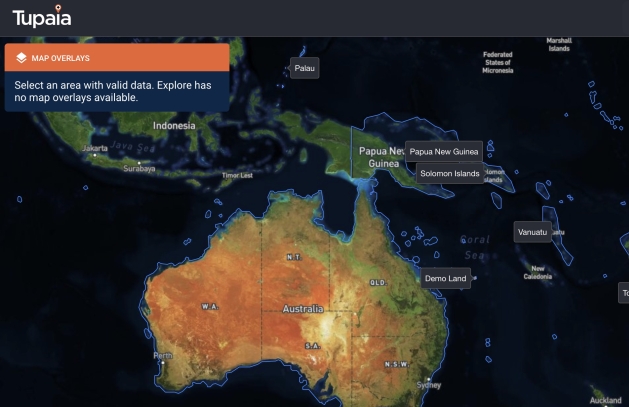
Developed in 2017 as a system for tracking items on the extremely lengthy supply chains of health materials in the Pacific Islands, today Tupaia is aggregating data about health, education and the environment from a number of unrelated sources, analysing it, and presenting it in an interactive online map.

“You can look at the national level and see how many people have accessed health services within a specified time frame or you can zoom into a province or a district and see more specifically details about where there are maybe gaps to people accessing the health system, or where people are doing really well, and that allows a country to set up different responses”

“If you want to see how many people a country has had in respect to a Covid outbreak, or a dengue outbreak, that sort of information will be displayed in Tupaia,” says Erin Nunan, director of Beyond Essential Services, the company that created the platform.

“You can look at the national level and see how many people have accessed health services within a specified time frame or you can zoom into a province or a district and see more specifically details about where there are maybe gaps to people accessing the health system, or where people are doing really well, and that allows a country to set up different responses,” adds Nunan in a video interview ahead of the Small Islands States (SIDS) Solutions Forum taking place online and in person 30-31 August 2021.

Tupaia is one of the innovations being featured at the event, which aims to kickstart SIDS’ efforts to reach the global development goals by 2030. Organised by the UN Food and Agriculture Organisation in partnership with the UN International Telecommunications Union and co-hosted by the Government of Fiji, the forum gathers representatives of the 38 SIDS worldwide, UN agencies and civil society.

The economies of many SIDS have been battered by COVID-19 restrictions, which have smothered the key tourist trade. Many were also already struggling with monumental challenges like rising sea levels and growing numbers of extreme weather events as a result of climate change. The forum, which ends Tuesday, is meant to “incubate, promote and scale-up home-grown and imported solutions to accelerate the achievement of the agriculture, food and nutrition related Sustainable Development Goals (SDGs),” says the website.

The makers of Tupaia believe that the platform has moved countries closer to the targets for SDG3 (health and well-being), SDG6 (water and sanitation for all) and SDG 17 (strengthen implementation and partnership for sustainable development). Their company, Beyond Essential Systems, has also released Tamanu, a medical records system.

Today, Tupaia operates in six Pacific Island countries, and beyond, collecting data in real time from nearly 800 facilities using a variety of sources including its own app, MediTrak, and creating visualisations that health systems, workers and even patients can use for decision-making. In Fiji, it is helping to track Covid-19 swab samples.

Open source and free, thanks to funding from the Government of Australia and others, Tupaia’s data collection, management, and visualization tools can also be used to collect environmental data to manage resources such as water stations and for disaster response. In Papua New Guinea, the platform is used to track the incidence of malaria.

“It might be a nurse in a clinic, it might be an administrator in a single province, those are the people that we really consider to be the customers of the software, the actual end users,” says Michael Nunan, CEO of Beyond Essential Systems, in another video interview for the SIDS Solutions Forum.

For example, in 2018 an order for cold chain medicines for the island of Kiribati was delayed. As a result, a busy facility ran out of several items, including insulin and Hepatitis B vaccine. But the facility nurse was able to log on to Tupaia and instantly see which nearby facilities had a functioning fridge and stock of the needed medicines. She contacted one of them and was able to organise a quick delivery of stock so there was little interruption to patient care.

Named after a Polynesian navigator who joined the crew of Captain James Cook in 1769, Tupaia takes data that is often siloed in specialised software designed for specific purposes and integrates it in dashboards that are customisable for a variety of user groups.

Tupaia’s data sources, supply chain software for vaccines and other medicines, health information software, and data collection applications, deliver information about health infrastructure including cold-chain, critical medical equipment, staff, and service provision.

“Whatever it is you want to do with data, whether it’s data collection, data aggregation, analysis, visualisation, or dissemination, we want you to be able to do that with Tupaia,” says Michael Nunan in the video interview.

SOURCE: IPS/PACNEWS
Corruption report indicts ‘deficient’ PNG

0

By Keith Jackson

A report by Transparency International PNG (TIPNG) on how the Papua New Guinea government is meeting its obligations under the United Nations Convention against corruption has highlighted “a multitude of deficiencies hindering the successful implementation” of the Convention.

In summary the TIPNG report concludes that the PNG government has been only partially compliant with its obligations.

This is despite the fact that “corruption, and particularly systemic grand corruption, has worsened in PNG in the decades following its political independence from the Australian colonial administration in 1975.

“Although laws and relevant agencies have been established to carry out these obligations,” the report states, “improvement is needed in areas where these laws are inadequate and where the Convention’s provisions are not strictly enforced.”

The report says that past and present PNG governments have looked to address and minimise corruption, they have enacted laws, joined international initiatives and adopted anti-corruption commitments.

But the authors of the report say that, despite the existence these policies, principles and laws, their enforcement is lacking.

This report identifies gaps within existing laws that allow corruption to grow and a lack of harmony between key agencies such as police, courts and the government departments.

It also refers to political interference in these agencies which affect their ability to perform their functions efficiently as well the chronic problem of under-resourcing.

TIPNG compiled the report from investigated and prosecuted court cases from 2012 to 2020 and interviews with the National Procurement Commission; the Public Services Commission and the Integrity of Political Parties and Candidates Commission.

Amongst recommendations to address these deficiencies, the report states that the National Anti-Corruption Strategy Taskforce should hold regular meetings to develop and “effectively implement” a national anti-corruption plan.

The report proposes that each government agency should prioritise the development of internal anti-corruption strategies to provide good governance, handle internal whistleblower complaints and liaise with the Independent Commission against Corruption (ICAC) once it is established.

TIPNG also states that senior public officials and elected leaders should be compelled to provide annual asset, income and interest declarations which are subject to independent oversight and publicly available.

In all, there are nine high level recommendations for improvement which collectively add up to a damning indictment of the current and past governance of PNG and the reluctance of elected officials and public servants to make themselves fully accountable.

It should be enough to make all Papua New Guineans very angry and to make the Marape government and senior officials hang their heads in shame.

But I think we all realise that – despite all the fine words, promises, workshops, training courses, missions, international conference, signatures on international conventions and legislation – nothing will happen.

The people of Papua New Guinea deserve a lot better.

ACT NOW PNG/PACNEWS

European Union releases $12.3 million to Fiji through budget support

0

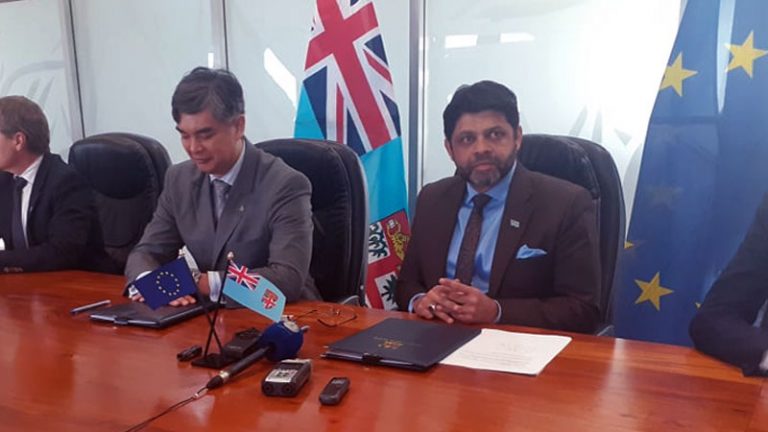
The European Union reaffirms its commitment to help the Fijian Government fight its second wave of COVID-19 by providing a further EUR 5 million (FJD$12.3 million) to support sustainable rural livelihoods.

The funds are targeted at the implementation of the agriculture sector strategy of the Government of Fiji. At a time when the fiscal environment is extremely constrained, they take the form of a financial grant, directly transferred to the Fijian Government. They are accompanied by the provision of technical assistance.

The European Union Ambassador to Fiji, Sujiro Seam highlights that “the budget support of FJD$12.3 million demonstrates European Union’s commitment to stand with the Government of Fiji as it battles its second wave of COVID-19. It provides a welcome financial relief in a difficult fiscal environment. It is aligned with the national strategy to enhance the rural livelihood, generate income and employment opportunities, support diversification and competitiveness, contribute to food and nutrition security and improve services and infrastructure. Consistent with the European Green Deal, it promotes climate smart and environmentally friendly agriculture.”

Fiji’s Attorney General and Economy Minister, Aiyaz Sayed Khaiyum welcomed the timely budget support from the European Union.

“Our budget for this financial year has funded sweeping socioeconomic protections for the Fijian people amidst the ongoing global pandemic–– including targeted support to the agricultural sector to strengthen Fiji’s food and nutrition security. With the Fijian Government’s support, our farmers are increasingly meeting more domestic demand for produce and building the Fijian brand of quality in overseas markets, creating sustainable livelihoods and sources of income in this growing sector. We look forward to putting the EU’s direct budget support to work through our effective and efficient support systems.”

The budget support to sustainable rural livelihood in Fiji is worth a total of EUR 20 million or approximately FJD$50 million (US$25 million) and covers a 3-year period from 2020 to 2022. The disbursement of the second annual tranche of EUR 5 million follows the first payment of EUR 8 million(US$9.4 million) last year.

This Budget Support contributes to the implementation of the Strategic Development Plan of the Ministry of Agriculture and the transfer of funds is concurrent with the results achieved in its implementation.

SOURCE:EU PACIFIC/FIJI GOVT/PACNEWS

Stay connected

529FansLike
172FollowersFollow
156SubscribersSubscribe
- Advertisement -