Home Blog Page 1141

USP made $34.2m surplus, says Nauru President Aingimea

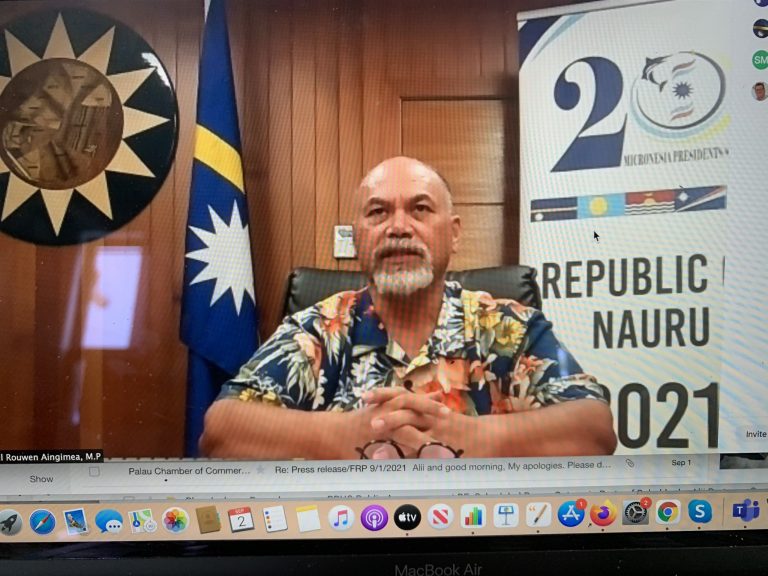
The University of the South Pacific(USP) has produced a record $34.2 million (US$16 .4 million) surplus in the last financial year when millions of taxpayers money have been wasted in the past due to misuse and mismanagement in the institution, says chancellor and Nauru President Lionel Aingimea.

Aingimea told the Nauru parliament the regional university has implemented reforms so past mismanagement, corruption, fraud and financial irregularities reflected in the BDO report should not be repeated.

“The losses reflected in the BDO report run into millions of taxpayers and government’s grant dollars”

“Going forward, I will be urging the council to develop strategies to ensure that the university remains financially sustainable.”

“This helped in surviving in 2021 albeit that it cannot undertake any strategic investments or deal with a decade of deferred maintenance,” he said.

He said Fiji’s holding back its grant to USP is a divisive move against regionalism.

Aingimea said Fiji’s decision comes despite member countries – supported by staff and student unions – voting overwhelmingly to support the offering of a new contract to vice-chancellor Pal Ahluwalia.

“Fiji’s Attorney-General Aiyaz Sayed-Khaiyum has expressed disapproval of the decision of the council to reappoint Ahluwalia in a parliament sitting on 19 August ,” he said in Nauru’s Parliament.

“Needless to say, there were a lot of statements that were issued by many bodies and people who went against what Sayed-Khaiyum stated in Parliament.

“In terms of the council’s actions, I state that in a democratic environment, where respect and honour are paramount, we as the employer of the vice-chancellor voted for his reinstatement.

Aingimea said the university council has never before met so often in a year, showcasing unwavering dedication to ensuring transparency, fairness and good governance.

Meanwhile, a USP executive director’s contract was renewed despite the staff review committee allegedly rejecting his request for a renewal due to his age.

And executive director Strategic Partnerships, Advancement and Communications executive director Jaindra Kumar continued to be paid Fiji National Provident Fund contributions despite the FNPF telling USP Kumar was no longer a member, claims chancellor and Nauru President Lionel Aingimea.

Aingimea told Nauru’s Parliament external consultants BDO had examined Kumar’s employment file and noted that on -06 August, 2017, “the staff review committee rejected his request for a contract renewal due to his age.”

He also claimed USP paid $28,274(US$13,616) in FNPF contributions for Kumar despite a letter from FNPF saying he was no longer a member and not eligible to rejoin.

He also claimed the paying of multiple allowances to Kumar on top of his $150,000(US$72,238) a year salary was “fiscally irresponsible” as “it would be very difficult to deliver all of these roles adequately.”

Wife and Minister for Education Premila Kumar said she will not be commenting on Aingimea’s statements.

SOURCE: FIJI LIVE/PACNEWS

Kurukuru embark on fourth FIFA Futsal World Cup campaign

0

The Solomon Islands are days away from stepping onto the world stage once again, as the FIFA Futsal World Cup 2021 kicks off in Lithuania.

The side, known as the Kurukuru, earned the right to represent Oceania at the event by beating New Zealand on penalties in the final of the OFC Futsal Nations Cup in 2019.

The Kurukuru play their first Group C match at the World Cup against Morocco on September 13 (4pm kick-off Lithuania time), a day after the tournament gets underway, followed by games against Portugal on September 16 and Thailand on September 19 local time.

As part of their World Cup preparations, the Vinicius Leite-coached Kurukuru took on some of Europe’s top futsal nations in this month’s Futsal Week Summer Cup in Croatia, along with playing a series of friendly matches against European club sides in Poland.

Most recently they secured a 3-1 win over Malta en route to a fifth-placed finish in the Futsal Week Summer Cup, marking the first time an OFC nation has beaten a UEFA side in a futsal international.

Prior results saw the Solomon Islands fall short in losses to Finland (6-2), Saudi Arabia (7-3) and Italy (3-0), with the latter proving costly for the Kurukuru due to key player Raphael Lea’i suffering a fractured right arm which ruled him out of the World Cup.

Despite the injury Lea’i was awarded the Individual Fair Play award at the competition.

In Poland the Kurukuru secured big wins over MSK Slask Wroclaw, 15-2 and 9-3.

They also drew 3-3 with Germany’s Hohenstein – Ernstthal HOT 05, picked up a 4-2 win against Czech Republic club side FTZS Liberec and drew 5-5 with Polish Cup champions Red Dragons Pniewy.

OFC Futsal Coach Educator Juliano Schmeling, who previously coached the Solomon Islands, said the games were much needed after 20 months without international futsal due to COVID-19 restrictions.
“The first challenge was to take the full squad to Europe to ensure they had the best facilities, trainings and matches leading up to the tournament,” Schmeling said.

“I believe that was the best decision they could have made and I’m proud of how they have adapted to the situation.

“So many people are looking forward to watching the Kurukuru at the World Cup and I know the OFC region will be proud of them regardless of the outcome.”

The 24-team World Cup features six pools of four, with the top two from each pool advancing to the Round of 16 alongside the four highest-ranked third-placed teams.

The final will take place on October 3 local time.

2021 Solomon Islands (Kurukuru) squad:

Anthony Talo, Alvin Hou, Elliot Ragomo, George Stevenson, Marlon Sia, Charlie Otainao, Alvin Ray, Jeffery Bule, Micah Leaalafa, Samuel Osifelo, Coleman Makau, Arnold Maeluima, Elis Mana, Lauwale Ata, Paul Laki

The Kurukuru’s Game Schedule:

Game 1 – Morocco v Solomon Islands – Sep 13, 6.00pm Lithuania time

Solomon Islands – Sep 14, 2.00am

New Zealand – Sep 14, 3.00am

Game 2 – Solomon Islands v Portugal – Sep 16, 6.00pm Lithuania time

Solomon Islands – Sep 17, 2.00am

New Zealand – Sep 17, 3.00am

Game 3 – Solomon Islands v Thailand – Sep 19, 6.00pm Lithuania time

Solomon Islands – Sep 20, 2.00am

New Zealand – Sep 20, 3.00am.

SOURCE: OFC/PACNEWS

UK rejects campaigners’ call to postpone COP26 climate talks again

The UK is resisting a call by campaigners to postpone critical UN climate talks, promising extra measures to address concerns about safety and inclusiveness in light of the ongoing coronavirus pandemic.

Climate Action Network (CAN), a global alliance of more than 1,500 climate and environmental campaign groups, urged organisers to postpone the Cop26 summit scheduled for 31 October to 12 November. They cited stark vaccine inequity, rising travel and accommodation costs and high rates of Covid-19 infection in many parts of the world.

“With just two months to go, time has run out for the UK’s vision for a ‘normal and inclusive”’ Cop26,” CAN said in a statement on Tuesday. “It is evident that a safe, inclusive and just global climate conference in early November will be impossible.”

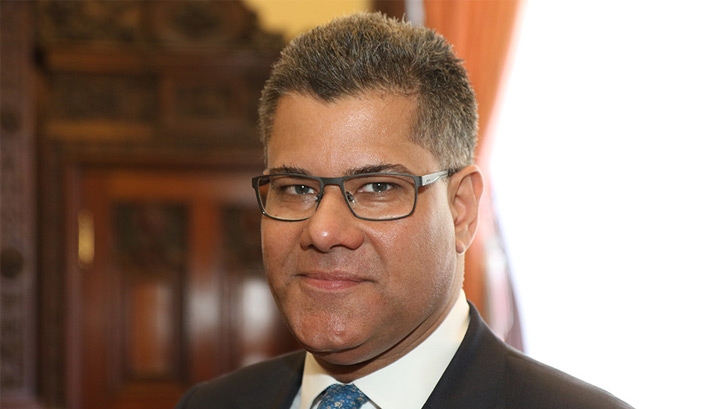
In response to CAN’s concerns, Cop26 president designate Alok Sharma pushed back. He said the Intergovernmental Panel on Climate Change’s latest report last month “underlines why Cop26 must go ahead this November”. The summit has already been delayed by a year.

“We are working tirelessly with all our partners… to ensure an inclusive, accessible and safe summit in Glasgow with a comprehensive set of Covid mitigation measures,” he said.

CAN argued that going ahead with an in-person event would exclude many government delegates, campaigners and journalists, particularly from developing countries on the UK’s “Covid-19 red list”.

All Cop26 delegates arriving from a red list country will be required to quarantine for five days if they are vaccinated and 10 if they aren’t.

CAN says this would pose “serious and long-lasting implications” for some of the key issues and developing country priorities under negotiations at the talks, including on climate finance, loss and damage and the design of new carbon market rules.

Under the current circumstances, a full and meaningful representation of those on the frontlines of the climate emergency is not possible, it said.

There is mounting frustration among developing country delegates over the slow delivery of vaccines Cop26 organisers promised. Many are worried they will be unable to get jabbed in time for the conference, or face prohibitively expensive travel costs.

The UK government has repeatedly said it wanted to host the “most inclusive Cop ever”. Last week, it said the first doses of AstraZeneca would be administered from this week to every delegate who requested them through the UN Climate Change registration portal.

In his statement on Tuesday, Sharma said the UK government will cover the full quarantine costs of delegates coming to Cop26 from developing countries on the “Covid-19 red list”, regardless of their vaccination status. This will apply when quarantine stays are booked through the government’s MQS system.

One source told Climate Home News this would cost around £11 million (US$15m). A spokesperson for the Cop26 team declined to give an estimate.

“Ensuring that the voices of those most affected by climate change are heard is a priority for the Cop26 presidency, and if we are to deliver for our planet, we need all countries and civil society to bring their ideas and ambition to Glasgow,” Sharma said.

Campaigners in developing countries previously told Climate Home they could not book their travel and accommodation to Glasgow until they were sure they would receive vaccines and could secure funding for travel costs.

Last week, Aimé Mbuyi Kalombo, who will lead the Democratic Republic of Congo’s climate team in Glasgow, told Climate Home that without support from the UK government to pay for the cost of quarantine, several of the delegation’s climate finance negotiators would be unable to attend.

“The climate talks are important but against the current context of vaccine apartheid they simply cannot proceed by locking out the voices of those who especially need to be heard at this time,” said Tasneem Essop, CAN’s executive director.

CAN said that to host any in-person event at scale, rich nations needed to support a swift and lasting patent waiver, allowing vaccines to be manufactured in developing countries. It said the call to postpone Cop26 did not imply a postponement of climate action or a boycott of the climate talks.

“If Cop26 goes ahead as currently planned, I fear it is only the rich countries and NGOs from those countries that would be able to attend. This flies in the face of the principles of the UN process and opens the door for a rich nations stitch-up of the talks,” warned Mohamed Adow, director of the Nairobi-based think tank Power Shift Africa.

SOURCE: CLIMATE HOME/PACNEWS

NZ quarantine-free travel for Pacific RSE workers to restart next month

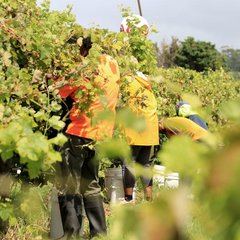
Recognised seasonal employer (RSE) workers from the Pacific Islands will be able to return to New Zealand next month, the Government has announced – but only if they’ve been vaccinated against COVID-19.

The return of RSE workers from Tonga, Samoa and Vanuatu will start up again in October, and is the first stage of one-way quarantine-free travel to New Zealand from these countries.

COVID-19 Response Minister Chris Hipkins and Agriculture Minister Damien O’Connor made the announcement on Friday morning.

“We want to provide certainty to the horticulture industry that we are moving forward with safe quarantine-free travel for RSE workers in time for the upcoming picking season,” O’Connor said.

Hipkins says even though there have been no community COVID-19 cases in Tonga, Samoa or Vanuatu, New Zealand needs to take a “cautious approach” as “we know first-hand how quickly Delta can spread if it gets in”.

As a result, the Government is putting in place additional health measures for these workers – including a requirement for them to have had at least one dose of the COVID-19 jab before departing for New Zealand.

They will also need to complete a period of seven days’ self-isolation on arrival and return negative COVID-19 tests on day zero and day five of their stay.

“We are starting solely with RSE workers for several reasons,” Hipkins said.

“RSE workers come to New Zealand in a cohort, and stay in employer-arranged accommodation. This helps mitigate any additional risk from COVID-19 by ensuring they go into self-isolation in a pre-organised place immediately upon arrival.”

The Government says up to 14,400 RSE workers normally come through New Zealand each year, with about 10,500 of these being in the country at peak harvesting times pre-COVID.

“Substantial planning has been under way both in New Zealand’s horticulture and viticulture sectors and in our partner countries for the arrival of these workers, with some incoming flights deferred in August and September because of New Zealand’s alert level 4 settings,” O’Connor said.

“We will be closely monitoring this first stage of one-way quarantine-free travel. Our intention remains to broaden eligibility for quarantine-free entry to New Zealand from these countries and Tokelau when we can be sure it is safe to do so.

“In the meantime, other people entering New Zealand from these countries will need to meet existing MIQ requirements.”

Details on the first flights carrying RSE workers from the Pacific to New Zealand in October are yet to be confirmed.

SOURCE: NEWSHUB/PACNEWS

Solomon Islands workers fly to Australia for seasonal work Programme

A first group of 160 workers have left Solomon Islands Thursday to work in Queensland, Australia under the Seasonal Work Programme (SWP) and the Pacific Labour Scheme (PLS).

A statement from the Ministry of Foreign Affairs and External Trade (MFAET) Labour Mobility Unit said they have been working very hard to ensure Solomon Islanders participate in the labour mobility programme,to earn an income, gain some skills and be able to support themselves financially, during this very difficult time.

“This is evident during the recent months where locals have travelled every month to Australia as part of the labour mobility program.

“They will be quarantined at their pre-arranged quarantine sites for 14 days before going to their respective farms where they will be working for the next 2 to 3 years,” the statement said.

It says the team has a mix of returning workers who have been part of the schemes previously and some first timers to the programs which was selected as part of February 2021 applicants. This consist of 110 male workers and 50 females selected from all the nine provinces.

“All the workers attended a mandatory two-day Pre-Departure Briefing and training program held on Thursday 02 September and Friday 03 September 21 at the St. Banarbas Cathedral Leaf Haus.”

It says the briefings include key information on worker contract & agreements, country information, health management, ambassadorial responsibilities, COVID 19 regulations and other important issues.

“The pre departure briefing is essential for the workers whom some of them have never travelled overseas before.

“For returning workers the pre departure briefing is an opportunity for them to get more information from officials about what they should do to try and gain more from their work,” the statement said.

The Permanent Secretary of the Ministry of Foreign Affairs & External Trade, Collin Beck, was one of the keynote speakers at the briefing.

Beck whilst congratulating the workers in their selection, also said that the Pacific Labour Scheme and Seasonal Worker Programme is aimed at creating employment opportunities and generating income for unemployed people, building people to people links and opportunities to develop new and innovative business opportunities between the two countries.

He strongly reiterated the Zero Tolerance on alcohol consumption, the consequences of absconding and the importance of Labour Mobility Unit’s here to work values.

“I strongly advise all workers to refrain from consuming alcohol and encourage you all to be good ambassadors of your country.

“Please be reminded that you are there to work whilst at the same time you are also promoting Solomon Islands under the Here to Work brand.

“Make good use of this opportunity to earn and save money and help your families when you return home.”

He also stressed to the workers that they must obey and respect the laws of the host nation while working there.

“You are ambassadors for the country and anything you do will reflect back on the country,” PS Beck said.

Beck also stated that absconding workers will not be tolerated and that there are significant consequences from such actions.

“If you have any intentions of leaving your designated place of work to work in another location then you will be breaching your visa conditions and you will be working illegally in Australia.

“The Ministry through the LMU does not tolerate absconders and those who have absconded or overstayed and are working illegally in Australia will be permanently blacklisted from the labour mobility programmes upon return to Solomon Islands,” Beck said.

The Australian High Commission representative who attended the Pre-departure briefing also re-emphasised the key messages shared by Beck and strongly encouraged workers to use the opportunity wisely to earn money and achieve their goals.

The labour mobility programme has benefited many families over the past years. Both SIG and the Australian government are committed to continuously support this programme in the future.

Solomon Islands labour mobility programme is managed by the Ministry of Foreign Affairs and External Trade through the Labour Mobility Unit which is housed under the Department of External Trade.

SOURCE: SIBC/PACNEWS

Scientists call for moratorium on ocean mining, fearing impact on Pacific tuna fishery

0

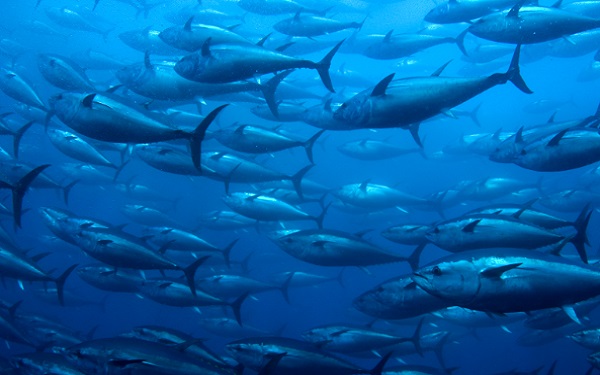
Around 500 scientists from 44 countries have signed a letter urging a moratorium on ocean mining, an activity that researchers say could be adversely affect fisheries, in particular deep-sea catches like tuna.

Scientists made the plea recently after an ocean-mining company and its host country, the Pacific island nation of Nauru, touched off a two-year rule with the International Seabed Authority (ISA), headquartered in Kingston, Jamaica. The two-year rule – triggered by Nauru on behalf of Vancouver, Canada-based Nauru Natural Ocean Resources Inc. – means that time is short for the ISA to set a code on the specifics of seafloor mining.

But researchers like Douglas McCauley, a professor of ocean science at the University of California Santa Barbara, told SeafoodSource that not enough is known about the impacts of seafloor mining on marine life.

“There has just been a lot of concern about this. We have 500 scientists saying we simply cannot activate this ocean mining, that we need to put a pause to it until we understand it’s impacts on the ocean and on fisheries, and we simply don’t have that science in hand,” McCauley told SeafoodSource. “Scientists never agree on anything, so it’s especially interesting to see 500 scientists signing on to the statement.”

If the process is not stalled, McCauley said that the policy developed in the next few months will shape the next century of ocean mining. Fisheries, he said, could be drastically altered. In seafloor mining, heavy equipment chews up the floor of the ocean. After the minerals are extracted, sediment-heavy wastewater is pumped back into the ocean via large tubes. Sediment from these plumes, researchers say, could end up in seafood and could smother the fragile forage base for fisheries.

Jesse van der Grient, a researcher from the University of Hawaii who is studying the potential effects of wastewater plumes on the fisheries, told SeafoodSource the effects of the plumes are still not well-understood by the scientific community.

“One of the problems that we have is that we need to know how far these sediment plumes will spread out from the ships they are discharged from. Right now, we don’t actually have good numerical models about how these sediment plumes are going to spread across the ocean,” van der Grient told SeafoodSource.

Van der Grient and her colleagues have assessed different plume sizes, and concluded that U.S. commercial fleets stand to have the most overlap with seafloor mining, in particular in the Clarion Clipperton Fracture Zone in the central Pacific. There, miners hope to dig up rich stores of nickel and cobalt – minerals used in the construction of lithium-ion batteries – but the area is also home to valuable tuna fisheries. A recent University of Hawaii paper concluded that mining plumes could overlap into 8 to 16 percent of current fishing grounds.

“I suppose on one hand, 16 percent of catch overlap doesn’t sound like much. However, I would just say that if folks had been given permission to mine on 16 percent of my land, I would care,” McCauley said.

It is not just the U.S. that could see adverse impacts. Studies have shown that fisheries in China, Mexico, Venezuela, Spain, the Philippines, as well as small island-nations could suffer from seafloor mining. Despite this, McCauley said there has been a notable absence of fisheries representatives in the discussions on ocean mining.

“There are representatives from a diversity of different ocean industries that could be affected by ocean mining present already in the negotiations on if and how to start commercial ocean mining at the International Seabed Authority meeting – ranging from the subsea cable industry to underwater munitions industry,” McCauley said. “But I have never met a fisheries representative sharing perspectives on what ocean mining would mean to the seafood industry at the ISA.”

McCauley said he does not know if regional fisheries management organisations are planning to weigh in on the seafloor mining debate.

“The only fisheries industry group that I am aware of engaging on the subject is the E.U.’s Long-Distance Advisory Council, which called for a moratorium on commercial seabed mining,” McCauley said.

Earlier this summer, the U.S. state of Washington banned offshore mining, and Pacific island nations Fiji and Papua New Guinea have shown an interest in an ocean-mining moratorium. Several major companies, including Samsung, BMW, and Google, have pledged not to use minerals from deep-sea mining in their supply chains.

SOURCE: SEAFOOD SOURCE/PACNEWS

People’s Alliance Party doors open: Rabuka

People’s Alliance Party leader Sitiveni Rabuka says he is expecting some Social Democratic Liberal Party (SODELPA) supporters to jump ship and join his political party to contest Fiji’s 2022 General Election.

The former prime minister and Opposition leader said he would welcome anyone who wished to join his party and they could show their interest by writing to the party.

“Understanding the affinity I had with the sitting members of the Parliament particularly for SODELPA, so it will be easier for us if they were not running for that party and I believe some of them have not expressed any interest to get a ticket to run in the next election under the SODELPA banner,” Rabuka said.

“In this case, they will have to actively show their interest by writing to say that they want to join the (People’s Alliance) party.

“The more the merrier, anybody from anywhere, at the moment we are a new party and anybody who comes in, we accept.”

In response, SODELPA leader Viliame Gavoka said it had been widely reported that not all the SODELPA parliamentarians have indicated their interest for SODELPA in 2022.

“I’m not surprised that Rabuka expects them to run with him,” he said.

“We have been planning for this eventuality. We have advertised and invited people to express their interest in a SODELPA ticket and the quality of the responses have been very encouraging.

“Rabuka’s platform is very different from that of SODELPA, and one thing we have learnt at SODELPA is that the voters know how to choose and to never underestimate them.”

Meanwhile, Rabuka’s party was officially registered on Wednesday and became the 10th registered political party which had expressed an interest in contesting the 2022 General Election.

SOURCE: FIJI TIMES/PACNEWS

Climate Finance effectiveness in the Pacific: are we on the right track?

TALANOA EVENT

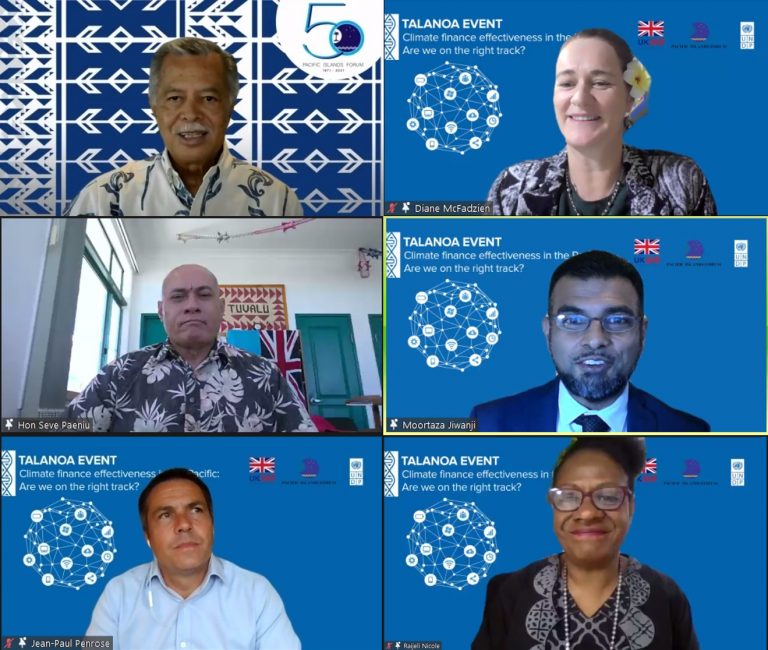
The Pacific Islands Forum (PIF) in partnership with the United Nations Development Programme (UNDP) and the UK Government hosted a Talanoa event, titled Climate Finance Effectiveness in the Pacific: Are we on the right track? on Thursday 9 September 2021.

This regional dialogue explored whether the US$2.2 billion international climate finance received in the Pacific over the past decade has been effective in tackling the impacts of climate change and what measures could help to make it more impactful in the future. The Talanoa was timed to ensure that Pacific voices feed into discussions on climate finance at the UN Climate Change Conference – COP26 – which takes place in Glasgow, UK later this year.

Moderated by UNDP, the Talanoa brought together representatives from PIF, the government of Tuvalu, Oxfam Pacific, the Green Climate Fund, and the UK Government who shared their perspectives on climate finance effectiveness in the region. More than 200 participants from around the region joined the meeting.

Opening the dialogue, the Pacific Islands Forum Secretary-General, Henry Puna highlighted that “Pacific Island Countries need adaptation action now and with that comes the need for substantial financial flows. Equally important, the increased financial flows must also be matched with increased access for Pacific Island Countries who bear the brunt of these impacts more so than most other countries in the world. The recent Intergovernmental Panel on Climate Change (IPCC) report removes any doubt that this is so”.

He added that “while improved access remains a priority, the other key element is the effectiveness of climate finance in the Pacific. Climate finance effectiveness should result in improved resilience for our Pacific communities and people. These are critical issues that the Forum Economic Ministers Meeting has been discussing over the past decade and most recently elevated the importance of ensuring the effectiveness and accountability for climate finance that flows into our region”.

The dynamic panel of speakers surfaced a number of challenges facing the region with regards to access to climate finance and using it most effectively.

Seve Paeniu, Tuvalu Minister for Finance and Chair of the Pacific Forum Economic Ministerial Meeting, highlighted that “despite a significant amount of climate finance raised, climate change is still having profound effects on Small Pacific Islands States”. He noted that to provide coastal protection against sea level in Tuvalu will cost over US$300m and that whilst grateful for the GCF US$36m funding for sea defences there is still a massive shortfall. He added that “climate finance needs to focus more on delivering resilience for the most vulnerable communities”.

On the way climate finance is currently delivered, Jean-Paul Penrose, Pacific Development Director, UK Foreign, Commonwealth and Development Office, British High Commission Suva, noted that “short term, projectised funding does not always lend itself to delivering sustainable, inclusive and resilient development outcomes”. Furthermore, Raijeli Nicole, Regional Director, Oxfam in the Pacific emphasised that “climate finance cannot be about loans. Loans transfer the risk on to the beneficiaries. We cannot give our children the burden of serving our loans”.

The Pacific Islands Forum Secretary-General Puna identified that “more can be done” and urged countries and development partners to integrate more comprehensive climate ambitions into their mandates and performance systems so that “climate priorities be genuinely mainstreamed into development”. Panelists were asked to identify areas for reform.

Jean-Paul Penrose emphasised from a donor perspective that “there is a need to bring together the principles of aid effectiveness and climate finance initiatives to deliver stronger development outcomes which meet the needs of the poor and most vulnerable and are fully aligned with the climate and development priorities of Pacific nations”. This was echoed by Vineil Narayan, Director Climate Change, Ministry of Economy Fiji who offered an intervention that “the narrative is not just climate change, but development first”.

Linked to these sentiments, Diane McFadzien, Regional Manager Asia Pacific, Green Climate Fund shared that “we want to see countries in the driver’s seat, countries driving to their own destinies”. Seve Paeniu emphasised that “climate finance needs to be channeled in a way that builds national capacity, national ownership”.

Raijeli Nicole spoke to the key challenge of ensuring financing reaches communities and vulnerable groups in the pacific. “Participation isn’t about coming in to help design. It is about citizenship. We design with people for people”.

Moving forward, there was a strong desire for ongoing dialogue and partnership, as emphasised by McFadzien “there is a need for a lot more collaboration, and not ignoring lessons that have been learned”. Moderator, Moortaza Jiwanji, UNDP Pacific Office in Fiji, noted an emerging call for action for more effective climate financing, requiring a stronger focus on development and the underlying drivers of vulnerability, systems change at all levels of development, and more agile approaches to climate financing to achieve more climate-resilient development.

As the region looks towards COP26 later this year, this dialogue provided an important opportunity for shifting the narrative and creating space for more regular and ongoing Talanoa on climate finance effectiveness in the region. A report on Climate Finance Effectiveness in the Pacific commissioned by the UK Government will be issued later this month in order to inform and influence decisions on climate finance at COP26.

For more information, or media interviews please contact:

Lisa Williams-Lahari, Public Affairs Adviser, Pacific Islands Forum, Email: lisaw@forumsec.org

Summer Lee, Partnership, Donor Liaison and Communications Specialist, Gov4Res Project, UNDP Pacific Office in Fiji, Email: summer.lee@undp.org

Kashimita Rao, Communications Officer, British High Commission, Suva Email: kashmita.rao@fcdo.gov.uk

SOURCE: UNDP/PIFS/UK GOVT/PACNEWS
Curtain falls on 30th SPREP Meeting of Officials

The 30th Meeting of Officials of the Secretariat of the Pacific Regional Environment Programme (SPREP) has officially concluded after three days of deliberations.

The Secretariat’s 26 Members – comprising of 21 Pacific island and five Metropolitan countries and territories – met virtually over the last three days to discuss strategic, programme and governance issues pertaining to the organisation, and approved the 2022-2023 work programme and budget.

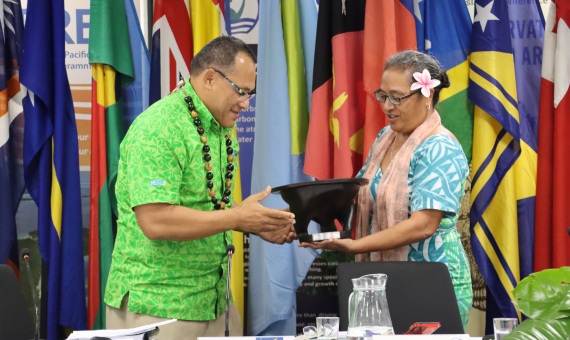
The meeting ended on a rather emotional note, with Kosi Latu addressing the SPREP Meeting for the last time as the Director General of the Secretariat. Latu’s contract will end in April 2022, whereby the newly appointed Director General,Sefanaia Nawadra, will take over for the next six years.

Mika Perez of Tokelau, Chair of the 30th SPREP Meeting, expressed on behalf of the SPREP Members their gratitude to Latu for his leadership over the last six years, and wished him well on his future endeavours.

“The Director General reminds us to not forget our collective responsibility towards one another, not only in countries alone but also at a regional level. After all, the Pacific is not only our Ocean, it is our Home,” Perez said.

“Since this will be your last Meeting, from the bottom of our hearts, we Members of the region say thank you, fakafetai lahi tele for the last six years. It has been very fruitful and productive working with you for those of us who know you on a personal and professional level. We say thank you very much for your time.”

As a token of their appreciation, Tokelau on behalf of Members and delegates presented Director General Latu with a gift to convey their gratitude and appreciation for his years of service to the Pacific.

Latu congratulated Tokelau for being an exceptional Chair, and for steering the Meeting through what was a challenging agenda which reflected the variety of environmental challenges faced by Pacific island countries.

Latu said that although countries in the Pacific seem to be doing a lot to try and save, protect and manage their environment, the irony is that the Pacific is seeing greater environmental degradation happening in our region.

“This is a major concern not just for me but for all of us who love our ocean and our islands and our region.”

He concluded his final remarks by thanking the SPREP Members and staff for their support, advice and guidance throughout his years as Director General. He also thanked the Chair for reminding them all of his remarks given during the opening of the 30th SPREP Meeting of the need for the Secretariat to be responsive to its Members.

“I’m happy to pass that on to the new incoming Director General to remind him that this is why SPREP is here and why we exist – to respond to the needs and requests of our Member countries,” Latu said.

“My ambition when I started at SPREP was to leave it in a better place than I found it. I wouldn’t say SPREP is now in a perfect situation as there will always be challenges and there will always be room for improvement, but I’d like to think that in the last six years that I’ve been at the helm of this organisation that we have been able to make some significant changes to the way we work, the way we engage with our Members and partners and that SPREP is in a much better place than it was six years ago.

“I would like to thank all the Members for your support and your contribution to the work of SPREP. SPREP is not just the Secretariat – it is the Secretariat and its Members. We exist because of you, and I appreciate your support and guidance.”

“It’s been a wonderful six years – I’ve learned a lot and grown. I have benefitted a lot from being with my staff. Perhaps they don’t realize but they have made me a better person than I was six years ago. I’ve learned to listen more and to lead better and I’ve learned a lot about science and I’m grateful for that. I leave with sadness as my time has come to an end, but as they say, all good things must come to an end,” he concluded.

The Third Executive Board Meeting will be held on the first week of September 2022, in accordance with the governance structure of SPREP which states that the full SPREP Meeting of Officials will shift from being convened annually to biennially, with a meeting of the Executive Board to be held every other year.

The Executive Board of SPREP is comprised of the Troika of past, present and future Chairs of the SPREP Meeting, and representatives of SPREP’s Melanesian, Metropolitan, Micronesian, Polynesian and French speaking members.

For more information, please contact Easter Chu Shing, Deputy Director General, easterc@sprep.org

SOURCE: SPREP/PACNEWS

PCRIC gains Observer status at FEMM21

0

The Pacific Catastrophe Risk Insurance Company (PCRIC) was recently granted observer status at this year’s Forum Economic Ministers Meeting 2021 (FEMM21) held in mid-July.

PCRIC had applied for observership member status with the Pacific Islands Forum Secretariat earlier in May. At the FEMM21, the Forum Economic Ministers considered and endorsed the company’s application as an observer at future FEMMs.

While participating as a guest presenter at the FEMM21 by invitation, the PCRIC CEO, ‘Aholotu Palu, provided a statement during the Ministerial segment of the meeting

“There is not a single Pacific Island nation which does not face an ever-increasing potential financial impact from climate or geophysical disaster. Our recent collective experiences with the COVID-19 pandemic remind us all that our nations face difficult threats. We surely know that when we are not prepared, our nations pay a heavy penalty,” Palu said.

Now as an official observer member of FEMM annual conferences, PCRIC will enhance cooperation and strengthen partnerships with regional organisations and Pacific Island countries to enhance strategic cooperation and the deployment of financial solutions for disaster relief planning.

By building relationships with the leadership within the Finance Ministries of the countries, PCRIC will gain a greater understanding of both the needs and resources of individual Pacific nations.

Gaining observer status is a significant accomplishment to further PCRIC’s initial vision to be integrated into the regional coordination architecture. This working relationship will facilitate considerable efficiency, effectiveness and synergy within the Disaster Risk Finance space.

Additionally, this fortified linkage ultimately means greater regional collaboration, greater access to financing options and more leverage for sovereign nations, collectively and individually, to implement cost-effective disaster management solutions.

SOURCE: PCRIC/PACNEWS