Home Blog Page 1135

Climate change ruthlessly pervasive: PM Fiame Mata’afa

The COVID-19 pandemic has exacerbated the adverse impacts of climate change, Prime Minister, Fiame Naomi Mata’afa has told an international conference.

The Prime Minister had made the comments during the Commonwealth Foreign Affairs Ministers Meeting which was held virtually on 17 September.

Emphasising the parallel threats of the COVID-19 pandemic and climate change,Mata’afa said having added an additional layer of risks that further exacerbate Samoa’s vulnerability which derailed development efforts and hard fought gains.

“The pandemic has exacerbated the adverse impacts of climate change. While the COVID19 virus has not infected everyone globally, climate change has been ruthlessly pervasive and affected all countries,” the Prime Minister said.

According to Mata’afa, Samoa has submitted its Second Nationally Determined Contribution focusing on economy-wide as well additional sector specific emissions reductions.

“The support by the Commonwealth for Samoa to meet these ambitious adaptation and mitigation actions would be welcomed,” she said.

“Our commonwealth family represents more than a quarter of the United Nations Framework Convention on Climate Change (UNFCCC) and almost one third of the world’s population. More than half of us are small states, with many SIDS, Samoa inclusive.

“We therefore take pride in the continued leadership of the Commonwealth members in providing and calling for ambitious climate action.”

The Prime Minister said small island developing states is counting on this united approach to encourage all countries especially the major emitters, to achieve net zero carbon emissions by the middle of the century.

“It is critical for a liveable climate to keep the 1.5 degrees promise within reach,” she said. “In closing I thank the United Kingdom as COP26 President for their proactive engagement and commitment, and pledge our support for a much anticipated successful Conference,” she said.

SOURCE: SAMOA OBSERVER/PACNEWS

President Whipps calls for urgent action from global community to address climate change

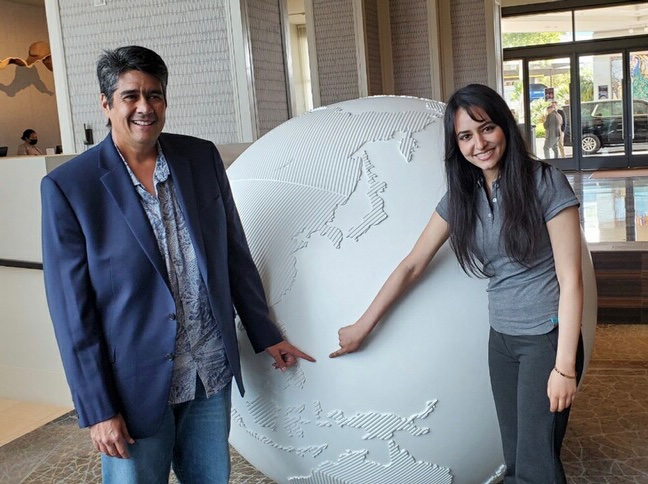
Palau President Surangel Whipps Jr has called for urgent action from international governments and leaders to address climate mitigation and adaptation as small nations such as Palau faces devastating impacts of global warming.

In his remarks during the Virtual Island Summit in early September said islands of the world “have been at the frontline of the intensifying impacts of Climate Change for decades now.”

President Whipps is attending the United Nations General Assembly (UNGA) this week, which he said is an occasion for leaders of the vulnerable islands to “encourage cooperation and petition for an exigent call for action among international governments, leaders, communities, and industry stakeholders to address climate adaptation and mitigation.”

“We urgently need greater ease and accessibility to climate financing to offset the irreversible and glaring threats posed by climate change.”

The president said the same call for urgent action is needed at the major UN climate change summit, known as COP26, in November to be held at Glasgow, United Kingdom.

“Our environment and our people are go drowning. There is no denying that Palau’s environment is one-of-a-kind. Nonetheless, at the center, our most valuable resource is our people, of which we only claim a global population of approximately 20,000. Despite this small number,

Palau has proven in the last couple of decades, that even the smallest things can have the biggest impacts,” he said.

He said while small, Palau was able to protect itself to remain” COVID-safe,’ through the help of partners such as the United States.

And the same assistance can be mobilised from foreign partners to address the impacts of climate change.

“Today, I urge the world to mobilise, once again, with the same vigor and sense of urgency, and take significant action against the climate crisis. As the IPCC Report indicated, the time is now to take action.”

He said the impacts of climate change will be strongly tackled through cooperation and partnership among the global communities.

SOURCE: ISLAND TIMES/PACNEWS

American Samoa reports first positive COVID-19 case

American Samoa confirmed its first positive case of COVID-19, the island nation’s Department of Homeland Security said Friday.

The case was detected last Thursday among 43 travelers who were quarantined at a hotel in the village of Utulei. After the case was confirmed, more than 200 travelers quarantined at a nearby hotel were also tested. No other positive cases were reported.

The traveler who did test positive was asymptomatic when tested and was fully vaccinated, Homeland Security said in a statement. The infected person has been transported to an isolation facility at the Department of Health, and the rest of the passengers are in quarantine.

The small island country requires that travelers spend 10 days in quarantine upon arrival. The department said the protocol has “allowed the medical team to continue the close monitoring of travelers and minimize the risk of community transmission.”

“The discovery of this positive case during quarantine highlights the importance of why our process is critical to prevent the spread of COVID-19,” Samoa’s Homeland Security said.

Officials called on the community to practice good hygiene by social distancing, washing hands and remaining calm and vigilant.

As of Saturday, all sales and ticketing at Samoa Airways in New Zealand and Australia were closed until further notice.

SOURCE: CBS/PACNEWS

Pandemic forces 52 hotels closure: Samoa tourism chief

0

Fifty-two hotels have closed while 48 are still operational out of the 144 hotel operations in Samoa that the Samoa Tourism Authority has on its records.

STA Chief Executive Officer, Fa’amatuainu Lenata’i Tuifua, gave the tourism statistics in a recent interview with the Samoa Observer.

He said 26 hotel operations are also currently being used by the Government to quarantine returning citizens and residents.

“So far given the stats that we have out of 144 total hotel operations since July this year 48 are still operational, 52 have been closed, 26 are being used for the quarantine,” he said in an interview.

“So we are thankful for that, that sort of assistance towards the quarantine and 18 that’s been partially opened so that during the weekends or when they have enough guests.”

A survey by the STA of employment in the tourism sector also revealed that a total of 3,877 jobs have been affected since the onset of the COVID-19 pandemic last year.

And the accommodation sector, food and beverage and car rentals felt the brunt of the decline with all losing more than half of their employees and jointly contributed 88.5 percent to overall job losses.

“In terms of employment, there’s a lot of unemployment, there’s a lot of excess stock of human resources and for Samoa Tourism, not only are we looking at marketing,” Fa’amatuainu said.

“But also we look towards how we actually maintain and retrain the current laid off workers so that by the time we reopen the borders in the future we won’t have to restart, it’s just the transition.”

Fa’amatuainu Lenata’i Tuifua said the local tourism industry had a good run in 2019, which marked the first time they surpassed the half a billion mark in terms of revenue of tourism.

However, the decline started towards the end of 2019 with COVID-19 dealing a big blow to tourism in the country when borders shut.

The tourism employment survey also showed that 68.6 percent of direct employment had been affected in some form with 48 percent getting laid off since December 2019.

Figures shown in the survey also indicated that the total workforce before the COVID-19 pandemic and the measles epidemic was at 5651.

But during the pandemic era, the number of those who were fully employed stood at 1,774, laid off workers 2,706 while 1,171 were in the reduced hours group.

Fa’amatuainu also indicated that there will be assistance forthcoming from the New Zealand government specifically for the tourism sector in terms of marketing.

“There will be assistance from the Government, our donor partner in New Zealand will actually assist us, so we aside from that in terms of the marketing STA are doing a lot of marketing not only destination marketing but also direct marketing for properties.”

Fa’amatuainu explained that they have done a lot of marketing on social media, including the Tafaoga and Kuka documentary series to let people know what Samoa has to offer in terms of tourism potential.

“So if you get bored you can always go fishing, go golfing, go hiking so Samoa has a lot to offer,” he said.

He added that the STA was recently out in the field with experts to develop new sites in terms of nature walking.

And with the budget recently tabled in the parliament, Fa’amatuainu said the STA is one of the agencies in the Government that have had a big increase in terms of the budget.

“We are helping our colleagues at [Ministry of Health] as well as [National Emergency Operation Center] in terms of having the travel tracer app and also during the vaccination we also have the fixed sites for vaccination,” he said.

Meanwhile, Prime Minister Fiame Naomi Mata’afa has underscored the impacts of the global COVID-19 pandemic on tourism at a meeting of Commonwealth foreign Ministers on Friday.

The Commonwealth Foreign Ministers Meeting was held virtually on 17 September.

“Samoa, like all tourism dependent economies [is] struggling since the pandemic. Most of the job losses were from the hospitality industry,” Mata’afa said in her statement.

“Low international consumer demand and limited shipping and air freight access have impacted exports.”

Before the 2019 measles epidemic and the COVID-19 global pandemic, the workforce stood at 5,651. But since the pandemic the number of fully employed workers dropped to 1,774. The total number of laid off workers caused by the pandemic-led downturn was 2,706; some 1,171 workers had their working hours reduced.

Mata’afa said she appreciated the continued work by the Commonwealth Secretariat, despite the challenges of global lockdowns and restrictions, to support trade and economic development efforts.

“We stress the importance of the support by the Commonwealth Small States Office in Geneva, enabling our active engagement in the [World Trade Organisation],” Mata’afa said.

“We look forward to its continued support as we finalise the opening of our Mission in Geneva. We particularly welcome the proposed areas of focus for the Commonwealth to support trade and economic recovery, especially the revival of the tourism sector and ensuring sustainable financing for recovery.

“We ask that all efforts to enhance digital trade and implement the Commonwealth Connectivity Agenda, be responsive to member countries’ COVID19 economic recovery efforts,” said PM Mata’afa.

SOURCE: SAMOA OBSERVER/PACNEWS

Cook Islands UN negotiator paid $700k by shipping industry lobby group

0

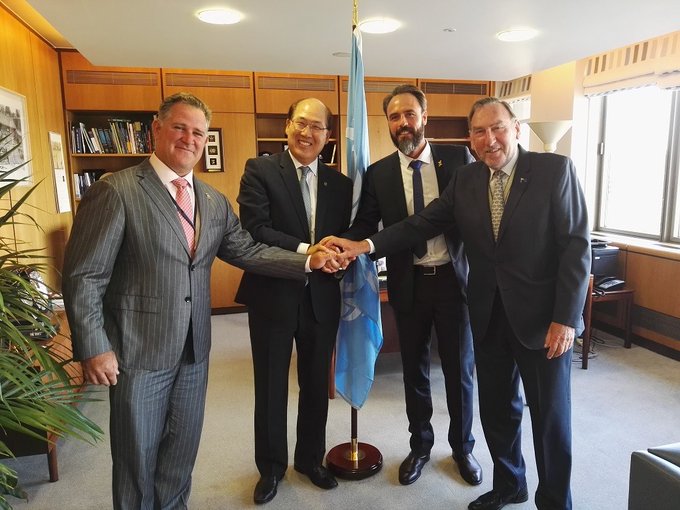
Campaigners have criticised Captain Ian Finley, a UK resident who has represented the Cook Islands at the International Maritime Organisation since 2006, for consistently defending industry interests.

By Rich Collett-White

A negotiator representing the Cook Islands at the UN who has been criticised for blocking efforts to tackle global shipping emissions has been paid at least US$700,000 since 2010 by an industry lobby group he helps run with his wife.

Campaigners said the revelation was a “slap in the face” for those suffering the effects of climate change in the South Pacific, where the archipelago is located.

The industry group’s General Manager Janet Strode, who is married to Captain Ian Finley, initially claimed he had had no involvement since the early 1990s, before admitting recent tax returns listing him as its Secretary were correct.

Finley, who is based in Dorset, UK, but has been the Cook Islands’ ambassador to the International Maritime Organisation (IMO) since 2006, has been praised for his contributions to the agency by its Secretary-General.

But campaigners accuse him of consistently defending industry interests, having recently backed a proposal that could have exempted an estimated 85 percent of shipping from emissions limits.

A spokesperson for the country’s foreign ministry denied there was any conflict of interest, criticising what he called “highly regrettable attempts to discredit the Cook Islands and its Permanent Representative Finley” over its approach to shipping emissions.

He said the “refusal to accept that we are capable of making our own decisions in a forum such as IMO” was “utterly patronising and insulting”.

The finding comes as a working group of the IMO, the UN agency that regulates shipping, has been meeting this week to discuss emissions reduction plans for the industry before the agency’s environmental committee meets in November.

London’s International Shipping Week opened on Monday, with the UK government calling on the shipping sector to hit “absolute” zero emissions by 2050, saying the target, which would be “a significant increase of ambition for the sector”, needed to be agreed via the IMO.

The Cook Islands, a voluntary dependency of New Zealand, are known for fishing, tourism, offshore finance and a national shipping registry that last year hit the headlines when two ships were struck off for allegedly breaking U.S sanctions by transporting Iranian oil.

International Parcel Tanker Association

U.S tax returns for the UK-based International Parcel Tanker Association (IPTA), dating back to 2010, list Finley as Secretary of the organisation, which describes itself as “serving the interests of the chemical tanker industry for more than 25 years”.

Between 2010 and 2012, Finley earned a total of US$713,138 for the 40 hours per week he worked for the IPTA, which is registered as a non-profit, tax-exempt organisation.

Tax returns from 2013 onwards list him as receiving £0 compensation personally, although the filings say expenses of a similar value were paid to “current officers, directors, trustees, and key employees”, which would include Finley. The latest return available, for 2018, listed total compensation for all staff as US$228,971.

Finley is not currently listed on the IPTA’s entry in the EU’s lobbying transparency register, and previous copies of the register coinciding with the tax returns show only one employee working part-time for the organisation.

Finley and Strode would not confirm whether he had received any income from the organisation since 2012 or provide DeSmog with the most recent tax returns.

They also would not explain why Strode was missing from the US filings, or why Finley is not listed in the EU lobbying register.

When asked, Strode, who represents the IPTA at the IMO, said payments received from the organisation were not all “directly related to salary, as they cover operating expenses, travel, meeting rooms, third party consultants etc.”, as well as her retainer. Finley’s address is the same as that given on the IPTA’s website.

The organisation hosted a conference in 2016, chaired by Finley, at which the Secretary-General of the IMO, Kitack Lim, praised Finley for his work as Cook Islands Ambassador in his keynote speech.

The year before, outgoing Secretary-General Koji Sekimizu said in a farewell speech that he had had “many difficult but enjoyable times” with Finley at the IMO, and said that “Sometime ago, a meeting without the duet of Ian and Janet was not an IMO meeting”, referring to Finley and his wife.

According to public VAT records, Finley has also been the owner of a company called Parcel Tanker Associates, which has since been renamed simply to “Ian Finley”. Strode described the IPTA as “effectively a client” of this consultancy.

As a non-UN member, the Cook Islands first applied to join the IMO in 1999, when the body’s executive body recommended its membership bid. However, it struggled to gain enough support for a number of years, with New Zealand making a plea in 2004 for IMO members to support its application in an attempt to accelerate the process.

Minutes for a 2006 IMO meeting list Finley, who previously represented Panama at the UN agency, as saying the Cook Islands government was determined to ensure “both living and non-living resources would be developed in a sustainable manner that ensured maximum benefit”.

But he has been criticised in recent years for opposing measures to tackle shipping emissions, which currently account for around 3 percent of global emissions but which campaigners say could rise to 10 percent by 2050 without urgent action.

‘Corporate Capture’

Campaigners said Finley’s work at the IPTA was at odds with the IMO’s stated aim of “energetically” cutting greenhouse gas emissions from shipping operations.

James Gamble, Head of Pacific Environment, an alliance of non-governmental organisations (NGOs) which has consultative status at the IMO, said it was an “intrusion by the shipping industry into the affairs of under-resourced countries” and a “slap in the face to people who are suffering the most extreme effects of climate change.”

Calling on the IMO to “crack down on this type of corporate capture”, he also claimed Finley’s opposition to slowing ship speeds, which would help cut emissions, may have “actually cost the industry money” due to the higher fuel costs associated with higher speeds.

Dr Lucy Gilliam, a shipping policy expert with marine NGO, Seas At Risk, said Finley’s positions at the IMO often “run counter” to proposals from other Pacific island states that argue for stronger climate action because of the threats they face from “aggressive flooding, storms and rising sea levels”.

She pointed to a proposal co-sponsored by the Cook Islands in April that would have exempted ships arriving to or departing from all developing countries from IMO emissions regulations – including China, the largest exporter of products in the world.

The exemption, she said, would have left an estimated 85 percent of global shipping without any greenhouse gas limits, according to calculations by Dr Tristan Smith, a shipping expert at University College London.

Although the proposed waiver was not accepted at the time, the committee agreed the issue could be revisited before January 2026, an IMO spokesperson said.

Asked about Finley’s dual role as IPTA secretary and IMO ambassador, an IMO spokesperson said representatives were selected by member states and that “representatives would be subject to the national laws of that country in relation to any conflict of interest or ethics.”

‘Full confidence’ of Cook Islands

Responding to questions sent to Finley, Josh Mitchell, Director of the Cook Islands’ Ministry of Foreign Affairs, said Finley’s position as IPTA Secretary was known to the government and that it was satisfied there was no conflict of interest at play.

“[Finley] has the full confidence of our Government in representing the interests of the people of the Cook Islands in our representation to the IMO,” Mitchell said. “We would simply clarify again that Captain Finley’s role is to follow our instruction and direction in conveying the position of the Cook Islands government, that he has been doing since 2006.”

Mitchell would not comment on whether Finley was still being paid by the IPTA and criticised what he called “highly regrettable attempts to discredit the Cook Islands and its Permanent Representative Finley” over the country’s approach to shipping emissions.

He said the “Cook Islands continues to remain open to considering all options for further [greenhouse gas] emissions reductions in the short, medium or long term.”

Responding to the specific criticisms of Finley’s position on the shipping emissions waiver proposal, Mitchell said the Cook Islands government had not proposed “a blanket exemption of any sort”. Rather, he said, their proposal “built on the waiver that already exists” within the IMO’s International Convention for the Prevention of Pollution from Ships.

Mitchell said that as a small island developing nation “on the front line of climate change”, the Cook Islands government remained “extremely concerned that any further measures to be adopted at the IMO and elsewhere do not come at a cost to our economy, already crippled by the impacts of the COVID19 pandemic.”

“Frankly, we find this refusal to accept that we are capable of making our own decisions in a forum such as IMO, utterly patronizing and insulting to our country,” he added.

Strode said the IPTA had “never had any interest in the impact any legislation under consideration at the IMO might have on the Cook Islands and most definitely has no interest in or influence on the Cook Islands government’s consideration of the issues at hand.”

As far as she was aware, she said, contributions from industry to the IMO had “never questioned the need to decarbonise and have always tried to be constructive.”

In June, the IMO adopted new binding measures to tackle international shipping emissions that require all ships to measure and reduce their annual carbon dioxide emissions per tonne of cargo carried. The new requirements are due to come into effect from January 2023, with ships set to receive an energy efficiency rating and poorly rated ships asked to submit improvement plans, though there are currently no penalties for non-compliance.

The rules have been criticised by climate campaigners for not taking a tougher line on emissions, however, with the NGO Seas At Risk describing them as “business as usual”.

A package of efficiency measures agreed at the IMO last year is expected to cut emissions from the sector by just 1 percent by 2030, according to the International Council on Clean Transportation thinktank, with the industry’s greenhouse gas footprint rising by 14, rather than 15 percent, over the coming decade.

SOURCE: DESMOG/PACNEWS

Australian nuclear-powered submarine deal raises concerns in the region, strikes at heart of Pacific regionalism

Nuclear activists have hit out at Australia’s decision to acquire nuclear-powered submarines in partnership with the United States and United Kingdom.

It’s Australia’s most significant defence change in decades and replaces a $90 billion(US$66 billion) contract it had with France to build 12 diesel-powered submarines.

In a press conference announcing the deal, Australia’s Prime Minister Scott Morrison said it signals that “we have no doubt entered a new era”.

Pacific Network on Globalisation(PANG)campaigner Joey Tau said he was concerned for what impact this will have on Australia’s commitment to the Treaty of Rarotonga.

“It contradicts what it has continued to commit to the Pacific in terms of ensuring it is a nuclear free zone,” he said.

Both Australia and New Zealand are party to the Treaty which which establishes a nuclear weapons free zone in the South Pacific.

Morrison said nuclear powered submarines would not extend to nuclear weapons and that Australia will meet all its nuclear non-proliferation obligations.

New Zealand’s Prime Minister Jacinda Arden swiftly responded to the news banning the new submarines from entering its waters.

In the Pacific, the legacy of nuclear weapons testing is strong, with many people in Marshall Islanders still plagued by health and environmental issues after the US conducted weapons tests in the 1940s and 50s.

Marshall Islands National Nuclear Commission Chair Rhea Moss-Christian said when it comes to nuclear issues in the region, Pacific countries should be consulted.

“Not only the Marshall Islands but Kiribati and French Polynesia, we have nuclear legacies we are still contending with… for the benefit of regional partnership consultation is the way to go,” she said.

While most Pacific countries have remained quiet in response to the news, the Federated States of Micronesia said the news was “a surprise” but they have full trust in the United States and Australia “in the promotion and protection of a free and open Indo-Pacific”.

The general secretary of the Pacific Conference of Churches (PCC), James Bhagwan, said the move was a serious concern for a region still dealing with the fallout from nuclear testing.
“Three weeks ago, the current chair of Pacific Islands Forum, the prime minister of Fiji (Frank Bainimarama) reiterated that we want a blue Pacific that is nuclear free. It’s at the heart of Pacific regionalism.

“From the Sixties, from when the very first tests started in our region, this is something that government, civil society, churches have all been very adamant against, to keep our Pacific nuclear-free. We are still dealing with the fallout from nuclear testing.”

The pact comes as the Pacific Islands Forum continues to protest about Japan’s plans to dump treated nuclear waste water into the ocean from the Fukushima power plant, that was damaged in an earthquake and tsunami ten years ago.

The Federated States of Micronesia, a country with close ties to the US, was diplomatic in conveying how the pact caught it by surprise.

A spokesperson for the FSM government said it had “trust, faith and confidence” in the U.S and Australia in their promotion, and protection, of a Free & Open Indo-Pacific

“It can safely be assumed that the United States and Australia are making security decisions with the best interests of the Pacific in mind, because our vitality is their vitality. That said, this news is a surprise.

“Micronesia is confident this decision makes our country safer, but Micronesia also looks forward to learning more about how precisely that is the case.”

Meanwhile, France has reacted with disappointment over the pact, as it means Australia has dumped an earlier lucrative deal in which it was to have purchased French diesel-electric subs.

But rather than loss of business, Pacific Islands are more concerned about existential loss, having first hand experience of nuclear testing by French, American and British.

“The ocean impacts our life,” Rev Bhagwan said.

“We are the fish basket of the world. So if one submarine comes in and something goes wrong and the nuclear waste from that submarine gets into our ocean, that’s too much already.”

Rev Bhagwan questioned how the pact stacks up with Scott Morrison’s claims that Australia considers Pacific Islands countries as vuvale, or family.

“This is our Pacific way. Sometimes we don’t agree, but we always act in the best interests, we always come and support one another,” he said.

“This is not Australia acting in the best interests of the rest of its Pacific Vuvale.”

China has described the pact as being detrimental to regional peace and stability.

Relations between Beijing and Canberra are at an all-time low, and a spokesman for the Chinese government urged Australia to think carefully whether to treat China as a partner or a threat.

SOURCE: ABC/RNZ PACIFIC/PACNEWS

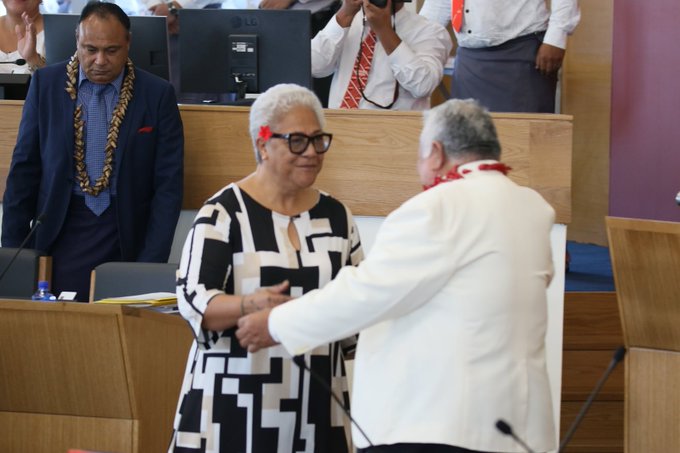
Samoa political rivals shake hands, hug before swearing-in

Former Samoa Prime Minister Tuilaepa Sailele Malielegaoi shook hands with his successor Fiame Naomi Mata’afa as her Cabinet Ministers and Members arrived for Friday’s Parliament session.

Ahead of the 18 HRPP elected Members of Parliament swearing-in ceremony Friday morning, Samoa’s two dominant parties have finally set aside their differences, in what would hopefully bring to an end the four-months running political crisis.

The Minister of Works Transport and Infrastructure, Olo Fiti Vaai was the first to greet the members of the rival party who were already seated on the right side of the House.

His gesture was received with a hug from Tuilaepa who stood up and crossed the floor to greet his successor Mata’afa.

It was a relief from those inside the House to see the leaders of the country finally meeting halfway, smiling and hugging.

The development comes after the Supreme Court on Thursday, following an application filed by the former ruling party, ruled that the HRPP members are sworn in by the Speaker of the House, Papalii Lio Masipau.

Papalii has a duty to administer the oath of allegiance for the unsworn MPs, the Court declared.

Those present in the Parliament included heads of government offices as well as relatives of the elected HRPP members to witness the delayed swearing-in.

SOURCE: SAMOA OBSERVER/PACNEWS

‘Tipping point’ for climate action: Time’s running out to avoid catastrophic heating

The temporary reduction in carbon emissions caused by global COVID-19 lockdowns did not slow the relentless advance of climate change.

Greenhouse gas concentrations are at record levels, and the planet is on path towards dangerous overheating, a multi-agency climate report published on Thursday warns.

According to the landmark United in Science 2021, there “is no sign of growing back greener”, as carbon dioxide emissions are rapidly accelerating, after a temporary blip in 2020 due to COVID, and nowhere close to the targets set by the Paris Agreement.

“We have reached a tipping point on the need for climate action. The disruption to our climate and our planet is already worse than we thought, and it is moving faster than predicted”, UN Secretary General António Guterres underscored in a video message. “This report shows just how far off course we are”, he added.

According to scientists, the rising global temperatures are already fueling devastating extreme weather events around the world, with escalating impacts on economies and societies. For example, billions of working hours have been lost due to excessive heat.

“We now have five times the number of recorded weather disasters than we had in 1970 and they are seven times more costly. Even the most developed countries have become vulnerable”, said the UN chief.

Guterres cited how Hurricane Ida recently cut power to over a million people in New Orleans, and New York City was paralysed by record-breaking rain that killed at least 50 people in the region.

“These events would have been impossible without human-caused climate change. Costly fires, floods and extreme weather events are increasing everywhere. These changes are just the beginning of worse to come”, he warned.

The report echoes some of the data and warnings from experts in the last year: the average global temperature for the past five years was among the highest on record, and there is an increasing likelihood that temperatures will temporarily breach the threshold of 1.5° Celsius above the pre-industrial era, in the next five years.

The picture painted by United in Science is bleak: even with ambitious action to slow greenhouse gas emissions, sea levels will continue to rise and threaten low-lying islands and coastal populations throughout the world.

“We really are out of time. We must act now to prevent further irreversible damage. COP26 this November must mark that turning point. By then we need all countries to commit to achieve net zero emissions by the middle of this century and to present clear, credible long-term strategies to get there”, urged the UN chief.

The 2021 United Nations Climate Change Conference, also known as COP26, is scheduled to be held in the city of Glasgow, Scotland between 31 October and 12 November 2021. The pivotal meeting is expected to set the course of climate action for the next decade.

“We must urgently secure a breakthrough on adaptation and resilience, so that vulnerable communities can manage these growing (climate) risks…I expect all these issues to be addressed and resolved at COP26. Our future is at stake”, Guterres emphasised.

“We are not yet on track towards the Paris 1.5 to 2 degrees’ limit, although positive things have started to happen and the political interest to mitigate climate change is clearly growing but to be successful in this effort, we have to start acting now. We cannot wait for decades to act, we have to start acting already in this decade”, added Prof. Petteri Taalas, World Meteorological Organisation’s secretary general.

The report also cites the conclusions of the most recent IPCC report: the scale of recent changes across the climate system are unprecedented over many centuries to many thousands of years, and it is unequivocal that human influence has warmed the atmosphere, ocean and land.

Concentrations of the major greenhouse gases – carbon dioxide (CO2), methane (CH4) and nitrous oxide (N2 O) continued to increase in 2020 and the first half of 2021.

According to WMO, reducing atmospheric methane (CH4) in the short term, could support the pledges of 193 Member States made in Paris. This measure does not reduce the need for strong, rapid and sustained reductions in CO2 and other greenhouse gases.

Meanwhile, the UN Environment Programme(UNEP), warns that five years after the adoption of the Paris Agreement, the emissions gap (the difference between where emissions are heading and where science indicate they should be in 2030) is as large as ever.

Although the increasing number of countries committing to net-zero emission goals is encouraging, to remain feasible and credible, these goals urgently need to be reflected in near-term policy and in significantly more ambitious actions, the agency highlights.

“Last year, we estimated that there was 5.6 percent drop in emissions and since the lifetime of carbon dioxide is so long, this one year anomaly in emissions doesn’t change the big picture. We saw some improvements in air quality, these short-lived gases, which are affecting air quality. We saw positive evolution there. But now we have returned more or less back to the 2019 emission levels”, further explained the WMO chief.

The report explains that the annual global average temperature is likely to be at least 1 °C warmer than pre-industrial levels (defined as the 1850–1900 average) in each of the coming five years and is very likely to be within the range of 0.9 °C to 1.8 °C.

There is also a 40 percent chance that the average temperature in one of the next five years, will be at least 1.5 °C warmer than pre-industrial levels. However, it is very unlikely that the 5-year average temperature for 2021–2025 will pass the 1.5 °C threshold.

High latitude regions, and the Sahel, are likely to be wetter in the next five years, the report also warns.

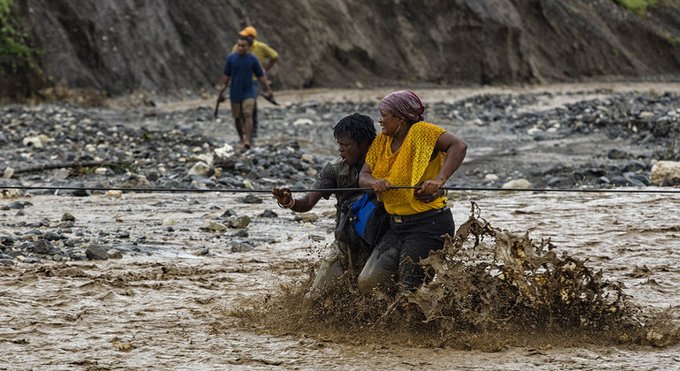
In Seychelles, efforts are undertaken to improve coastal protection from flooding caused by storms and a rise in sea level due to climate change.

“We don’t know what’s going to happen to the Antarctic glacier, where we have the biggest mass of ice worldwide and in the worst case, we could see up to two meters of sea level rise by the end of this century if the melting of the Antarctic glacier happens in a speedier manner”, cautioned Professor Taalas.

Global sea levels rose 20 cm from 1900 to 2018, and at an accelerated rate from 2006 to 2018.

Even if emissions are reduced to limit warming to well below 2 °C, the global average sea level would likely rise by 0.3–0.6 m by 2100 and could rise 0.3–3.1 m by 2300.

Adaptation to the rise will be essential, especially along low-lying coasts, small islands, deltas and coastal cities, explains WMO.

The World Health Organisation (WHO) warns that rising temperatures are linked to increased heat-related mortality and work impairment, with an excess of 103 billion potential work hours lost globally in 2019 compared with those lost in 2000.

Moreover, COVID-19 infections and climate hazards such as heatwaves, wildfires and poor air quality, combine to threaten human health worldwide, putting vulnerable populations at particular risk.

According to the UN health agency, the COVID-19 recovery efforts should be aligned with national climate change and air quality strategies to reduce risks from cascading climate hazards, and gain health co-benefits.

“We had this temperature anomaly in western Canada and the United States, where we were up to 15 degrees warmer temperatures than normally. And that led to a record breaking, forest fires and major health problems, especially amongst elderly people”, highlighted WMO Secretary General.

SOURCE: UN NEWS CENTRE/PACNEWS

Fiji eases restriction measures as more people get vaccinated

Border restrictions on Fiji’s main island Viti Levu have been lifted Friday.

The move came after 62 percent of all adults are fully vaccinated and over 97 percent of the population have received their first jab.

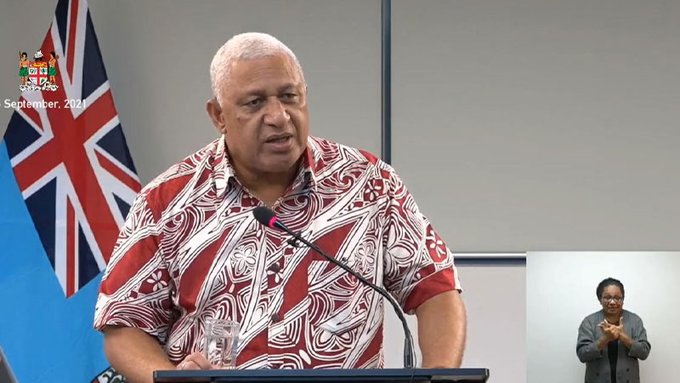
Prime Minister Voreqe Bainimarama said domestic travel is now open for the whole of Viti Levu.

“Inter-island travel, however, will remain highly controlled, including to Vanua Levu, until we achieve higher vaccination coverage in Vanua Levu and our outer islands,” Bainimarama said.

“With domestic travel open, public service vehicles will be able to operate at 70 per cent capacity.”

“Employers who were required under COVID-safe measures to transport staff to and from work will no longer need to do so.”

“Everywhere in Fiji, social gatherings of up to 20 people will be permitted indoors in people’s homes. For outdoor venues, we will allow gatherings of up to 30 people.

“From 04 October, all workplaces, tertiary institutions, houses of worship, hotels, restaurants, cafés, cinemas, gyms, pools, tattoo parlours will be able to open at 70 percent capacity, but only to fully-vaccinated persons. As part of our Vaccination Authentication Exercise –– we will be rolling out a VAX-Check tool that allows for real-time digital verification of vaccine status that venues can use to confirm the vaccine status of their patrons.

“When the doors of these venues open, all other COVID-safe measures must be strictly enforced. That means masks must be worn, two metres of physical distance should be maintained where possible, and careFIJI must be installed on everyone’s phones, with Bluetooth switched on. These relaxations are not for anyone to tread carelessly. We’re introducing new regulations that allow for spot checks on venues, businesses and houses of worship. Those who do not respect these measures risk serious fines or being shut down. I repeat you will be fined heavily or shut down if you do not follow these regulations”

“We must wield these new freedoms responsibly. Our journey to the new normal is a marathon, not a sprint. We have to move forward in step with the science at a careful and responsible pace. This war is not over and the defence is to continue to test, trace, and isolate COVID-19 positive patients,” said Bainimarama in his address to the nation Thursday.

Bainimarama said their advice for Fijians is to avoid places with lower vaccination coverage.

“If you are an unvaccinated Fijian living in an area with low vaccine coverage, do not wait another day to get the jab and if you are only partially vaccinated please maintain strict adherence to every COVID-safe measure and make sure to get your second jab.”

Bainimarama stressed that most Fijians are doing what needs to be done to put an end to this deadly virus.

“At the 70 percent threshold, the curfew hours for Viti Levu will move from 10 pm to 4 am. At the 80 percent threshold, the curfew will be from 11 pm to 4 am, we expect that all businesses will fully re-open to fully-vaccinated Fijians, all sports –– including team sports –– can be played again, like rugby, football and netball, and stadiums can re-open.

“In short, life in Fiji will look much like it did before this second wave of the virus struck us. But we need to strive for more than the Fiji of six months ago. Our goal is to free our country –– and our economy –– from the rut of the pandemic.

“For the sake of the tens of thousands of Fijians –– and their families –– who depend on our tourism industry, we are also preparing to re-open Fiji as one of the world’s safest tourism destinations. That re-opening depends on more than our vaccination rates –– it depends on the vaccination rates of other countries, as well as a great deal of work behind the scenes. For Fiji’s part, we are ticking every box of readiness,” Bainimarama said.

He said Fiji was “quickly becoming one of the safest countries in the world”.

“With well over half of adults in Fiji fully vaccinated, our COVID-19 Risk Mitigation Taskforce – which includes our top medical and policy experts – has developed a careful framework that details the next phase of our response.”

He said quarantine-free travel with the entire world will not be implemented in one go.

Bainimarama said it will be gradual, starting with travelers from exclusive “green list” areas with similar high rates of vaccination to Fiji and low test positivity rates.

He said once 80 percent of adults are vaccinated, Fiji will be in a position to open quarantine-free travel with other countries that have deployed Pfizer, Moderna, and AstraZeneca vaccines used in Fiji.

“At this point, that includes Australia, New Zealand, Japan, Canada, Korea, Singapore, and parts of the USA. We will be establishing mutually recognised vaccine protocol agreements with these governments, which essentially shows that we are comfortable with their levels of vaccine coverage and that we can rely on the vaccine status of their travelers and, vice versa, that Fijians can prove their vaccine status when traveling abroad.”

Bainimarama said travelers from potential green list areas must be fully vaccinated and receive pre-departure approval, which will be easily obtained online.

He said although these travelers will be fully vaccinated, they must also register a negative COVID-19 test result within 72 hours of boarding their flight to Fiji.

“Once they arrive, these travelers can vacation in designated travel safe areas where they can enjoy the best of Fiji knowing that everyone they interact with will be fully vaccinated, from their fellow guests to the hotel staff, to the tour operators. We’re drawing up the boundaries of these travel safe areas in close cooperation with the tourism industry. We will have regular in-country testing and clear protocols in the event of breakthrough infections. At the rate we are going, we expect to be ready to accept travelers well before our goal of celebrating Christmas in Fiji with our friends from around the world.”

The Prime Minister said Fiji are looking at re-opening international borders by November.

“Well-established protocols for quarantine centres will remain for people who are not vaccinated or who are not traveling to Fiji from a green list country.

“And we are also accommodating for the long-awaited reunions between friends and family throughout the Fijian diaspora. Fully vaccinated travelers from green list countries can travel throughout Fiji after spending five days within a travel safe area and clearing another negative COVID-19 test result,” said PM Bainimarama.

SOURCE: PACNEWS/FBC NEWS

Fiji records 197 new cases of COVID-19, four deaths reported

Fiji has recorded 197 new cases of COVID-19 and four new deaths Thursday, increasing the total number of cases to 49,517 and 542 deaths since the outbreak that started in April.

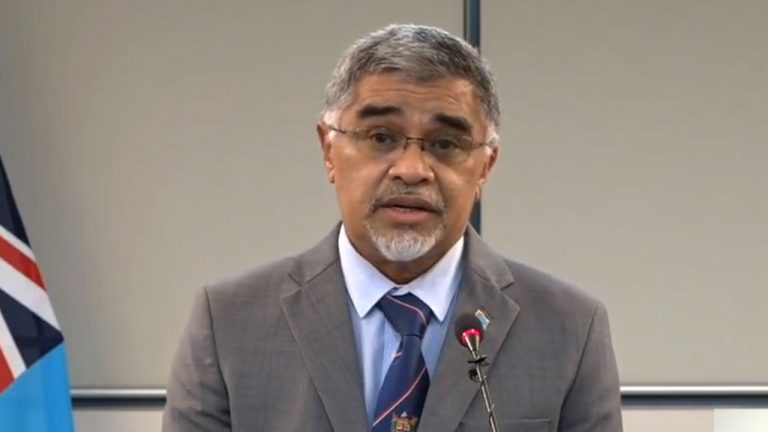
Permanent secretary for Health, Dr James Fong said 93 cases are from the Western division, 98 cases are from the Central division in Vitilevu, Fiji’s main island and six cases are from the Eastern diivision.

“There have been 81 new recoveries to report since the last update, which means that there are now 12,978 active cases. 1,343 active cases are in the Central Division, 11,314 active cases in the Western division, one active case in the Northern division (Macuata), and 320 active cases in the Eastern division (all in Kadavu).

There have been 49,517 cases during the outbreak that started in April 2021. We have recorded a total of 49,587 cases in Fiji since the first case was reported in March 2020, with 35,686 recoveries,” said Dr Fong.

He said there are four COVID-19 deaths reported for the period of 08- 16 July 2021. All four deaths were reported from the Central division.

“There have been five more deaths of COVID-19 positive patients. However, these deaths have been classified as non-COVID deaths by their doctors. The doctors have determined that these deaths were caused by serious pre-existing medical conditions and not COVID-19.

“There have now been 544 deaths due to COVID-19 in Fiji, with 542 of these deaths during the outbreak that started in April this year. As of 11 September, the national seven days rolling average of COVID-19 deaths per day is 1.3. The seve day rolling average for COVID-19 deaths per day in the Central division is one and in the Western division is 0.3.

“We also have recorded 379 COVID-19 positive patients who died from the serious medical conditions that they had before they contracted COVID-19; these are not classified as COVID-19 deaths,” Dr Fong explained

He said there are currently 124 COVID-19 patients admitted to hospitals in Fiji.

“37 patients are admitted at the Lautoka Hospital, four patients are admitted at the FEMAT field hospital, and 83 are admitted at CWM hospital, St Giles, and Makoi. Five patients are considered to be in severe condition, and four are in critical condition,” said Dr Fong.

A total of 352,643 samples have been tested since this outbreak started in April 2021, with 395,504 tested since testing began in March 2020.

“The national seven-day average daily test positivity is 12.4 percent, which is on a downward trend but still indicating a high level of community transmission,” he said.

To date, 580,504 adults in Fiji have received their first dose of the vaccine and 372,434 have received their second doses.

“This means that 97.7 percent of the target population have received at least one dose and 63.5 percent are now fully vaccinated nationwide,” said Dr Fong.

SOURCE: PACNEWS

Stay connected

529FansLike
172FollowersFollow
156SubscribersSubscribe
- Advertisement -