Home Blog Page 1134

PNG Institute of Medical Research to conduct Covid-19 genome sequencing tests

The Papua New Guinea Institute of Medical Research (IMR) is being prepared to conduct genomic sequencing of the Coronavirus (Covid-19) test beginning next month, National Pandemic Response Deputy Controller Dr Daoni Esorom says.

“We need to speed up tests and results for a better response to the pandemic. Speed matters for us to be able to know the actual status and for use to respond swiftly and effectively against the virus threat,” he added.

“The results of the Covid-19 test samples sent to Australia’s Doherty Institute in Melbourne more than three weeks ago for genomic sequencing to determine whether they were the Delta variant had yet to return. We are into the fourth week and it is a big concern for us.

“At the moment, the turnaround time for us is too long (and) that is unacceptable. If we have a surge in the country, we just cannot manage (with) very slow turnaround in results.

“That is not good in guiding us as to where the Delta variant is heading, how it is spreading and at what speed it is spreading.

“If we have to increase our turnaround time, we have to build our own capacity and that is what we are doing with IMR. That is our only solution for this problem now.

“We had a meeting with the extractive industry on Monday they have agreed to pay for the equipment (machines and accessories) that IMR will be using for genome sequencing.

“We are looking at next month to make sure that we get IMR up and running (their capacities, training and equipment).

“It is only through testing that we can detect cases and if we are not testing enough, we will just have many respiratory illnesses and many people will be dying without actually really knowing if they are dying from the vial virus (original Covid-19) or the Delta variant,” he added.

Esorom said the IMR capacity was needed to do the genome sequencing not only of Covid-19 strains but also other strains of Coronaviruses.

Meanwhile, the Port Moresby General Hospital (PMGH), despite being the country’s national referral hospital, continues to refer patients overseas for treatment, which has to stop, chief executive officer Dr Paki Molumi says.

Speaking during the hospital’s commemoration of Papua New Guinea’s 46th Independence and farewell of 43 retiring staff on Wednesday, Dr Molumi said: “We have to look back on how far we have come as a hospital, serving this country for 46 years. Our country has been politically independent for 46 years now (but) we are striving to be economically independent.

“Health must contribute to Papua New Guinea achieving economic independence by first being health independent.

“Health independent meaning, our citizens must not travel to a foreign hospital seeking treatment, we must have specialist services here in our country.

“We must rely less on outside help to provide healthcare to our citizens, we must have the capacity to look after our own citizens’ health and we should be looking towards attracting them to come and seek healthcare here,” he said.

SOURCE: THE NATIONAL/PACNEWS

Fiji PM launches schools vaccination programme and rollout of Mordena vaccine

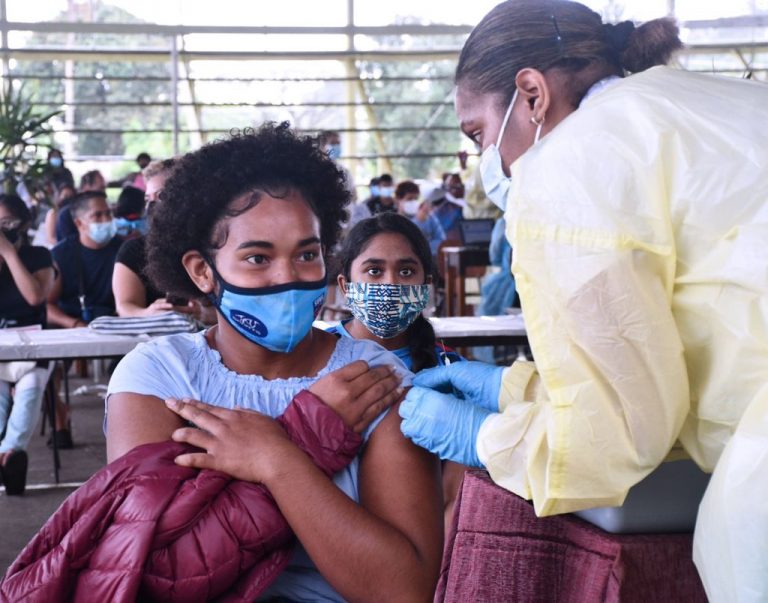
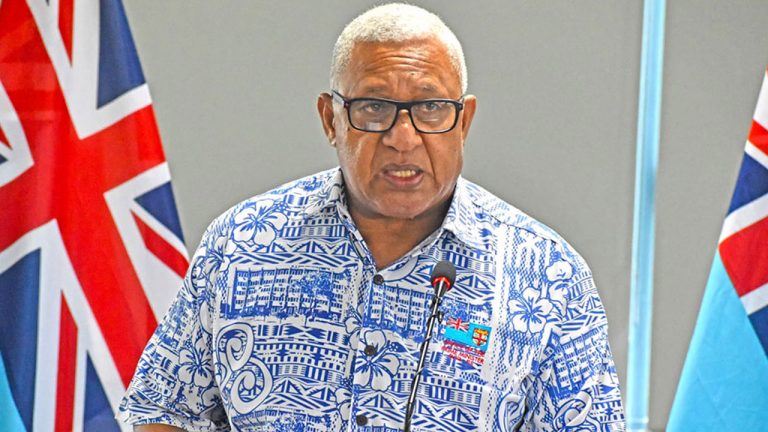
Fijian Prime Minister Voreqe Bainimarama today launched the school vaccination programme and rollout of the Moderna vaccine for children aged 15 years to 17 years, a collaboration between the Ministry of Health and Medical Services, Ministry of Education, Heritage and Arts, and Ministry of Communication.

According to the Prime Minister, Fiji is the safest it has been since April thanks to the Fijian people’s exceptional effort to vaccinate our adult population. This exceptional effort to date has resulted in the 66 percent of all adults in the country being fully vaccinated and 98 percent have received their first dose.

Prime Minister Bainimarama continued to say that Fiji learned quickly from keeping an eye on the early vaccine rollout in more advanced countries where preventable death occurred when misinformation was allowed to fester.

PM Bainimarama was adamant that this would not be the case in Fiji.

“We took decisive measures to get people protected quickly through vaccine requirements for the workplace and to access unemployed benefits – and it worked. We are saving lives. We are moving forward. We have surpassed the rate of vaccination in most higher income countries, and are well on our way to achieving a 100 percent vaccination rate of the adults in Fiji. Until every Fijian that is eligible is vaccinated, our teams of nurses and doctors will continue to make sure that the vaccines reach every corner of our islands.”

Thanking all Fijians for the successful vaccine rollout, the Prime Minister stated that life in Fiji is now gradually becoming more familiar. After the containment area borders were lifted, the Prime Minister expressed how moved he was by the images he saw across Viti Levu of friends and family reuniting after five long months apart for the sake of our COVID containment effort.

“Now, we can focus on providing the same level of protection against the COVID-19 disease for our children, because Fiji will not be Fiji until our children are back in school where they ought to be,” said the Prime Minister.

PM Bainimarama in his address thanked all children and parents for keeping up with school work through online classes or worksheets provided by the Ministry of Education, Heritage and Arts.

The Prime Minister also acknowledged all teachers especially those who have trekked for miles to get work sheets to their students in support of the Fijian Government’s efforts to ensure that no child is left behind. Additionally, the Prime Minister also recognised the efforts of parents who continue to engage their children in extracurricular activities, teaching life skills like home gardening, cooking and home maintenance activities.

Whilst launching the vaccination programme, the Prime Minister also thanked the government of the United States of America for making the Moderna vaccine available to Fiji and the New Zealand government for the Pfizer vaccine which will be rolled out later for children who are 12 to 14 years old.

“After completing all of the necessary clinical trials for safety and efficacy for children, hundreds of thousands of young people around the world have already received the Pfizer and Moderna vaccines. Adding to that total, we have four students here with us this morning, Mohammed Taireem of Bhawani Dayal Arya College, Litia Golea Volavola of Gospel High School, Saula Muriwaqa of Queen Victoria School and Kristal Tasha Calo-oy of Yat Sen Secondary School who have been given consent by their parents to receive the first jabs of the Moderna vaccine. I want to thank these patriotic young people and their parents for their commitment to protect themselves and others. You should be very proud of yourselves today, and we are all certainly proud of you. Well done!”

PM Bainimarama in his address also encouraged all parents of children within the vaccination age group to get their children vaccinated and informed all parents that doctors, medical researches and health care professionals at the Ministry of Health and Medical Services are available to assist them in making this important decision for their children.

“As parents and guardians, you will be asked to register your consent for your children to receive this vaccine. We encourage you to do so online through the Vaccine Registry portal that is posted on the Fijian Government and Ministry of Health Facebook pages. Registration is very simple. It requires the Birth Registration Number, Citizenship Certificate Number or Permit Number from both the parent or guardian, and the child, entered alongside correlating dates of birth.”

The Prime Minister concluded his address by emphasising the need for all parents to keep themselves updated on the Moderna vaccine, its rollout program and to learn more about the benefits of this vaccine for their children on the Fijian Government’s Facebook page as well as across the air waves on radio and in the newspapers.

PM Bainimarama also reminded parents by consenting to their children getting vaccinated, they are consenting to their being protected against a deadly disease, which assists in stopping community transmission.

Meanwhile, the Moderna vaccine is first being administered to 15 to 17 year olds who are nearing the end of their secondary education and need to sit for their external exams to progress onto tertiary education.

The vaccination programme will add a powerful layer of protection for our children against COVID-19 to support their return to school so Fiji’s education revolution is back underway.

SOURCE: FIJI GOVT/PACNEWS

Fijian Drua unveils the first group of five exciting players

0

The Fijian Drua has today unveiled the first five players signed by the Club for its debut Super Rugby Pacific season in 2022.

Electric backline utility Napolioni Bolaca, Flying Fijians’ hooker Tevita Ikanivere, blockbusting winger Onisi Ratave, powerful loose forward Nemani Nagusa and rising star halfback Simione Kuruvoli are onboard for Super Rugby Pacific’s newest side.

The five also attained the coveted 1 through 5 ‘Drua Numbers’, with Olympic Gold Medalist Bolaca honoured as Fijian Drua Number 1. All players in the squad will be assigned a number they will retain for life. The numbering system is based on a combination of factors, which include the Club’s depth chart and sign up commitments from each player.

Interim Fijian Drua CEO Brian Thorburn said the Club was delighted to make its maiden squad-related announcement: “We’re steaming ahead towards our historic first season, and today’s naming signals our intentions – we are going to delight rugby fans with that typical Fijian flair and playing style. It also underscores our commitment to offer a pathway for Fijian players into Super rugby. The competition is about to get a whole lot more exciting, and we can’t wait for rugby fans to see our Fijian Drua in action.”

The Fijian Drua will announce a further 32 players over the next several weeks.

Thorburn added: “The inclusion of Napolioni Bolaca Fijian Drua Number 1 is well deserved. He exemplifies some of the key values of our Club, and plays the game with pure joy and heart. ‘Naps’ is an excitement machine with a ‘never say die’ attitude in whichever position he plays. Of course, Fijian rugby fans are familiar with what he tells himself when he is tired.”

Fiji Rugby General Manager High Performance Unit Simon Raiwalui said the today’s announcement sets the foundation for what fans could expect from the full squad.

“All five players unveiled today are homegrown and have come through our Fiji Airways Fijian 7s, Age-Group or High Performance programmes. It is wonderful to be able to reward these players with a professional contract to play in the world’s best club rugby competition.”

Raiwalui expanded on the attributes of the first tranche of players.

“Naps is World Rugby Sevens Series’ top point scorer for 2019/2020, and will be an excellent backline utility option in the squad as a flyhalf, fullback or winger.”

“Hooker Tevita Ikanivere has a wonderful story. He was the Fiji-U20 Captain in 2018 when the side won the World Rugby Under-20 Trophy to gain promotion into the 2019 World Rugby U20 Championship. Tevita has played for the Fiji Warriors (2019; 2 caps), the former NRC Drua (2019; 7 caps) and has a Flying Fijians cap to his name (2020 Autumn Nations Cup against Georgia).”

“Winger Onisi Ratave has been part of the extended Fijian 7s and Flying Fijians squads in 2021. He is currently making waves for Bay of Plenty in New Zealand’s NPC competition, and will bring the same speed and power to the Fijian Drua.”

“Nemani Nagusa returns home with valuable international experience with Stade Aurillacois Cantal Auvergne in France’s Pro D2 and the Newcastle Falcons in England’s Premiership. As a former 7s player, he possesses power and offload skills and will be a valuable addition to the back-row.”

“Finally, Simione Kuruvoli is yet another home-grown star who has come through the ranks of the Fiji U-20s and Fiji Warriors. He already has two Flying Fijians caps, and really held his own against the world’s best halfback earlier this year when we played the All Blacks. This is just reward for his patience and toil over these years.”

The Fijian Drua will also reveal its coaching staff shortly. A new brand, website, social channels will also follow, along with a number of exciting membership options for fans and juniors.

SOURCE: FRU/PACNEWS

Pacific Oceania clinch Davis Cup promotion

0

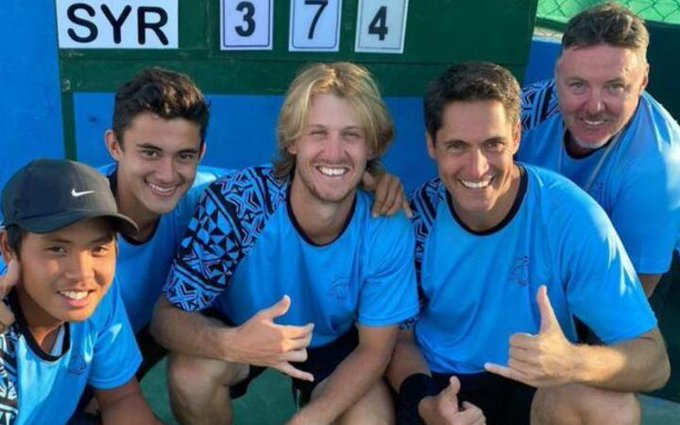
The Pacific Oceania men’s tennis team is celebrating a Davis Cup promotion that’s been almost a decade in the making.

The regional team beat Syria on Saturday to clinch promotion from Asia Oceania Group Three, alongside Hong Kong and Vietnam.

They’ll contest the Davis Cup World Group Two Play-offs in February for one of 12 spots in the main draw.

Cook Islands veteran Brett Baudinet was a part of the Pacific Oceania team promoted to Group Two back in 2009, before being relegated three years later.

“(It’s been) a long wait, a long battle so it’s great, and especially with two young boys (Vanuatu’s Clement Mainguy and Heimanarii Lai San from Tahiti),” he said.

“It’s their debut so what a great way for them to start, winning our Group Three and helping the team move up to Group Two.”

Pacific Oceania has won all six head to head match-ups against Syria, dating back to 1996, but had to pull out all the stops in Amman, Jordan to keep their streak alive.

Clement Mainguy was beaten 6-2 6-1 by Hazem Naw in the opening singles rubber but the Vanuatu teenager was praised for his performance against an unexpected opponent.

“Syria actually flew in their top player just for the last day…because he wasn’t seeded as high he actually had to play the number two singles against Clement, so he obviously had a very tough one to come into the finals,” Baudinet explained.

“But it all adds up because obviously the guy he played played in the doubles too and taking it to him on the singles doesn’t make it any easier for them going in the doubles.”

Colin Sinclair from the Northern Marianas levelled the tie with a 7-5 6-7 6-4 victory over Kareem Al Allaf in the second singles rubber before linking up with Baudinet for the decisive doubles clash.

The experienced duo won the opening set 6-3 and were a break up in the second before succumbing in a tiebreak.

But they held their nerve in the decisive set to prevail 6-4 and clinch promotion to Group Two for the first time in a decade.

“They were actually up a tie break at the start at 2-1 serving at 40-15 and we managed to play a couple of huge points and broke them back then held on to 4-all where we’re up the net and a huge net point,” Baudinet said.

“They tried hitting a passing shot pass Colin and he clipped it off the corner of his racquet and it fell over the net for a drop shot winner, so that ended up putting us up 5-4 and then we broke them to take the victory so it was awesome.”

The Pacific Oceania team ranges in age from 18 to 39 and the youngest member, Mainguy, learnt a lot from his first experience of Davis Cup at senior level.

“As a junior it was actually my first tie as well, Junior Davis Cup against Vietnam. That time I won in three sets so that brought back memories as a junior and then it was such a close game (in my senior debut),” he said.

“I had a match point against the Vietnamese guy in the third set. I didn’t manage to pull the win but it was just a great first match and very encouraging.”

Mainguy secured his first singles win against Qatar before a tough outing against Syria, but said the whole experience was amazing.

“I saw what Davis Cup is all about: these close games, one-all deciding doubles and I was on the sideline with Heimanarii just watching, supporting, stressing and all the emotions you go through when you support. It was an amazing experience.”

Lai San was a late call-up to the squad and made his on-court debut in the doubles defeat by Qatar.

The 20 year-old was grateful to be even considered for selection and learnt a lot over the past week.

“Hopefully I can get some more but we don’t know as of now, but it was great. I was surrounded by so much experience, like from Brett and Colin, and it was just great to see how they perform on court and everything.”

Colin Sinclair is already up to seventh on the list of all-time Davis Cup wins for Pacific Oceania, with 14 wins 16 attempts across singles and doubles since making his debut in 2017

The Pacific Games gold medallist is already in Germany preparing for his next tournament on the ITF circuit and Baudinet, who tops the list with 37 wins from 65 matches, said he was an example to everyone.

“Without him definitely we couldn’t do what we’ve done. The guy’s so solid,” he acknowledged.

“…for him to actually still play singles and come on and play doubles with me afterwards and keep that intensity level up and the level of his game it was awesome and amazing and definitely his experience on the road helped the team get through, 100 percent.”

Baudinet also paid tribute to the team’s non-playing captain, Richard Breen, who flew in from Spain at short notice, and New Zealand based Executive Officer David Smith.

“Originally I was supposed to be the playing captain but definitely having (Richard) on so I could focus on the matchplay – because I actually was on the court as coach for both the singles matches before playing the doubles,” he said.

“Having Richard there was huge so a big thanks to him joining us this year really helped get us through and then also thanks to David Smith. He does such an amazing job trying to organise the team.”

Colin Sinclair is now back to plying his trade on the ITF Circuit while Clement Mainguy and Tahiti’s Heimanarii Lai San are returning to their respective universities in Ohio and South Carolina.

Baudinet is unable to return to Rarotonga right now, because of Covid-19 travel restrictions, but has just been able to reunite with his wife Maya and son Blake for the first time in five months ahead of another major milestone.

“My wife and our two year old are in Chicago and we’re expecting our next child in three weeks. As much as we’re excited to have the win…I want to go and see my family as well,” he said

SOURCE: RNZ PACIFIC/PACNEWS

Rich countries not providing poor with pledged climate finance, analysis says

Rich countries will continue to miss a longstanding pledge to provide poor countries with US$100bn a year in climate finance for the next four years, new analysis suggests on the eve of a crunch meeting of world leaders at the UN on Monday.

The promised cash is seen as essential to gaining support from developing countries for a global climate deal to fulfil the 2015 Paris agreement, with only six weeks go before vital UN climate talks, called COP26, to be hosted in Glasgow this November.

However, current pledges and announced plans from developed country governments will amount to only about US$93bn to US$95bn a year in climate finance by 2025, according to Oxfam.

More than 30 world leaders have been invited to a vital meeting on Monday on the sidelines of the UN general assembly in New York. Co-hosted by António Guterres, the UN secretary general, and Boris Johnson, the UK prime minister, the meeting will focus on climate finance.

A Whitehall source told the Guardian the aim of the meeting was to bring together the leaders of big economies with the leaders of poor countries that are likely to suffer most from the climate crisis. Some of the world’s poorest countries will have the chance at the meeting to demonstrate how vital it is both for more funding to be made available, and for large economies – including China – to cut their greenhouse gas emissions faster.

Poor countries need climate finance to help them cut greenhouse gas emissions and cope with the impacts of extreme weather. They were promised in 2009 that US$100bn a year would be provided, from public and private sources, from 2020 to 2025.

Data from the OECD on Friday showed that climate finance reached only US$80bn in 2019, falling $20bn below the 2020 target. Oxfam’s projections, which build on the OECD data, show that recent pledges to increase those amounts in the next four years are still inadequate.

Alok Sharma, the UK cabinet minister who will preside over the Cop26 talks, said: “There is no excuse: delivering on the US$100bn goal is a matter of trust. Climate finance is key to unlocking emissions reductions and action to adapt to climate change across the developing world.

“We have seen little progress and the OECD report shows clearly how much further there is to go. Achieving the US$100bn goal is one of my biggest priorities and ahead of the UN General Assembly I am repeating my call for developed countries to step up their climate finance pledges.”

Nafkote Dabi, global climate policy lead at Oxfam International, said: “The pandemic has shown that countries can swiftly mobilise trillions of dollars to respond to an emergency – it is clearly a question of political will. We are in a climate emergency [that] is wreaking havoc across the globe and requires the same decisiveness and urgency. Wealthy nations must live up to the promise made 12 years ago and put their money where their mouths are.”

As well as trying to wring higher pledges of cash from donor countries, the UK and the UN will also hope to persuade some of the world’s biggest emitters at the meeting to strengthen their pledges on cutting greenhouse gas emissions in the next decade.

It is not yet known whether Xi Jinping, president of China, will attend Monday’s meeting, which will be a hybrid of in-person and virtual. China – the world’s biggest emitter, responsible for more than a quarter of global carbon output – is now the focus of frantic diplomacy from the UK and the U.S, as the country has yet to submit formal plans to the UN on emissions cuts ahead of COP26.

At last year’s virtual UN general assembly, Xi surprised the world by setting a target of reaching net zero emissions by 2060 and ensuring the country’s emissions peak before 2030. Bernice Lee, research director for futures at the Chatham House thinktank, warned that another dramatic announcement from China was unlikely at this year’s UN general assembly but said that there were encouraging signs from the country, as many provinces were peaking their emissions.

The UN published a report on Friday showing that current emissions pledges from all countries fall far short of the halving of carbon dioxide needed in the next 10 years to limit global temperature rises to 1.5C, the tougher of two targets in the 2015 Paris agreement. On current national pledges, emissions would rise by 16 percent by 2030.

The issues of climate finance and greater ambition on emissions cuts from China are closely linked. China is not a beneficiary of climate finance, but likes to be seen as a leader to developing countries. At previous Cops – conference of the parties to the UN Framework Convention on Climate Change, parent treaty to the Paris agreement – building coalitions of vulnerable countries, for whom climate finance is essential, has been a key factor in persuading China to increase its efforts.

SOURCE: UN NEWS CENTRE/PACNEWS

Fiji Military commander outlines future plans

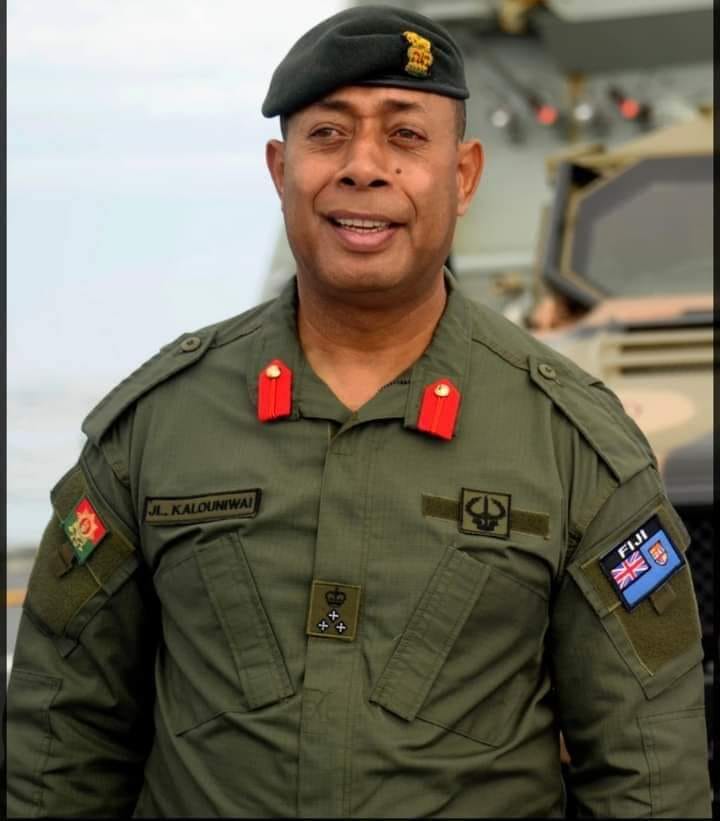
Republic of Fiji Military Forces Commander, Brigadier General Jone Kalouniwai says instilling discipline in soldiers is at the top of his agenda.

Speaking to FBC News Kalouniwai said he will implement a modernisation plan in the RFMF during his five-year term.

The new Commander wants changes in staff professionalism saying he is overwhelmed with what is to come.

“I think if I can bring back a lot of professionalism into the individual soldier and that will help us rise to a level that society that government can be confident on the RFMF as a whole.”

Kalouniwai said he wants a modern view of the Force.

The new Army boss said he wants to lead the military with a positive attitude that people can trust.

“If I start inculcating a culture of trust, a culture of transparency within the RFMF, a culture that can reach out to government, non-government and civil societies as well, I think it will help us change the way society views the RFMF and identifying with society with agencies in trying to help them with emergence security.”

Kalouniwai said he is aware of the greater expectations from the public for the office he now leads.

He said during his tenure he will do what is best for the institution to meet the expectation of society.

SOURCE: FBC NEWS/ PACNEWS


‘Killed like animals’: documents reveal how Australia turned a blind eye to a West Papuan massacre

By Christopher Knaus

In the pre-dawn light, beneath a water tower on the West Papuan island of Biak, Yudha Korwa lay bleeding in the dirt.

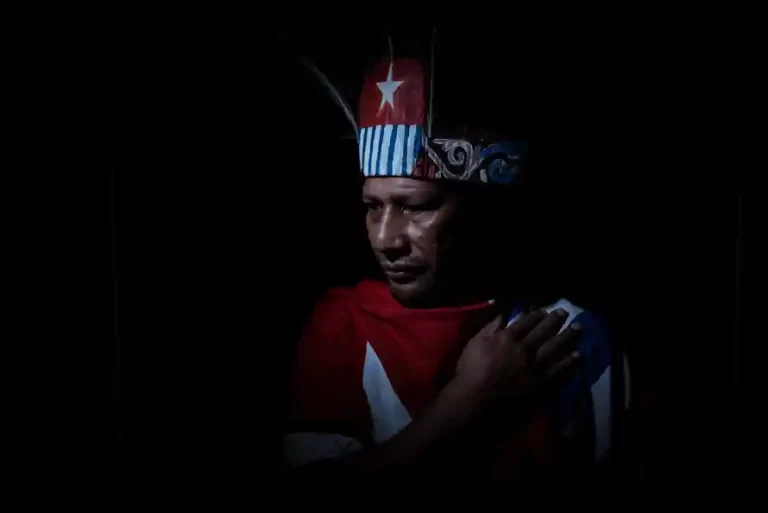
Four days earlier, the young high school student, full of hope in post-Suharto, Reformasi Indonesia, had joined hundreds of other independence activists to fly the Morning Star, the banned West Papuan flag, near Biak’s harbour.

Now he was feigning death among the bodies, watching a scene of pure horror unfold around him.

Korwa remembers hearing screams of “help me, help me, help me” and the roar of an Indonesian military helicopter overhead, raining bullets down on the protesters.

Women and children were cut down before his eyes. Some were singing hymns as the troops opened fire.

Bullets tore through the neck and stomach of two of his friends.

“They were killing like they killed animals,” he says. “They don’t think these are human beings, they are thinking these are animals.”

Korwa’s skull was cracked from the butt of an Indonesian soldier’s rifle and his stomach was bleeding heavily from a machete wound.

One thought sustained him: he had to live, so that someone could tell the world what had happened on Biak on 06 July 1998.

“I thought ‘I don’t think I will be dead today, because one day I will tell the international community what has happened here’.”

In the 23 years since, not one person has been charged with the killings. The massacre is not recognised officially and no government or international inquiry has reported on it.

The Indonesian government has either denied or downplayed the deaths.

When bodies began washing up on Biak’s beaches, many mutilated horrifically, the Indonesian military blamed a tsunami in Papua New Guinea, more than 1,000km away.

Australia has only ever offered a muted response, expressing concern to the Indonesian government but not condemning the massacre.

The true extent of the Howard government’s knowledge of the massacre has, until now, largely remained unknown.

But a newly released, unredacted intelligence report handed to Guardian Australia reveals an Australian intelligence officer provided the government with compelling evidence just 11 days after the killings that Indonesia “almost certainly used excessive force against pro-independence demonstrators”.

The same officer was also handed photographic evidence by West Papuans on Biak, at great risk to their safety. The photos were distributed to his superiors within defence, but never saw the light of day.

New evidence suggests they have since been destroyed by the defence department, despite consistent calls for a proper investigation into the atrocity.

The revelations have shocked survivors.

“From the document … I can see that Australia is still waiting, they’re still staying quiet and lost their mouth and pretending like they didn’t know what was going on,” Korwa said.

“But this is not secret any more.”

‘Disturbing’: Australian secret mission to Biak

Five days after the massacre, Dan Weadon, an Australian military attaché and intelligence officer connected to the Jakarta embassy, boarded a plane to Biak, the newly released document shows.

Officially, he was only on the island due to a forced stopover with a commercial flight to the city of Jayapura.

Unofficially, he was there to investigate the events of 06 July.

His presence on the island quickly aroused suspicion.

Plainclothes officers started tailing Weadon the day after he arrived, interrogating staff at his hotel about the Australian’s activities. Others seen talking to Weadon were quickly questioned about their conversations.

Weadon visited the scene of the massacre, but reported that the “site of the incident has been cleaned up“ and the “people so intimidated” that any investigation would be difficult.

He took photos of 50 bullet holes that riddled the Biak water tower, and met with two Australian aid volunteers working on the island, who had collected information from witnesses and compiled their own report.

“The people were surrounded and tried to run. If they ran they were shot. If they stayed still they were shot,” the volunteers’ report said. “The shots were mainly in the legs of the people present. Our friend described open bullet wounds, lots of blood and dead bodies.”

Weadon was also handed a roll of film said to contain photographic evidence of the “injuries received by separatists at the hands of ABRI [the Indonesian military]”.

Despite warnings that such a meeting was dangerous, the source of the photographs later talked face-to-face with Weadon, pleading for help.

“[He] wept while stating that life in Irian Jaya was very difficult and dangerous, and that it was hoped that [Weadon] would be able to do something to help,” the intelligence report reads.

Weadon eventually spoke to a local military officer , who downplayed the violence, saying no one was killed and only four people were badly wounded.

The officer spoke of the time he spent being taught by the Australian Defence Force in Australia.

“He also stated that the flag raising action was not a reformation demonstration, but was an attack upon the government (Makar) and the country,” Weadon reported. “He likened the action to that of Iraq invading Kuwait, and justified his response as being comparable to the U.S-led effort to expel Iraq from Kuwait.

“It was obvious that he saw the separatist demonstration as being an act just short of war.”

Weadon’s final intelligence report on his Biak trip landed on 17 July 1998.

It concluded that it was “highly likely” that the military “acted in a very heavy-handed manner during and after their assault on demonstrators”.

“The timings of shots heard by [the Australian volunteers] indicate that shots … were fired for a much longer period than would probably have been necessary to simply shock and pacify the demonstrators, indicating that some extra-judicial punishment with live and/or rubber bullets may have been exacted.”

The report could easily have remained secret. Previous attempts to secure it through freedom of information laws, including by the Australia West Papua Association, have been blocked by the Australian government.

But last year, Anthony Craig, a campaigner for justice in West Papua, sought a copy from the National Archives of Australia.

The archives initially sought exemptions to redact significant parts of the report, but last month, facing action in the Administrative Appeals Tribunal, it gave Craig and his lawyers, Xenophon Davis, access to the document in its entirety.

During the proceedings, it emerged the photos handed to Weadon appear to have been destroyed by defence in 2014 under a policy governing the handling of intelligence material.

Xenophon Davis partner Mark Davis described the destruction of the photos, which could be evidence of crimes against humanity, as “disturbing” and sickening.

“The photos were not created by Australian intelligence, they were entrusted to them by the families of the injured and the dead who trusted that Australia would act upon those photos or at least safeguard the evidence,” he said.

In response, the defence department said only that its retention, archival, and disposal of official records is governed by archives law, and that “records are subject to routine review and destruction”.

The Department of Foreign Affairs and Trade has always maintained it raised concerns directly with Indonesia immediately after it became aware of reports of violence on the island.

“This included high-level representations by then foreign minister Downer during his visit to Jakarta on 8-10 July 1998, with then Indonesian foreign minister [ Alatas] and then commander of the Indonesian armed forces [General Wiranto],” a spokesperson told the Guardian in 2013.

‘They turned away’: anger and sadness at Australia

Eben Kirksey has a clear memory of the night before the massacre.

The young American, an undergraduate anthropology student on exchange, was in his hotel room near Biak’s airport.

He watched a troop transport glide in from the sky. Soon, there were Indonesian soldiers everywhere. Kirksey remembers seeing them eating at the canteen across the road.

“There was a real sense that something was about to happen,” he said.

All week, there had been an air of optimism about the protest under the water tower. The dictator Suharto was out and Indonesia was in its early reform era, promising movement towards democracy and liberalism. The protesters’ civil disobedience had triggered meetings with civilian, church and military authorities.

“There was this sense that they were achieving what they had hoped for, with this tactic that we’ve seen now in the Arab spring and Occupy Wall Street, Black Lives Matter.”

In the early hours of 6 July, the hope was gone. Kirksey could hear gunshots ringing out from his hotel room.

Across the harbour, navy ships loomed ominously.

Sketchy reports started filtering through that protesters had been shot. The next day, needing a phone to organise a ferry, Kirksey walked to the harbour, still oblivious to the scale and severity of what had happened.

“One of the only telephones in town was right where the occupation had happened and where the massacre had happened,” he said.

“I wandered through there as they were starting to clean up the site.”

Kirksey remembers seeing the same bullet holes described in the Weadon report.

“I was there, I saw those bullet holes.”

Rumours also took hold that bodies had been taken to the Indonesian ships and thrown overboard.

It wasn’t until 27 July, well after Weadon left the island, that the bodies started to wash ashore. Many were mutilated or showed signs of torture.

“Thirty-three bodies of men, women and children were found on the beaches of east and north Biak, and the government tried to claim these were bodies from a tsunami – a tsunami that took place in Papua New Guinea, another country,” Kirksey said.

“I talked to one woman who was on the boat, she jumped and swam back to shore. Before she jumped, she told me those bodies of women, men and children, she saw them on the boat and these were people she knew. Women were getting raped, these bodies, some of them were beheaded when they washed up on the shore.

“Really the most horrific things that we can imagine that humans might do to each other, this was happening that day.”

The experience on Biak changed Kirksey’s life irrevocably.

He began investigating. Two years later he won a scholarship at Oxford University to study Indonesian state violence in the region, and published a book on the Biak massacre in 2012.

Now an associate professor with Deakin University, Kirksey has reviewed Weadon’s newly released intelligence report.

The document shows the Australian government was told, in no uncertain terms, that something major had happened on Biak.

Its response was to turn a blind eye, Kirksey says.

The destruction of the photos was an even worse betrayal.

“You can have a massacre of this scale and it doesn’t get noticed, it doesn’t get registered, it gets actively forgotten, there is a deliberate destruction,” he said.

“It makes me sad, it makes me angry. People with the capacity to help, people with the capacity to respond, they turned away.”

A remarkable escape and a plea for justice

Korwa managed to escape Biak with his life, somehow.

For two long nights, wounded and bloodied, he hid in a road culvert from the Indonesian troops.

Eventually, he would plot a miraculous journey to Australia with other West Papuan activists aboard traditional longboats.

He sought protection, successfully, and is now an Australian citizen, living in Melbourne.

Korwa is now pleading with the Australian government to lead the charge for an official investigation.

Aside from an unofficial citizen’s tribunal held in Sydney in 2013, no inquiry has ever reported on the events in Biak.

An investigation into the massacre by the Indonesian human rights commission, Komnas Ham, was raised by the body as recently as last year, but it has never concluded – despite the passage of more than 20 years.

“Since the massacre, Australia they didn’t say anything,” Korwa says.

“So I want to say like this: I’m now an Australian citizen. [Will] Australia stand up to fight for my right or not? I’m an Australian citizen so I have the right to say: ‘Look, this has happened, 20 years ago. I’m here now … I’m Australian. I need your help to push for a more serious investigation’.” he said.

SOURCE: THE GUARDIAN/PACNEWS
 

Paris climate deal could go up in smoke without action: Guterres

Unless wealthy nations commit to tackling emissions now, the world is on a “catastrophic pathway” to 2.7-degrees of heating by the end of the century, UN Secretary General António Guterres warned on Friday.

This is far beyond the one to 1.5 degree Celsius threshold, agreed by the international community as part of the 2015 Paris Agreement.

The UN chief’s remarks came after the UN’s climate agency (UNFCCC) published an update on national climate action plans (officially known as Nationally Determined Contributions or NDCs) submitted by the 191 countries which signed Agreement.

The report indicates that while there is a clear trend that greenhouse gas emissions are being reduced over time, nations must urgently redouble their climate efforts if they are to prevent disastrous global heating in the future.

The document includes updates to the NDCs of 113 countries that represent around 49 percent of global emissions, including the nations of the European Union and the United States.

Those countries overall expect their greenhouse gas emissions to decrease by 12 percent in 2030 compared to 2010.

“This is an important step,” the report points out, but insufficient, as highlighted by Guterres at Friday’s Forum of Major Economies on Energy and Climate, hosted by the President of the United States, Joe Biden

“We need a 45 percent cut in emissions by 2030, to reach carbon neutrality by mid-century…It is clear that everyone must assume their responsibilities”, he emphasised.

70 countries indicated their embrace of carbon neutrality goals by around the middle of the century. If this materialises, it could lead to even greater emissions reductions, of about 26 percent by 2030, compared to 2010, the report explains.

However, with national plans staying the way they are right now for all 191 countries, average global emissions in 2030 compared to 2010, instead of decreasing, will increase by around 16 percent.

According to the latest IPCC findings, that would mean that unless climate action is taken immediately, it may lead to a temperature rise of about 2.7C, by the end of this century.

“The recent report of the Intergovernmental Panel on Climate Change (IPCC) was a code red for humanity. But it also made clear that it is not too late to meet the Paris Agreement 1.5-degree target. We have the tools to achieve this target. But we are rapidly running out of time”, the UN chief highlighted.

The Secretary General highlighted a particular challenge: energy still obtained from coal. “If all planned coal power plants become operational, we will not only be clearly above 1.5 degrees – we will be well above 2 degrees. The Paris targets would go up in smoke”.

Guterres urged the creation of “coalitions of solidarity” between countries that still depend heavily on coal, and countries that have the financial and technical resources to support transitions to cleaner energy sources.

Without pledges and financial commitments from industrialised nations to make this happen, “there is a high risk of failure of COP26”,Guterres continued, referring to the pivotal UN Climate summit in Glasgow in six weeks’ time.

“G20 nations account for 80 percent of global emissions. Their leadership is needed more than ever. The decisions they take now will determine whether the promise made at Paris is kept or broken”, he warned.

Patricia Espinosa, Executive Secretary of UN Climate Change, clarified during a press conference that countries can submit or update their national plans “at any time”, including in the run-up to COP26.

The agency highlighted some good news. The new or updated plans included in the report, show a marked improvement in the quality of information presented, for both mitigation and adaptation, and tend to be aligned with broader long-term, low-emission development goals, the achievement of carbon neutrality, national legislative/regulatory/planning processes, and other international frameworks such as Sustainable Development Goals (SDGs).

The UN chief was clear that by COP26, all nations should submit more ambitions plans that help to place the world on a 1.5-degree pathway.

“We also need developed nations to finally deliver on the US100 billion commitment promised over a decade ago in support to developing countries. The Climate Finance report published by the Organisation for Economic Co-operation and Development (OECD) shows that this goal has not been reached either”.

A sizeable number of national climate plans from developing countries, which define targets and actions to reduce emissions, contain conditional commitments which can only be implemented with access to enhanced financial resources and other support.

For Guterres, the fight against climate change will only succeed if everyone comes together to promote more ambition, more cooperation and more credibility.

“No more ignoring science. No more ignoring the demands of people everywhere. It is time for leaders to stand and deliver, or people in all countries will pay a tragic price,” he said.

SOURCE: UN NEWS CENTRE/PACNEWS

Fiji PM Bainimarama wants to unite PIF member countries

Fijian Prime Minister Voreqe Bainimarama has admitted there is distrust between Pacific Islands Forum member countries.

Speaking on Radio Fiji One’s “Na Noda Paraiminisita” programme, Bainimarama says in his capacity as Chair he aims to unite the region.

Bainimarama was asked about his role and what he intends to do as Fiji will be in a leadership role for the next two years.

The Prime Minister said he wants to mend the distrust that is there, particularly from some Micronesian member states.

Bainimarama said Fiji is honoured to lead PIF and to begin with the journey, he wants a united front in the region.

He said this will help them address matters in the region.

SOURCE: FBC NEWS/PACNEWS

Fiji records 79 new cases of COVID-19

Fiji has recorded 79 new cases of COVID-19 Sunday, increasing the total number of cases to 49,889 with 564 deaths since the outbreak in April.

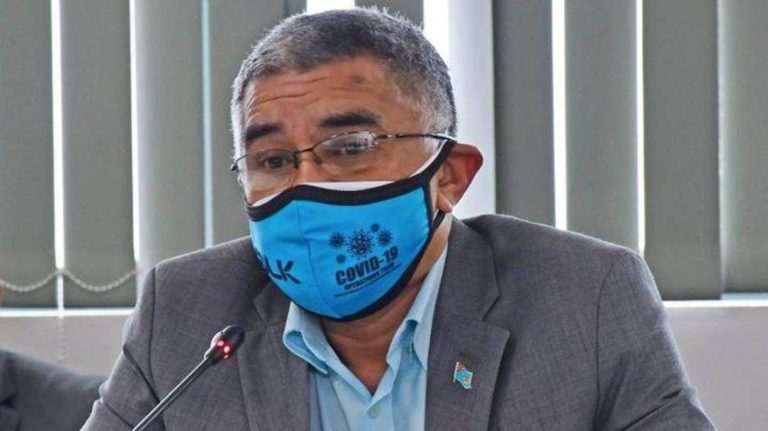
Permanent secretary for Health, Dr James Fong said 35 cases are from the Western division and 44 cases are from the Central division in Vitilevu, Fiji’s main Island.

“There have been 82 new recoveries to report since the last update, which means that there are now 12,981 active cases. 1,252 of the active cases are in the Central division, 11,419 active cases in the Western Division, one active case in the Northern division (Macuata), and 309 active cases in the Eastern division (all in Kadavu).

“There have been 49,889 cases during the outbreak that started in April 2021. We have recorded a total of 49,959 cases in Fiji since the first case was reported in March 2020, with 36,011 recoveries,” said Dr Fong.

He said there has been one death of a COVID-19 positive patient. However, this death has been classified as a non-COVID death by their doctors.

“The doctors have determined that this death was caused by a serious pre-existing medical condition and not COVID-19.

“There have now been 566 deaths due to COVID-19 in Fiji, with 564 of these deaths during the outbreak that started in April this year.

“As of 14 September, the national seven days rolling average of COVID-19 deaths per day is 1.1. The seven days rolling average for COVID-19 deaths per day in the Central division is 0.6 and 0.6 in the Western division.

“We also have recorded 401 COVID-19 positive patients who died from the serious medical conditions that they had before they contracted COVID-19; these are not classified as COVID-19 deaths,” said Dr Fong.

He said there are currently 115 COVID-19 patients admitted to hospitals in Fiji.

“34 patients are admitted at the Lautoka Hospital and 81 are admitted at CWM hospital, St Giles, and Makoi.

“Six patients are considered to be in severe condition, and three are in critical condition,” said Dr Fong.

He said a total of 355,992 samples have been tested since the outbreak that started in April 2021, with 398,853 tested since testing began in March 2020.

“The national 7-day average daily test positivity is 12 percent which is on a downward trend but still indicating a high level of community transmission,” said Dr Fong.

To date, 587,948 adults in Fiji have received their first dose of the vaccine and 387,320 have received their second doses.

“This means that 98 percent of the target population have received at least one dose and 66 percent are now fully vaccinated nationwide,” said Dr Fong.

Meanwhile, the rollout of the Moderna COVID-19 vaccine for children from the ages of 15 to 17 years will begin today across the country.

According to an advisory from the Ministry of Health and Medical Services, children from 15 to 17 years of age are being vaccinated first as these children are mostly in secondary school and some of them are nearing the end of their secondary education.

The advisory further states that Year 12 and Year 13 students need to sit external exams to progress onto higher education.

Details of the rollout plan:

*Through the Ministry of Education, the Moderna vaccine will be rolled out by school clusters within the four divisions.

*Schools that are close by to each other will group to form a cluster, where students who are 15 to 17 years of age can get vaccinated.

*Children will need to receive two doses of the Moderna vaccine which is administered at a dose interval of 28 days.

*Parents and guardians will be asked to sign a consent form for children receiving this vaccine.

*They will also be able to register their child online before he or she receives the first dose of the Moderna vaccine.

*Parents and guardian can register their child online for the COVID-19 vaccination before going to the vaccination site at: https://vra.digitalfiji.gov.fj/.

SOURCE: PACNEWS

Stay connected

529FansLike
172FollowersFollow
156SubscribersSubscribe
- Advertisement -