Home Blog Page 1122

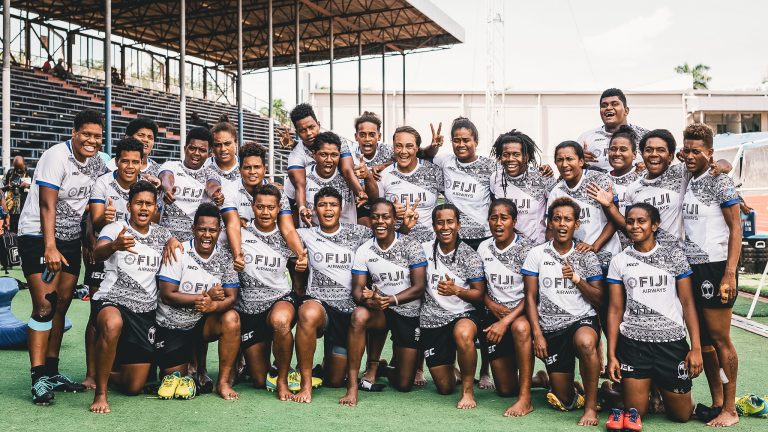
World Rugby confirms Pacific Four Series schedule, the new cross-regional women’s 15s tournament

0

World Rugby has announced details of a new cross-regional annual international competition titled, Pacific Four Series, that will bring together some of the world’s top women’s teams.

Contested by four of the world’s top teams – Australia, Canada, New Zealand and USA – the Pacific Four Series will act as one of the principle annual qualification routes for the top tier of WXV, with the top three-placed teams competing in WXV 1 and the fourth-placed team competing in WXV 2 from 2023 onwards.

With the global pandemic continuing to cause the global sporting community challenges, the World Rugby-funded competition will soft launch in 2021 with Canada and USA going head-to-head on 1 and 5 November. The full four-team format will debut in 2022, ahead of Rugby World Cup 2021, creating a bumper schedule of fixtures.

The Pacific Four Series’ primary objective is to increase the reach, competitiveness and value of women’s rugby – one of the world’s fastest-growing team sports between Rugby World Cups, adding to a full aligned global competition calendar for the world’s top players.

Mastercard, the founding partner of Women in Rugby, continues to strengthen it’s support and commitment of raising the global profile of women’s rugby as they become the founding Global Partner and Preferred Card of the 2021 and 2022 Pacific Four Series tournaments. Mastercard and World Rugby will celebrate the fans and players by honoring a Fan of the Match and Player of the Match at 2021 Pacific Four Series matches

A key pillar of World Rugby’s game-changing global strategic women’s plan 2017-25, the World Rugby Pacific Four Series delivers on developing more world-class, high-performance and inspirational competitions to increase the competitiveness of women’s international rugby.

World Rugby Chairman Sir Bill Beaumont said: “World Rugby is committed to investing into high-performance competitions to increase the competitiveness of the women’s game at elite level.

“We had previously announced a new cross-regional tournament featuring New Zealand, Australia, USA and Canada as part of the WXV competition qualification structure, which starts in 2023.

“The Pacific Four Series will provide quality playing opportunities and further support teams as they prepare to compete at Rugby World Cup 2021 in New Zealand next year. We look forward to watching teams compete again at the highest level for what will undoubtably be a thrilling showcase of women’s elite rugby from some of the best teams in the world.”

“Providing extraordinary opportunities and compelling experiences that brings people closer to their passions is something we pride ourselves on at Mastercard,” said Raja Rajamannar, Mastercard Chief Marketing and Communications Officer. ‘We’re proud to join forces with World Rugby to create the Pacific Four Series and provide these exciting moments for fans and players alike.”

Further details in relation to the format for next year’s Pacific Four Series will be announced in 2022.

SOURCE: WORLD RUGBY/PACNEWS
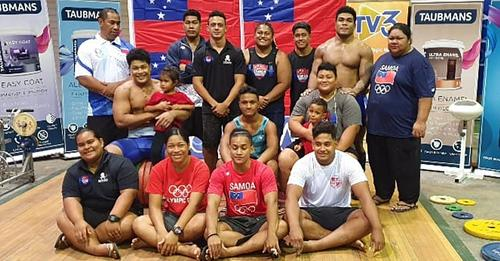
Landmark for weightlifting as Oceania athletes compete in virtual Championships

Weightlifters from Oceania have won titles and set records at their senior Championships, despite the fact that the competition was organised online.

It is the first continental Championships ever to take place online, and the first time results from a virtual competition have been officially endorsed by the International Weightlifting Federation (IWF).

The IWF approved the format in exceptional circumstances.

Because of coronavirus “every single country of the Pacific has its borders closed,” said Paul Coffa, general secretary of the Oceania Weightlifting Federation (OWF).

Travel in the region has been a huge challenge, and often impossible, for 15 months during the pandemic.

A few teams had to withdraw shortly before the Championships, including New Zealand and Niue, because lockdown conditions are so strict the athletes could not even go to a gym.

Australians in New South Wales were also unable to take part.

“An incredible amount of work was put in to this tournament,” said Coffa.

“The IWF established a system for the results to be officially registered and have these performances officially endorsed.

“We thank the Executive Board of the IWF for their understanding and consideration of the circumstances which affect our region.”

Athletes from Australia and Samoa – Sarah Cochrane and Nevo Ioane – set senior Oceania records and Ditto Ika, a 16-year-old from Nauru, claimed a youth record.

There were stand-out performances from Eileen Cikamatana of Australia and Don Opeloge of Samoa, whose nations were the strongest performers overall.

Australia won seven titles and Samoa six.

Rather than having to fly home after their exertions, the Samoa team – 11 of whom did enough to qualify for the Commonwealth Games next year – headed for the local beach for a “fun day” to wind down.

“After the fantastic results we achieved, it’s time to take a breather from training and relax,” said Jerry Wallwork, President of the Samoa Weightlifting Federation, in a local media report.

“It is part of their training to once in a while take time off and recuperate after an international event.

“They have made their nation proud with such an amazing outing at the virtual Oceania Championships.”

The competition, which ran over three days and finished on Sunday, featured the full quota of technical officials – juries, referees and marshals – and there were as many no-lifts and “bombouts” as there are at a typical in-person competition.

Anti-doping testing took place in the build-up, starting in Papua New Guinea out of competition, and all athletes were liable to be tested at their national hubs during the three days of action throughout the Pacific.

There was an electronic down signal that was both visible and audible, weigh-ins were visible and coaches were able to change weights via a dedicated portal as athletes lifted in different time zones “as if it was a face to face competition,” said Coffa.

Bowen Stuart from the Australian Weightlifting Federation, who has worked on virtual competitions around the world, “did a great job in coordinating the technical logistics,” said Coffa.

He said the special portal for coaches to make the change of attempt was a big success – something the IWF could consider to try to modernise the sport.

Stuart agreed, and said the handheld option for coaches to register changes would avoid the “scrambling around the table” behind the scenes that currently happens.

“I’m very happy with what we achieved,” said Stuart, whose system has been used in Latin America and the United States as well as Oceania.

“The IWF Board was very supportive – there was an acknowledgement that it’s better to do something than do nothing.

“Without their support, a lot of athletes are going to be missing competitions and that’s not going to help the sport.

“It doesn’t replace face-to-face weightlifting but it certainly adds another aspect to the sport, and virtual events can be very cost effective.

“Each time we run the events we get closer and closer to real life experiences and that’s a good thing for the sport.”

In the women’s events, Cochrane set Oceania records at 64 kilograms in the clean and jerk and total as she made 100-120-220.

Cikamatana, who will seek a special travel exemption to head to Italy for a month to prepare for the IWF World Championships in Uzbekistan in December, made 110-140-250 to win the 87kg.

Other women winners included Thelma Toua of Papua New Guinea with 55-75-130 at 49kg; Jenly Wini of Solomon Islands, aged 38, with 75-101-176 at 55kg; and Jacinta Sumagaysay of the Northern Mariana Islands with 70-95-165 at 59kg.

Olivia Shelton of Australia was victorious at 71kg with 90-117-207, compatriot Ebony Gorincu topped the 76kg standings with 91-117-208 at 76kg, while Antonette Labausa of Northern Mariana Islands was victorious at 81kg with 66-91-157.

Feagaiga Stowers of Samoa won the super-heavyweights category with 114-144-258.

Ioane’s record, by one kilogram, came in the 67kg clean and jerk.

He made 124-165-289 to finish well clear of Ika, who set youth records in the clean and jerk and total by making 96-135-231.

The other men’s winners were Morea Baru of Papua New Guinea with 115-150-265 at 61kg; John Tafi of Samoa with 123-161-284 at 73kg; Leo Lark of Australia with 130-165-295 at 81kg; Beau Garrett of Australia with 131-166-297 at 89kg; and Don Opeloge with 159-200-359 at 96kg.

Nobody in the heavier weight categories made more than Opeloge’s 359kg.

The winners of those events were Jack Opeloge of Samoa at 102kg with 150-187-337; Petelo Lautusi of Samoa with 150-193-343 at 109kg; and Suamili Nanai of Australia in the super-heavyweights with 153-200-353.

SOURCE: INSIDE THE GAMES/PACNEWS

Viliame Kikau’s rise to stardom will melt your heart

Viliame Kikau’s ascent from shy teenager to NRL superstar could not have happened without the love and support of one Townsville family.

Panthers forward Viliame Kikau has credited the “beautiful family” he stayed with in Townsville for two years for setting him on his path to stardom after arriving in Australia from Fiji as a shy teenager with a sketchy grasp of the English language.

Ahead of Sunday’s grand final against the Rabbitohs, the 26-year-old looked back at his time with Cheree Egan, her daughters Tenille and Courtney, and son Leigh as a transformative time in his life.

“To this day, I am very grateful to the Cowboys for putting me with Cheree and her beautiful family,” Kikau said.

“If they were here with me now, I would give them a massive hug. We message each other nearly every day and they always care for me and ask after me.

“They are all a part of my journey now and set me on the path to where I am today. I wouldn’t be here without them.

“I came over in November of 2013 from Fiji and I’d never been overseas away from my family before and it was hard for me to even speak English, but they took me in and cared for me.”

Cheree Egan said she was “so proud” of the change in Kikau over the last eight years.

“When all the photos started flowing through from the Dally M Awards of how beautiful Viliame and (partner) Brittany looked, and that he was in the team of the year, my heart just burst,” Cheree said.

“I thought, ‘Wow, you have come so far and really are an amazing person.’ It hasn’t come easy for him.”

Cheree knows better than anyone just how tough Kikau’s initial time was in Townsville.

“He had come straight into a family with totally different traditions and culture, and didn’t know where he fitted,” Cheree recalled.

“There were tears from me nearly every day for a month because I thought I was failing him.

“I spoke to the welfare officer at the Cowboys, Kev Marty, and asked how I could make him feel comfortable, because he wasn’t joining us for meals and was reluctant to come out of his room.

“Kev said to tackle it straight on, so I said to Viliame that we are his family now and joining us at the meal table was part of that.”

Cheree’s words of wisdom transformed the situation and Kikau started to open up.

“It wasn’t long before we learned this big, reserved bloke was quite a character,” she said.

“Viliame has that nature about him where people embrace him.”

After two years with the Cowboys’ under 20s, Kikau joined the Panthers in 2016 and has gone from strength to strength.

Through it all, he has never forgotten the Egans.

Cheree gets regular texts now from Kikau to the family that say “love youse” and “miss youse”.

“They are part of my family now,” Kikau said.

“I get in touch with them every time I go back to Townsville. When we played there in the finals I got them all tickets and it was really special to see them again.”

Cheree said that gesture just summed up her adopted son.

“When he came to Townsville to play (against Souths) he got us the most amazing seats and I got to stand at the tunnel and was able to talk to him briefly,” she said.

“He wants us to stay with him in Penrith as soon as we can at his new house.

“I am absolutely proud of who he has become and how he has the confidence to embrace everything before him.”

For Cheree’s son, Leigh, who Kikau is very close to, it was a special occasion in more ways than one.

“I was like a school kid watching Viliame, and even better, he got to see my son Jagger for the first time. He is another brother to me and like a son to mum,” Leigh said.

“She absolutely adores him because he is just a very special individual.

“He gives me goose bumps. From the shy kid we first knew, to get where he is now is just unbelievable. I pinch myself some days when I see how well he is going.”

Kikau has to pinch himself, too.

“When I first went to the Cowboys, I was just muddling my way through and learning the game after playing rugby in Fiji,” Kikau recalled.

“(Cowboys game development officer) Gavin Lloyd would take us in a room with a whiteboard and show me the plays, but I was really confused.

“It took me a while to get the hang of it, but I am just so glad that I hung in there.

“Here I am in my second grand final with the Panthers, and I can’t wait. I just want to bring impact. When the boys are gassed, I want to be the one to rally the team.”

The Egans will be rallying around Kikau in style.

“We have got the day sorted,” Leigh said.

“We are having ribs and then putting on our Panthers gear to watch the footy at my house. We’ll all be cheering Viliame on.”.

SOURCE: NEWS.COM.AU/PACNEWS

1.5-degree world will safeguard our region’s sustainable future: Fiji PM Bainimarama

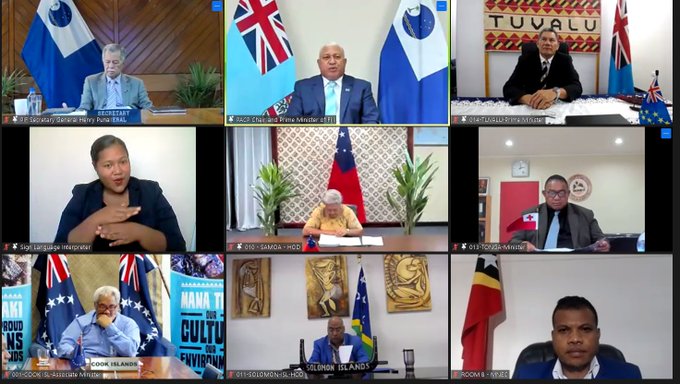
Fijian Prime Minister and Forum Chair Voreqe Bainimarama has reaffirmed a 1.5-degree world will safeguard the region’s sustainable future.

Speaking at the Pacific -ACP Leaders Meeting today, Bainimarama said the Pacific should demand this at COP26 in Glasgow.

“As Pacific ACP States we are now on the frontlines of the climate crisis and only a 1.5-degree world will safeguard our region’s sustainable future.

“We must reaffirm this, and indeed demand this, at COP 26 in Glasgow next month. It is our collective responsibility. Today, we have the opportunity to deliberate on this and I look forward to our discussions.

“It is a challenging road ahead, but I remain hopeful and confident that we can overcome our challenges with unity and ambitious collective action,” said Bainimarama.

As Pacific ACP States we are now at a juncture where we are considering how best to organise as Pacific ACP States, taking into account the new OACPS-EU Partnership Agreement – which we look forward to signing in Samoa in 2022, he said.

“There is no doubt that the Pacific ACP States is an important grouping – not just for our engagement with the European Union and with fellow African and Caribbean States, but more broadly also.

“This platform can be an opportunity for Pacific developing states to work together to discuss and develop solutions to overcome common development challenges towards a sustainable future for our people. And indeed, there is room for this comprehensive discussion within the ambit of the imminent work on the Review of the regional architecture,” said Bainimarama.

He said the region is faced with a set of extraordinary circumstances which are now amplifying their existing vulnerabilities and challenges – the COVID-19 pandemic and its related economic challenges, an intensifying climate crisis and the ongoing geopolitical tussle on the rim of the Pacific region.

“To combat such challenges, we must work together and forge our own development future. We must ensure that our engagement with all our international partners responds to our collective vision and priorities for our Blue Pacific.

“We last met as Pacific ACP Leaders in Tuvalu in August 2019 amid the Post Cotonou Negotiations. Today we will consider the outcome of those negotiations and discuss its implications on our engagement with the European Union over the next 20 years.

“I acknowledge our Ministers, senior officials and our Ambassadors in Brussels who have worked tirelessly to finalise a new Agreement that is reflective of our Pacific priorities, in particular, climate change and resilience, and Oceans, seas, and fisheries.

“Just as crucial, is how we move forward collectively to implement this new agreement.

“We must ensure that the implementing modalities that we confirm are complementary of our existing national and regional mechanisms. By the same tenor, there must always be an opportunity for our voice to be heard in these discussions and decisions because it is our future and that of our people who will be impacted the most,” said PM Bainimarama.

Meanwhile, Tuvaluan Prime Minister Kausea Natano also participated in the Pacific ACP Leaders Meeting.

During the meeting, Prime Minister Natano raised Tuvalu’s candidate for the position of Secretary General to the Commonwealth of Nations, Sir Iakoba Taeia Italeli, and Tuvalu’s new joint communiques for establishing diplomatic relations, which seek to protect Tuvalu’s statehood and maritime boundaries in the face of climate change.

Prime Minister’s interventions were warmly received and thanked Pacific nations for their consideration and encouragement of Tuvalu’s initiatives.

SOURCE: PACNEWS

Delta surge in PNG

Papua New Guinea is now grappling with a surge in the deadly (Covid-19 Delta variant, with cases tripling from 30 on 01 September, to 97 on Sunday.

National Pandemic Response Deputy Controller Dr Daoni Esorom said the Covid-19 death toll had also risen to 227, including 17 deaths last week 20 September to 26.

The 30 new Delta cases were reported in the National Capital District (NCD), West Sepik, Central, Morobe, Hela and Milne Bay.

“As of Monday, 67 new cases of the Delta variant have been reported.

“NCD has 23 cases of the Delta variant, with West Sepik 35, Central four, Morobe two, Hela one and Milne Bay two,” Esorom said.

“Data shows that there has been ongoing transmission from August to the early weeks of September.”

On 17 August, there was one Delta case in Central which was imported from the Philippines.

“Central also began detecting Delta cases on first and second weeks of September.

“Morobe and Milne Bay began detecting cases in the first week of September.

“NCD is experiencing a Delta surge beginning in late August into September,” Dr Esorom said.

The hotspots for the Delta variant are Alotau, Lae, NCD, Vanimo, Kairuku, Exxon plant site and Oil Search Moro.

The age groups affected is those from age 31 to 40, followed by those over 50, 41 to 50, and 19 to 30.

The data suggests an in-country Delta transmission.
Dr Esorom said 18,381 people had recovered.

“We have a very good recovery rate – around 98 per cent,” he said.

During a 24-hour period on Monday, 118 new cases were reported.

He said surges had been recorded in Western, West Sepik and Eastern Highlands, with Morobe, Western Highlands, NCD and Enga also reporting a hike in cases.

“So the situation is very fluid,” Esorom said.

“It can change within days.

“That’s what we are seeing at the moment.”

West Sepik recorded 635 cases and eight deaths, with 584 recovered and 45 in isolation.

Western on Monday diagnosed 15 new cases but no deaths.

“Western since the beginning of the outbreak recorded 3,138 cases and 20 deaths. Around 2,800 people have recovered,” he said.

Eastern Highlands recorded 43 new cases over the 24-hour period on Monday.

Meanwhile, five Covid-19 deaths were reported in Mt Hagen Hospital in the last 13 days, with 28 health staff testing positive for the virus, Western Highlands Health Authority acting chief executive officer Jane Holden says.

“The province recorded 287 cases from 17CSeptember and we believe more people had been infected and are at home.

“Another seven deaths were reported in Gia and Kiripia in Tambul-Nebliyer, near Southern Highlands’ Imbonggu,” she added.

Holden said the number of new infections would rise if more people volunteered to be tested for the Covid-19.

She said the seven deaths occurred after the victims reported short illness with shortness of breath.

“More positive cases are coming from Gia and Kiripia areas at the moment,” she added.

Holden said many Covid-19 infected people could be living in communities and only testing would verify for treatment and isolation at an early stage.

“The isolation unit is also full with 11 patients waiting for admission.

“The management is trying to open another 12 beds yesterday and hopefully 20 by today.

“However, once we have those full, we will have no further capacity because we believe many more could turn up.

“We want people to come forward for testing so that they can be treated and isolated if positive,” she added.

Holden said people’s behaviour needed to change because if they refused to come for testing, they were putting the lives of others at risk. “Only a few people are getting the vaccine.

“We want to see a massive increase in number of people getting the vaccine but it is not happening.

“Vaccine is free but they seem to have the couldn’t-care-or-less mentality because of misinformation.

“People need to change their attitude and adhere to the new normal protocol.

“We are sensing danger and the public must turn up at the hospital to be tested or vaccinated,” she pleaded.

In another development, a surge in Covid-19 cases and deaths in Eastern Highlands has prompted a large number of people to turn up for vaccination at the Goroka Provincial Hospital.

Covid-19 vaccination assistant staffer at the centre Jeffery Majike said since the hike early this month, many people were coming in for jabs.

He said those people had not been serious about getting vaccinated, but since the surge from 03 September, there seemed to be a change of mind.

“On Monday and Tuesday, 168 people came to get their jabs.

“We anticipate that more people will be coming before the end of the week,” Majike said.

He said individuals, families, partners, groups, businesses and organisations were turning up each day for jabs.

While numbers were not available immediately, Majike said “quite a number of them” had been vaccinated.

Meanwhile, Eastern Highlands Health Authority (EHPHA) chief executive officer Dr Joseph Apa said there was no other effective way of preventing infection apart from vaccination.

He said the health message was for people to practise the new normal.

“I am glad to see more people getting vaccination. It is good because this will eventually kill the virus and make Eastern Highlands Covid-19-free,” Dr Apa said.

SOURCE: THE NATIONAL/PACNEWS

ANZ’s International Money Transfer fee waiver to Pacific here to stay

0

ANZ customers in Australia and New Zealand can continue to send money to the Pacific for free using ANZ Internet Banking or ANZ goMoney, to help the flow of funds to communities impacted by Covid-19.

ANZ Regional Executive Pacific, Tessa Price, said: “For the past 11 months, ANZ has been waiving transfer fees on foreign currency international transfers from Australia and New Zealand sent via our banking apps and internet banking to a range of Pacific Islands.

“Today, I’m pleased to share that from 01 October, we’ll be extending this waiver indefinitely.”

The fee waiver on foreign currency international transfers applies to transfers from Australia and New Zealand via ANZ Internet Banking (AU and NZ) and ANZ goMoney (NZ) to the Cook Islands, Fiji, French Polynesia (AU Only), Kiribati, New Caledonia, Papua New Guinea, Samoa, Solomon Islands, Timor Leste, Tonga and Vanuatu.

“The Pacific is a key part of the ANZ family. Many of our customers and staff in Australia and New Zealand have close friends and family in the Pacific,” Price said.

“ANZ Australia and New Zealand customers have wholeheartedly embraced the fee waiver and sent more than 104,000 International Money Transfers to the Pacific worth AUD141.8m (US$102.2 million), which is an increase of 50% in volume and 20 percent in value, compared to the same period last year.

“In an average year, remittances can make up 25 percent of household income. It’s fair to say that the past 18 months have been anything but average and Covid-19 has underscored the need to help the flow of funds to communities.

“We know that the economic impact of Covid-19 on the Pacific has been significant and it will take some time to recover. ANZ remains committed to helping our Pacific customers during these challenging times,” Price said.

International Money Transfers to the Pacific are generally cleared the same day.

SOURCE: ANZ/PACNEWS

WWF and partners launch gender mainstreaming in Fiji offshore Tuna Industry report

0

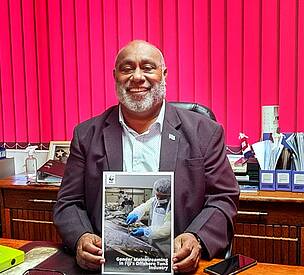
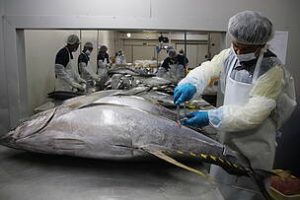
In a bid to strengthen gender inclusion and gender mainstreaming in Fiji’s tuna offshore sector, WWF and partners today launched a Gender Mainstreaming in Fiji’s Offshore Tuna Industry Report.

With today being World Maritime Day and this year’s theme, Seafarers: at the core of shipping’s future, the WWF led report provides a snapshot of improving the understanding of the longline fishing sector from a socio-economic and cultural perspective with a focus on gender inclusion and mainstreaming in the offshore fisheries sector.

In virtually launching the report, Fiji’s Minister for Fisheries, Semi Koroilavesau stated that the report and its findings was a step in the right direction in improving awareness, and to strengthen gender equity in Fiji’s offshore sector.

“There is also a lack of gender disaggregated data overall, and a knowledge gap about consumption patterns and the differing constraints on men and women to enable more effective participation in markets. This lack of data on women’s roles in offshore fisheries perpetuates the existing assumption that women’s interests are taken care of by men, and that women are better off employed in other sectors and not in the offshore fishing sector.”

“This led to Pacific Leaders declaration on Gender Equality. This means that we need to invest in the collection and use of disaggregated data across sectors, and ensure that there is sufficient budget
allocation to address the needs of gender equality,” highlighted Koroilavesau.

Dr Mark Drew, WWF-Pacific’s Director said: “although the work on gender mainstreaming may not be new, its application and thought process in relation to its relevance and its impact on Fiji’s offshore fisheries sector has not been fully explored, this report is a step in the right direction in exploring this, and this was an area WWF and partners through its Developing Sustainable and Responsible Tuna Longline Fisheries in Fiji Project that is funded by the government New Zealand embarked on – to improve understanding and knowledge of the different implications when addressing gender inclusion and gender mainstreaming in the development of the tuna industry in Fiji and how these challenges can be effectively addressed.”

“I am optimistic that the Gender Mainstreaming in Fiji’s Offshore Tuna Industry Report will not only build
capacity for the fishing sector but more importantly, it complements the collective approach that Fiji and
its partners are undertaking in the sustainable use and protection of our limited resources and people,”
added Dr Drew.

The consultations and production of the report was implemented through the Developing Sustainable & Responsible Tuna Longline Fisheries in Fiji Project that is a partnership between the Ministry of Fisheries,
Fiji Fishing Industry Association, Fiji Maritime Academy and WWF and funded by the New Zealand
Government through its Ministry of Foreign Affairs and Trade(MFAT).

Fiji Fishing Industry Association’s (FFIA) President, Radhika Kumar highlighted that the onus now was for all stakeholders to work together.

“We do hope that through this report, the responsible Government Ministries will establish an active working group comprising of the public sector, IGOs, NGOs and the fishing industry to work on the recommendation and report back within 6 months…an independent body to be established in Suva where seafarers from both the national fishing fleet, the Fiji based foreign fishing fleet and all foreign fishing vessels visiting Suva can lodge their complaints. This body will have in place procedures and processes to deal with the received complaints in a professional and timely manner to resolve the complaints,” highlighted FFIA’s President.

The Minister for Fisheries added that at a regional stance, the Forum Fisheries Agency (FFA) has increased the focus on gender equality and social inclusion in Pacific fisheries, in its work for the next few
years with gender-related policies have been in place in FFA since 2016.

“We need to use the findings to harness and improve our regional and national standards in addressing gender needs. This may include providing robust legislation and policy needs in addition to proper working conditions that set the platform towards achieving gender equality. We all know that these needed changes will take time, but with our collective efforts and the strength we have through cooperation, we will prevail,” added the Minister for Fisheries.

The report will be used by the Pacific Community (SPC) as a case study for a handbook on gender and social inclusion in the offshore fisheries sector among other case studies from the region.

KEY FINDINGS FROM THE REPORT:

*Gender participation in the tuna longline industry in Fiji has specifically been set back by the lack of
basic facilities on board vessels to ensure women’s safety and well-being. There are no specific processes and mechanisms to ensure reporting and proper recording and follow up by police on sexual harassment and human rights abuses.

*The industry has been viewed as a male domain, and women joining the industry are expected to live and work within very restrictive situations.

*Cultural perceptions and stereotypes continue to undermine progresses that women are making in the industry.

*In the industry, human rights abuse, issues related to contractual agreements, and sexual harassment are issues that need to be discussed and addressed. The recent launching of the National Anti-Human Trafficking Strategies and Action Plan has shed light on emerging issues mainly related to forced labor or sexual exploitation which are linked to the fishing industry. There are also in place maritime regulations that could address these issues, however, implementation and enforcement of existing regulations have not been effective.

* Consultations with industry representatives, FFIA, and other stakeholders highlighted the need for more work on data collection, setting baselines for gender work and the need for cost benefit analysis on the participation of both men and women in the offshore fisheries sector (sea going).

* Participation in the industry has positive impacts for both men and women; however, the negative impacts are often directly felt by women. The increase in a woman’s work load and domestic responsibilities when husbands are on long fishing trips, poor working conditions in processing factories, the sex trade, and the related transmission of sexually transmitted diseases including HIV/AIDS, and alcohol and drug abuse are some negative aspects that affect the health and wellbeing of women.

*In 2020, the FFIA consisted of 63 fishing vessels and 18 companies and employment ranged from fishing activities (seagoing), fish processing (onshore), cold storage, engineering workshop and management, finance and administration which included a total of 1,429 men and 126 women. Of these, seagoing fishing activities involved 1,032 men and five women.

*Current gender participation at PAFCO, the largest processing plant in Fiji, is 33.5 percent males and 66.5 percent females. 88 percent of females employed at PAFCO work in the processing sector and they make up 46 percent of support workers. Participation of women in five fishing companies visited in Suva revealed that women dominantly worked in on-shore facilities.

*Regulations exist that deal with sexual harassment cases that occur within Fiji’s EEZ however addressing reported cases and enforcing the regulations remain weak.

*Working conditions at PAFCO have generally improved with the upgrade of the factory since the new partnership agreement with Bumble Bee however some issues remain in the working conditions of men and women.

*Awareness of the positive and negative impacts of the tuna industry will help in addressing those impacts that have a negative effect on women. By highlighting the constraints that restrict the participation of women in the industry, it is envisaged that support will be given to help in the development of opportunities.

*Forced labor and human trafficking of fishers in the fisheries sector is not a new phenomenon, however, increased globalisation, competition, and the mobility of migrant workers, have exacerbated the problem. Research into deceptive and coercive labour practices in the fisheries sector is not comprehensive or coordinated.

MEDIA CONTACT: Ravai Vafo’ou
Communications Officer
Developing Sustainable & Responsible Tuna Longline Fisheries in Fiji Project
WWF-Pacific (Fiji Office)
E: rvafoou@wwfpacific.org | M. +679 238 2192

SOURCE: WWF/PACNEWS

75 candidates register for 18 November Tonga general election

A total of 75 candidates had registered for the Tonga General Election on 18 November, when registration closed at 3:00pm Tuesday, 28 September 2021.

Meanwhile, over 64,000 voters have registered to elect their 17 representatives to the Tonga Legislative Assembly.

The Electoral Commissioner, Pita Vuki said that two candidates from Tongatapu were disqualified because they failed to complete their application forms on Tuesday.

Sixteen incumbent members are among the 75 candidates for the People’s seats, including 12 female and 63 male candidates.

There are seven female candidates from Tongatapu, one from ‘Eua, and two each from Ha’apai and Vava’u.

Candidates register as individuals in their respective small constituencies.

The Tongan parliament is made up of 26 members, with 17 seats for People’s Representatives and nine seats for Nobles’ Representatives.

The Nobles will also elect their nine representatives on 18 November, but they don’t have to go through the same process of electing their representatives as the People.

On election day, the 33 noble title-holders, and the four Life Peers, elect their nine Nobles’ Representatives to the Tongan Parliament.

Meanwhile, Vuki said the voter registration has increased by 1,411 compared to the final role for the last election in 2017. Of the 60,414 eligible voters over 49 percent are male and 51 percent female.

There are 15,823 voters aged between 31-40 years, the largest age group registered. Registration for voters remains open until 03 November for those who have just turned 21 years as well as individuals who have yet to register.

The final roll will be published on 04 November, two weeks before the General Election.

SOURCE: TONGA WIRES/PACNEWS

Cook Islands border restrictions extended until November

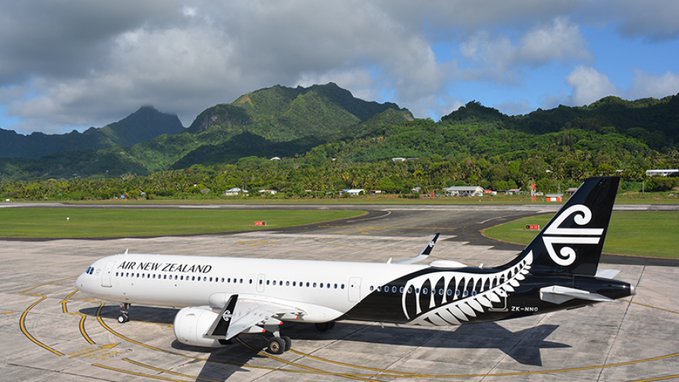
Border restrictions to the Cook Islands have been extended until November.

A statement from Prime Minister Mark Brown’s office late Tuesday afternoon said Cook Islands will further extend its travel advisory restricting inward arrivals to the nation until 11.59pm on Thursday 04 November 2021.

Hi announcement came after it was revealed there were 45 new cases in Delta community outbreak in New Zealand on Tuesday – the highest number in three weeks.

“Today’s cabinet decision to extend the current travel advisory from 27 September until 04 November was based on the advice of the Ministry of Foreign Affairs and Immigration (MFAI) and Te Marae Ora Ministry of Health (TMO),” Brown said.

“Both ministries advised that with the return of the stranded Cook Islanders from New Zealand scheduled for next month, the highest possible precautions should continue to be taken.”

Extending the travel advisory until 04 November would mean that those returning to the Cook Islands on the second repatriation flight would have cleared managed isolation quarantine seven days prior, on Thursday 28 October, Brown said.

It would allow “invaluable” time for the Border Easement Taskforce and cabinet to reassess whether settings had been met for the safe resumption of regular inwards travel, and to “pivot staffing and other officials towards this resumption if determined safe to do so at that point”, Brown added.

Meanwhile,there is fear among Cook Islands parents and caregivers as the day for youth vaccinations looms.

The National Auditorium echoed with voices of dissent as the first of several consultation meetings was hosted by Te Marae Ora late Monday.

New Zealand is providing the vaccines and has bought enough supplies of the Pfizer vaccine to cover its own population as well as 12 to 15 year olds in the Cook Islands, Niue and Tokelau; known as ‘the Realm Countries’.

Secretary of Health Bob Williams, director of hospital health services Dr Yin Yin May and paediatric registrar Dr Donna Mokoroa fronted as members of the public questioned the validity of the vaccine rollout and made claims it could contribute to harmful long term health effects.

It is estimated there are just over 1200 young people in the 12 to 15 years age range in the Cook Islands.

Williams told Cook Islands News the vaccine is expected to arrive next week and Te Marae Ora will start vaccinating on Friday 08 October.

A parent of three 12-year-old children told Dr May she had concerns about the long term effects of vaccination.

She asked Dr May if there was accredited proof of the long term effects.

Dr May said she could provide evidence, there had been studies, and there were no long term effects.

Another parent said she was concerned about the reported adverse effects of the vaccine.
“We need fully informed consent which I don’t think is being provided.”

She claimed it contributed to menstrual disorders and that studies had shown it did not breakdown in the body.

“There is no long term safety, how do we know about long term effects, we need long term studies.

“I think all parents should have all the facts.”

A fact sheet handed to attendees by Te Marae Ora stated a parent of caregiver’s consent together with the child’s consent is preferable, if the child is competent to consent.

Vaccination is not compulsory in the Cook Islands “but the world is changing, and vaccination may well become a need for travelling or school environment”, the document said.

Williams told those gathered there may be a time when Cook Islands has to live with Covid-19.

Another audience member asked what public health measures would need to be put in place to take care of Covid-19.

“It means you can be forced to vaccinate your children, you can be imprisoned.”

Williams said that was not the case . . . “We have said it is voluntary, we are not directing anyone to get their children vaccinated.”

Another audience member stood and said; “This is not a vaccination, it is an experimental jab, any danger is on your heads.”

Williams responded; “There are no other people that know more about your health than these doctors.”

The meeting continued with multiple claims the vaccination programme was irresponsible, unnecessary, not future proofed and not affective against the Delta variant.

Following the meeting, Williams told Cook Islands News; “We did expect the kind of questions we got as some have already raised their concerns on social media.”

Questions and comments were well noted and taken on board, he added.

“Some people came already knowing that they will not support the vaccination but it is encouraged that people look at what’s happening globally with Covid-19.

“We are Covid-19 free but the future may not be same for the Cook Islands, so it is important for us to take that into consideration in our decision making; the evidence from other countries experience is that the benefit of vaccination reduces the risk of being hospitalised for Covid-19.”

More meetings are scheduled for Tereora College at 4.30pm today and Thursday at Titikaveka College from 5pm.

“We also have next week for another opportunity for other schools if they still want another session before Friday 08 October ,” Williams said.

SOURCE: COOK ISLANDS NEWS/PACNEWS

PIF chair reflects on painful legacy of nuclear testing, calls for disarmament

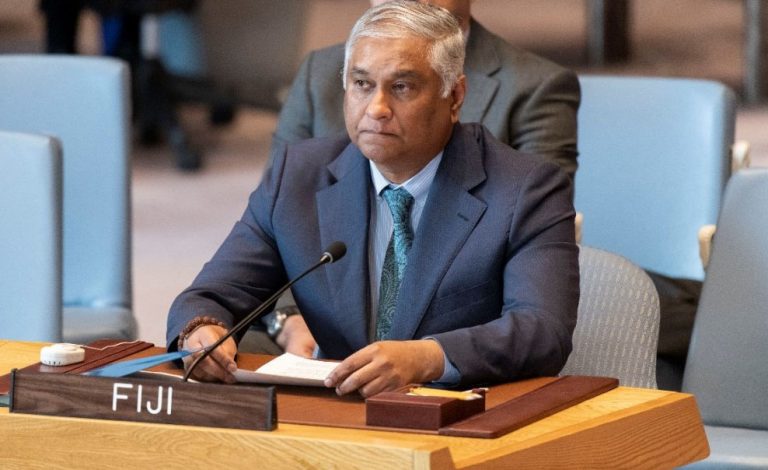
Pacific Islands Forum (PIF) chair Dr Satyendra Prasad said he was concerned about the more than 13,000 nuclear weapons around the world, many of which remain in a state of ‘high operational alert’.

The Fiji Permanent Representative to the UN made his remarks before the UNGA76 plenary on Tuesday to commemorate the international day for the total elimination of nuclear weapons.

“Our Blue Pacific encompasses ocean space and land territory of significant maritime and geostrategic influence,” Prasad said.

“We re-emphasise our determination to ensure that the bounty and beauty of the ocean space, land territory and the airspace above them shall remain the heritage of our peoples and our descendants in perpetuity to be enjoyed by all in peace.”

Prasad said that universal disarmament was the highest priority of the forum and called on the nine nations — China, France, Russia, United Kingdom, and the United States, India, Israel, Pakistan and North Korea — which controlled an estimated 13,080 nuclear weapons, to accede to the Comprehensive Nuclear-Test-Ban Treaty.

“For us, the ongoing struggle with the legacy of nuclear testing, from transboundary contamination of homes and habitats to higher numbers of birth defects and cancers, vests in the Pacific both a legal right and moral standing to demand that nuclear weapon states commit to their respective disarmament obligations under international law,” Prasad said.

“We recall concerns about the environmental impacts of the Fukushima Daiichi Nuclear Reactor accident in 2011 and we are accelerating efforts to prevent harm to our Blue Pacific. We acknowledge Japan’s efforts to date and its engagement with the International Atomic Energy Agency.”

The PIF chair also underscored concern about the fact that most nuclear weapons around the world were in a state of ‘high operational alert’.

The PIF considered its regional nuclear weapons-free zone safeguard as supporting the common global goal of the elimination of nuclear weapons, Prasad added, noting that 2021 marked 35 years since the South Pacific Nuclear-Free Zone Treaty (Rarotonga Treaty) came into force.

“Four of the nuclear weapon states have signed and ratified the protocols to the Rarotonga Treaty and the United States announced in 2010 its intention to ratify all Protocols to the Treaty. We call on the United States to take the necessary steps toward the ratification of the said Protocols,” Prasad said.

This year also marks 50 years since the PIF came into being and 25 years since the cessation of nuclear testing in the Pacific region. Forum member nations include Australia, Cook Islands, Federated States of Micronesia, Fiji, French Polynesia, Kiribati, Nauru, New Caledonia, New Zealand, Niue, Palau, Papua New Guinea, Republic of Marshall Islands, Samoa, Solomon Islands, Tonga, Tuvalu, and Vanuatu.

Dr Prasad concluded by underscoring the legal obligations of states to prevent radioactive nuclear waste, and other radioactive material, from being dumped into the ocean.

“With growing interest in nuclear energy as a form of clean energy, we strongly urge all states to fully comply with the NPT safeguards on peaceful nuclear activities, and all related international law obligations, to ensure to the highest safety levels the prevention of any risk or harm to our ocean and our Blue Pacific, particularly from radioactive disasters that result in the transboundary spread of radioactive material and radioactive waste,” Prasad said.

SOURCE: THE MANDARIN/PACNEWS

Stay connected

529FansLike
172FollowersFollow
156SubscribersSubscribe
- Advertisement -