Home Blog Page 1077

Fiji welcomes first Australian tourists in 20 months amid Omicron concerns

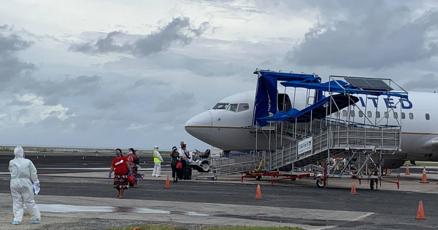
Fiji has thrown open its doors today to tourists for the first time in 20 months, despite fears over the new Omicron coronavirus variant.

The first Australian tourists touch down in the Pacific Island nation this morning from Sydney and daily flights from Melbourne will also begin today.

All tourists must be fully vaccinated and show a negative PCR test taken within 72 hours when they check in for their flight to Fiji at the airport.

In light of the Omicron variant, Fiji has moved to add greater restrictions for its nationals returning from red-listed countries, which include several southern African nations.

Australian tourists will not need to isolate but are required to stay at an approved COVID-safe hotel for three nights. There they will be able to visit bars and restaurants inside certain zones while they undergo rapid testing.

Australians returning home from a holiday to Fiji will face some uncertainty, however, depending on how the Omicron variant affects restrictions locally.

Under current rules introduced in Australia last week, travellers returning from non-African countries to New South Wales and Victoria will need to self-isolate at home for 72 hours.

Currently 90 percent of the adult population in Fiji is fully vaccinated and it is hoped the return of tourists will help revive the country’s economy.

The Pacific Island nation relies on tourism for more than $2 billion (US$1.4 billion) a year in revenue.

“Today is a very special day as we welcome back our Aussie friends after 20 long months,” Fiji Airways Managing Director & CEO Andre Viljoen said.

“We have been working hard since March last year to prepare for this moment and ensure our guests have the safest and most enjoyable travel experience possible.

“The safety of our customers and staff will always be our highest priority. Our entire workforce is fully vaccinated, our new Travel Ready programme is dedicated to medical safety and wellness,” he said

SOURCE: 9 NEWS/PACNEWS

Marshall Islands moves to reduce world’s strictest Covid-quarantine

The Marshall Islands is one of only a handful of nations never to have experienced a single case of community transmission of Covid-19.

Its border closure in the early stages of the coronavirus pandemic in March 2020 and later implementation of one of the world’s strictest quarantine programmes for people coming into this isolated island group have kept it Covid-free.

Twenty-one months of border closure and 18 months maintaining an extended quarantine is slowly changing. In October, the government’s National Disaster Committee, which oversees the Covid response, gained Cabinet endorsement to reduce the Hawaii quarantine period from 14 days to seven for individuals who are fully vaccinated.

This past week, the government announced the Hawaii portion of quarantine for entry will be reduced to three days starting in January, which means to enter the country will involve 17 days of quarantine starting in the new year. The reduced Hawaii quarantine time raises the possibility of positive Covid cases showing up in people while in Marshall Islands quarantine facilities.

The two-stage quarantine was launched in June 2020 so U.S Army personnel and their families who work and live at the missile testing range at Kwajalein Atoll could repatriate from the United States. Initially, the Hawaii quarantine was under a week. But when one person in an early group of returning Army personnel tested positive for Covid while in quarantine at the Army base in Kwajalein, the Marshall Islands increased the time for managed quarantine to 14 days in Hawaii to match the same quarantine period at Kwajalein. That one positive case also resulted in the quarantine period in Kwajalein being extended to three weeks and the individual testing negative before release. There was no community transmission as a result.

The Marshall Islands began on a monthly basis to repatriate groups of Marshall Islanders, essential workers and diplomats in October last year.

From July 2020, the quarantine period was 14 days in Hawaii and 14 days in the Marshall Islands, with multiple Covid tests prior to release. It has been seven and 14 days quarantine in Hawaii and the Marshall Islands, respectively, for the past two months.

New vaccine requirements go into effect in January for anyone coming to Marshall Islands. “All entering Marshall Islands from 1 January onwards that are eligible for Covid-19 vaccines — that is, five years and older — are required to be fully vaccinated prior to entering,” said Chief Secretary Kino Kabua. Although the majority of those who are 12 years and older in the most recent several repatriation groups have been fully vaccinated, it has not been a requirement.

The Army has sought a reduced Hawaii quarantine period for some months, recommending three days instead of the current seven. There is no proposed change to the 14-day quarantine times in Majuro and Kwajalein for those repatriating from the U.S.

The National Disaster Committee, which Kabua chairs, recently endorsed the plan to reduce quarantine time in Hawaii, and submitted this to the Cabinet for review and approval.

The initial request for reducing the quarantine period came from the Army for their personnel, Kabua added. “We have always mirrored our protocols so this would of course be the case in the near future for Marshall Islands quarantine protocols for anyone entering the Marshall Islands that is fully vaccinated,” she said.
Before the seven-day Hawaii quarantine went into effect two months ago it generated a great deal of criticism and pushback from Nitijela or parliament members, who voiced their concerns at a Nitijela Committee of the Whole for maintaining the earlier 14-day quarantine period.

Since the seven-day quarantine went into effect for Hawaii, both for Army personnel and Marshall Islands groups, there have been no Covid cases detected in quarantine in either Kwajalein or Majuro. However, as with earlier quarantine groups, a number of people have tested positive for Covid in quarantine in Hawaii and been dropped from the returning groups.

The last Marshall Islands repatriation group for 2021 goes into quarantine in Hawaii on Monday 29 November. If no one tests positive for Covid in Marshall Islands quarantine, the fully vaccinated people group will be released a week before Christmas.

SOURCE: MARIANAS VARIETY/PACNEWS

Australia’s commercial kava importation pilot officially launched

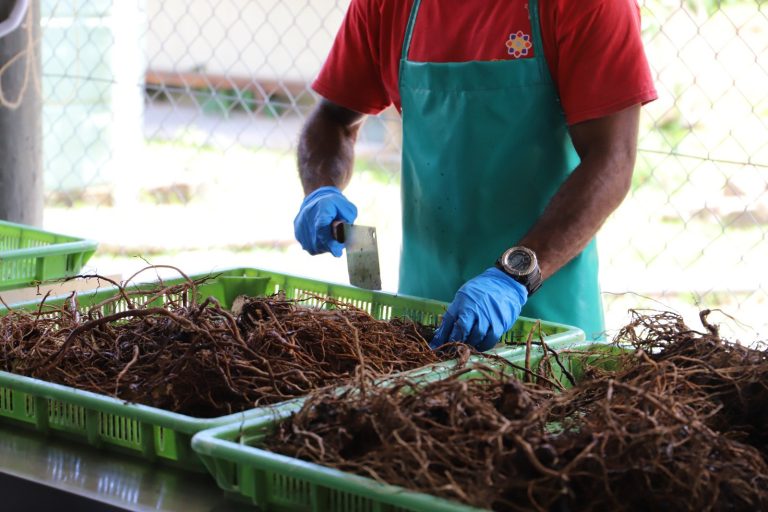
Pacific kava farmers and producers will now have direct access to the Australian market under Phase Two of the Morrison Government’s Kava Pilot, recognising the significant cultural and economic importance kava has for Pacific communities.

From 01 December, producers will be able to apply to import kava for commercial purposes under the two-year pilot. The quantity of kava that can be imported for personal use has already been doubled from two kilograms to four kilograms under Phase One of the pilot.

Minister for International Development and the Pacific, Senator Zed Seselja, said he saw firsthand the cultural and economic significance of kava to Pacific communities, including diaspora in Australia, during a recent visit to Fiji.

“Many businesses in Fiji and across the Pacific have been hit hard by COVID 19, so the excitement for the kava pilot was palpable,” Minister Seselja said.

“Through improved access, the pilot will provide greater cultural connection for Pacific diaspora in Australia, as well as a welcome economic boost for the agricultural sector and rural communities across the Pacific.”

“Supporting Pacific farmers’ access new international markets, like Australia, is a key pillar of Australia’s Pacific Step-up that will see stronger agricultural development and investment, translating into more and better jobs across the region.”

Pacific island communities form an essential part of Australian society. They will now have increased access to kava for ceremonial and cultural purposes.

Minister for Health and Aged Care, Greg Hunt, said the kava pilot will be strictly monitored and will comply with Australia’s high-quality importation and food standards.

“The Morrison Government will undertake robust monitoring and evaluation of the pilot, working closely with state and territories, recognising their regulatory role in the domestic supply and use of kava,” Minister Hunt said.

“It is important Pacific communities here in Australia stay connected to their culture, including access to kava for ceremonial and cultural use, while the Government ensures strong social, health, and cultural outcomes are protected across Australia.”

The Australian Government has commissioned the National Drug and Alcohol Research Centre at the University of New South Wales and Ninti One Limited, an Indigenous owned organisation, to undertake monitoring and evaluation of the pilot. At the end of the two-year period a report will include a recommendation on the future of kava imports to Australia.

Australian businesses can take part in the commercial kava pilot by applying for an import permit from the Department of Health.

SOURCE: AUST GOVT/PACNEWS

Wanting to be watchdogs: Pacific journalists and their views

By Shailendra B. Singh, Folker Hanusch

While global scholarship on the professional views of journalists has expanded tremendously in recent decades, the Pacific remains a blind spot, with sporadic research at best. For instance, the Pacific was not featured in the Worlds of Journalism study on 76 countries, perhaps the most ambitious undertaking in the field as yet.

The lack of research is a drawback in understanding the state of Pacific media, including the challenges faced by journalists, let alone tackling the issues in a sector that is responsible for providing the public with information on which important decisions are formed.

To address this gap, we conducted a standardised survey of 206 Pacific journalists in nine University of the South Pacific member countries based on questions modeled on the Worlds of Journalism study:

1.What are the demographic profiles of Pacific journalists?
2.What are Pacific journalists’ perceptions of their role?
3.What are Pacific journalists’ views of controversial reporting practices?
4.What are Pacific journalists’ perceptions of influences on their work?

The surveys were conducted between mid-2016 and mid-2018 in the following countries: Cook Islands, Fiji, Marshall Islands, Nauru, Samoa, Solomon Islands, Tonga, Tuvalu and Vanuatu.

The response rate in each country varied between 70% (Solomon Islands) and 100% (Nauru), with an overall response rate of 79%. One-quarter of our respondents worked in a management function (editor-in-chief, managing editor, department head, etc.), while the remainder were non-management staff (producers, reporters, news writers, subeditors, or trainees).

We found that while Pacific journalists are now older, more experienced and better educated than 30 years ago, they are still younger and less-educated than their counterparts internationally. So while Pacific journalism schools appear to be having an impact, and journalist retention rates in the industry are improving, the efforts need to be ongoing. The full findings are published in Pacific Journalism Review.

Our results suggest a marked change from earlier studies in key demographic aspects. The median age of nearly 34 years is significantly higher than the 20-29 years range in previous studies. Closer inspection reveals important differences across the nine countries. The oldest age profiles were found in the Cook Islands (43 years) and Tonga (41 years) and, at an average age of 33 years, Fijian journalists are the youngest. One possible reason is the high turnover of Fijian journalists due to the punitive Fiji Media Industry Development Act.

Pacific journalists are more likely to have been educated at tertiary institutions today, in line with global trends, but at just over 50% with bachelor’s degrees, the region lags well behind Australia and New Zealand (at 80-90%). Samoan and Solomon Islander journalists were the most-educated with 69% and 68% holding at least a bachelor’s degree.

As for gender, the overall figures suggest broad parity, albeit large discrepancies in individual countries. Just as in other parts of the world, however, women are still largely disadvantaged in terms of power within the field. In the Pacific, only four in 10 journalists in a management position were women.

Past studies have noted that, faced with limitations on media freedom, journalists display a mix of watchdog ideals and developmental goals. Our results support this assumption.
The most popular roles chosen by survey respondents included being an ‘adversary of government’, and to ‘promote tolerance, cultural diversity and social change’ – with the latter falling in the realm of development journalism. However, ‘support national development’ received relatively little support, with respondents favouring a typically Western standpoint of ‘detached observer’ role.

When asked about using classified business or government documents, only around half the respondents did not approve of this practice under any circumstances. This is still considerably higher than the global average in the Worlds of Journalism study. Among our respondents, only 9% said it was ‘always justified’ to use confidential information, and 40% said it was justified on occasion, compared to 93% of New Zealand journalists who said it was acceptable.

Our findings support the argument that such investigative techniques were generally more accepted in the Global North, as part of journalism’s monitorial role, than the Global South Pacific. Even the second-least controversial practice – using hidden microphones or cameras – was approved by only around 40% of our respondents, compared to 66% globally.

Regarding perceived influences, our findings confirm previous research that those influences which journalists experience most directly are the ones they see as most influential. Hence, journalists feel that procedural and organisational influences – such as deadlines, media laws, access to information and editorial policy – have the most impact on their work. This is followed by economic influences that tend to interact with organisational pressures.

In contrast to the global average, Pacific journalists placed political pressures higher than personal network influences. This is indicative of the stronger role that governments play in Pacific journalism. Samoan journalists are far more likely to perceive pressure from political sources than those in the Cook Islands and Tonga.

Across the Pacific, journalists identify strongly with the role of holding power to account, mixed with views that support a developmental role. While they want to be watchdogs, the political realities of their work – as shown through their risk-averse views on the acceptability of various reporting practices, as well as perceived influences on their work – make this a difficult exercise. In many situations, Pacific governments still hinder the press in this crucial fourth estate role….

SOURCE: DEVPOLICY.ORG/PACNEWS

NZ is the latest to join foreign intervention mission to Solomon Islands

0

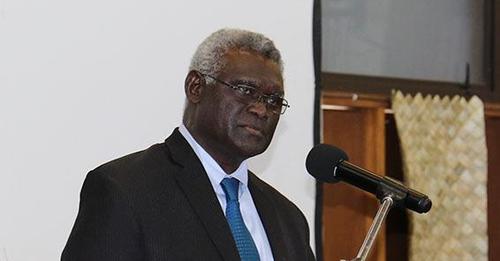
Solomon Islands Prime Minister Manasseh Sogavare has announced that New Zealand officers will now join three other countries: Fiji, Papua New Guinea and Australia in the latest intervention to support Solomon Islands following last week’s unrest in Honiara.

In his address last night, Sogavare said: “We have opened our borders to allow our neighbours to enter to assist us. New Zealand will join the three countries in the next few days.”

“On behalf of the people and Government of Solomon Islands I convey the grateful thanks of a grateful nation to our friends, neighbours and partners, the people and the governments of Australia, Papua New Guinea, Fiji, and New Zealand for responding to our call to help us back onto our feet,” he said.

Fiji troops arrived in Honiara Tuesday to join Australia and PNG personnel who had been in the country since Friday.

Prime Minister Manasseh Sogavare has admitted that COVID-19 tests conducted on the visiting peacekeeping contingent has returned with some inconclusive results.

He said the tests were repeated and the results have since returned negative.

The Prime Minster said that the opening of Solomon Islands borders for the peacekeeping contingent carries with it risks, but assures the public that measures are in place to mitigate such risks.

He said COVID-19 tests are, or have been conducted on days three, four, six, eight and 10 for low risk countries. High risk countries will have additional tests on days 12 and 14.

Sogavare said that the visiting peacekeeping team are in Honiara on the invitation of the Solomon Islands government and all the participating countries have followed strict testing protocols before coming over.

Meanwhile, the Democratic Coalition Government for Advancement (DCGA) has expressed sadness following the destruction to business houses in Honiara in recent days.

A statement from DCGA said the destruction of businesses are done by unlawful and heartless people with selfish agendas.

The statement said the instigators of the recent looting and arson that gripped Honiara have no respect for our multi-diverse ethnic groupings.

“The looters and rioters destroy and victimise the innocent residents and business houses of Honiara,” the statement said.

The statement said the Government is aware of reports that the instigators are planning another evil plan to completely decimate the whole of Honiara city before implementing the next phase which they call the “third wave” including the declaration of Malaita as an independent state.

It says some of the ring leaders are openly stating on Facebook that “in order to build a new house, the old house must be first destroyed”.

“Such statements are not helping the volatile situation we are currently experiencing in Honiara,” the DCGA statement said.

“To the peace loving and right minded Malaitan’s, we should ask ourselves whether we are comfortable with the violent advocators to lead our people to an independent state.”

Nevertheless, the statement said the national government is encouraged by the wisdom of the majority of our citizens not to employ violence, looting or threatening tactics to impose one’s evil plan of decimating Honiara city, the capital of Solomon Islands.

“It is even beyond comprehension and brevity to see the violence and disrespect the instigators demonstrated against the peace loving people of this beloved country of ours,” the statement adds.

The DCGA statement said resorting to violence will never bring about peaceful solutions but disaster upon oneself.

The statement said the DCGA government sees that the majority of the people are not supportive of the ongoing unlawful events and thanked good citizens to continue to remain law-abiding citizens of this country.

The national government also thanked our Churches for urging their followers to refrain from unlawful gatherings and events and such call must continue to be reemphasised to our good people.

“Instigators are strongly urged to encourage their violent supporters to embrace similar pathways from the provincial governments of Choiseul and Western provinces if they want to democratically replace the national leadership,” it said.

The statement also urged all our peace-loving citizens irrespective of our ideological disagreements to resolve our differences within the bounds of our laws.

“Solomon Islands belongs to all of us and to all nine provinces in the country. There is a democratic process to elect and oust a duly elected Prime Minister and that is at the floor or Parliament and not through violence, looting and destruction,” the statement said.

SOURCE: SBM ONLINE/SOLOMON TIMES ONLINE/PACNEWS

Bougainville President commends PNG intervention in Solomon Islands

0

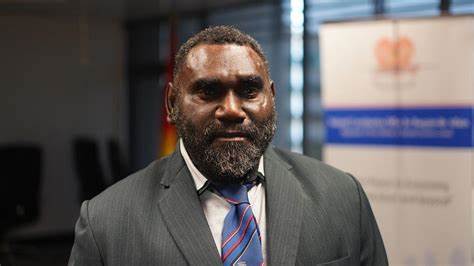
The current troubles in the Solomon Islands must not be seen as an opportunity by Bougainvilleans to prey on the nation’s instability says Bouganville President Ishmael Toroama.

He said Bougainville has long shared traditional and familial ties with the Solomon Islands. However, the Solomon Islands remain an independent sovereign nation.

“Many Bougainvilleans will have a vested interest in the situation in the Solomon Islands owing to our ties with them. But I caution restraint and respect for the nation’s sovereignty and the democratically elected government of the Solomon Islands at this time.

“During the ten year Bougainville Civil War the people of the Solomon Islands offered Bougainville refuge and support. In the same token I offer our support to the people and Government of the Solomon Islands.

“This support goes by way of supporting the Papua New Guinea Government’s response to the SIG.
As our closest neighbors along our internal borders I commend the efforts by Prime Minister James Marape in offering security assistance to the Solomon Islands,” said President Toroama.

In the true spirit of Melanesian brotherhood the Prime Minister’s response to his counterpart the Prime Minister of the Solomon Islands Manaseh Sogavare is timely to ensure the safety and security of the people, he said.

“I appeal to the factions on the Solomon Islands who have resorted to violence and arson to cease what they are doing and work with your government to resolve the conflict in an amicable manner.

“The Solomons region has been the foreground for conflict in the last thirty years. We cannot continue along this path without recognising the consequences of our actions.

“It is time to adopt a civil approach to resolving our grievances by being transparent, accountable and respecting democracy.

“Melanesians have always prided ourselves in our strength in war and our love of peace. Let us not confuse these two ideals in accomplishing our own agendas,” said President Toroama.

SOURCE: ABG GOVT/PACNEWS

COVID-19: WHO’s Tedros criticises ‘blunt’ Omicron measures

The head of the UN health agency has criticised “blunt” and “blanket” measures taken by countries in the past few days to stop the spread of the Omicron variant.

In a statement on Tuesday, the World Health Organisation Director-General said that it was “deeply concerning” that Botswana and South Africa, where the new variant was first identified, were “being penalised by others for doing the right thing”.

Dozens of countries have imposed travel bans on the southern African nations since the mutation was discovered at the end of last week.

Tedros said that while it was understandable that all countries should want to protect their citizens, Omicron was still a largely unknown threat.

And he insisted that the world should not forget “that we are already dealing with a highly transmissible, dangerous variant – the Delta variant, which accounts for almost all cases globally”.

As scientists race to understand how virulent and transmissible the new Omicron variant is, WHO is urging the use of all available precautions to stop the spread.

“As we don’t have any full picture of this variant, as long as we don’t know how well the existing vaccines are working…we need to use the measures that we know work,” said Christian Lindmeier, WHO spokesperson, during a scheduled briefing in Geneva on Tuesday.

These measures include “mask-wearing…ventilating a room if possible, as often as possible, keeping the normal hand and body hygiene…We know these measures work”.

The WHO’s message comes as reports indicated potential concern voiced by the chief of vaccine manufacturer, Moderna, that existing shots may not be as effective against the new variant as previous ones, such as Delta.

Lindmeier said that more time was needed to reach a conclusion on the Omicron variant: “There might be higher transmissibility, according to initial reports,” he said, “hence we’re deeply looking. We still need a couple of weeks to get the details together and to know exactly what we’re dealing with.”

On Monday, WHO Director-General Tedros Adhanom Ghebreyesus addressed a special three-day meeting of the organisation’s governing body in Geneva, warning that the world shouldn’t need another “wake-up call” about the dangers of COVID-19 before deciding to act to prevent further pandemics.

“Omicron’s very emergence is another reminder that although many of us might think we are done with COVID-19, it is not done with us,” he said.

“We are living through a cycle of panic and neglect.  Hard-won gains could vanish in an instant. Our most immediate task, therefore, is to end this pandemic.”

Reinforcing Tedros’s message, Lindmeier pointed out that “Omicron is not the only variant out there, it’s now high on the agenda of interest. Let’s not forget there is Delta out there. There is a COVID-19 pandemic, even without the Omicron variant”.

Despite concerns that existing vaccines may not be as effective against Omicron, the WHO spokesman reiterated that a “high vaccination rate in the population works, we know that.

“The emergency rooms…are full of people with the most percentage unvaccinated. The most severe diseases and the most severe outcome until death is most often in those unvaccinated, and that’s of high importance.”

Lindmeier also stressed that it should not be forgotten that life-saving operations “are being postponed for months for people who urgently need them because of full emergency wards and hospitals. Let’s use all the measures we have right now until we know more.” .

SOURCE: UN NEWS CENTRE/PACNEWS

Unease builds over New Caledonia referendum

0

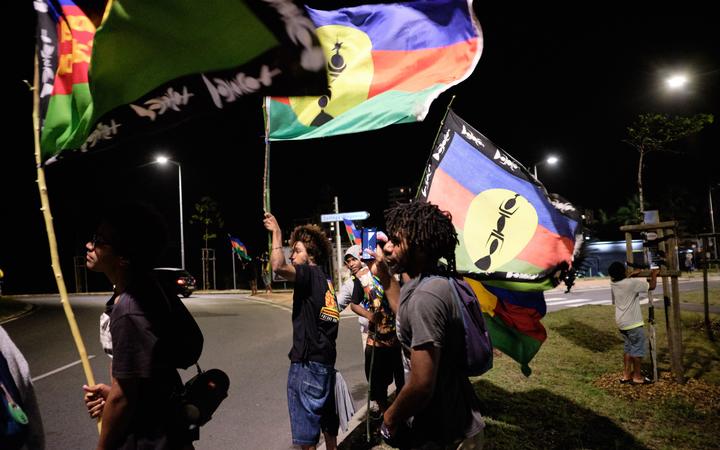
There is growing unease over the French decision to hold New Caledonia’s third and final independence referendum on 12 December.

Pro-independence parties and groups decided last month that because of the pandemic, they will stay away from the polls.

The decolonisation mechanism, at play for 30 years, will therefore reach its formal end without the full participation of the colonised people at the centre of the process.

In the two preceding referendums in 2018 and 2020, the percentage of voters backing the status quo fell from 56.7 percent in 2018 to 53.3 percent in 2020.

With the expected overwhelming no vote, the referendum decision will put the onus back on France to find a new way to accommodate the Kanaks’ right to self-determination.

The December date for the referendum was chosen by the French overseas minister Sebastien Lecornu in June after he dismissed calls by the pro-independence parties to hold it in late 2022.

His position echoed the consensus that the referendum date should in no way overlap with the campaign period for the French presidential and legislative elections due next year.

However, the pro-independence parties had asked Paris to honour the 2019 promise by the then French prime minister Edouard Philippe to exclude the period from September 2021 to July 2022 for the referendum

While the anti-independence camp wasn’t keen on having another vote, its preference was a date as early as possible

The pro-independence side grudgingly accepted the choice by France and began readying itself for the third independence vote in three years.

In August, campaigning started but it ground to sudden halt in early September when a community Covid-19 outbreak shattered New Caledonia’s bubble, hitherto spared any pandemic-related fatalities.

A strict lockdown ensued while the virus rapidly infected thousands and killed more than 200 people, mainly indigenous Kanaks.

Vaccinations have picked up and around 80 percent of the eligible population has had at least one jab, while about 70 percent have had two doses.

With community gatherings banned, the pro-independence parties saw their chances to reach grassroot voters dimmed and called for a postponement of the vote until late next year.

They also argued that for a population in grief, the time for political campaigning was not right.

But for Paris, the referendum machinery has been set in motion, with hundreds of security forces and their armoured personnel carriers on their way to Noumea.

Grief was not considered to be a reason to delay the vote, and Lecornu said only an out-of-control pandemic justified a postponement.

With case numbers falling, the pandemic was deemed to be managed and conditions fine for the vote to go ahead.

Failing to get any concession, the pro-independence parties let the deadline lapse to submit official campaign material and then announced they would not take part in the referendum.

Mayors in towns with pro-independence administrations have been asked to assist in the formality of running of the referendum but not to vote.

The Melanesian Spearhead Group, which has New Caledonia’s pro-independence FLNKS movement as a member, endorsed the call to delay the vote.

Vanuatu’s government also supports a postponement, while other governments in the region, including the Pacific Islands Forum, have remained silent.

Furthermore, Pacific regional statesmen, such as the former presidents of the Marshall Island, Kiribati and Palau, have written to President Macron asking him to show consideration and respect for the wishes of the Kanak people.

Former senior French officials as well as civil society members have also publicly, but unsuccessfully, lobbied Paris to delay the vote.

It is being pointed out time and again that the independence referendum imposed by France in 1987 failed because the Kanaks rejected the conditions attached to it.

With more than 98 percent then opting to stay French, it didn’t reflect the aspirations of the people colonised since 1853 and sidelined for the better part of a century thereafter.

A conflict simmering for years and on the verge of a civil war in the early 1980s had its most dramatic flashpoint in the 1988 Ouvea hostage crisis when both French police and hostagetakers were killed in operations controversial until today.

The crisis happened to reach its very peak as France was in the middle of its 1988 presidential elections.

It marked a turning point and ushered in a deal to try to achieve New Caledonia’s decolonisation peacefully.

Known as the Matignon Accords, a ten-year horizon was set for a proper vote, but again put off with the signing of the 1998 Noumea Accord.

Another 20-year window was given for a decolonisation by 2018, and in case of a no, two more votes were possible, in 2020 and 2022.

Under the Accord, New Caledonia was given a collegial government, made up of members in proportion to their parties’ representation in Congress.

The electorate for provincial elections as well as the referendums was limited to indigenous people and long-term residents, and enshrined in the French constitution.

The Accord also saw the phased and irreversible transfer of power from France to New Caledonia as part of the decolonisation under the auspices of the United Nations.

What remains under French control, and is the substance of the referendum, is defence, policing, the judiciary, monetary policy and foreign affairs.

Also part of the realignment was the transfer of vast nickel ore deposits to the mainly Kanak Northern Province for it to partake in what is the backbone of the economy.

While these accords provided for a peaceful coexistence for three decades, they failed to unite the communities for the much vaunted common destiny.

Approaching a third and final vote, the anti-independence side has been keen for an early vote, warning that the prolonged referendum process has already created uncertainty in difficult economic times.

The pro-French loyalists also pointed out that it was the pro-independence parties, which in April asked for the referendum and which should now stand by their decision, irrespective of the arrival of Covid-19 in the community.

In July, France released a comprehensive document outlining what either a yes or a no will mean.

It also provides for a convergence period to June 2023 when Paris wants another vote in New Caledonia on its next status, whose elaboration looms as an enormous challenge.

With the French presidential election less than half a year away, time will be tight as attention invariably drifts towards French domestic politics which may even bring on another set of actors.

Missing in the lead-up to the December referendum, which is now all but certain to be a resounding victory for the anti-independence side, is any proposal which could be acceptable to both sides in order to maintain the peace.

Lecornu has said December 12th will see the Noumea Accord lapse. For the anti-independence side, this is being taken to mean the end of the restricted roll and the admission of all French citizens in future votes.

This risks setting an end to the concept of a New Caledonian people, made of indigenous Kanaks, descendants of 19th century convicts and long-term settlers.

It is clear that the Kanak people won’t accept that its right to self-determination will be voted away by recent migrants.

A flawed referendum in December will set the clock back and force the two camps to relitigate the terms for a continued peaceful coexistence.

Maybe the time will come for a New Caledonia with sovereignty shared with France.

SOURCE: RNZ PACIFIC/PACNEWS
Fiji’s international borders re-open today

0

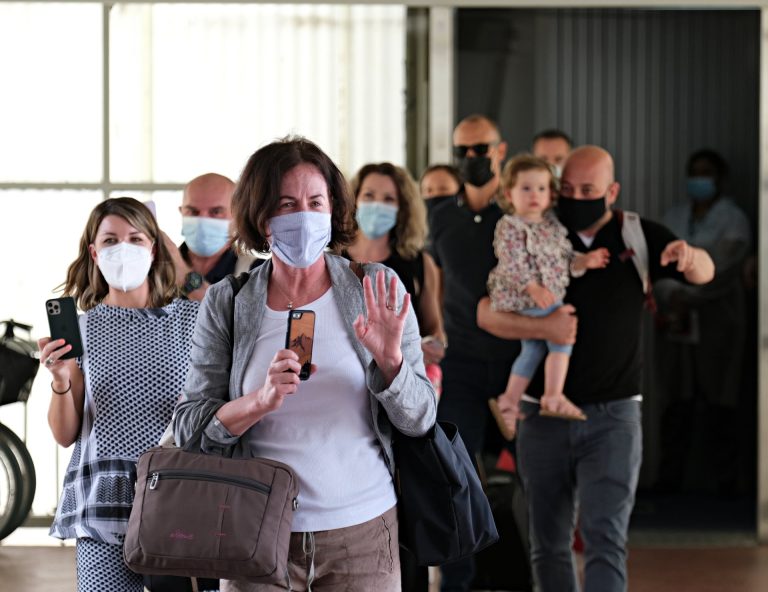
Fiji’s international borders will reopen today after almost two years.

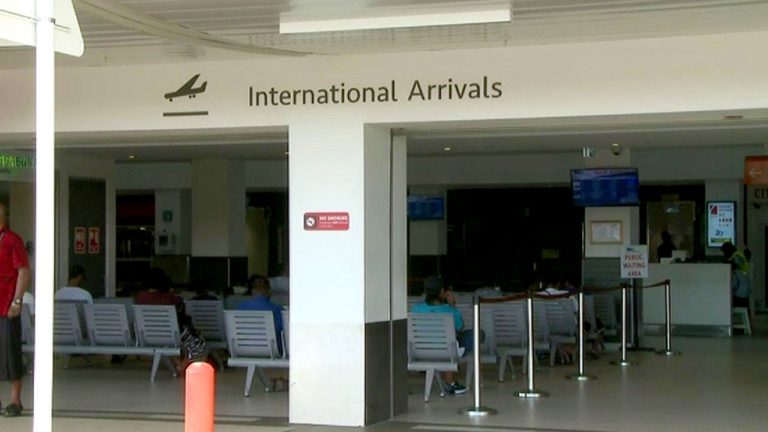
This has brought in much excitement for the people of Fiji as the first tourist flight lands at the Nadi international airport this morning.

This first flight is a strong indication of our resilience to get through the pandemic and a ray of hope for many employees of the tourism sector to be reemployed.

Fiji Airways is working closely with the Ministry of Health to monitor and minimize the risk of the new Omicron variant of COVID-19 from entering the country.

As an added measure, the airline says it will introduce an additional check at the airport today, for all travellers to declare where they have been in the last 14 days.

According to the national carrier the safety protection protocols from COVID-19 and its potential variants are included in the border-reopening framework which was designed to deal with situations like this.

Fiji Airways has an independently verified Travel Ready programme that has several safeguards to minimize risk, and the carrier has medically qualified Customer Wellness Champions onboard to enforce these measures.

These protections are now further enhanced with the implementation of Fiji Airways’ “No Jab, No Fly” Vaccination Policy, which requires all adults (over 18 years of age) to be fully vaccinated with a Fiji-approved vaccine prior to travel.

Fiji Airports Communications and Public Relations Manager Christopher Chand says today’s flight is probably the most anticipated one.

“It will be after 20 months that we will be having our first tourist flight and we are looking forward to it with great excitement to see and welcome our passengers back to Nadi International Airport.”

The Nadi International Airport will come alive today as a welcome celebration has been planned for tourists.

A water salute will be done when the first plane touches down followed by a Fijian welcome ceremony by villagers from Sabeto and the Minister for Economy together with a few other key stakeholders.

The flow-on effect for when holidaymakers are in the country is huge as this creates business, opens up employment which adds to the economic development.

Handicraft seller Asha Nand said they have been setting up their shop since Monday.

“Everybody is excited since we haven’t said ‘Bula’ in a long time, or ‘have a look inside. People are practicing and people are laughing.”

Nadi Taxi Driver Jiten Kumar says today is the day that many have been looking forward to.

“So now it’s going to be good for everyone mostly us the taxi operators, the staff will get engaged to do their work at the airport, from there, we will get our business and this is how the business will pick up.”

The first flight from Sydney that will land today will see 233 passengers.

SOURCE FBC NEWS/PACNEWS

US$5 million ADB grant to support Tonga’s post covid-19 economic recovery

0

The Asian Development Bank (ADB) and the Government of Tonga have signed a US$5 million grant agreement to help restore and accelerate private sector-led economic growth in Tonga after the COVID-19 pandemic.

The agreement, under the ADB’s Tonga Economic Recovery Support Programme, was jointly signed by ADB Pacific Department Deputy Director General Emma Veve and Tonga’s Minister of Finance, Tevita Lavemaau.

“The ADB supported grants will help expedite the Government of Tonga’s ongoing reforms, while providing much-needed budget support,” said Minister Lavemaau. “Strengthening fiscal management will be absolutely critical during the COVID-19 recovery phase.”

“The reform program is expected to spur inclusive private sector-led economic growth in Tonga,” said Veve.”The government’s continued investments in strengthening its economy and systems and building economic resilience will result in a more progressive Tonga supporting a higher quality of life.”

Reforms supported through the program will help enable Tonga to manage its external public debt, redirect public spending towards development needs, and increase impact through improved public financial management.

An enabling environment for private sector growth will be promoted through an improved international commercial arbitration framework, enhanced access to finance and supervision of nonbank financial institutions, and increased number of higher-skilled workers ready for deployment.

The programme financed in close collaboration with other development partners, builds on reforms ADB has supported in Tonga since 2009 to strengthen public financial management and build macroeconomic resilience.

SOURCE: ADB/PACNEWS