Home Blog Page 1059

New Covid-19 border measures for the Cook Islands

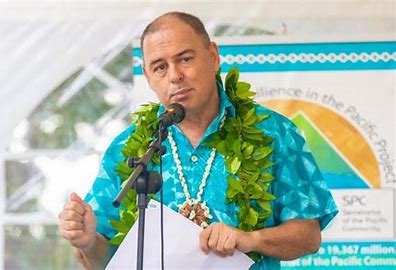
The Cook Islands Prime Minister says Cabinet has approved new entry rules for people once the border is reopened mid-January.

Mark Brown said the Covid-19 Safe Framework will be enforceable under new regulations available to Te Marae Ora (TMO) Ministry of Health.

Under the Safe Framework there will be three different groups of visitors able to enter the country, each group will need to comply with its own particular set of rules.

The three groups are tourists, permit holders, Cook Islanders and permanent residents.

He said failure to comply with the border entry regulations will result in travellers being denied entry to the country at the border.

All three groups must complete the TMO online form 96 hours before departure, return a negative PCR Covid test undertaken within 48 hours of departure and they must have been in New Zealand for at least 10 days prior to entry into the Cook Islands.

In addition to the above, Group one (tourists) may only enter the country if they are fully vaccinated. There are no exceptions to this requirement. Consequently, children under 12 years will not be able to enter the country unless and until they are vaccinated.

Those in the Group two (permit holders for work or residence) may enter the country if they’re vaccinated. There are two exceptions to the vaccination requirement, firstly for children aged under 12 and secondly for those aged over 12 who cannot be vaccinated because of a medical exemption.

Those permitted entry under an exemption will be subject to certain additional public health controls upon their arrival to the Cook Islands, for example, they will be required to self-isolate at home for 5 days and undertake Covid tests.

Cook Islanders and Cook Islands permanent residents comprise Group three.

Group three may enter the country regardless of their vaccination status, however those who are unvaccinated will be subject to certain additional public health controls upon arrival in the country.

For example, Group three travellers aged 12 and over who are not vaccinated and do not have a medical exemption must undergo 10 days in managed isolation and quarantine (MIQ) at their own cost and undertake three tests during that time.

If a minor (aged 12 – 17) in this group is travelling unaccompanied, a caregiver / guardian will have to enter quarantine with them, and that cost will also need to be paid for.

Group three travellers who have a medical exemption from vaccination must isolate at home for 5 days upon arrival and undertake two tests during that time.
Children aged under 12 travelling with vaccinated adults (or adults exempt from vaccination) or travelling unaccompanied, must isolate at home for five days upon arrival, and undertake two tests.

Children aged under 12 and who are travelling with unvaccinated adults, must enter MIQ with their family.

Prime Minister Mark Brown said “New Zealand will remain our only international gateway for the time being and provide an additional safety buffer, so a traveller from a high-risk country must stand down for ten days before continuing onto the Cook Islands.”

Group three will also be required to prove their immigration status.

The entry requirements will be enforced at the border by immigration officials, and failure to comply with the border entry regulations will result in travellers being denied entry to the country at the border.

SOURCE: RNZ PACIFIC/PACNEWS
WHO lists 9th COVID-19 vaccine for emergency use

0

The World Health Organisation (WHO) approved on Friday the Covovax vaccine for emergency use listing (EUL), elevating to nine the number of immunisations approved to fight the COVID-19 pandemic.

The vaccine is produced by the Serum Institute of India, under licence from Novavax, and will now be part of the COVAX facility portfolio, boosting efforts to vaccinate more people in lower-income countries.

WHO Assistant-Director General for Access to Medicines and Health Products, Dr Mariângela Simão, said that “even with new variants emerging, vaccines remain one of the most effective tools to protect people against serious illness and death from SARS-COV-2.”

She said WHO hoped the new Indian-produced shots would increase access, particularly in lower-income countries, 41 of which have still not been able to vaccinate 10 percent of their populations, while 98 countries have yet to reach 40 per cent.

According to WHO, the procedure to qualify for emergency use, assesses the quality, safety and efficacy of the vaccines. The approval also allows countries to expedite their own regulatory process.

The Technical Advisory Group for Emergency Use Listing (TAG-EUL), convened by WHO and made up of experts from around the world, determined that the vaccine meets WHO standards for protection against COVID-19, that the benefits far outweighs any risks, and that it can be used globally.

Covovax is a subunit of the vaccine developed by Novavax and the Coalition for Epidemic Preparedness Innovations (CEPI). It requires two doses and is stable at 2 to 8 °C refrigerated temperatures.

This week, a meeting of WHO’s Strategic Advisory Group of Experts on Immunisation (SAGE) also reviewed the vaccine.

SOURCE: UN NEWS CENTRE/PACNEWS

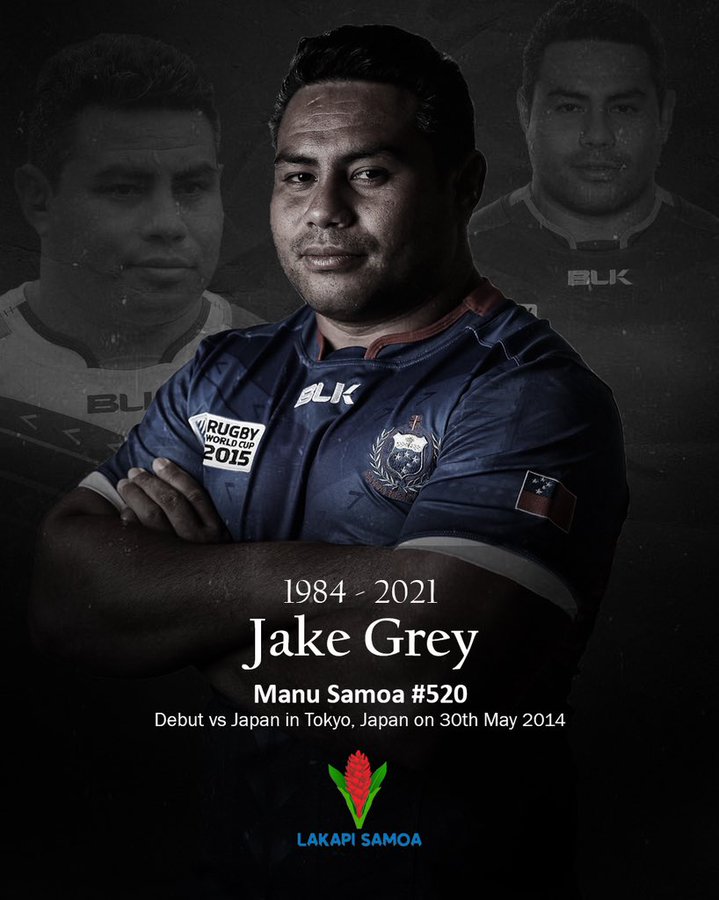
Samoa rugby mourn death of Jake Grey

0

Lakapi Samoa has announced the death of former Manu Samoa front rower Jake Jacob Grey.

The 37 year-old passed away at Tupua Tamasese Meaole hospital in Apia on Sunday, after a long battle with cancer.

Grey was a product of local rugby development and had played through the ranks of age groups rugby playing Under 20 and Manu Samoa A.

“Jake became Manu Samoa #520 when he was first selected to Manu Samoa in 2014, making his debut against Japan in May 2014,” General Manager of Lakapi Samoa High Performance, Seumanu Douglas Ngau Chun, told KHJ News.

“The Manu Samoa aiga are saddened to hear Jake has lost his battle with cancer and wish to express our deepest condolences and prayers of comfort for his family,” he said.

Grey also played professional rugby in New Zealand and Europe.

SOURCE: RNZ PACIFIC/PACNEWS

Solomon Islands 2023 Pacific Games launches funding programme to support National Federations

0

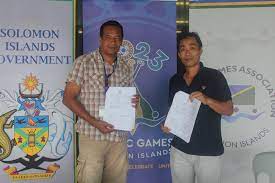
The Games Organising Committee (GOC) for the 2023 Pacific Games in Solomon Islands launched a funding programme to support National Sports Federations in Solomon Islands.

This aims to support the functionality and enhancement of National Sports Federations (NSFs) ahead and beyond 2023 as part of the Federations’ commitment to engage with the GOC in delivering their respective sport competitions at the 2023 Pacific Games in Honiara, Solomon Islands.

Adrian Tuhanuku, GOC’s Senior Sport Delivery Manager, highlighted that the SBD50,000(US$6,200) funding programme is one of the support initiatives for NSFs purposely to ensure they are functioning and are prepared to support the GOC in the delivery of the 2023 Games.

Three (3) Federations namely the Solomon Islands Weightlifting Federation, Solomon Islands Golf Federation and the Solomon Islands Volleyball Federation were the first to sign a binding agreement on Thursday 16 December, 2021 to access this fund after the GOC through its Sport Delivery Department received clearance from both the National Sports Council (NSC) and the National Olympic Committee of Solomon Islands (NOCSI) on this three Federations’ eligibility.

The local Tennis, Rugby and Boxing Federations are the next to sign their funding agreements with GOC on Friday 17th December while six other Federations are awaiting clearance from either NSC or NOCSI in terms of their governance.

The GOC also takes into consideration Federations’ performances in previous regional Games and their medal prospect for 2023.

Solomon Islands have twenty-four (24) Sports Federations that are confirmed to take part during the 2023 Pacific Games.

Tuhanuku further highlighted that in order for Federations to qualify to access this funding support, they must have an existing bank account, a finance officer responsible for auditing, they must have a full executive according to their respective constitutions, be in good standing with their respective International Federations (IFs), NSC and NOCSI and must be a properly registered sports body.

“In terms of utilising the funds, Federations are required to settle all or any outstanding affiliation fees they may have with NOCSI, NSC and their IFs up until 2024 which will enable Federations that are inactive to restore some kind of functionality while enhancing those that are already active.

“The funding support comprises of two components which are the functional component based on the basic requirements that will enable Federations to become functional and the strengthening component to assist the Federations in their administrative operational costs. Any other payment that is outside of a set Payment Eligibility Schedule will be subject to approval by the GOC’s Sport Delivery Department,” Tuhanuku said.

The payment of funds to Federations will be done according to the Phases set out in the Schedule of Payment in the agreement between GOC and the Federations.

Meanwhile, monitoring systems will be in place to assess whether or not the funds granted to Federations are properly utilised as intended and to ensure the effectiveness of the funds provided to the Federations.

The amounts for the fund can be reviewed and amended periodically, taking into account the increase in operational costs and requirements, when it is deemed necessary which also follows in line with GOC’s planned legacy of well governed and functioning NSFs post 2023.

Chief Executive Officer (CEO) of GOC, Peter Stewart said: “While the focus has been on preparation for the 2023 Pacific Games not much attention has been given to the governance and administration of National Federations.
The Games emphasises the importance of having functioning Federations capable of supporting its mission to deliver in 2023.”

While the recently completed Solomon Islands National Institute of Sport (SINIS) High – Performance is responsible for developing Team Solomons, GOC’s sole focus is in ensuring a successful Games for all participating nations from the region including Australia and New Zealand.

This means GOC is tasked with delivering the sports program for the 2023 Games, as well as the opening and closing ceremonies, marketing, broadcasting, security, transport and logistics, and the meals and accommodation for an estimated 5,000 athletes and officials.

SOURCE: SOLOMON TIMES ONLINE/PACNEWS

Parker too good for Chisora

0

The New Zealand boxer Joseph Parker has bagged a unanimous points decision win over British veteran Dereck Chisora in their heavyweight rematch in Manchester.

Parker, who won the first fight back in May by a controversial split decision, won this morning’s bout far more decisively, by at least two rounds on all three judges scorecards.

The former WBO heavyweight champion was particularly strong in the first half of the fight, with Chisora given a standing eight count on three occasions, in rounds three, seven and right.

But to Chisora’s credit, he stayed in the contest, refusing to go down, with Parker unable to finish off the fight.

“I just felt like it was a continuation of the first fight,” Parker said.

“He never stopped coming to the end, but we practised and practised the jab uppercut, didn’t finish it with the hook … but (to win) what a Christmas present!”

Parker’s trainer Andy Lee was delighted with Parker, saying he managed the fight perfectly.

“Yeah there are always mistakes, but that’s a good thing because we can work on them and I’m so proud of him because he’s dedicated himself like he’s never done before,” he said.

The result extends Parker’s winning streak to six – and edges him closer to his goal of regaining a world title belt.

Parker’s overall record is 29 wins from 31 fights.

Meanwhile, Olympic bronze medallist boxer David Nyika has sent a message to the cruiserweight division with a clincal showing in his first professional bout on British soil.

Fighting on the undercard of the Parker rematch with Chisora, Nyika easily swept aside 31-year-old Frenchman Anthony Carpin.

The two-time Commonwealth Games gold medallist put his skill, speed and power on display in a dominant first round showing, after which Carpin retired in his corner.

The retirement was due to an apparent elbow injury but the French fighter’s face was evidence of the punishment he had taken, while he also absorbed several punishing body shots.

Nyika, who trained alongside Parker under new Irish trainer Andy Lee for the fight, went to 2-0 as a professional with the victory.

The 26-year-old’s first pro bout back in February was a bizzare technical knockout win over Jesse Maio lasting just 30 seconds.

SOURCE: RNZ PACIFIC/PACNEWS

Vanuatu CSOs demand National Parliament to officially declare a climate emergency for Vanuatu

The disappointing outcomes of COP26 have shown the lack of political will from world leaders to address climate change at the global level says Civil Society Organisations in Vanuatu.

Despite the ever-increasing climate change issues impacting billions of lives around the world, governments are not committed to climate action.

The Civil Society Organisations in Vanuatu are calling out to the government of Vanuatu to take Climate Justice seriously in its actions to address climate change impacts.

The Vanuatu Civil Society strongly demands the government to officially declare a Climate Emergency as an action to acknowledge the menacing threat climate change poses to the lives of the Vanuatu people.

This declaration will also recognise Vanuatu’s status as a very vulnerable country with the highest exposure to multiple climates and geological hazards in the world. Almost 81% of the country’s landmass and 76% of its population are considered extremely vulnerable to multiple climate and geological hazards.

This call came during a consultation meeting held on the 10 December 2021 based on the climate emergency declaration for Vanuatu.

Additionally, as a complementary action to this declaration, the Vanuatu government must submit a new and highly ambitious Nationally Determined Contribution that actually prioritises Adaptation and Loss and Damage over mitigation, in the lead up to the upcoming COP27 UN Climate Conference next year in Egypt. This will cement Vanuatu’s status in the international community as a leader on climate action as well influence other affected countries to take similar actions in aims of creating a global momentum in the space of climate action.

Such momentum is crucial to magnify the voices of the front line victims as emphasised by Lorenzo Raplili from Pacific Climate Action Network and a youth climate Activist who lamented that “This year’s COP26 Vanuatu delegation were not attending and the outcome is very disappointing to us civil societies. Climate change mitigation, adaptation which includes loss and damage, climate finance, gender, and transparency are key topics of discussion and negotiations that Vanuatu government focuses mainly on were seen as nothing and useless to the eyes and ears of developed nations.” The voices of the Pacific people are falling on deaf ears.

Speaking in their first consultation meeting with different CSOs representatives, Leiasmanu Cullwick as the Executive Director of Vanuatu National Women Council said that “Vanuatu government must act with urgency, women are becoming victims of natural disasters that are worsening these days. We need everyone to take serious actions because climate change is life and death for us today. We support the call for a climate emergency declaration for Vanuatu to be tabled in parliament as soon as possible.”

“People with disabilities in Vanuatu are at increased risk of the adverse impacts of climate change including threats to our health, food security, water, sanitation, and livelihood. We also support this initiative for a climate emergency declaration.” Freda Willie, Vanuatu Disability Promotion and Advocacy Association.

With these strong messages, the Vanuatu Civil Society strongly urges the government to use an inclusive approach in its climate actions or climate governance systems that will not leave the women, youths, elderly, and LGBTQI behind. This should also include the accessibility of small grants and finance to CSOs to implement their priorities in the space of climate change. Climate action must begin in this country as well and not just at the global level.

Marie Joanita Meltebury of Pacific Islands Climate Action Network COP26 Advocacy Officer also strongly expressed, “The COP26 outcomes are very disappointing and show that world leaders are not taking the necessary climate action to protect our people’s lives and environments. Thus, this initiative will pave the way for another possible solution to this climate crisis. We cannot wait for the world leaders to act, we are going to make them ACT now!”

To date, few Nations around the world including New Zealand apart from any Pacific Islands have declared a Climate Emergency (along with 975 jurisdictions and local governments covering 212 million citizens).

The Declaration does not commit the Government to any additional financial burden, but rather expresses solidarity with existing global movements.

The Climate Emergency Declaration will be implemented in alignment with the already approved International Climate Diplomacy Strategy and the existing framework of the National Advisory Board (NAB) on Climate Change, and the Ministry of Foreign Affairs.

“A draft motion paper is already in place and we strongly call on the Minister of Climate Change and Minister of Foreign Affairs, International Cooperation, and External Trade to take into account and table it in the parliament next year 2022 in the first extraordinary session” the statement said.

SOURCE: PICAN/PACNEWS

Strong political leadership needed to weed out corruption: Samoa PM

The 9th session of the Conference of the States Parties (CoSP) officially commenced in Sharm El-Sheikh, Egypt, on 13 December 2021.

Samoa is one of 152 countries meeting to advance action through the United Nations Convention against Corruption (UNCAC) and strengthen integrity responses to the COVID-19 pandemic.

The CoSP is taking place over the course of five days from 13 – 17 of December 2021. It was established as per Article 63 of the United Nations Convention against Corruption (UNCAC) and acts as the main policymaking body of the UNCAC.

Prime Minister Fiame Naomi Mata’afa delivered Samoa’s official country statement online at the High-Level Opening Plenary, as head of Samoa’s online delegation which included representatives of government, civil society and the private sector.

“Samoa acceded to the United Nations Convention Against Corruption in 2018, marking the culmination of years of work to strengthen our national anti corruption systems, frameworks and internal processes. We still have a long way to go. This is particularly true, as we are faced with a myriad of inter-linked and cross-cutting sectoral challenges exacerbated by the impacts of climate change and the COVID19 pandemic,” Fiame Naomi Mata’afa told the conference, which included a record 2133 participants from governments, regional and intergovernmental organisations, parliaments, civil society, academia, and the private sector, in person and virtually.

The Prime Minister underscored the importance of strong political leadership that observe the standards and values of good, trusted governance, at all levels, which was needed to weed out corruption. Further, she made mention of several initiatives and commitments detailed in Samoa’s Public Administration Sector Plan 2020 – 2025, which is the government’s roadmap to ensuring a trusted, citizen focused administration.

“The government has tasked our Audit Office to build a roadmap to establish an independent anti-corruption agency by 2024.

“We continue to seek additional resources to upskill our officials, particularly in the fields of forensic accounting, specialised anti-corruption or fraud investigation, and information technology. We would also require additional support to upskill our officials in the Judiciary and the Prosecution, as well as the Ombudsman and the Public Service Commission.

“Since accession, the government has committed itself to several initiatives aimed at further strengthening our anti-corruption policy and legislative landscape. These include plans to develop an anti-corruption strategy, a right to information policy and legislation, an Open Access policy, as well as clearer guidelines on conducting parallel investigations when it comes to official corruption in government,” said the Prime Minister.

Samoa also presented at the COSP Pacific Special Event held on Monday 13 December 2021, titled “implementing a Pacific Pathway Against Corruption”, with Samoa delegation member, the Controller and Auditor-General, Fuimaono Camillo Afele, sharing Samoa’s progress on strengthening its supreme audit institution.

During the same special event, UNODC Pacific Anti-Corruption Adviser,Marie Pegie Cauchois, praised Samoa’s commitment to participate in the COSP virtually, despite the major time difference and logistics.

“Samoa’s decision to include representatives from the Samoa Umbrella for Non-Government Organisations and the Samoa Chamber of Commerce as part of the national delegation demonstrates a commitment to implementing a whole-of-society response to corruption. UNODC looks forward to continue working with Samoa in the Pacific to help meet the nation’s integrity responses,” said Cauchois.

SOURCE: SAMOA GLOBAL NEWS/PACNEWS

PNG get vaccinated: WHO

The World Health Organisation (WHO) is urging Papua New Guinea to increase its Coronavirus vaccination rates in its efforts to prepare for a Omicron variant surge.

Dr Takeshi Kasai, WHO regional director for Western Pacific, was concerned as vaccination rates for the Covid 19 in the country still remained extremely low.

He said based on his observations, the country only experienced drastic increase with vaccination rates when there was a surge.

“Vaccination is the key for the country to cope with the next surge,” he said.

“The message is plain and simple and not new, getting the vaccine and abiding to the protocols in place would minimise the spread of the virus.
“Every variant comes stronger than the last one.”

Dr Kasai warned the country to consider taking a jab before the next surge hit.

He shared his sad news while in East New Britain where four health workers died at the Nonga General Hospital from the Covid-19.

Dr Kasai said the country’s health workforce had been overworked and were exhausted but due to the high number of positive cases, they were being forced to work under pressure and overtime.

He said based on global reports by the World Health Organisation, more than 70 countries had reported the presence of Omicron variant.

“Omicron is highly transmissible and there were possibilities for Omicron to enter the country from anywhere,” he said.

“The WHO want most of this country’s population to be vaccinated before that happens.”

Dr Kasai said vaccination could not prevent people from the new variant but it could prevent severe cases during the surge and also prevent deaths.

He stressed that many people who had been vaccinated in other countries, had received the Covid 19 booster vaccines which helped to improve the protection they had from their first doses of the types of vaccines they had received.

“This country can have booster vaccines only when a request was made by the Government for the booster vaccines to be made available,” he said.

Dr Kasai emphasised the complexities of communicating the Covid-19 messages right to the remotest parts of the country.

“I know this country’s geography combined with its diverse cultures and language barriers could be a challenge when communicating the Covid-19 messages to the people,” he said.

Dr Kasai said communicating the right messages using the best communication tools could help more people getting vaccinated to save lives.

“Everyone in the community must know what the Covid-19 is and how they can prevent themselves from getting infected by the virus,” he said.

Despite the low rates in vaccination, he commended the Government, the health minister and the Department of Health for heading the country in the right direction in terms of the Covid-19 restrictions and protocols.

Dr Kasai said he was impressed by the Government’s priority on health as it was a timely and important commitment for a government to put its priority where its people’s well-being were of paramount importance.

SOURCE: THE NATIONAL/PACNEWS

UN rights forum’s action on climate and COVID-19 vaccines shows its relevance, says President Ambassador Khan

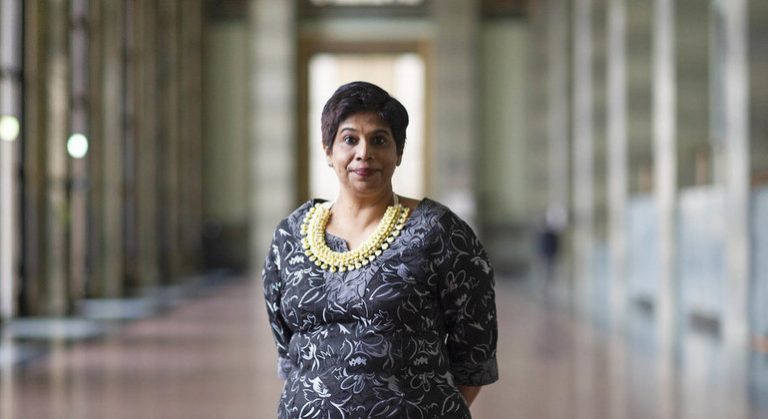
After one of the busiest years in the history of the Human Rights Council, President and Fijian diplomat Ambassador Nashat Shameem Khan insisted on Thursday that the UN forum remains more relevant than ever, citing action on COVID-19 vaccine inequity, climate change and no less than five Special Sessions in Geneva.

Speaking to the UN as she prepares to step down from her one-year term at the Council at the end of the month, Ambassador Khan also looked ahead to her new role at the International Criminal Court (ICC), where her appointment as Deputy Prosecutor was announced at the start of the week.

Created by the UN General Assembly in 2006, of the most important roles of the Council is to address immediate and important human rights violations around the world – not least the coronavirus pandemic and vaccine inequity – Ambassador Khan explained.

“There were some substantive issues from the COVID 19 pandemic, and one was the access to vaccines,” she said. “This is a conversation that is happening everywhere in the world, whether within countries, we have an equal access to vaccines by all communities, especially those which are most vulnerable.

“And secondly, are we having an equitable transfer of vaccines among countries. So, I think that conversation was really amplified this year.”

And in a year that brought nations together for the COP26 Climate Summit in Glasgow, the Human Rights Council amplified calls for action on cutting emissions from a rights-based perspective, despite historic resistance in some quarters, Ambassador Khan continued.

“There are many people in the world who believe that the only conversation you can have on climate change is in Bonn with the UNFCCC (United Nations Framework Convention on Climate Change), and that it is none of the business of the Human Rights Council to speak about issues which are relevant to the environment. But increasingly, I think many more countries have recognised that climate change is a relevant discussion in every UN agency, in every institution. It’s the business of everyone.”

By way of example of this new awareness over the risks posed by climate change, Ambassador Khan pointed to increased international activity and pronouncements on the issue, within the sphere of human rights.

Then came comments, recommendations and reports about climate change from specialised bodies appointed by the Council, known as UN Special Procedures and Treaty Body experts. This included the Committee on the Rights of the Child, which issued a report on the impact of climate change and children.

It was this kind of foundational work “over many, many years” in the climate change versus rights nexus that work culminated in two landmark resolutions at the Council this year on climate and environmental rights, Ambassador Khan explained.

“One …recognised the right to a healthy, safe and sustainable environment; and the second was the creation of a mandate for climate change and human rights. Both are incredibly significant for the world. Of course, they’re very important to small island States, particularly in the Pacific, but they are significant for the whole world. And the fact that there was such an overwhelming level of support for both resolutions, I think, really indicate an increasing consensus”, she said.

Reflecting the importance placed on achieving gender equality at the UN, Ambassador Khan underscored the Council’s support for this, and inclusivity in general, in particular for small island States.

But she explained that as only the third woman to sit in the President’s seat at the Council, although she was proud of her achievement, “we need to do a lot of self-examination” about why so few women have come before her.

“Often when people speak at the Council, the question should be, are they speaking at a level which makes decisions because often in organisations and institutions, you will find 50 per cent and more representation of women, but they are often at the level where they are not they’re not really making the decisions. So, the issue is, where is the leadership of women? I think this is the very important issue for the Council. How many ambassadors in Geneva are women who are still in the minority, although there’s a very, very good network.”

On a positive note, Ambassador Khan added that “after much effort and commitment”, more than half of the Council’s independent experts were women. “So, I think we’ve achieved something there, but it could fall back at any time,” she said. “I don’t think we should be complacent about it.”

Responding to concerns that any politicisation of the Council risked paralysing its work – a longstanding criticism of the Council and something that the body’s next President raised shortly after his appointment – Ambassador Khan said that the body’s diverse range of views was no surprise, given its global membership of 47 States.

It was also important to note that there was no division of the Council “in two bands of sort of developed countries and developing countries”, she said. The current dynamic was more “nuanced”, she continued, with smaller countries that were “less likely to be connected to any large power group” responsible for promoting “helpful and productive” exchanges.

After presiding over no less than five Special Sessions at the Human Rights Council in 2021, in addition to the three regular sessions held in February, June and September, Ambassador Khan can expect little rest before taking up her next challenge at International Criminal Court (ICC).

The former Fijian criminal prosecutor and High Court judge will take with her a greater understanding of the world of international cooperation “and the importance of diplomacy”, she insists.

“The ICC is not just a court, it’s also an international institution and it’s also a multilateral body. And I believe that in fact, this particular step that I take now is a logical conclusion of the way that my career path has developed for the fight for my life.

“So, I think that it is going to be an extremely challenging experience, but it is one for which I believe my career has prepared me for. I look forward to it. As to what areas of work I would be covering, that is, of course, entirely at the discretion of the (ICC) chief prosecutor (Karim Khan). And I don’t know that yet. I’m assuming that in the next few months it’ll become clearer.” she said .

SOURCE: UN NEWS CENTRE/PACNEWS

UN chief: ‘We cannot defeat a pandemic in an uncoordinated way’

Arguing that the world “cannot defeat a pandemic in an uncoordinated way”, the UN Secretary-General said on Thursday that countries “must take concrete action in the coming days” to vaccinate 40 percent of the world’s population by the end of the year.

Speaking to journalists in New York, António Guterres also asked Member States to be “far more ambitious” in their efforts to reach 70 per cent of people in all countries by the middle of 2022, a goal established by the World Health Organisation (WHO).

Just days from the deadline, 98 countries have not been able to meet that end-of-year target, and 40 nations have not yet even been able to vaccinate 10 per cent of their population. In lower-income countries, less than four percent of the population is immunised.

“Vaccine inequity is giving variants a free pass to run wild – ravaging the health of people and economies in every corner of the globe”, Guterres said.

According to WHO, the vaccination rates in high-income countries are 8 times higher than in the countries of Africa. At current rates, the continent will not meet the 70 percent threshold until August 2024.

Because of all that, the Secretary-General believes that “COVID-19 is not going away.”

“It is becoming clear that vaccines alone will not eradicate the pandemic. Vaccines are averting hospitalisation and death for the majority who get them and slowing the spread. But transmissions show no sign of letting up. This is driven by vaccine inequity, hesitancy and complacency.”

In his last press conference of the year in New York, Guterres said the world was “coming to the end of a difficult year”.

In 2021, he pointed out, the pandemic still raged, inequalities kept rising, the burden for developing countries grew heavier and the climate crisis remained unresolved.

“I am deeply worried. If things do not improve – and improve fast – we face even harder times ahead”, the UN chief warned.

Guterres also denounced “lopsided” recovery efforts, that are accelerating inequalities and increasing stresses on economies and societies.

In fact, he recalled, advanced economies mobilised nearly 28 percent of their Gross Domestic Product into economic recovery. For middle-income countries, the number fell to 6.5 percent, and it plummeted to 1.8 percent for the least developed countries.

The Secretary-General highlighted projections from the International Monetary Fund (IMF) showing that cumulative economic growth per capita over the next five years in Sub-Saharan Africa will be 75 percent less than the rest of the world.

With inflation rising to a 40-year high in the United States and growing elsewhere, Guterres expects interest rates to rise, placing greater fiscal constraints on the least developed countries.

“Defaults will become inevitable for lower income countries that already bear much higher borrowing costs”, he said. “Today’s global financial system is supercharging inequalities and instability.”

As a result, inequalities keep widening, social upheaval and polarisation keep growing and the risks keep increasing.

For Guterres, “this is a powder keg for social unrest and instability” and poses “a clear and present danger to democratic institutions.”

Because of that, he argued, “it is time to clearly assume the need for reform of the international financial system.”

Speaking about the response to the pandemic and the international financial system, the Secretary-General argued that they reveal governance failures that are also moral failures.

“I am determined that 2022 must be the year in which we finally address the deficits in both governance systems”, he said.

The Secretary-General is sure that the world knows “how to make 2022 a happier and more hopeful new year” but said that everyone “must do all it takes to make it happen.”

Finally, the UN chief mentioned his last visit of the year, that will take him this Saturday to Lebanon, a country “that is in the grip of all these challenges and worse.”

SOURCE: UN NEWS CENTRE/PACNEWS